



A targeted mass spectrometry report can fill many rows with peptide peak areas, normalized ratios, or concentration values and still leave reviewers unsure what to trust. Multiple reaction monitoring (MRM) and parallel reaction monitoring (PRM) quantify predefined proteotypic peptides on liquid chromatography-tandem mass spectrometry (LC-MS/MS) (Lange et al. 2008; Peterson et al. 2012). Confidence comes from assay quality control (QC), peak evidence, failed-target flags, and whether the reporting unit matches the project decision. Reading the numeric table alone is not enough when the next step is cohort interpretation, panel revision, or absolute claim review.
Relative targeted tables answer fold-change or panel-comparison questions under a declared normalization rule. Absolute tables answer amount questions only when a matched stable isotope-labeled internal standard (SIS) or Absolute QUAntification (AQUA) design and a valid calibration range are documented (Gerber et al. 2003; Carr et al. 2014). Surrogate peptides report the measured sequence, not every isoform or modified form by default (Bantscheff et al. 2012).
In MtoZ Biolabs targeted offerings, results review is scoped when the panel version, acquisition mode, QC notes, and reporting unit are available. Service intake appears in Targeted Proteomics Service.
What Confident Targeted Results Review Covers
Four review layers belong in the brief and stay separated.
Deliverable layer confirms that tables, method notes, QC summary, and failed-target documentation were scoped into the report.
Evidence layer reviews retention time, peak shape, MRM transition ratios or PRM fragment support, and blank or carryover behavior.
Reporting layer separates relative normalization from absolute calibration and flags values outside the validated interval.
Claim layer matches interpretation to the original decision: group comparison, candidate confirmation, or concentration reporting. Clinical diagnosis or release language needs a separately validated method beyond a research report.
Confident review starts with QC and peak evidence. Table size alone does not define reliability.
How Relative and Absolute Targeted Readouts Differ
Relative MRM or PRM values depend on how peak areas were normalized across samples and which targets passed inclusion rules. Absolute values depend on light-to-heavy ratios, calibrator bracketing, and QC recovery under a declared unit such as ng/mL or fmol (Gerber et al. 2003). Mixing those reporting types in one interpretation is a common over-read.
MRM confidence rests on predefined transition quality in matrix. PRM confidence rests on selected high-resolution fragment chromatograms after precursor isolation (Peterson et al. 2012). Route choice between those acquisition modes appears in Parallel Reaction Monitoring vs MRM: Which Fits?. Absolute curve and standard failures belong on dedicated recovery paths in Absolute Protein Quantification Not Meeting Spec? Troubleshooting Calibration Curves, Standard Recovery, and Matrix Bias and AQUA Peptide Not Performing? Troubleshooting Standard Purity, Spike Level, and Matrix Recovery.
Discovery fold-changes do not transfer automatically into a targeted table. Discovery-to-targeted stage matching appears in Targeted Mass Spectrometry or Discovery LC-MS/MS? Matching MRM, PRM, and Profiling Routes to Your Analytical Goal.
End-to-End Workflow for Reading Targeted Results
A practical review spine usually runs as follows.
- Freeze the decision the report must support: relative group contrast, panel confirmation, or absolute amount.
- Confirm deliverable scope: analyte table, method notes, batch QC, failed-target flags, and reporting unit.
- Review assay and batch QC before inspecting the most interesting fold change.
- Evaluate peak quality: retention time, integration, MRM transition ratios, or PRM fragment support.
- Exclude or quarantine failed and borderline targets unless a justified handling rule is documented.
- Verify normalization logic for relative tables, or calibration range and QC recovery for absolute tables.
- Compare groups only on targets that pass QC in enough samples per arm.
- Document surrogate limits, out-of-range samples, and batch structure before acting on the data.
- Request clarification or assay revision when QC gaps remain; archive the review notes with the panel version.
Steps 1 through 2 protect the decision and deliverable record. Steps 3 through 9 are the evidence, reporting, and action record. PRM service context appears in Parallel Reaction Monitoring (PRM) Service. MRM/SRM service context appears in SRM-MRM Quantitative Proteomics Services.
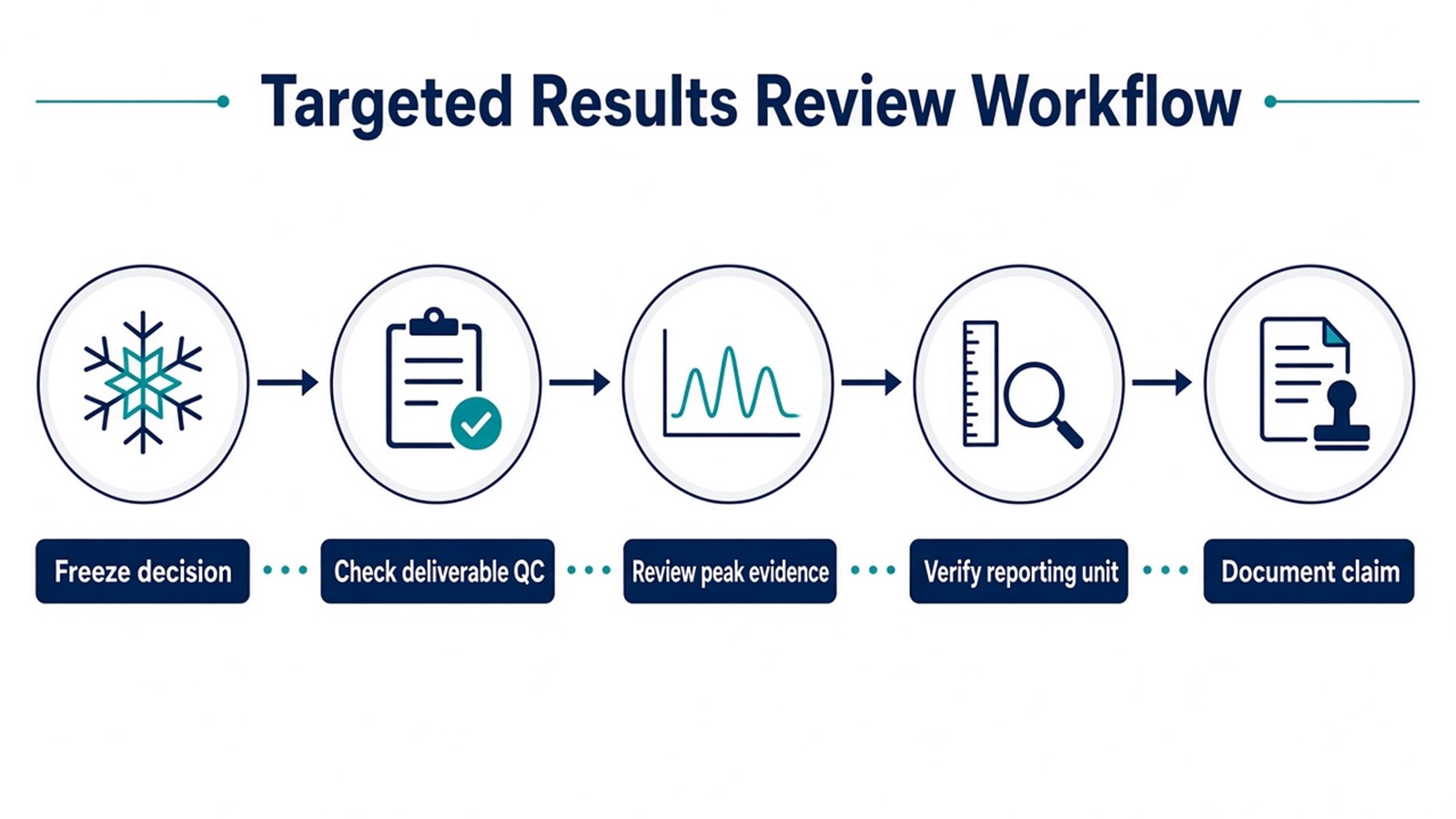
Figure 1. Confident targeted interpretation depends on QC and peak evidence before group comparison or concentration claims are accepted.
Parameters That Must Be Checked Before Trusting Values
Layer |
Parameter that must be declared |
Failure mode if ignored |
|---|---|---|
Decision |
Relative contrast versus absolute unit |
Wrong QC evidence applied to the claim |
Panel version |
Peptide list and acquisition mode |
Mixing MRM and PRM rules silently |
Batch QC |
Blanks, pools, precision, drift notes |
Jumping to biology from a failed batch |
Peak evidence |
Retention time and transition or fragment quality |
Trusting noisy or missing peaks |
Failed targets |
Exclusion flags and handling rule |
Averaging failed peptides into group means |
Normalization |
Relative rule and internal standard behavior |
Batch comparison without a common scale |
Calibration |
Range, recovery, and reporting unit |
Extrapolated concentrations as validated amounts |
Surrogate |
Uniqueness and modification state |
Protein-level overclaim from one peptide |
Cohort structure |
Replicates and batch map |
Batch effect read as treatment biology |
Deliverable |
Method notes archived with the table |
Numeric file without review context |
Limits follow the same table. A complete value grid is not a review-ready report. Borderline peaks do not become high-confidence biology by spreadsheet formatting. Absolute units near the lower or upper bound still need range flags.
What a Targeted Results Package Can Support
A QC-supported relative table supports same-peptide comparison across samples acquired with the same locked method. A QC-supported absolute table supports concentration or amount for surrogates inside the validated interval. Pathway language and biomarker ranking remain optional after inclusion rules pass.
Failed targets support exclusion, re-integration, or panel revision. They do not support silent zeros. Surrogate peptides support the measured sequence. They do not automatically represent all isoforms or PTM states. Cross-study comparison needs matching normalization or calibration assumptions.
A targeted value supports a decision only after QC, peak evidence, and reporting logic are acceptable.
How to Choose the Next Action After Results Review
Use QC status, peak evidence, and claim unit together.
Review outcome |
Action that often fits |
Recheck before committing |
|---|---|---|
QC and peaks acceptable for the planned claim |
Proceed with documented limitations |
Expand claim beyond assay scope |
Some targets fail, others pass |
Narrow the conclusion to passing targets |
Keep failed peptides in group averages |
QC summary missing or incomplete |
Request full reporting package |
Interpret tables without method notes |
Absolute values outside calibrated range |
Dilution, reanalysis, or range re-lock |
Treat extrapolated values as validated |
Persistent interference on key peptides |
PRM review or surrogate redesign |
Force MRM conclusions from weak transitions |
Relative claim only was needed |
Keep relative panel output |
Demand absolute units without SIS design |
Assay clearly underperforms in matrix |
Panel or calibration revision before expansion |
Scale the same failed method to a larger cohort |
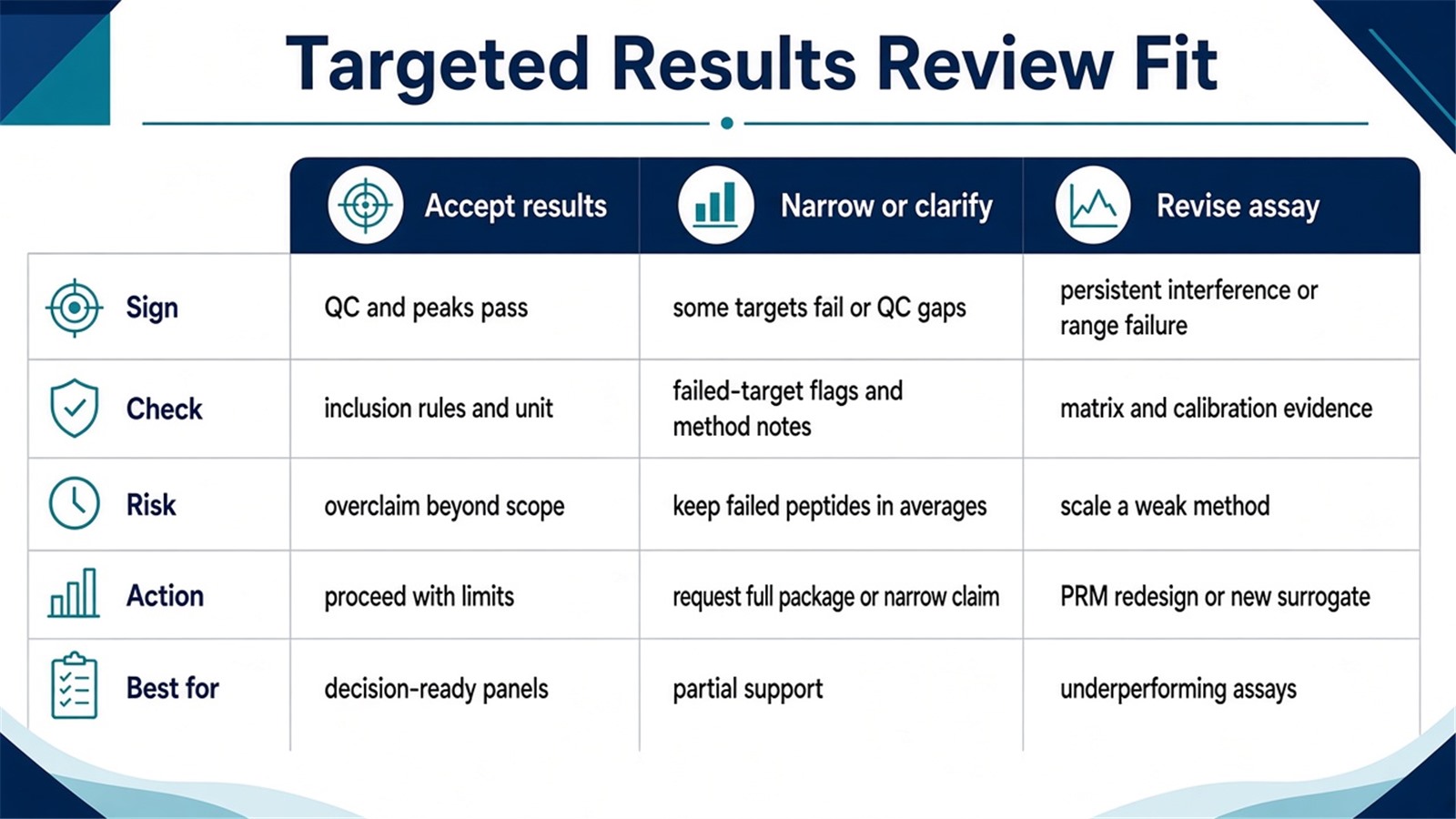
Figure 2. Choose the next action from review evidence; prefer a smaller set of well-supported targets over an unreviewed full panel.
Teams with panel versions, QC notes, and reporting questions can review MtoZ Biolabs Targeted Proteomics Service when interpretation support is declared in the project record. Absolute reporting intake appears in Absolute Quantitative Analysis (AQUA) Service when concentration units are required.
Frequently Asked Questions
1. What should be reviewed first in a targeted mass spectrometry report?
Assay QC, failed-target flags, and reporting logic should be reviewed before group comparison or concentration interpretation.
2. Can failed peptides still appear in the results table?
Yes, but failed or borderline targets should be flagged. Values from failed targets should not be interpreted like fully accepted measurements.
3. How do relative and absolute results differ in review?
Relative results require normalization and peak-quality review. Absolute results also require calibration range, QC recovery, and reporting unit verification.
4. When should PRM fragment data be reviewed manually?
When matrix interference is suspected, when MRM transitions are unstable, or when fragment-level confirmation was required for target acceptance.
5. What if the report lacks QC documentation?
Request clarification or a fuller reporting package before using the data for validation, publication support, or expanded cohort decisions.
MtoZ Biolabs can provide targeted proteomics analysis using MRM, PRM, and isotope-assisted absolute quantification for predefined protein or peptide panels, including QC-supported reporting when panel design and study goals are documented.
If further evaluation of failed-target handling, normalization or calibration logic, or MRM versus PRM result review is needed, project details can be submitted for a feasibility review.
Reference
- V. Lange, P. Picotti, B. Domon, R. Aebersold (2008). Selected reaction monitoring for quantitative proteomics: a tutorial. Mol. Syst. Biol., 4, 222. https://doi.org/10.1038/msb.2008.61
- A.C. Peterson, J.D. Russell, A.A. Klammer, P.F. Doubleday, H. Liu, J.N. Anderson, M.J. MacCoss (2012). Parallel reaction monitoring for high resolution and high mass accuracy quantitative, targeted proteomics. Mol. Cell. Proteomics, 11, 1475-1488. https://doi.org/10.1074/mcp.O112.020271
- S.A. Gerber, J. Rush, O. Stemman, M.W. Kirschner, S.P. Gygi (2003). Absolute quantification of proteins and phosphoproteins from cell lysates by tandem MS. Proc. Natl. Acad. Sci. U.S.A., 100, 6940-6945. https://doi.org/10.1073/pnas.0832254100
- S.A. Carr, S.E. Abbatiello, B.L. Ackermann, C. Borchers, B. Domon, E.W. Deutsch, R.P. Grant, A.N. Hoofnagle, R. Huttenhain, J.M. Koomen, D.C. Liebler, T. Liu, B. MacLean, D.R. Mani, E. Mansfield, H. Neubert, A.G. Paulovich, L. Reiter, O. Vitek, R. Aebersold, A.J. Smith, et al. (2014). Targeted peptide measurements in biology and medicine: best practices for sample preparation, assay standardization, and assay validation. Mol. Cell. Proteomics, 13, 907-917. https://doi.org/10.1074/mcp.M113.036095
- M. Bantscheff, S. Lemeer, H.U. Haab, B. Kuster (2012). Quantitative mass spectrometry in proteomics: a critical review. Anal. Bioanal. Chem., 404, 939-965. https://doi.org/10.1007/s00216-012-5892-4
