






Radiolabeled Peptide Binding Assay Service
MtoZ Biolabs provides a comprehensive Radiolabeled Peptide Binding Assay Service designed to quantify molecular interactions between peptides and their binding partners, including receptors, enzymes, and antibodies. This service integrates high-sensitivity radioactive labeling and quantitative detection methods to deliver precise affinity, specificity, and kinetic data critical for peptide drug discovery and receptor characterization.
Background
Radiolabeled peptide binding assays remain one of the most sensitive and quantitative methods for evaluating ligand-receptor interactions. By labeling peptides with isotopes such as tritium (3H), iodine-125 (125I), or carbon-14 (14C), researchers can accurately monitor binding events at very low concentrations, achieving high sensitivity without perturbing biological function. These assays are widely used in receptor pharmacology, drug screening, and structure-activity relationship studies to evaluate peptide affinity, receptor occupancy, and competitive binding kinetics. Compared with non-radioactive methods, radiolabeled assays provide unparalleled signal-to-noise ratios and quantification accuracy.
Principle of Radiolabeled Peptide Binding Assay
The method involves incubating radiolabeled peptides with biological targets under defined equilibrium or kinetic conditions. The amount of peptide bound to the receptor or protein target is then separated from the unbound fraction using filtration, centrifugation, or precipitation techniques. The bound radioactivity is measured using scintillation or gamma counting, allowing determination of binding parameters such as affinity, capacity, and competition dynamics.
Depending on the research goal, MtoZ Biolabs offers various assay types including:
💠Saturation binding assays to determine dissociation constants (Kd) and maximum binding capacity (Bmax) values.
💠Kinetic assays to analyze association and dissociation rate constants (kon and koff).
💠Competition binding assays to assess inhibitory constants (Ki) and selectivity.
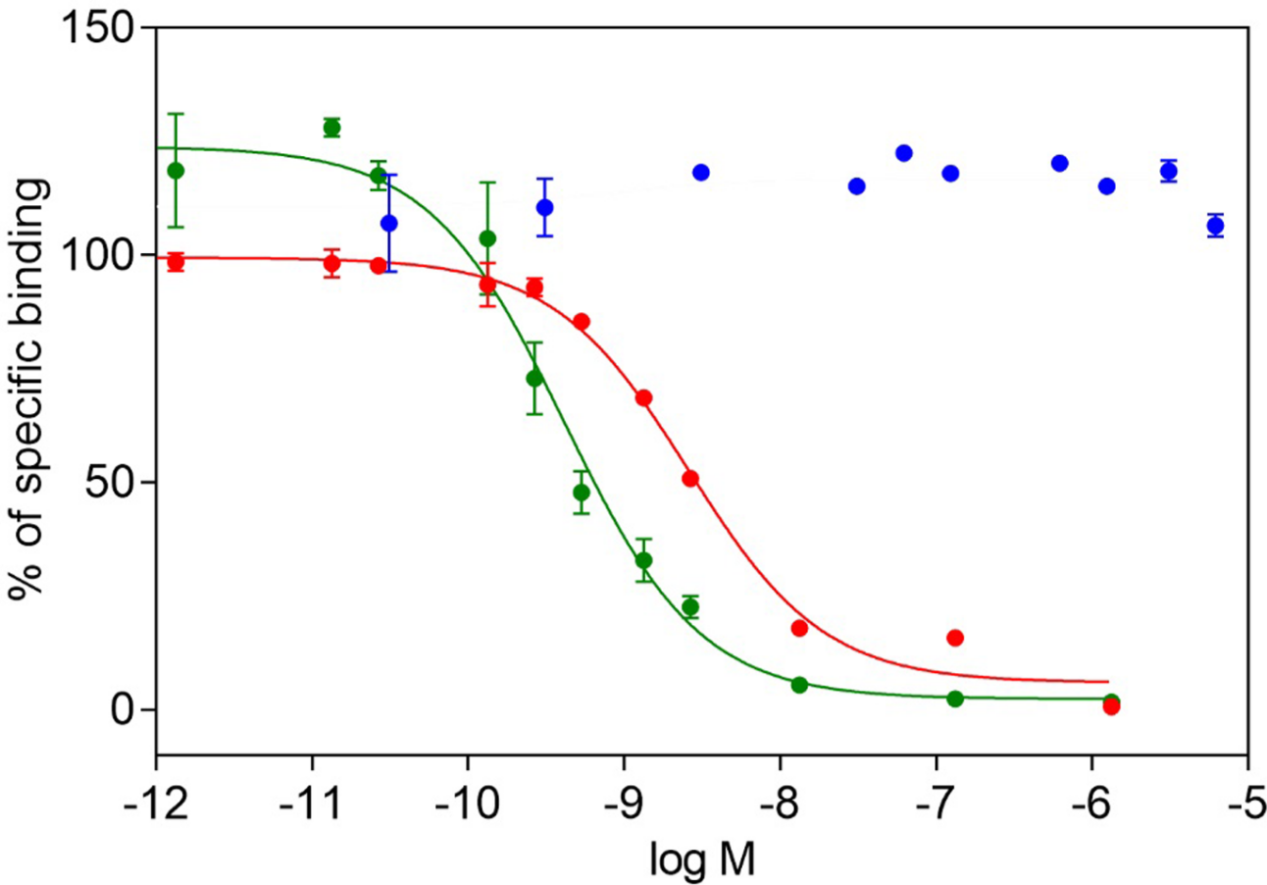
Potalitsyn, P. et al. PLoS One. 2020.
Figure 1. Representative Binding Curves of IGF Hormones on Immobilized D11
Radiolabeled Peptide Binding Assay Service at MtoZ Biolabs
MtoZ Biolabs provides a fully integrated solution covering all stages of radiolabeled peptide binding analysis:
🔸Selection of appropriate isotope and labeling chemistry based on peptide sequence, structure, and stability.
🔸Radiolabeling of peptides under controlled conditions to ensure high purity and specific activity.
🔸Optimization of assay conditions including buffer composition, incubation time, and temperature.
🔸Quantitative analysis of binding data using advanced nonlinear regression and Scatchard plot models to extract kinetic and equilibrium parameters.
Workflow of Radiolabeled Peptide Binding Assay Service
1. Experimental Design
Consultation to determine peptide labeling strategy, assay type, and experimental parameters.
2. Peptide Radiolabeling
Synthesis and labeling using isotopes such as 3H, 125I, 14C, 32P, 33P, or 35S, followed by purification and quality control.
3. Binding Assay Setup
Optimization of reaction conditions, including receptor source, incubation time, and temperature.
4. Separation and Detection
Use of rapid filtration or centrifugation to isolate bound complexes, followed by radioactivity measurement.
5. Data Analysis
Calculation of kinetic and thermodynamic parameters including Kd, Bmax, and Ki using professional curve-fitting software.
6. Reporting
Comprehensive documentation of methods, raw data, and interpreted results in user-preferred formats.
Why Choose MtoZ Biolabs
☑️High Sensitivity and Accuracy: Enables detection of binding events at femtomolar concentrations.
☑️Wide Dynamic Range: Quantifies binding from low-affinity to high-affinity interactions.
☑️Comprehensive Assay Options: Supports equilibrium, kinetic, and competition studies for diverse peptides and targets.
☑️Customizable Formats: Offers cell-free, membrane-bound, and cell-based assay designs.
☑️Strict Radiochemical Safety: All procedures comply with international standards for radioactive material handling.
☑️Expert Data Interpretation: Delivers clear, publication-ready results supported by professional bioinformatics analysis.
Applications of Radiolabeled Peptide Binding Assay Service
Radiolabeled peptide binding assays have extensive applications across life sciences and pharmaceutical research:
- Evaluation of ligand-receptor affinity and selectivity.
- High-throughput screening of peptide analogs and mimetics.
- Pharmacological characterization of G protein-coupled receptors (GPCRs), ion channels, and enzymes.
- Drug-receptor interaction studies and competitive binding assays.
- Structure-activity relationship (SAR) and mutational analysis.
- Validation of peptide-protein interactions in biomarker or therapeutic development.
FAQ
Q1: What types of samples are suitable?
Radiolabeled peptide binding assays at MtoZ Biolabs can be performed on purified proteins, membrane preparations, receptor-expressing cells, tissue homogenates, and biological fluids such as serum or plasma. Both synthetic and naturally derived peptides can be analyzed.
Q2: How should I prepare my samples?
- Ensure samples are free of detergents, protease inhibitors, and substances that interfere with binding or radioactivity measurements.
- Peptides: Provide high-purity peptides in appropriate buffer or lyophilized form, with details on concentration, solvent, and sequence.
- Cells or membrane fractions: Confirm receptor expression and store immediately at -80°C. Avoid detergents or inhibitors that may interfere with binding.
- Tissues: Homogenize samples in a neutral, low-salt buffer, centrifuge to remove debris, and collect the supernatant. Snap-freeze aliquots in liquid nitrogen and store at -80°C.
- Biological fluids: Centrifuge to remove particulates and ensure samples are free from hemolysis or lipids.
Detailed requirements and recommendations can be found in the Sample Submission Guidelines for Proteomics.
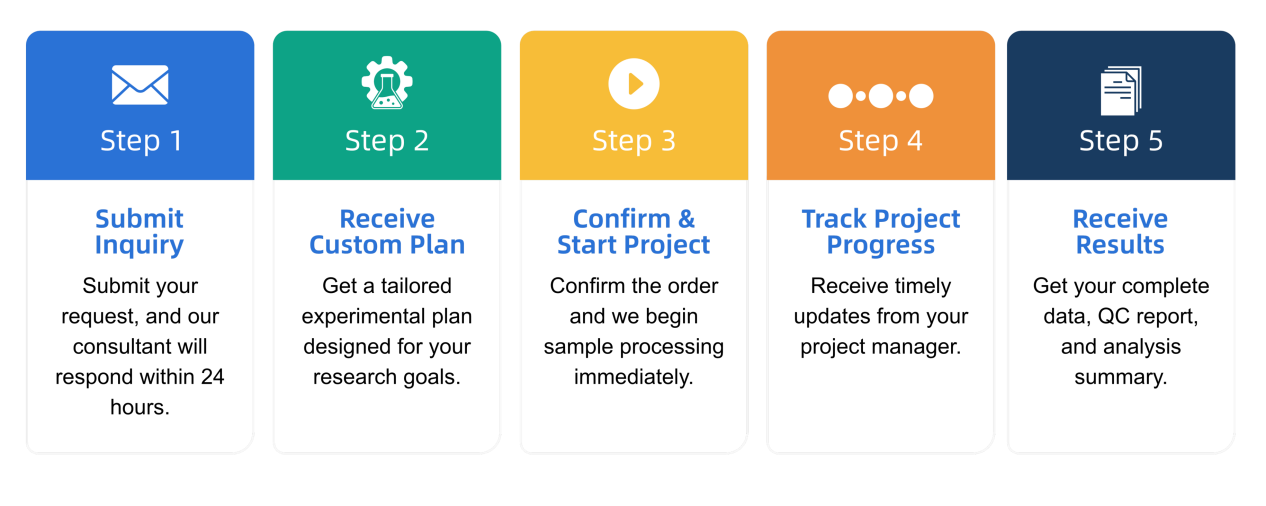
Q3: What is the service general workflow?
Q4: What data formats are provided?
1. Comprehensive assay reports in PDF format, including experiment design, results, and interpretation.
2. Raw and processed data in Excel or CSV format.
3. Kinetic and saturation curves provided as high-resolution PNG or TIFF images.
4. Additional data formats can be provided upon request to meet publication or database requirements.
Start Your Project with MtoZ Biolabs
Whether you are exploring receptor pharmacology, validating peptide candidates, or optimizing binding affinity, MtoZ Biolabs offers the expertise and technology to support your goals.
Contact us to discuss how our Radiolabeled Peptide Binding Assay Service can advance your research.
How to order?




