






From Purified IgG to VH/VL Sequence: Antibody Protein Sequencing for Legacy and Recombinant Antibodies
Introduction
Many antibody projects stall not because the binder fails functionally, but because the sequence record is incomplete. A legacy hybridoma may still produce IgG in supernatant, yet lab notebooks contain no VH or VL files. A recombinant lot may pass binding QC while the team still needs primary structure evidence for tech transfer. A comparator antibody may require documented sequence support before analytical similarity work can proceed.
Antibody protein sequencing addresses these gaps by determining amino acid sequence directly from purified antibody protein. The workflow typically combines enzymatic digestion, LC-MS/MS acquisition, de novo peptide interpretation, and expert assembly of heavy-chain and light-chain variable regions. Because the starting material is IgG rather than hybridoma RNA, the method remains viable when cell banks are lost, productivity has declined, or genetic source material was never archived.
This route is widely used for legacy clone rescue, recombinant antibody verification, patent support, and biosimilar documentation. For teams deciding whether a purified IgG sample can support reliable VH/VL recovery, MtoZ Biolabs can Review IgG sequencing feasibility before samples are prepared or submitted.
What Makes Purified IgG Sequencing Different?
Hybridoma PCR recovery reads transcript sequence from viable cells. Antibody protein sequencing reads the antibody molecule itself after purification. That distinction matters in three common situations:
1. Legacy Hybridoma Rescue
Only affinity-purified IgG or archived antibody lots remain. Cell passage records are incomplete and RNA quality is uncertain.
2. Recombinant Lot Verification
An expressed IgG must be confirmed against an intended VH/VL design before scale-up, release, or partner transfer.
3. Comparator and Biosimilar Support
Primary structure must be documented from the reference or test antibody when genetic files are unavailable or restricted.
In each case, the project goal is not generic protein identification. The team needs VH/VL sequence evidence that supports the next development or documentation decision.
When viable hybridoma cells or high-quality RNA remain accessible, Hybridoma Antibody Sequencing Service may be faster. When only purified IgG is available, protein-level recovery becomes the practical default.
Related Services
| Customer Need | Recommended Service Direction |
|---|---|
| Need protein-level antibody sequence from purified IgG | De Novo Antibody Sequencing Service |
| Need full antibody sequencing support | Antibody Sequencing Service |
| Need MS-based antibody sequence recovery | Mass Spectrometry Based Antibody Sequencing Service |
| Need IgG-specific sequencing workflow | IgG Antibody Sequencing Service |
| Need heavy and light chain sequence recovery | Antibody Light and Heavy Chain Sequencing Service |
| Need sequence recovery from hybridoma cells instead | Hybridoma Antibody Sequencing Service |
Workflow Overview: From IgG Sample to VH/VL Report
A typical antibody protein sequencing project begins with feasibility review of IgG purity, amount, isotype, and intended deliverable. Purified antibody is reduced and alkylated, then digested with one or more proteases to generate overlapping peptides across heavy and light chains. Peptides are analyzed by LC-MS/MS, and individual spectra are interpreted to build sequence tags that anchor VH and VL assembly.
Analysts pay special attention to variable region coverage, CDR boundaries, glycosylation sites, and framework regions that can look similar across antibodies. Expert review is essential because incomplete digestion, isobaric residues, and weak CDR3 spectra can otherwise produce overconfident calls.
Core workflow steps include:
1. Feasibility Review of Purified IgG and Project Scope
2. Reduction, Alkylation, and Multi-Enzyme Digestion
3. LC-MS/MS Acquisition Across Heavy and Light Chains
4. De Novo Peptide Interpretation and Overlap Assembly
5. VH/VL Annotation, Coverage Mapping, and QC Review
6. Report Delivery with Sequence Files and Supporting Notes
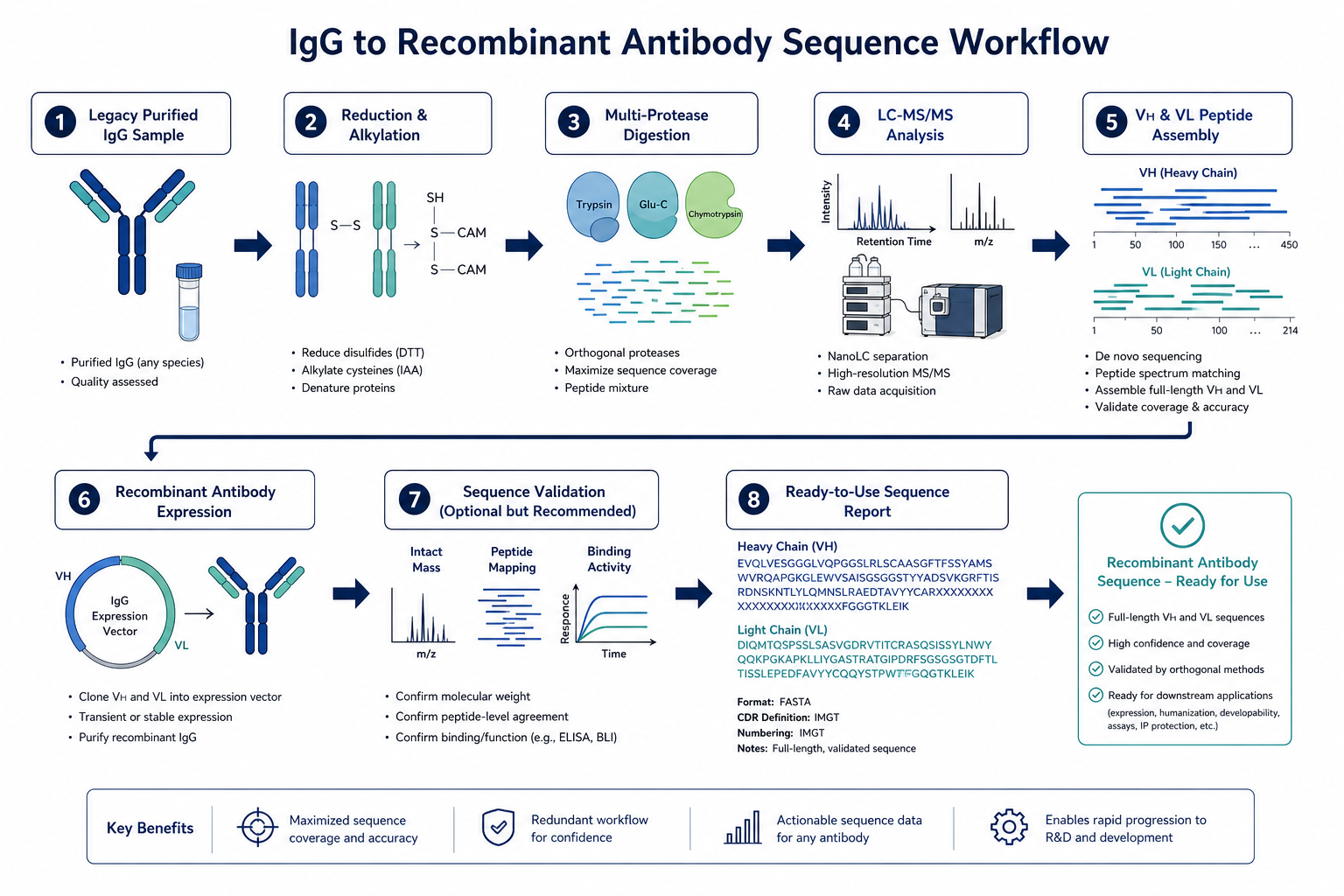
Figure 1. Antibody protein sequencing converts purified IgG into VH/VL sequence evidence through digestion, LC-MS/MS, and expert assembly review.
Sample purity and IgG amount strongly influence success. Highly pure recombinant IgG often moves quickly. Legacy material with host protein background, aggregation, or limited quantity may require additional cleanup or repeat acquisition before variable regions are confidently assembled.
Teams submitting legacy material should note storage temperature, freeze-thaw history, and purification method in the project brief. Even small metadata gaps can delay digestion optimization or lead to an incomplete first-pass coverage map.
Application Scenarios That Commonly Require IgG-Based Sequencing
Researchers most often pursue this route in four settings:
1. Legacy Clone Recovery
Hybridoma cells are gone, but purified antibody or enriched supernatant IgG remains.
2. Recombinant Expression Handoff
A produced IgG lot must be confirmed before vector redesign, stable line development, or partner review.
3. Regulatory or Publication Support
Sequence evidence must be archived for IND-enabling files, manuscripts, or internal audit trails.
4. Comparator Antibody Documentation
A reference antibody must be characterized when plasmid or cell line records are unavailable.
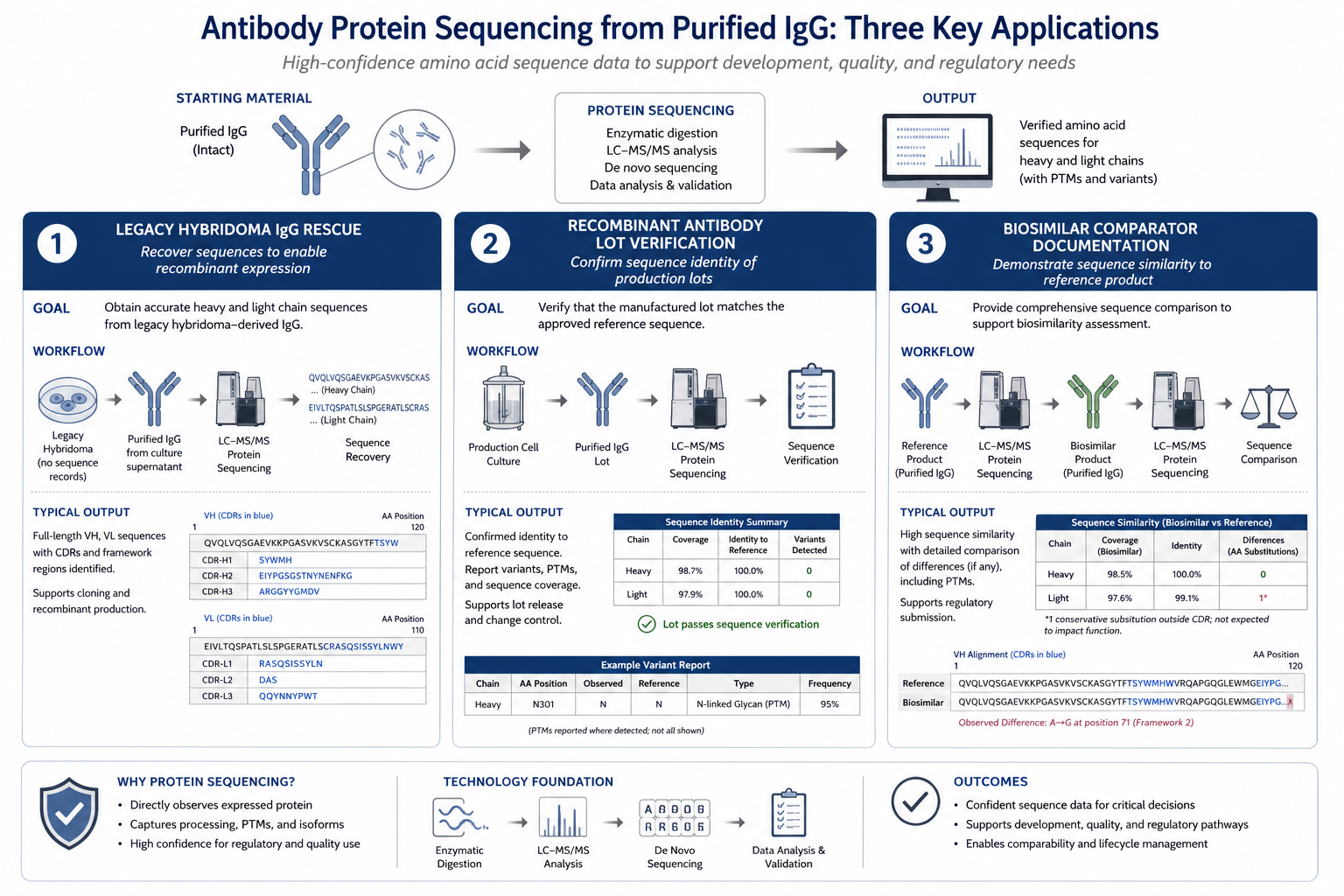
Figure 2. Legacy rescue, recombinant verification, and comparator documentation are the most common drivers for IgG-based sequence recovery.
What Deliverables Should a Project Define Up Front?
Before samples ship, teams should clarify whether the project requires full VH/VL recovery, CDR annotation only, coverage maps, annotated spectra, or expression-ready sequence formatting. Scope clarity prevents mismatched expectations and reduces rework.
Useful deliverables often include:
- annotated VH and VL sequences
- CDR and framework boundaries where coverage supports them
- peptide coverage maps across heavy and light chains
- annotated MS/MS spectra for critical peptides when required
- notes on ambiguous residues, glycosylation, or low-confidence segments
- recommendations for expression validation or orthogonal confirmation
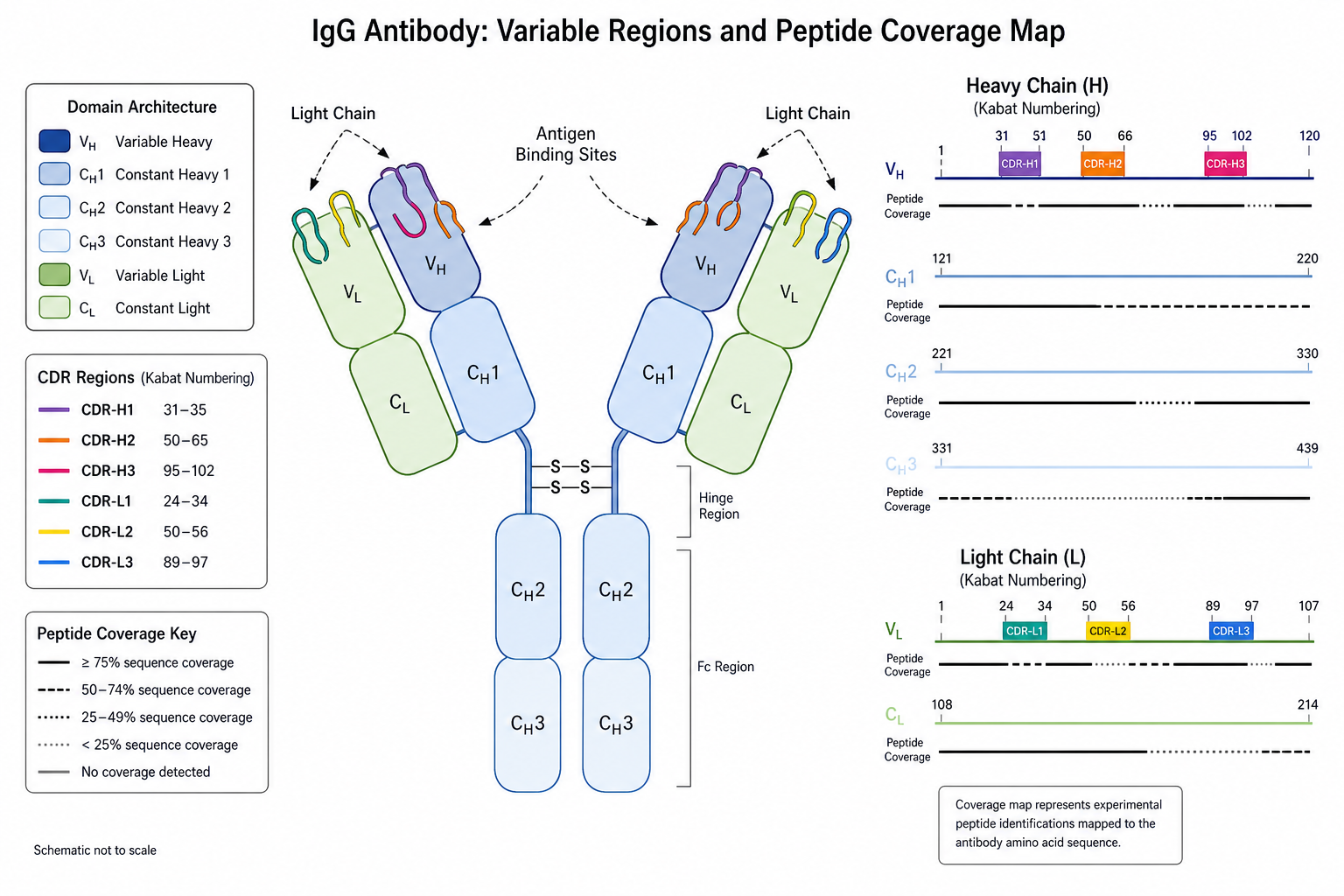
Figure 3. Coverage maps help teams judge whether recovered VH/VL evidence is sufficient for expression design or documentation use.
Advantages and Limitations in Real Projects
1. Advantages
(1) Independent of hybridoma cell availability. Sequence recovery can proceed from purified IgG alone.
(2) Direct protein-level evidence. The result reflects the antibody molecule submitted, not transcript abundance or cell health.
(3) Strong fit for rescue and verification. Legacy IgG, recombinant lots, and comparator material are all within scope when purity and amount are acceptable.
(4) Compatible with orthogonal support. Results can be strengthened with or when needed.
For IND-enabling or partner-review packages, teams often request both annotated VH/VL files and a short methods summary describing digestion and LC-MS/MS review steps. Defining that reporting need early helps the provider align deliverables with downstream documentation requirements.
2. Limitations
(1) Coverage depends on sample quality. Low purity or insufficient IgG can leave CDR3 regions unresolved.
(2) Glycosylation adds complexity. Fc glycans can affect peptide distribution and review time.
(3) Not always the fastest option when cells exist. Healthy hybridoma RNA may support quicker PCR-based recovery.
(4) Sequence alone does not prove binding. Functional activity still requires assay confirmation.
Frequently Asked Questions
1. Can antibody protein sequencing work from old frozen IgG?
Often yes, if integrity and purity remain acceptable. Feasibility review before shipment is recommended.
2. Is full-length constant domain recovery always included?
Many projects focus on VH and VL. Constant-domain coverage can be expanded when scope and sample amount support it.
3. Can polyclonal antibody material be sequenced?
Sometimes, if a dominant clone or enriched fraction can be isolated. Highly mixed pools usually need additional separation.
4. How does this differ from hybridoma PCR sequencing?
Hybridoma PCR uses RNA from cells. IgG-based sequencing uses purified antibody protein and LC-MS/MS assembly.
5. Does the method prove binding activity?
No. It documents molecular identity. Binding should be verified separately.
Conclusion
Antibody protein sequencing gives teams a practical path from purified IgG to VH/VL sequence evidence when hybridoma records, plasmids, or viable cells are unavailable. By combining digestion, LC-MS/MS, and expert variable-region assembly, the method supports legacy rescue, recombinant verification, and documentation workflows that begin with antibody protein rather than genetic source material.
For legacy IgG rescue, recombinant lot confirmation, or comparator documentation, MtoZ Biolabs provides De Novo Antibody Sequencing Service support with feasibility review, coverage mapping, CDR annotation, and report-ready deliverables. Contact the technical team to evaluate IgG purity, isotype, and the fastest route to usable VH/VL data.
How to order?




