






Proteomics Service for Protein Identification, Quantification, and PTM Profiling
Introduction
Proteomics requests often arrive as a single line: identify the proteins, quantify the changes, and check modifications. Those goals sound related, but they are not the same analytical project. A discovery screen may need broad protein identification. A treatment-versus-control study may need reproducible quantification. A signaling or quality study may need PTM profiling with enrichment and localization support. Choosing a proteomics service without separating these goals can lead to the wrong acquisition mode, incomplete reports, or unnecessary spend.
A proteomics service for protein identification, quantification, and PTM profiling should be evaluated by the decision each workflow is designed to support. Identification answers which proteins are present. Quantification answers how abundance changes across samples. PTM profiling answers which modified peptides are detected and where modifications localize when evidence allows. This article explains how these three service components differ, what to confirm before ordering, and how to move from project question to a matched proteomics plan.
The Core Selection Question
The first question is not which instrument is available. The first question is which result will change the next experimental or development decision.
If the team needs a protein list from a lysate, tissue, or purified fraction, identification is the lead need. If the team needs differential abundance across conditions, quantification must be designed into sample grouping and acquisition. If the team needs phosphorylation, glycosylation, ubiquitination, or another modification layer, PTM profiling requires enrichment strategy and fragment evidence planning.
A useful proteomics service engages at this decision point before sample preparation begins. Method matching at intake is more valuable than a generic proteomics package applied to every request.
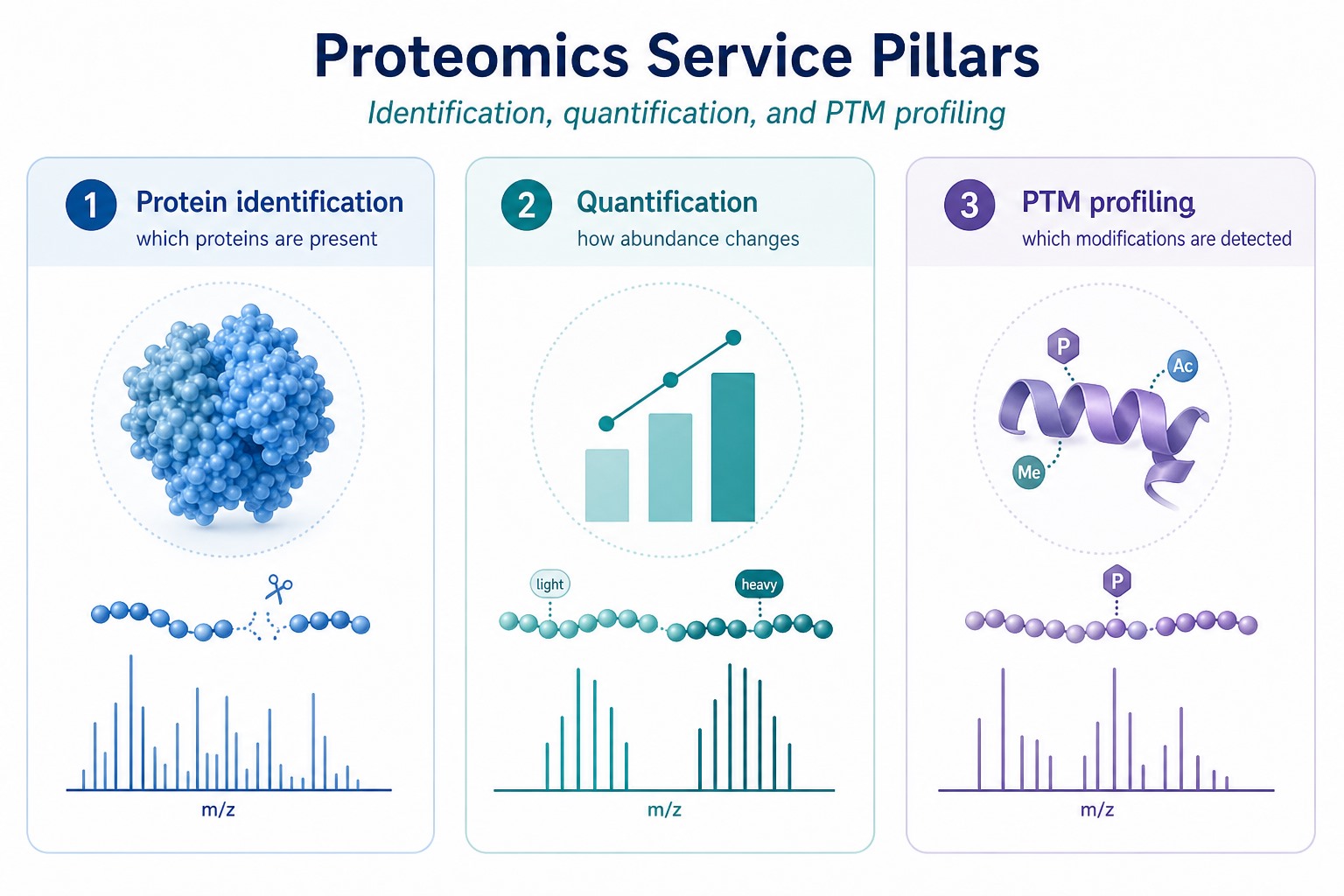
Figure 1. Proteomics services are clearer when split into identification, quantification, and PTM profiling goals.
Protein Identification: What the Service Should Deliver
Protein identification services convert digested peptides into protein assignments through LC-MS/MS and database searching or related matching strategies.
The practical value is sequence-supported evidence for which proteins are present in a sample. Typical outputs include peptide-spectrum matches, protein groups, and coverage or confidence metrics defined by the search settings. Identification is the right lead service when the question is discovery, confirmation of expected proteins, or composition review of a complex mixture.
Before ordering identification, confirm sample type, expected complexity, database or species context, and whether contaminants or host-cell proteins are relevant. Identification depth depends on sample quality and acquisition design. It does not automatically include statistically designed quantification across groups.
Protein Quantification: What the Service Should Deliver
Quantification services measure relative or targeted abundance differences across defined sample sets.
Approaches may include label-free comparison, isobaric labeling, metabolic labeling, or targeted monitoring depending on study design. The practical value is reproducible comparison of selected proteins or broader proteome changes between conditions. Quantification is the right lead service when treatment, time point, genotype, or process condition differences are the decision drivers.
Before ordering quantification, confirm biological replicates, group structure, normalization needs, and whether the study is discovery-scale or focused on a defined protein panel. Quantification quality depends as much on experimental design as on instrument performance. A service quote should state the quantitation strategy and the planned statistical or comparative outputs.
PTM Profiling: What the Service Should Deliver
PTM profiling services detect modified peptides and, when fragment evidence supports it, localize modification sites.
Common project types include phosphoproteomics, glycosylation-focused workflows, ubiquitin remnant profiling, acetylation studies, and other enrichment-based PTM analyses. The practical value is modification-level evidence that total protein identification or bulk quantification may miss. PTM profiling is the right lead service when pathway regulation, occupancy changes, or modification quality attributes are central.
Before ordering PTM work, confirm the modification class, whether enrichment is required, sample amount available after enrichment losses, and whether site localization is needed or compositional profiling is enough. PTM projects are not interchangeable with standard identification packages.
How to Compare Service Components Before You Order
Evaluate each component against the decision it supports rather than treating proteomics as one flat menu item.
For identification, confirm species database context and matrix complexity. For quantification, confirm replicates and group definitions. For PTM profiling, confirm modification class and enrichment needs. If a project needs more than one component, sequence them intentionally. Identification can establish composition. Quantification can compare conditions. PTM profiling can add modification resolution where required. Ordering all three without prioritization often creates report volume without a clear decision path.
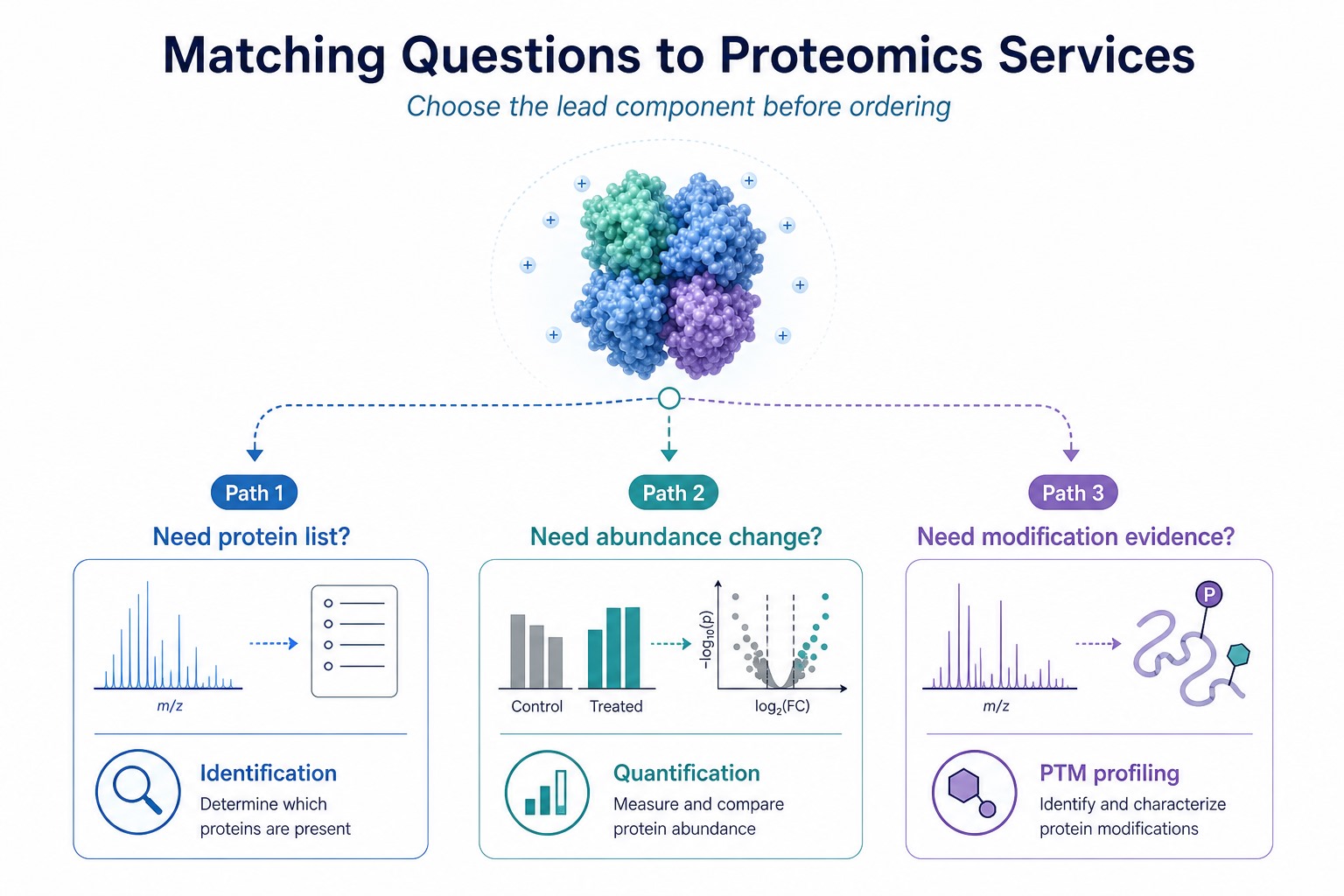
Figure 2. Match the project question to identification, quantification, or PTM profiling before selecting a proteomics package.
Related Services
Protein Identification Service
Label-Free Quantitative Proteomics Service, MS Based
iTRAQ/TMT/MultiNotch Quantitative Proteomics Service
Quantitative Phosphoproteomics Service
Post-Translational Modifications Proteomics Service
Teams planning proteomics work across identification, quantification, and PTM profiling can consult MtoZ Biolabs to prioritize the service component that matches the current decision question.
What Determines Project Fit and Practical Value
Several factors decide whether a proteomics service will answer the intended question.
Sample quality and preparation compatibility affect peptide recovery and modification preservation. Study design determines whether quantification claims are supportable. Modification chemistry determines whether enrichment and specialized acquisition are required. Reporting format determines whether results can be used directly in manuscripts, internal reviews, or follow-up assay design.
Transparent scope matters as much as technical breadth. A clear service plan should state which component is included, which options are additive, and what sample limitations may reduce depth. This is especially important when PTM enrichment consumes material that might otherwise support broader identification or quantitation.
Next Steps: From Question to Proteomics Plan
A practical ordering sequence keeps projects focused.
Step 1. Write the decision question
State whether the next action depends on protein identity, abundance change, modification evidence, or a defined combination.
Step 2. Rank the three components
Choose a lead component and list any secondary needs. Avoid equal-priority requests unless the study truly requires all layers.
Step 3. Confirm sample readiness
Provide matrix type, amount, buffer notes, replicate structure, and any known modification context.
Step 4. Align outputs before submission
Confirm the tables and interpretation depth needed for publication, internal review, or follow-up validation.
Step 5. Submit with a component-specific plan
Ship samples with the selected identification, quantification, or PTM workflow clearly documented.
For studies that may later expand from identification into quantification or PTM profiling, MtoZ Biolabs can help design a staged proteomics plan that preserves sample and budget for the next phase.
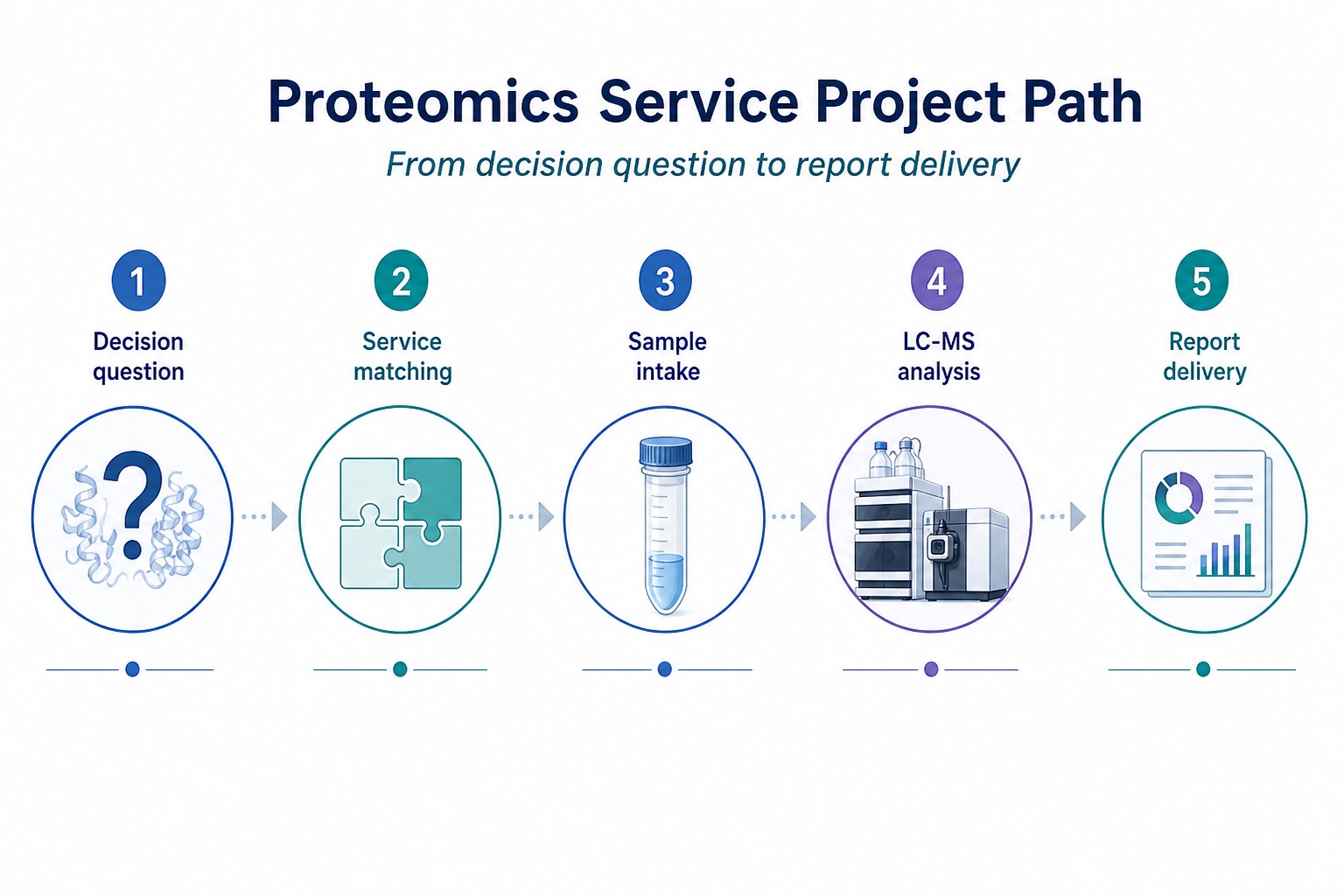
Figure 3. A focused proteomics path moves from decision question and service matching to sample intake, analysis, and report delivery.
Key Precautions When Ordering Proteomics Services
A few precautions prevent mismatched projects.
Do not order quantification without defined groups and replicates. Do not treat PTM profiling as a standard add-on to every identification run. Do not assume one digest aliquot can support deep identification, multi-group quantitation, and enrichment-based PTM work without amount planning. Do not evaluate quotes only by protein count promises. Compare method fit, design support, and report usability.
Proteomics services create value when the ordered component matches the decision the team must make next.
Frequently Asked Questions
1. What does a proteomics service for identification, quantification, and PTM profiling include?
It can include protein assignment workflows, abundance comparison workflows, and modification-focused workflows. Each component should be selected by project question rather than ordered as an automatic bundle.
2. Can one sample support all three components?
Sometimes, but only when sample amount, study design, and modification strategy allow it. Many projects need staged analysis or prioritized components.
3. Is protein identification enough for differential expression studies?
Usually no. Differential claims require a quantification design with appropriate groups and comparative analysis.
4. When should PTM profiling be ordered separately?
Order it separately when modification detection or site evidence is central, especially when enrichment is required.
5. What information should be provided before requesting a quote?
Provide the decision question, sample type, available amount, replicate plan, species or database context, and any target modification class.
6. How should teams compare proteomics service providers?
Compare method consultation, component-level scope clarity, sample guidance, and report format in addition to turnaround and pricing structure.
Conclusion
A proteomics service for protein identification, quantification, and PTM profiling is most effective when treated as three related but distinct analytical paths. Identification establishes which proteins are present. Quantification measures abundance changes across defined groups. PTM profiling resolves modification-level evidence that bulk protein lists may miss.
Teams that rank these components against a clear decision question, confirm sample readiness, and align report expectations before submission reduce mismatched methods and unused data. Researchers planning proteomics projects can contact MtoZ Biolabs to select the identification, quantification, or PTM workflow matched to the current project phase.
How to order?




