






Protein Interaction Discovery with IP-MS Validated Antibodies
Introduction
Mechanism studies often start with a pathway hypothesis rather than a product shortlist. A lab may need to map partners around a signaling kinase, ask whether a modified bait recruits a different complex, or connect a disease-linked protein to an uncharacterized interactome. At this stage the scientific question is clear, yet the enrichment reagents and analysis route are still open.
Protein interaction discovery with an IP-MS validated antibody connects those planning decisions. Immunoprecipitation recovers the bait and associated proteins. Mass spectrometry identifies the enriched proteins at scale. When the capture reagent is an antibody validated by IP-MS, bait recovery is more likely to support interpretable partner lists. This article outlines how IP-MS validated antibodies fit interaction, PTM-linked, and pathway mechanism projects, and how to plan antibody plus Protein Interaction Analysis options before locking SKUs or service packages.
Why Interaction Discovery Depends on IP-MS Antibody Fit
Interaction discovery fails when enrichment does not recover the intended bait, or when background proteins dominate the LC-MS/MS readout. Antibody choice is therefore part of experimental design, not a late purchasing detail.
An antibody validated for IP-MS is useful in planning because it indicates that the reagent has been tested in an immunoprecipitation-to-MS context. That claim does not prove every partner list in every matrix. It does reduce a common upstream risk: selecting a blot-only antibody that never recovers enough bait for interaction analysis.
For endogenous targets, Target Protein Antibodies matter because there is no affinity tag to rescue weak capture. For modification-dependent complexes, PTM Antibodies matter because the biologically relevant bait may be a modified subpopulation. Both product classes support interaction discovery when IP-MS evidence matches the planned question.
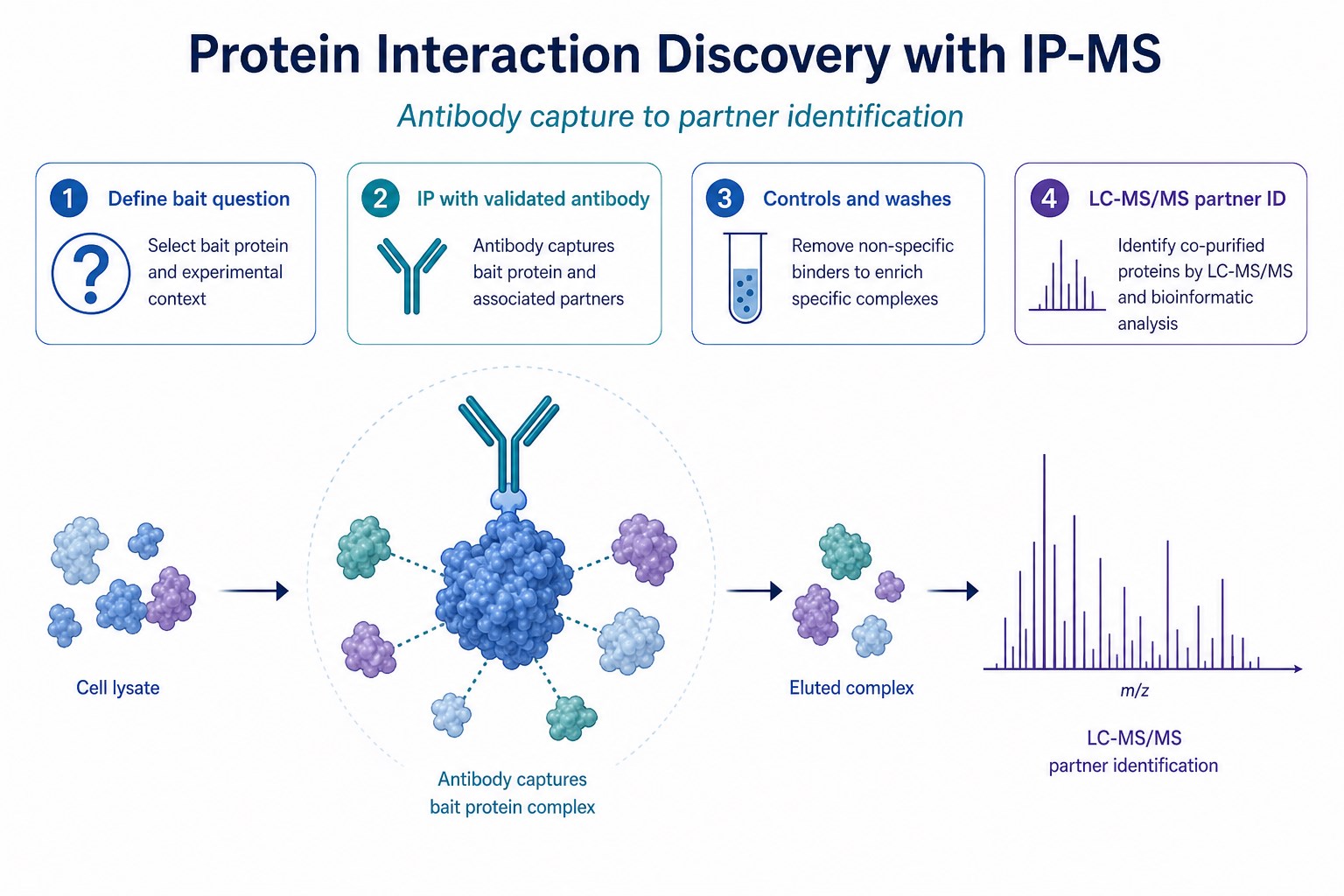
Figure 1. Interaction discovery with IP-MS combines antibody-based bait enrichment with LC-MS/MS identification of co-enriched proteins.
How IP-MS Supports Protein Interaction Discovery
A typical planning model has four linked stages.
Define the biological question
State whether the goal is open discovery around a bait, confirmation of expected partners, comparison across conditions, or PTM-conditioned interactomes. The question determines wash stringency, control design, and whether a target-specific or PTM-directed antibody is the primary capture reagent.
Select an enrichment antibody matched to the bait
Prefer an IP-MS validated antibody when endogenous capture is required. Match species, isoform, and epitope accessibility to the sample. If the hypothesis centers on acetylation, phosphorylation, or another modification state, include PTM Antibodies in the planning shortlist rather than assuming a pan-target antibody will recover the relevant subpopulation.
Design controls and replicate IP-MS runs
Negative controls, isotype or bead-only IPs, and biological replicates separate candidate interactors from sticky background. Interaction discovery quality depends as much on these controls as on antibody brand claims.
Identify and interpret co-enriched proteins by MS
After digestion and LC-MS/MS, partner ranking depends on enrichment relative to controls, not on raw identification counts alone. Protein Interaction Analysis workflows help turn IP eluates into ranked interaction hypotheses that can be followed by orthogonal assays.
Application Scenarios in Mechanism Research
Endogenous bait interactome mapping
When overexpression or tagging would disturb localization or stoichiometry, endogenous IP with a Target Protein Antibody is often the preferred discovery route. An antibody validated by IP-MS supports bait recovery under native or native-like lysis used for complex preservation.
Pathway complex and signaling-node discovery
Pathway projects frequently ask which proteins assemble around a kinase, receptor, or scaffold under stimulation. Condition-matched IPs with an IP-MS validated antibody can compare resting and activated states, provided controls keep stimulus-independent background in view.
PTM-linked interaction remodeling
Many mechanism questions ask whether a modification changes partnership. PTM Antibodies can enrich modified baits or modified partner classes before MS. Pan PTM reagents and site- or motif-oriented PTM-Specific Antibody options serve different hypothesis widths. In both cases, antibody validated for IP-MS evidence helps confirm that enrichment remains MS-compatible.
Disease-associated protein neighborhoods
Disease mechanism studies may begin with a disease-linked bait and ask which neighborhood changes across genotypes or treatments. Planning should connect Target Protein Antibodies for bait capture with Protein Interaction Analysis capacity for partner identification and network interpretation.
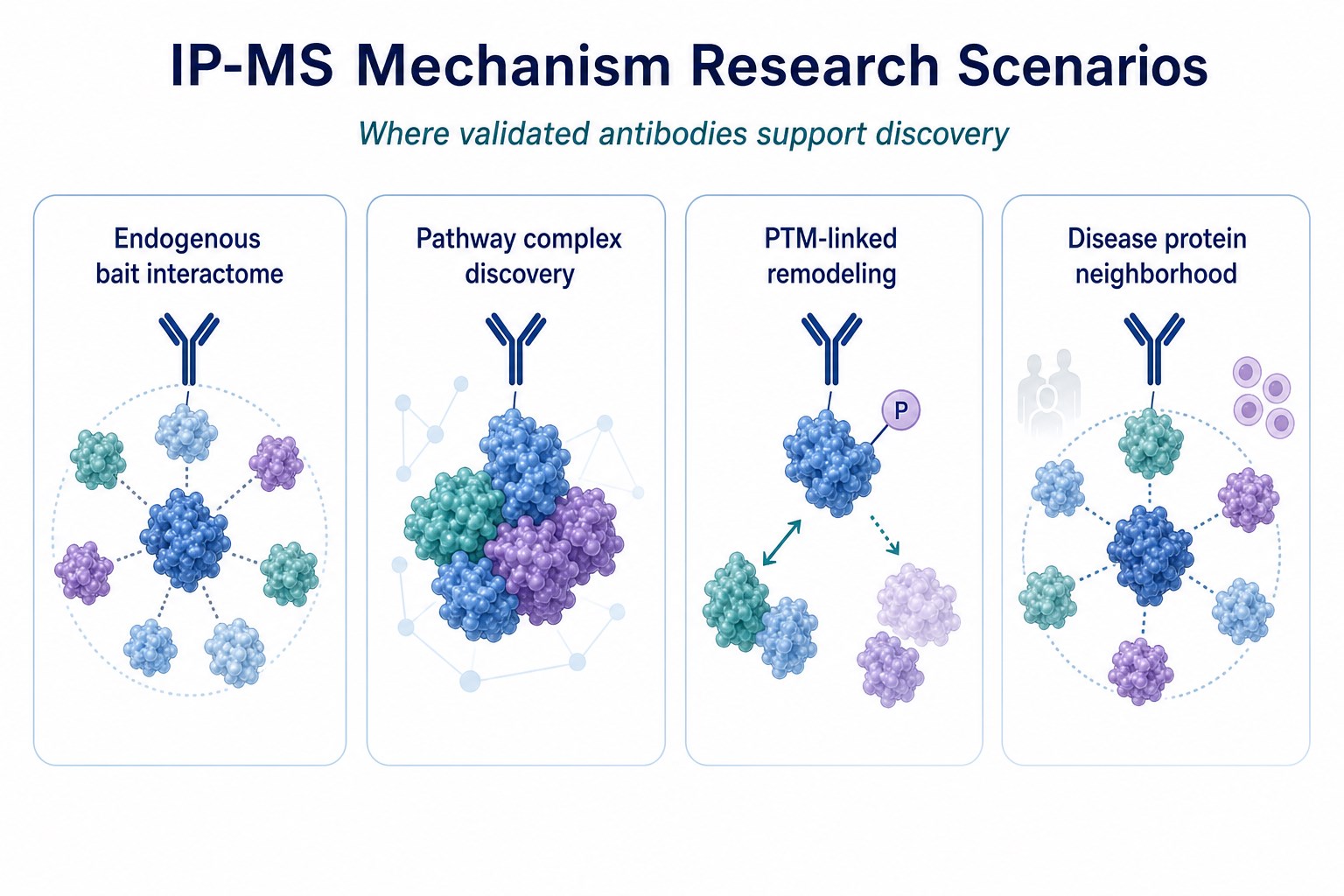
Figure 2. Common mechanism scenarios for IP-MS interaction discovery include endogenous bait mapping, pathway complexes, and PTM-linked partner remodeling.
Planning Antibody and Analysis Choices Before Purchase
At the topic-planning stage, separate scientific design from catalog browsing.
|
Planning question |
What to decide early |
Typical resource type |
|---|---|---|
|
What is the bait? |
Endogenous protein, tagged construct, or modified form |
Target Protein or PTM Antibodies |
|
What interaction claim is needed? |
Open discovery vs confirmation vs condition comparison |
IP-MS design and controls |
|
How will partners be identified? |
In-house MS vs outsourced Protein Interaction Analysis |
PPI / IP-MS service pages |
|
What evidence is required for the antibody? |
IP-MS validation, specificity, species fit |
IP-MS validated antibody listings |
A practical sequence is to lock the bait and condition design first, then shortlist antibodies with IP-MS validation evidence, then decide whether Protein Interaction Analysis will be performed internally or through a CRO workflow.
Related Products
Related Services
Protein-Protein Interaction Analysis Service
MS-Based Protein-Protein Interaction Analysis Service
IP-MS Protein Interactomics Analysis Service
Co-Immunoprecipitation Protein Interaction Analysis Service
Protein Interaction Analysis Service
Teams planning interaction discovery can consult MtoZ Biolabs to align bait strategy, IP-MS validated antibody options, and Protein Interaction Analysis scope before committing to a final reagent or service package.
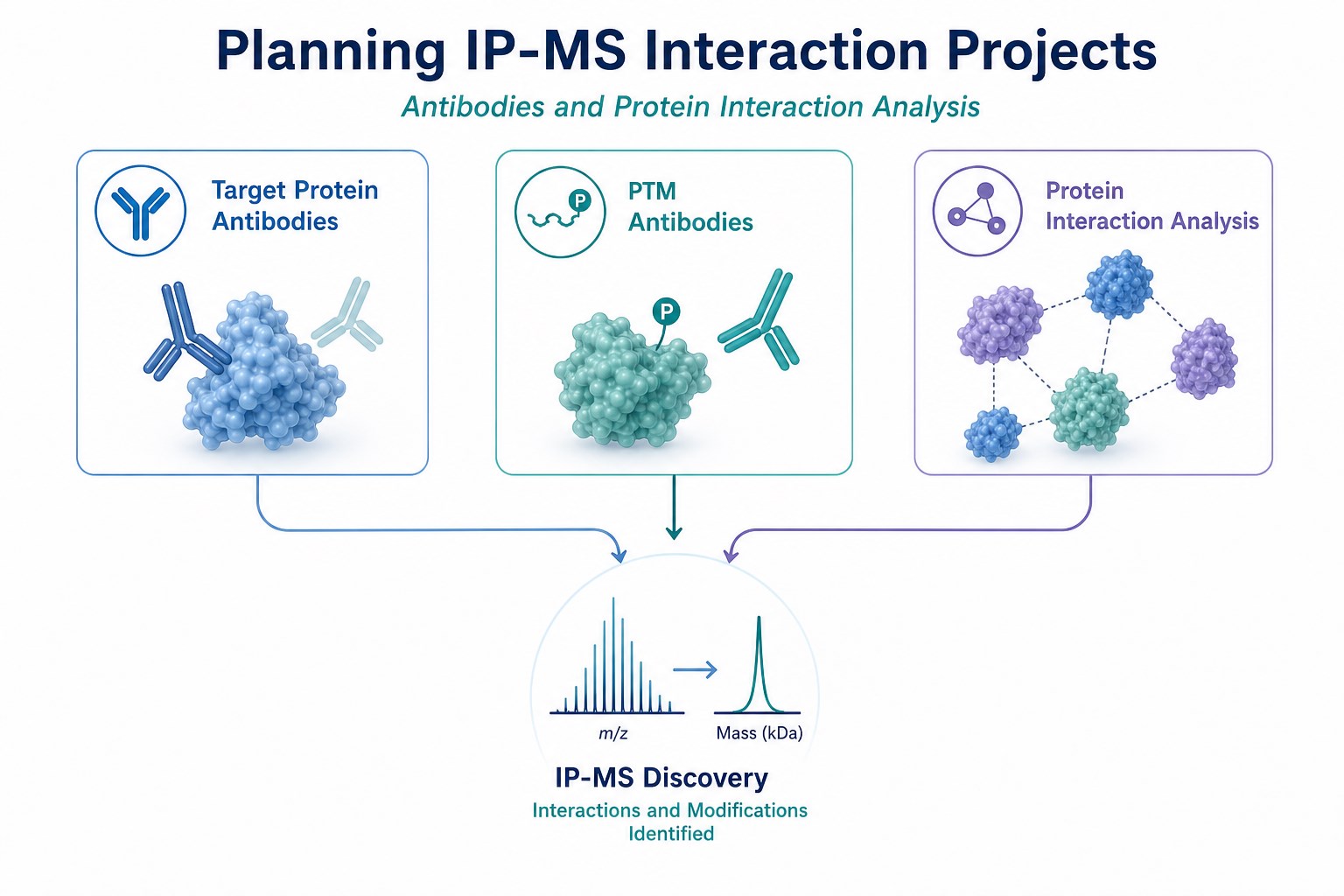
Figure 3. Early project planning connects Target Protein Antibodies or PTM Antibodies with Protein Interaction Analysis capacity for IP-MS discovery.
For mechanism projects that need both reagent framing and MS interaction readout options, MtoZ Biolabs can help review whether the current bait question is ready for IP-MS design.
Frequently Asked Questions
1. How do IP-MS validated antibodies support protein interaction discovery?
They improve the chance that immunoprecipitation recovers the intended bait under conditions compatible with LC-MS/MS partner identification.
2. When should Target Protein Antibodies be preferred?
Use them when the bait is an endogenous protein and the discovery question centers on that protein's partners rather than a modification class alone.
3. When do PTM Antibodies matter for interaction studies?
Use them when the hypothesis depends on a modified bait or modified partner population that a pan-target antibody may not enrich selectively.
4. Is an antibody validated by IP-MS enough to claim direct interactions?
No. IP-MS reports enrichment. Direct binding usually needs orthogonal assays after candidate ranking.
5. How should Protein Interaction Analysis services fit into early planning?
Decide early whether partner identification and network interpretation will be handled in-house or through a Protein Interaction Analysis workflow, then match sample prep and antibody choices to that route.
Conclusion
Protein interaction discovery with IP-MS validated antibodies is a planning framework for mechanism research. The scientific core is bait-centered enrichment followed by MS identification of co-enriched proteins. Target Protein Antibodies support endogenous bait projects. PTM Antibodies support modification-conditioned interactomes. Protein Interaction Analysis services convert IP eluates into ranked interaction hypotheses when in-house MS capacity is limited or specialized analysis is needed.
Researchers who already know the pathway question, but have not locked reagents or analysis routes, can start from Target Protein Antibodies or PTM Antibody listings and parallel Protein Interaction Analysis pages. Selecting an antibody validated for IP-MS early reduces a frequent cause of empty or noisy discovery datasets. Teams preparing IP-MS interaction projects can contact MtoZ Biolabs to review bait design, antibody evidence needs, and analysis options for the current study phase.
How to order?




