






Protein AMPylation Identification Service
Protein AMPylation identification based on mass spectrometry is a powerful method for studying protein post-translational modifications (PTMs), providing accurate site-level analysis of AMPylation events. AMPylation, also known as adenylylation, is catalyzed by AMP transferases (AMPylators), which attach adenosine monophosphate (AMP) covalently to serine, threonine, or tyrosine residues. This modification alters charge, conformation, and interactions, playing critical roles in immune regulation, host-pathogen interactions, stress response, and signaling pathways.
AMPylation occurs in both eukaryotes and prokaryotes and has been linked to multiple pathological processes. For example, GS-ATase regulates glutamine synthetase activity via AMPylation, while some viral proteins use AMPylation to suppress host antiviral responses. Understanding AMPylation provides valuable insights into disease mechanisms, biomarker discovery, and therapeutic development.
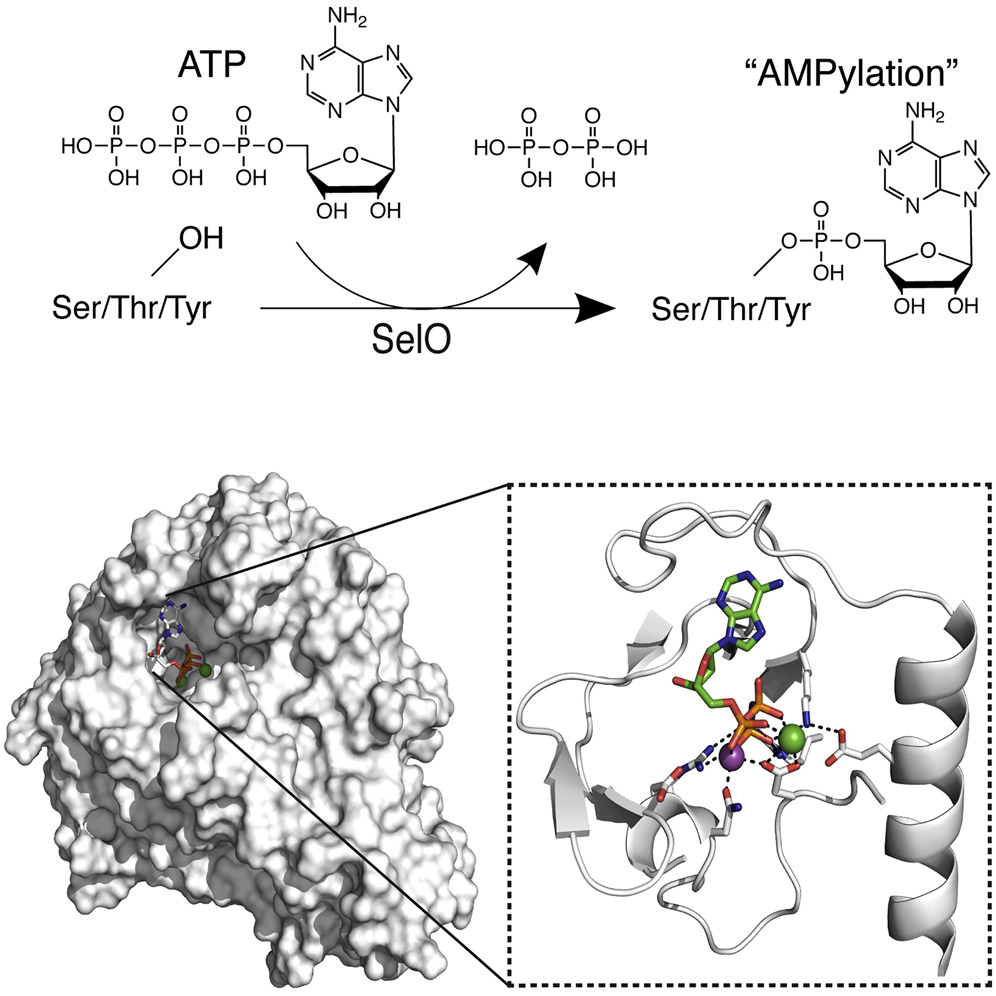
Sreelatha, A. et al. Cell. 2018.
Figure 1. Protein AMPylation Reaction Mechanism
MtoZ Biolabs delivers high-sensitivity Protein AMPylation Identification Service powered by Thermo Fisher Q Exactive HF, Orbitrap Fusion, and Orbitrap Fusion Lumos mass spectrometers with Nano-LC systems. Using high-resolution MS and diagnostic ion detection, we capture AMPylation events with precision and provide researchers with systematic modification profiles.
Analysis Workflow
MtoZ Biolabs’ Protein AMPylation Identification Service follows a standardized workflow designed to deliver accurate and reproducible results. Protein samples are extracted, quantified, and digested, then selectively enriched for AMPylated peptides using approaches such as anti-AMP antibody enrichment, SCX chromatography, or click chemistry. The enriched peptides are analyzed with Nano-LC coupled to high-resolution LC-MS/MS, where AMPylation sites are precisely identified based on the +329.0525 Da mass shift and characteristic diagnostic ions (m/z 136.06, 348.07). Comprehensive database searching and functional annotation are then performed to generate a complete analysis report, providing researchers with deeper insights into the biological roles of AMPylation.
Why Choose MtoZ Biolabs?
✔ High-specificity Detection: Diagnostic ions ensure clear distinction of AMPylation from other PTMs.
✔ Flexible Enrichment Methods: Antibody, SCX, and click chemistry approaches improve detection of low-abundance sites.
✔ Advanced Analysis Platforms: Orbitrap-based MS with Nano-LC ensures sensitivity and resolution.
✔ Experienced Team: Extensive PTM expertise with tailored solutions for complex projects.
✔ Comprehensive Deliverables: Site-level data, annotated spectra, raw files, and functional insights ready for publication.
Sample Submission Suggestions
· Types: Cell lysates, tissue extracts, purified or recombinant proteins, serum, plasma, and biofluids.
· Amount: ≥50 μg with ≥80% purity for target proteins; ≥1 mg with ≥1 μg/μL for complex samples.
· Storage: Store at –80°C, ship on dry ice, avoid freeze-thaw cycles.
Note: Provide details on sample collection and handling. If you need further details, our technical support team is happy to assist and provide comprehensive guidance on sample submission.
Applications
· Immunity and Signaling: Study AMPylation roles in cellular signaling and immune pathways.
· Host-pathogen Interactions: Analyze how microbes manipulate host proteins through AMPylation.
· Disease Mechanisms: Explore AMPylation links to neurodegenerative, immune, and cancer disorders.
· Protein Function: Assess how AMPylation alters protein stability, activity, and interactions.
· Biomarker and Drug Discovery: Identify disease-related AMPylation patterns to support diagnostics and therapeutics.
What Could be Included in the Report?
1. Comprehensive Experimental Details
2. Materials, Instruments, and Methods
3. Total Ion Chromatogram & Quality Control Assessment
4. Data Analysis, Preprocessing, and Estimation
5. Bioinformatics Analysis
6. Raw Data Files
MtoZ Biolabs Protein AMPylation Identification Service provides precise detection of AMP modifications with high-confidence data. We support researchers and biopharma teams in disease mechanism studies, biomarker discovery, and drug target validation. Alongside AMPylation, we offer identification services for phosphorylation, acetylation, methylation, ubiquitination, SUMOylation, and glycosylation, enabling comprehensive PTM profiling and accelerating translation from research to application. Contact us today to start your project.
Related Services
Acylation Proteomics Analysis Service
How to order?




