






How Post-Translational Modifications Affect Protein Function?
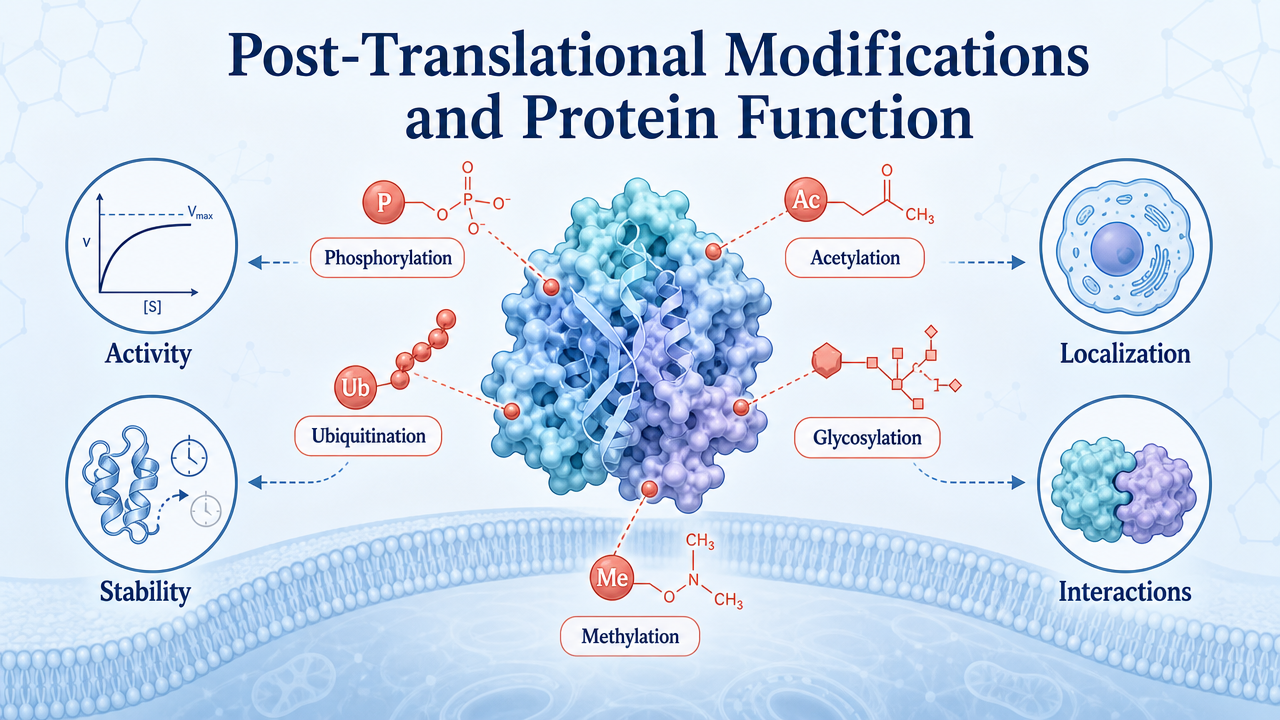
Post-translational modifications (PTMs) change protein behavior after translation by adding or removing chemical groups, glycans, lipids, or peptide modifiers at specific residues. These changes can alter enzyme activity, structure, localization, degradation, interaction partners, and signaling output. In practice, PTMs are one reason the same protein sequence can behave differently across cell types, disease states, treatments, or time points.
Key Takeaways
- PTMs regulate protein function by changing charge, shape, binding surfaces, stability, localization, and turnover.
- Phosphorylation often works as a fast signaling switch; ubiquitination often controls degradation or trafficking; glycosylation often affects folding, recognition, secretion, and biopharmaceutical quality.
- PTMs can cooperate or compete with each other, so one modification site may change how another site is used.
- MS-based PTM analysis usually needs enrichment, high-quality spectra, site localization, and interpretation alongside total protein abundance.
What Are Post-Translational Modifications?
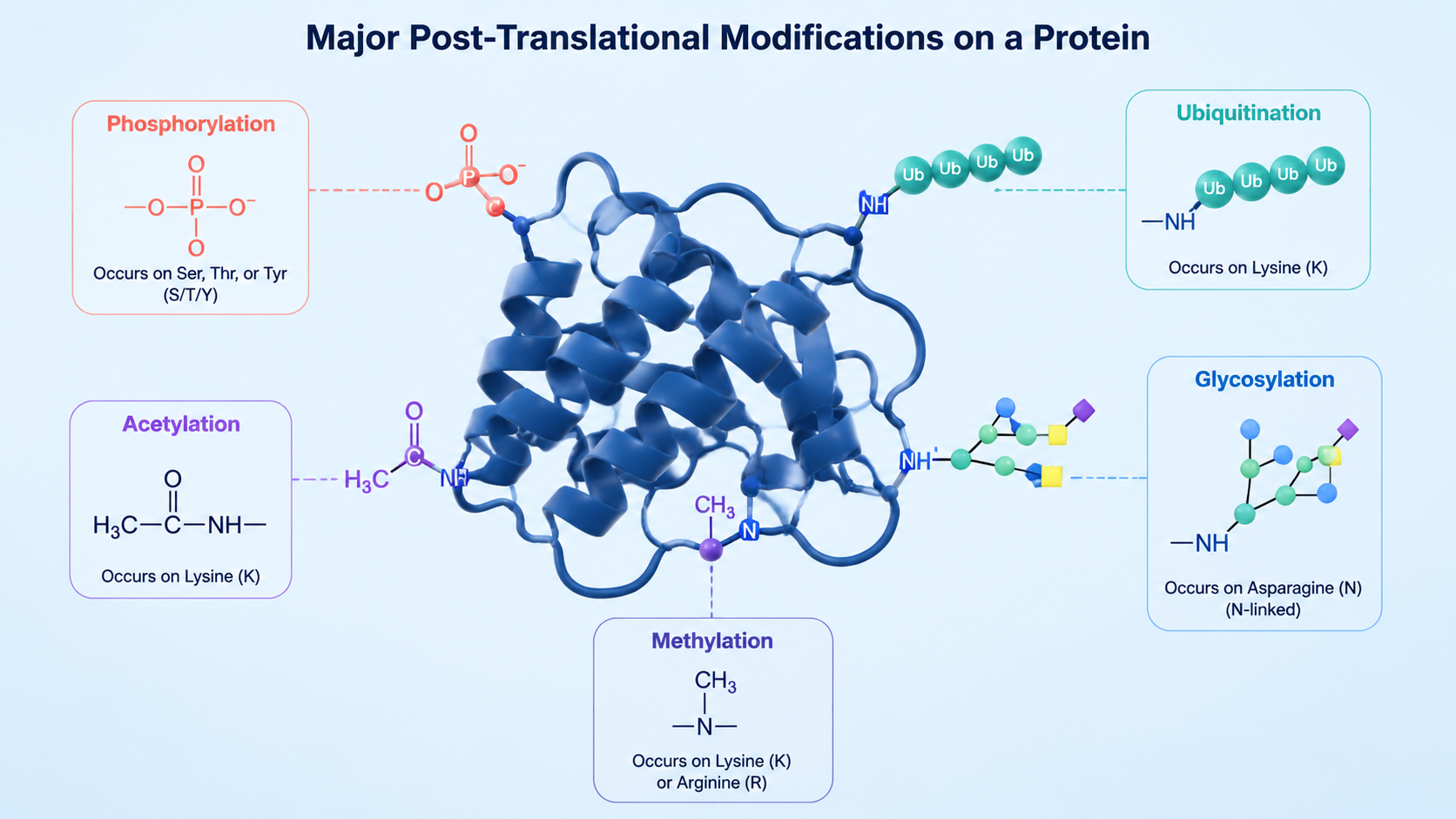
PTMs are covalent changes made to proteins after translation. Common PTMs include phosphorylation, acetylation, methylation, ubiquitination, glycosylation, SUMOylation, lipidation, oxidation, and proteolytic processing. Some are reversible and highly dynamic. Others define protein maturation, secretion, or degradation.
Related Services
Post-Translational Modifications Proteomics Service
Bottom-Up MS-Based PTM Analysis Service
DIA/SWATH-Based Quantitative PTM Analysis Service
How PTMs Change Protein Activity?
PTMs can activate or inhibit enzymes by changing local charge, substrate access, or catalytic-site geometry. Phosphorylation is the classic example: a phosphate group can create a docking site, block a binding interface, or stabilize an active conformation.
Acetylation and methylation can also regulate activity, especially in chromatin biology and metabolic enzymes. The important point is that PTM function depends on site context.
How PTMs Affect Structure and Stability?
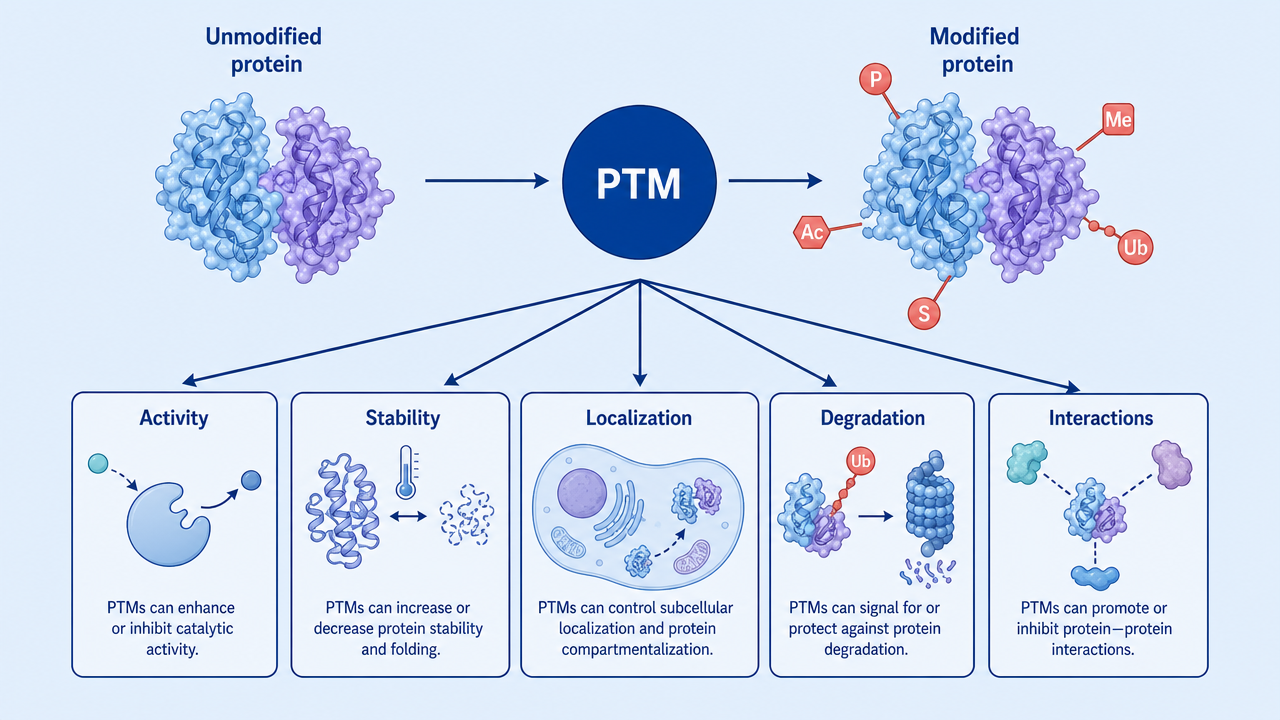
PTMs can stabilize a protein, destabilize it, or change how it folds. Glycosylation can support folding, secretion, solubility, and extracellular stability. Ubiquitination can mark proteins for proteasomal degradation, but some ubiquitin chain types regulate signaling or trafficking instead of degradation.
How PTMs Control Localization and Interactions?
PTMs can create binding sites for reader domains or remove existing interaction surfaces. Phosphorylation can recruit SH2, 14-3-3, or FHA domain-containing proteins. Acetylation and methylation marks can recruit chromatin readers. Glycosylation can change recognition at the cell surface. Localization is often controlled the same way. A modification can expose or hide a nuclear localization signal, regulate membrane association, or alter secretion.
PTMs in Signaling, Metabolism, and Cell Fate
Cell signaling relies on PTMs because many regulatory decisions must happen faster than transcription. Kinases, phosphatases, ubiquitin ligases, deubiquitinases, acetyltransferases, deacetylases, methyltransferases, and glycosyltransferases create regulatory circuits that respond to stimuli and then reset.
PTM Crosstalk
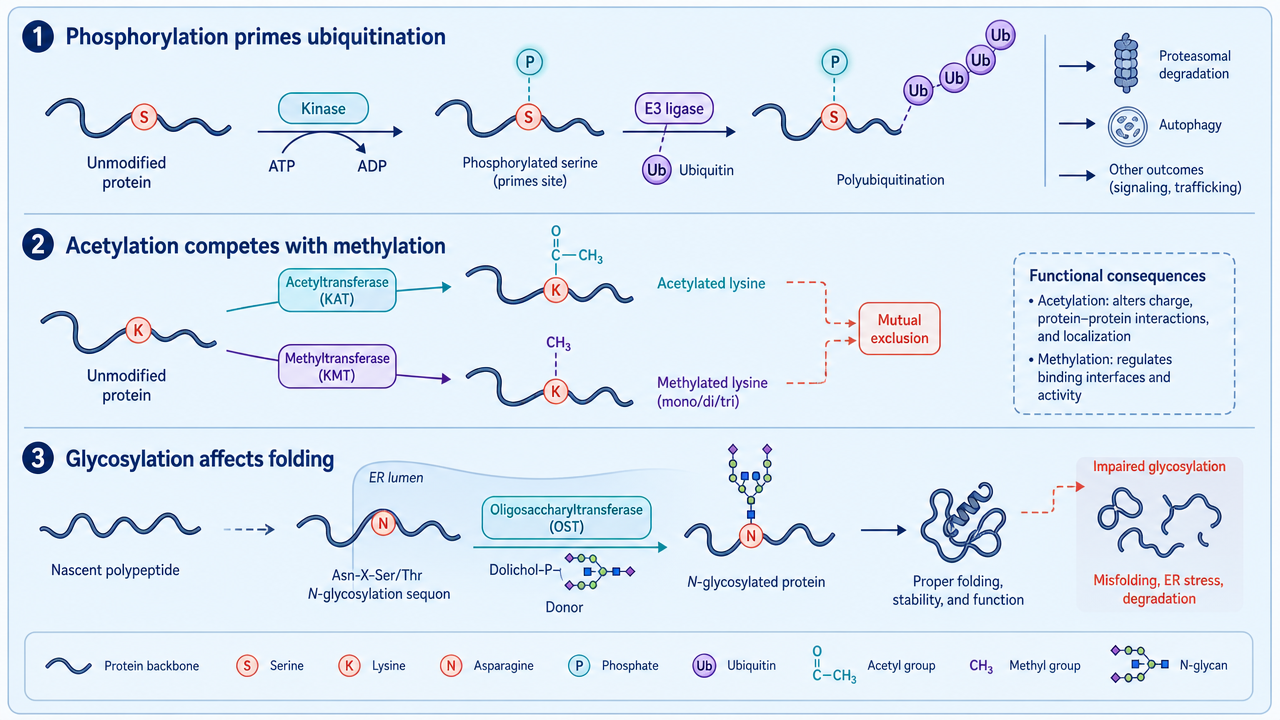
PTMs rarely act alone. One modification can promote, block, or redirect another. Phosphorylation may prime a protein for ubiquitination. Acetylation and methylation can compete on lysine residues. Glycosylation may change protein folding in a way that affects later processing or interaction.
PTM Dysregulation in Disease
PTM dysregulation is common in cancer, neurodegeneration, metabolic disease, immune disorders, infection, and biopharmaceutical development. Aberrant phosphorylation can indicate kinase pathway activation. Altered ubiquitination can change tumor suppressor or oncoprotein turnover. Abnormal glycosylation can affect immune recognition and therapeutic protein quality.
How PTMs Are Analyzed?
MS-based PTM analysis usually follows a workflow: protein extraction, digestion, PTM enrichment if needed, LC-MS/MS acquisition, database search with variable modifications, site localization, quantification, and biological interpretation.
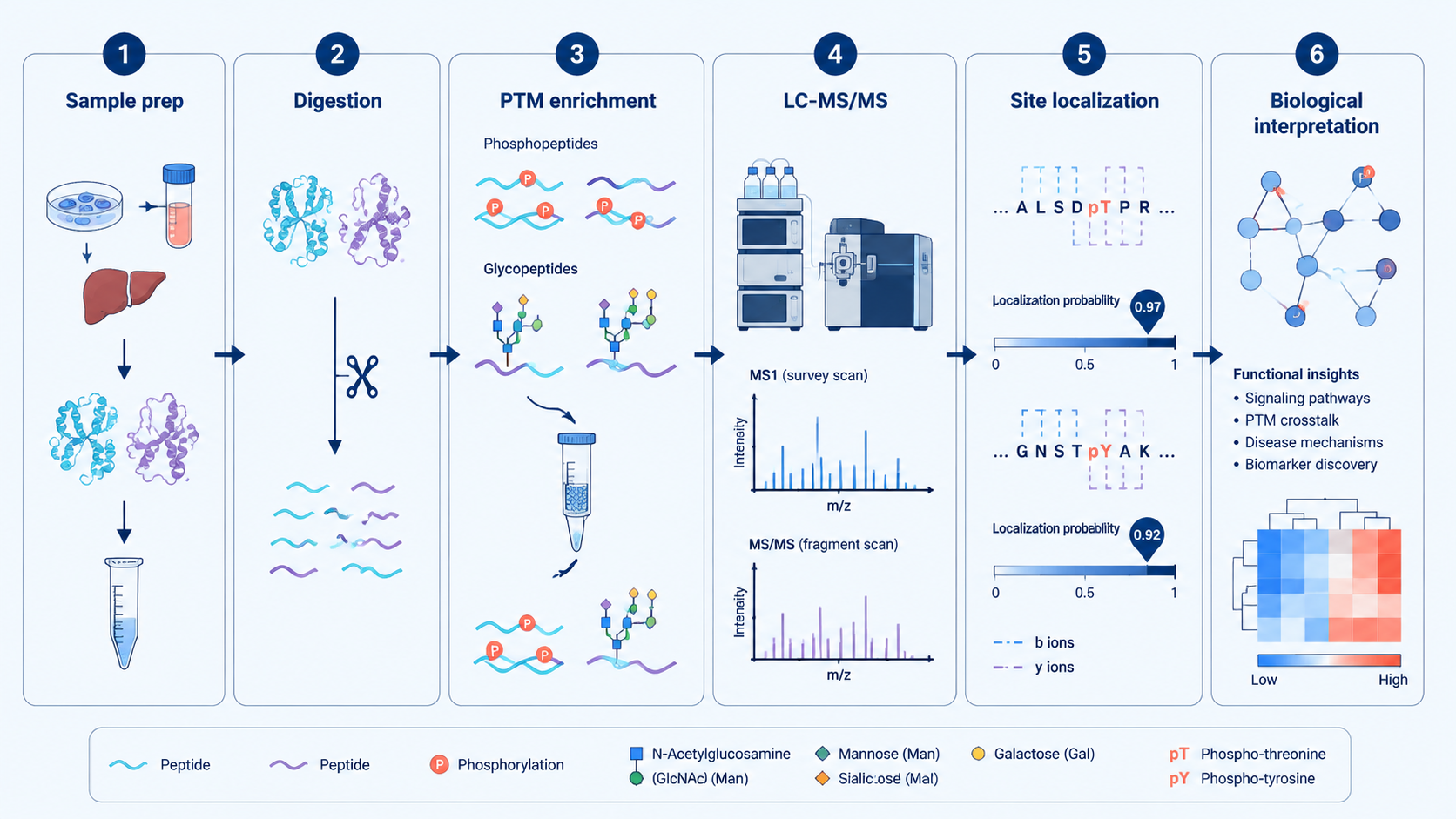
The main technical challenge is that modified peptides are often low-abundance. Enrichment improves detection, but it can also introduce bias. PTM results should be interpreted with peptide evidence, localization probability, replicate consistency, and where possible, total protein abundance.
FAQ
1. How do PTMs affect protein function?
PTMs affect protein function by changing activity, stability, localization, degradation, and interaction partners. They can also create docking sites or block binding surfaces.
2. Why is phosphorylation important?
Phosphorylation is important because it can change rapidly after signaling stimulation and often regulates enzyme activity, pathway activation, and protein interactions.
3. Does ubiquitination always mean degradation?
No. Some ubiquitin chains target proteins for proteasomal degradation, but other chain types regulate trafficking, DNA repair, immune signaling, or protein interactions.
4. Why is glycosylation important for biopharmaceuticals?
Glycosylation can affect folding, stability, serum half-life, immunogenicity, Fc effector function, and batch comparability.
5. Why analyze PTMs by mass spectrometry?
Mass spectrometry can identify modified peptides, localize modification sites, and quantify site-level changes across samples, which is difficult to achieve with many antibody-based methods.
Conclusion
PTMs turn protein sequence into regulated biological behavior. They can switch enzymes on or off, redirect proteins to new locations, change degradation rates, and connect signaling pathways to cellular outcomes. The best PTM studies combine careful sample preparation, enrichment, LC-MS/MS evidence, site localization, and biological validation.
How to order?




