






Plasma and Serum Exosome Proteomics: Sample Preparation and Study Design Considerations
Introduction
Blood-based EV projects often start with a practical question: can plasma or serum exosome preparations support proteomics, or will abundant blood proteins overwhelm vesicle cargo signals. A biomarker team may prefer plasma for longitudinal sampling. A clinical collaborator may already bank serum and ask whether those aliquots are still usable. Both matrices can support vesicle proteomics, but they are not interchangeable without study-design controls.
Plasma Exosome Proteomics and Serum Exosome Proteomics both analyze proteins from blood-derived vesicle enrichments by mass spectrometry. Suitability depends less on the matrix name alone and more on collection chemistry, isolation strategy, matched group handling, and the protein claim being tested. This article focuses on sample preparation and study-design considerations that decide whether plasma or serum EV fractions are ready for proteomic cargo analysis. For project-specific review of blood-derived EV samples, researchers can submit sample matrix, collection details, isolation status, available volume, storage history, and study design through the Exosome / Extracellular Vesicle Proteomics Service page.
Why Plasma and Serum Are Common Inputs for EV Proteomics
Plasma and serum are accessible, repeatable, and widely banked. They are therefore common starting points for circulating EV cargo studies in disease, treatment response, and longitudinal monitoring projects.
They are also difficult matrices. Highly abundant soluble proteins can co-isolate with vesicles. Platelet activation, clotting, and hemolysis can change particle and protein backgrounds. For Plasma Exosome Proteomics, anticoagulant choice and platelet depletion practices matter. For serum workflows, clotting time and clot handling can reshape the vesicle and protein profile before isolation begins.
Blood-derived EV proteomics is therefore feasible when enrichment quality and matched processing are strong enough for the intended claim. It is not automatic for every banked aliquot.
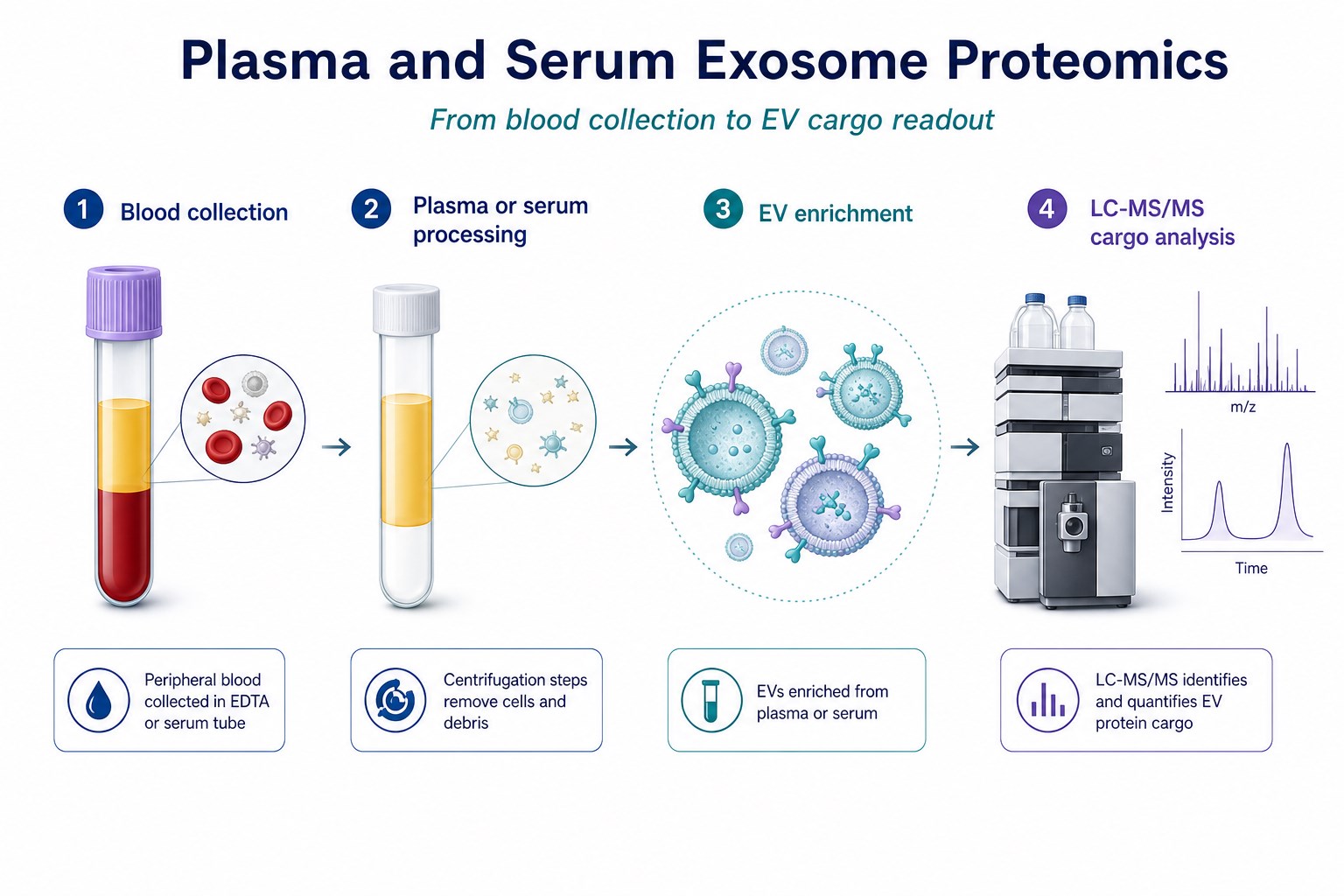
Figure 1. Plasma and serum EV proteomics depend on controlled blood collection, vesicle enrichment, and LC-MS/MS cargo readout.
Plasma vs Serum: What Changes Before Isolation
1. Anticoagulation Versus Clotting
Plasma is prepared with anticoagulant and retains clotting factors in solution. Serum is generated after clotting and clot removal. These upstream differences change platelet-related particle release, soluble protein background, and the practical behavior of later EV enrichment.
2. Practical Consequences for Proteomics
Plasma preparations can be sensitive to platelet contamination if processing is delayed or incomplete. Serum preparations can carry clotting-associated protein and particle changes that are not present in carefully processed plasma. Neither matrix is universally cleaner for every proteomics claim. The better choice is the one that can be collected consistently across all study arms.
3. Study Implication
Do not mix plasma and serum within the same differential comparison unless the design explicitly tests matrix effects. Plasma Exosome Proteomics comparisons should stay within matched plasma collection protocols. Serum Exosome Proteomics comparisons should stay within matched serum protocols.
Sample Preparation Considerations for Blood EV Proteomics
1. Standardize Collection and Pre-Analytical Handling
Record anticoagulant type for plasma, clotting conditions for serum, centrifugation steps, time to processing, and freeze-thaw history. Store aliquots at −80°C and ship on dry ice. Avoid hemolysis and microbial contamination whenever possible. Pre-analytical drift is a frequent source of false cargo differences.
2. Plan Volume Against Isolation and MS Needs
Blood EV yield is limited. As a planning reference, about 1 mL plasma or serum is commonly suggested for quantitative proteomics, and about 3 mL may be needed when NTA, TEM, and WB are included in the same package. Volume planning should cover isolation losses, optional characterization assays, and protein input for LC-MS/MS. Underpowered input is a common reason blood EV proteomics returns limited identification lists.
3. Choose Isolation with Blood Background in Mind
Blood-derived EV samples may be prepared using different isolation or enrichment approaches, such as ultracentrifugation, density gradient methods, SEC, precipitation, filtration, affinity capture, or combined workflows. The method used should be documented because different approaches vary in lipoprotein and soluble protein carryover. The isolation choice should match the proteomics claim and the accepted purity trade-off for the project.
4. Document Vesicle Quality When Interpretation Requires It
Particle profiling and selected marker checks help judge whether the enriched fraction behaves like an EV preparation. For blood matrices, quality context is especially important because contaminant proteins are expected.
5. Keep Processing Matched Across Comparison Groups
Same matrix, same collection window, same isolation batching logic, and same protein preparation conditions are required for differential Plasma Exosome Proteomics or Serum Exosome Proteomics designs.
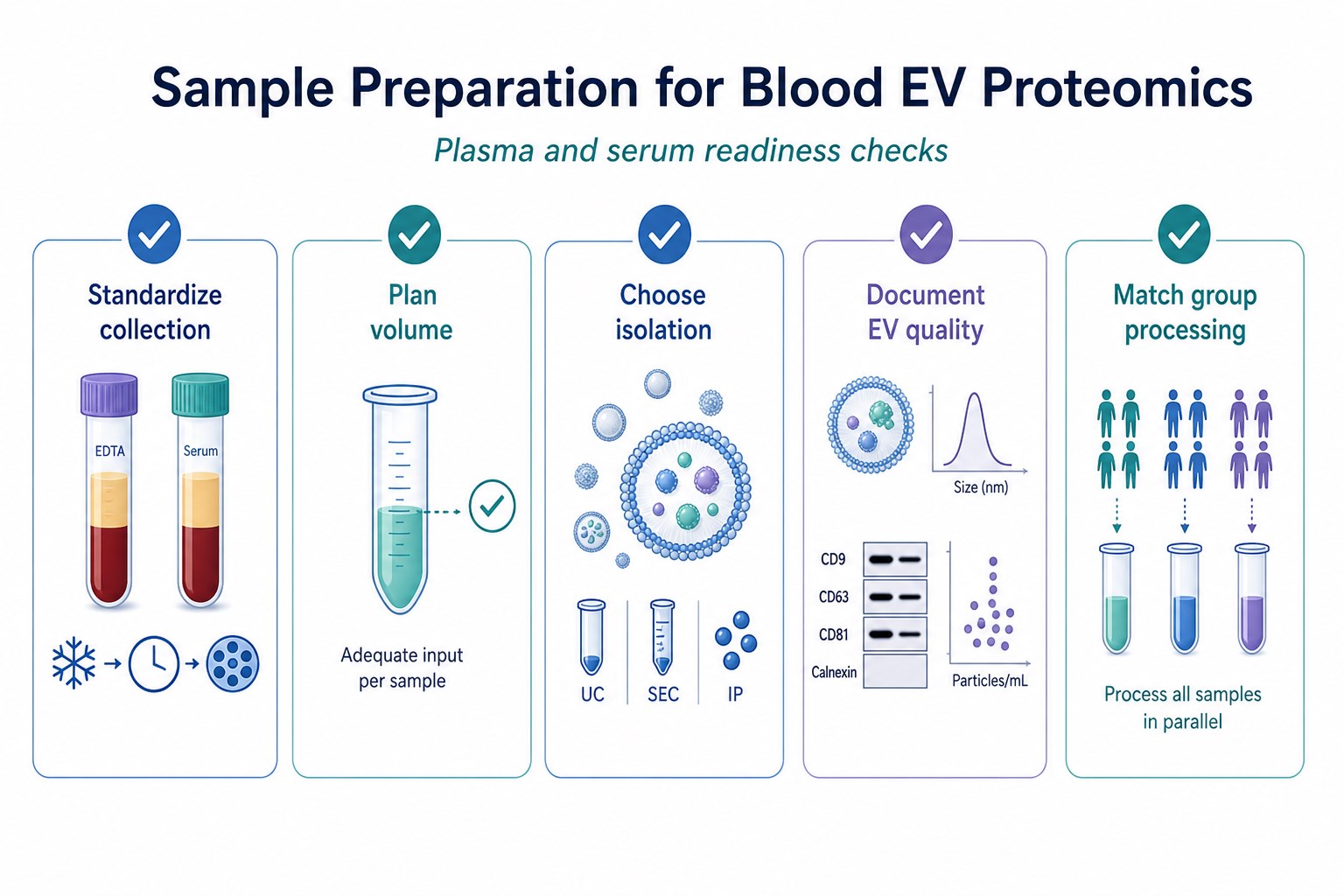
Figure 2. Blood EV proteomics readiness depends on standardized collection, adequate volume, isolation strategy, and matched group handling.
Study Design Considerations Before Proteomics
1. Define the Protein Claim First
Decide whether the project needs cargo inventory, differential profiling, or confirmation of selected candidates. Blood background makes claim clarity more important than in cleaner culture-media EV studies.
2. Control Matrix and Clinical Covariates
Age, sex, disease state, medication, fasting status, and sampling site can affect circulating particles and proteins. Design should minimize uncontrolled covariates or record them for later interpretation.
3. Separate Technical from Biological Replication
Biological replicates answer population or condition questions. Technical replicates help assess isolation and MS stability. Both are useful, but they answer different confidence questions.
4. Decide Whether Plasma or Serum Is Locked by Sample Availability
If only serum is banked, Serum Exosome Proteomics may be the only practical route. If new prospective collection is possible, choose the matrix that best fits the clinical workflow and can be standardized for all arms.
5. Plan Orthogonal Follow-Up for Priority Cargo Proteins
Blood EV lists are enrichment hypotheses. Priority candidates should be confirmed with orthogonal assays when the biological claim is high stakes.
Teams preparing blood-derived vesicle studies can consult MtoZ Biolabs to review whether plasma or serum aliquots, isolation plans, and proteomics scope are aligned for the current project.
When Blood EV Proteomics Is a Good Fit, and When Caution Is Needed
Blood EV proteomics fits when circulating vesicle cargo is central to the hypothesis and collection can be standardized. It is useful for disease-versus-control cargo comparisons, treatment-response research, longitudinal sampling studies, and projects that require a protein-level view of blood-derived EV cargo.
Caution is needed when aliquots have unknown freeze-thaw history, mixed matrix types, visible hemolysis, or insufficient volume for both isolation and MS. In those cases, either remake collection protocols or narrow the claim before investing in broader comparative proteomics.
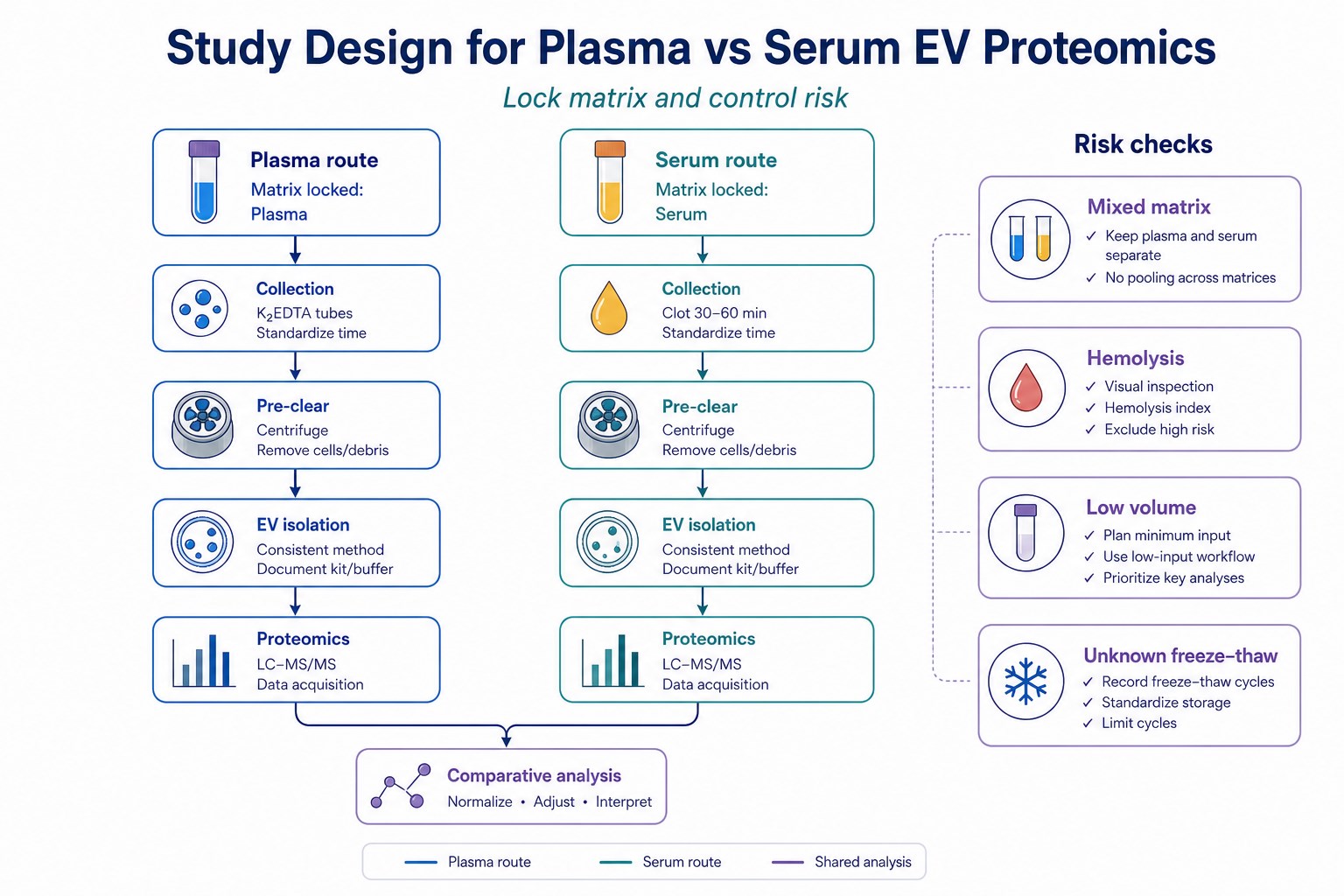
Figure 3. Study design for blood EV proteomics should lock matrix choice, match pre-analytical variables, and check volume and sample-quality risks early.
For projects that still need help choosing between plasma and serum routes, MtoZ Biolabs can review collection constraints against the intended Plasma Exosome Proteomics or serum-based EV proteomics claim.
Frequently Asked Questions
1. Can plasma support exosome proteomics?
Yes, when collection, anticoagulant handling, isolation, and protein input are adequate for the intended cargo claim.
2. Can serum support exosome proteomics?
Yes, but clotting-related pre-analytical effects must be standardized across all comparison arms.
3. Should plasma and serum be compared directly in one differential study?
Usually no. Matrix differences can dominate cargo profiles. Keep comparisons within one matched matrix unless matrix effect is the study question.
4. What most often makes blood EV proteomics fail?
Insufficient volume, inconsistent pre-analytical handling, and isolation that leaves too much soluble blood-protein background for the planned claim.
5. What should be decided before requesting Plasma Exosome Proteomics or Serum Exosome Proteomics?
Lock the matrix, define the protein claim, standardize collection variables, and confirm that volume supports isolation plus MS.
Conclusion
Plasma Exosome Proteomics and Serum Exosome Proteomics are both viable routes for circulating EV cargo studies when blood collection and vesicle enrichment are controlled. The decisive factors are matrix consistency, pre-analytical standardization, isolation strategy, and whether sample volume can support meaningful LC-MS/MS identification and quantification for the planned claim.
Plasma and serum should be treated as distinct study designs, not as interchangeable labels on the same comparison. For blood-derived EV proteomics projects, MtoZ Biolabs can review plasma or serum sample information, collection status, isolation method, available volume, storage history, and study design through the Exosome / Extracellular Vesicle Proteomics Service page to help determine whether the current aliquots are suitable for plasma- or serum-based LC-MS/MS cargo analysis.
Related Services
Exosome / Extracellular Vesicle Proteomics Service
Extracellular Vesicles Proteomics Service
Exosome Quantitative Proteomics Service
Body Fluid-derived Exosome Isolation and Development Service
How to order?




