






Plant Protein Interaction Analysis Service
MtoZ Biolabs provides Plant Protein Interaction Analysis Service using immunoprecipitation, affinity purification, proximity labeling, crosslinking-assisted enrichment, and LC-MS/MS. The service supports the discovery and comparative analysis of plant protein complexes, candidate interaction partners, and local protein environments under different developmental, genetic, and treatment conditions.
Overview
Protein–protein interactions are central to plant growth, development, signal transduction, metabolism, environmental adaptation, and defense responses. Plant proteins frequently function as components of dynamic complexes rather than as isolated molecules. Characterizing these interaction networks can therefore provide important information about protein function, molecular regulation, and condition-dependent biological processes.
However, plant protein interaction studies can be technically challenging. Protein complexes may be low in abundance, transient, weak, membrane associated, or sensitive to extraction conditions. Plant tissues may also contain pigments, polysaccharides, phenolic compounds, and other substances that interfere with protein extraction, affinity enrichment, and mass spectrometry analysis.
Plant protein interaction proteomics combines targeted enrichment strategies with LC-MS/MS to identify proteins associated with a target protein, affinity-tagged bait, purified protein, protein complex, or defined spatial environment. Different methods capture different types of molecular relationships. Therefore, workflow selection and appropriate control design are essential for reliable candidate prioritization.
Plant Protein Interaction Analysis Service at MtoZ Biolabs
MtoZ Biolabs provides multiple plant protein interaction analysis workflows to support different bait types, sample conditions, and interaction properties. The service offerings include, but are not limited to, the following approaches.
|
Method |
Core Principle |
Best Suited For |
|
Uses a target-specific antibody to enrich the bait protein and associated proteins, followed by LC-MS/MS identification. |
Endogenous target proteins with a reliable enrichment antibody. |
|
|
Isolates the bait protein together with proteins retained in the same complex under defined extraction conditions. |
Relatively stable endogenous or recombinant protein complexes. |
|
|
Uses an affinity-tagged bait or other affinity handle to purify the bait-associated protein complex. |
Tagged bait proteins, especially when a suitable target-specific antibody is unavailable. |
|
|
Uses an immobilized recombinant protein, domain, or peptide to capture binding proteins from plant extracts. |
Screening candidate binders and comparing bait variants or interaction domains. |
|
|
Covalently labels proteins near a bait or defined subcellular location in living plant cells before LC-MS/MS analysis. |
Weak, transient, membrane-associated, or spatially restricted protein environments. |
|
|
Stabilizes protein associations before or during enrichment to reduce interaction loss during sample preparation. |
Weak, transient, membrane-associated, or lysis-sensitive interactions. |
Workflow of Plant Protein Interaction Analysis Service
1. Project Consultation and Experimental Design
Define the bait protein, sample type, comparison groups, controls, and analytical strategy.
2. Plant Sample Preparation and Protein Extraction
Collect plant materials and prepare protein extracts under conditions suitable for preserving the target interaction network.
3. Protein Interaction Capture
Perform IP-MS, Co-IP-MS, AP-MS, Pull-Down-MS, proximity labeling, or crosslinking-assisted enrichment according to the project design.
4. Protein Digestion and Peptide Preparation
Process enriched proteins, perform enzymatic digestion, and prepare peptide samples for mass spectrometry.
5. LC-MS/MS Analysis and Protein Identification
Acquire mass spectrometry data and identify proteins associated with the bait or proximity-labeled protein environment.
6. Data Analysis and Report Delivery
Conduct quantitative comparison, background filtering, candidate prioritization, bioinformatics analysis, and final report preparation.
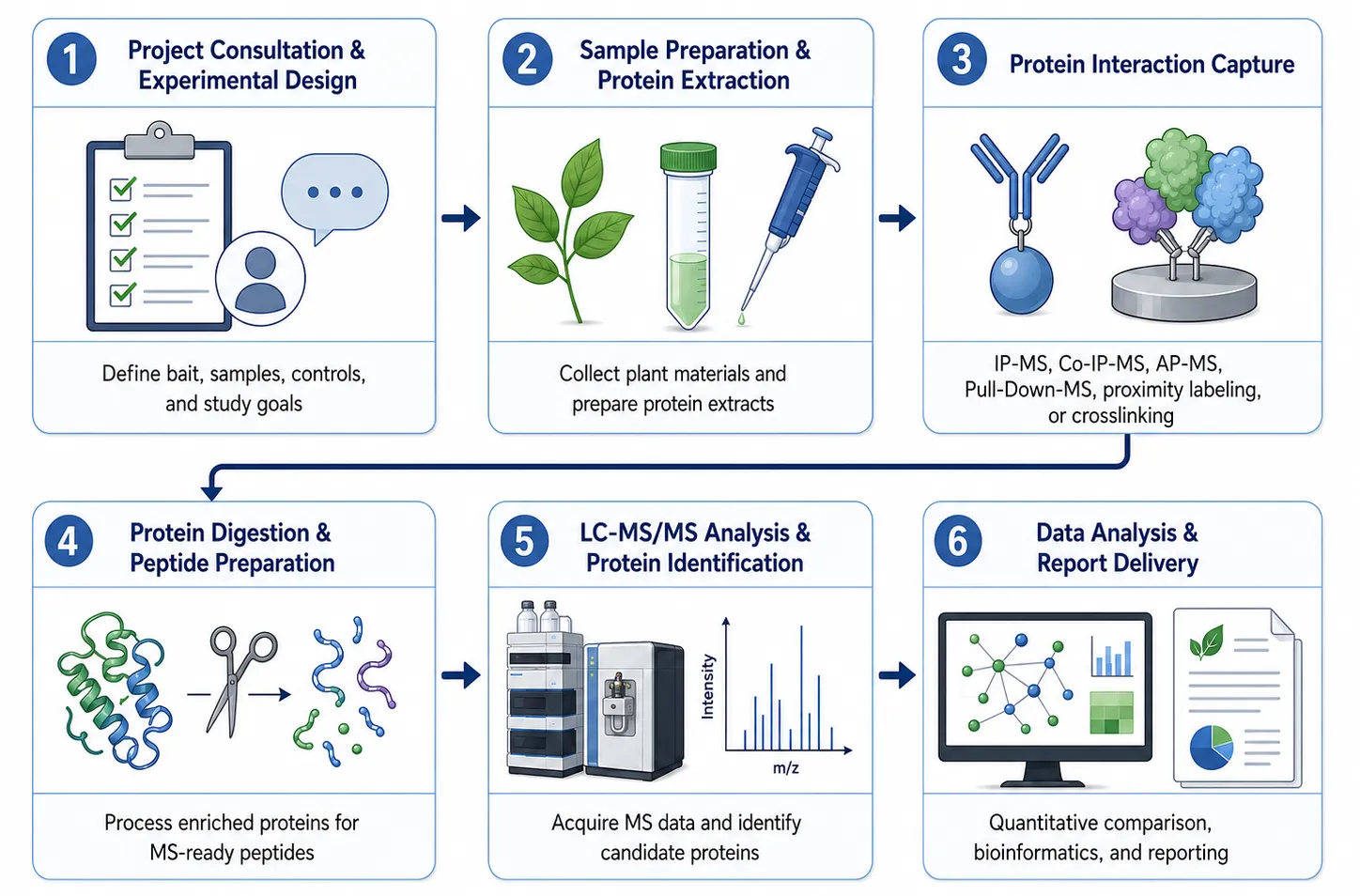
Figure 1. Workflow of Plant Protein Interaction Analysis Service
Why Choose MtoZ Biolabs?
1. Plant-Oriented Sample Preparation
Protein extraction and enrichment conditions can be adapted for different plant tissues while considering common plant-derived contaminants such as pigments, polysaccharides, phenolic compounds, lipids, and cell-wall-associated materials.
2. LC-MS/MS-Based Identification
Our advanced mass spectrometry platforms include Orbitrap Fusion™ Lumos™, Orbitrap Exploris™ 480, and Orbitrap Astral™, supporting sensitive identification and comparative analysis of bait-associated and proximity-labeled proteins.
3. Customized Project Design
Workflow selection, enrichment conditions, comparison groups, and data analysis can be adjusted according to the plant species, bait properties, sample type, and biological question.
4. One-Time Charge
Our pricing is transparent, with no hidden fees or additional costs.
Applications of Plant Protein Interaction Analysis Service
1. Plant Growth, Development, and Hormone Signaling
Identify protein complexes and regulatory partners involved in cell division, tissue differentiation, flowering, seed development, senescence, and plant hormone signaling.
2. Stress Response and Plant–Pathogen Interactions
Investigate condition-dependent protein associations related to drought, salinity, temperature, nutrient limitation, oxidative stress, pathogen recognition, and plant defense responses.
3. Membrane Proteins and Signal Transduction
Characterize proteins associated with membrane receptors, transporters, ion channels, signaling enzymes, and other membrane-associated regulatory complexes.
4. Organelle Function and Metabolic Regulation
Analyze protein networks associated with chloroplasts, mitochondria, peroxisomes, photosynthesis, energy metabolism, secondary metabolism, and multienzyme complexes.
5. Gene Function and Protein Regulation
Support the functional characterization of candidate genes by identifying proteins involved in transcriptional regulation, chromatin organization, protein trafficking, ubiquitination, autophagy, and protein degradation.
Sample Submission Suggestions
| Sample Type | Sample Amount |
| Cells, tissue, organoids, or other biological samples with antibody-, tag-, or pull-down-based enrichment. | 1–5 × 10⁷ cells,100-150 ul cell pellet or 50–200 mg tissue per IP condition as a typical planning range. |
| Cultured cells, treated cells, tissue pieces, organoids, or matched biological groups for condition-based discovery. | Common planning range: 1–10 × 10⁷ cells per condition or 100-150 ul cell pellet per condition; tissue input is typically reviewed by available mass and target abundance. |
| Labeled or tagged cells with matched negative controls and labeling conditions. | 1-5 × 10⁷ labeled cells,100-150 ul cell pellet per condition as a starting reference. |
| Cells, tissue, or prepared lysate containing the endogenous bait protein. | ≥1×10⁷ cells,100-150 ul cell pellet or ≥50 mg tissue. |
For sample types not listed above or if you are unsure whether your material is suitable, please contact our technical team for evaluation before submission.
Deliverables
- Protein identification and quantitative results
- Candidate interaction or proximity protein lists
- Data visualization and bioinformatics results
- Raw and processed mass spectrometry data
- Comprehensive project report
FAQ
Q1: When should proximity labeling be considered?
Proximity labeling can be considered when interactions are expected to be weak, transient, membrane-associated, spatially restricted, or sensitive to cell lysis. It is also useful when the objective is to characterize the local protein environment surrounding a bait protein or subcellular structure. Because proximity labeling identifies nearby proteins rather than only direct binding partners, important candidates normally require further validation.
Q2: Does an identified protein represent a direct interactor?
Not necessarily. IP-MS, Co-IP-MS, and AP-MS may identify direct binders, indirect complex members, and nonspecific copurified proteins. Proximity labeling may additionally identify proteins that occupy the same local environment without forming a stable physical interaction.
Q3: What controls are recommended?
The optimal controls depend on the selected workflow. Common controls include IgG, beads-only, mock enrichment, tag-only, empty-vector, unrelated bait, free labeling enzyme, localization-matched labeling enzyme, no-biotin, noninduced, and non-crosslinked controls.
Q4: Can plant membrane proteins be analyzed?
Yes. Plant membrane proteins and receptor-associated complexes can be studied using optimized Co-IP-MS, AP-MS, proximity labeling, or crosslinking-assisted workflows.
Start Your Project with MtoZ Biolabs
Contact us to discuss your plant protein interaction study or request a project evaluation. Our team will help you select an appropriate workflow based on your bait protein, sample type, and research goals.
Related Services
Supporting Antibody Products for Protein Interaction Studies
MtoZ Biolabs offers antibody products for IP, Co-IP, IP-MS, and related protein interaction workflows, complementing protein interaction analysis services and supporting target enrichment and downstream mass spectrometry analysis.
IP-MS Validated Antibodies
Explore antibodies evaluated for target enrichment and downstream mass spectrometry applications, with product information available to support antibody selection.
View IP-MS Validated AntibodiesOther Supporting Products
How to order?




