






Planning an Antibody Protein Sequencing Project: Budget, Scope, and Vendor Deliverables
Introduction
Once a team decides to recover VH and VL sequence from purified IgG, the next questions are often practical rather than scientific. How much budget is realistic? What scope is required for recombinant handoff, publication, or QC documentation? Which deliverables separate a usable report from a partial sequence summary that cannot support the next decision?
Antibody protein sequencing project cost is shaped by more than antibody count. A highly pure recombinant IgG with complete isotype metadata and a legacy hybridoma-derived sample with low purity, heavy glycosylation, and limited backup material require very different levels of sample handling, digestion optimization, LC-MS/MS depth, manual review, and reporting. Two proposals labeled with the same service name can describe very different work.
For principal investigators, QC managers, and procurement teams, the goal is predictable delivery of VH/VL evidence that matches the project's decision standard. If your team is building a budget request or comparing vendors for IgG-based sequence recovery, MtoZ Biolabs can Provide a scoped project quote based on purity, isotype, amount, and reporting requirements.
Define Scope Before You Compare Quotes
Before price shopping, clarify what the project must prove.
- Is full VH and VL recovery required, or is partial coverage acceptable for the next step?
- Will the data support recombinant expression, patent filing, publication, or internal clone rescue?
- Are coverage maps, annotated MS/MS spectra, or expression-ready sequence files required?
- Is CDR annotation, glycosylation review, or constant-domain expansion in scope?
- What turnaround time is tied to the next milestone?
A vendor quote without scope clarity is difficult to compare. One proposal may include only a basic VH/VL summary, while another includes multi-enzyme digestion, repeat LC-MS/MS acquisition, CDR annotation, and report-ready deliverables.
Related Services
- De Novo Antibody Sequencing Service
- Antibody Sequencing Service
- Mass Spectrometry Based Antibody Sequencing Service
- IgG Antibody Sequencing Service
- Antibody Light and Heavy Chain Sequencing Service
- Hybridoma Antibody Sequencing Service
What Drives Antibody Protein Sequencing Cost?
Project cost usually reflects four components: sample handling and digestion, LC-MS/MS acquisition, assembly and annotation, and reporting format.
1. Sample Handling and Digestion
Sample complexity often drives the first cost layer. Affinity-purified recombinant IgG is usually the most straightforward case. Legacy IgG, crude enrichment pools, or difficult buffer conditions may require cleanup, repeat preparation, or feasibility testing.
Common cost drivers include:
- low antibody purity or high host-protein background
- limited IgG amount
- incomplete species, isotype, or subclass metadata
- need for repeat digestion optimization
- delayed or improper cold-chain handling
2. LC-MS/MS Acquisition Depth
VH/VL recovery depends on sufficient variable-region peptide coverage and high-quality MS/MS spectra. Difficult legacy IgG, weak CDR3 support, or heavy glycosylation may require repeat injections, additional proteases, or extended acquisition time.
Method-related cost drivers include:
- antibody isotype complexity
- need for multi-enzyme digestion
- repeat LC-MS/MS runs
- sparse or ambiguous variable-region coverage requiring extra review
3. Assembly, CDR Annotation, and Manual Review
Unlike routine proteomics identification, IgG-based sequence recovery requires heavy-chain and light-chain assembly, CDR boundary assignment, and expert review of ambiguous regions. This manual layer is one reason specialized antibody protein sequencing is priced differently from generic database searching.
Analysis-related cost drivers include:
- CDR annotation requirements
- glycosylation site review
- unresolved CDR3 or L/I ambiguity
- expression-ready formatting or additional expert review
4. Deliverable and Reporting Requirements
Reporting format can materially affect project cost. A short sequence summary is not equivalent to a report-ready package with annotated VH/VL files, coverage maps, annotated spectra, and QC notes suitable for documentation review.
Delivery-related cost drivers include:
- annotated MS/MS spectrum delivery
- coverage map generation
- documentation for patent or publication use
- rush turnaround or dedicated project management
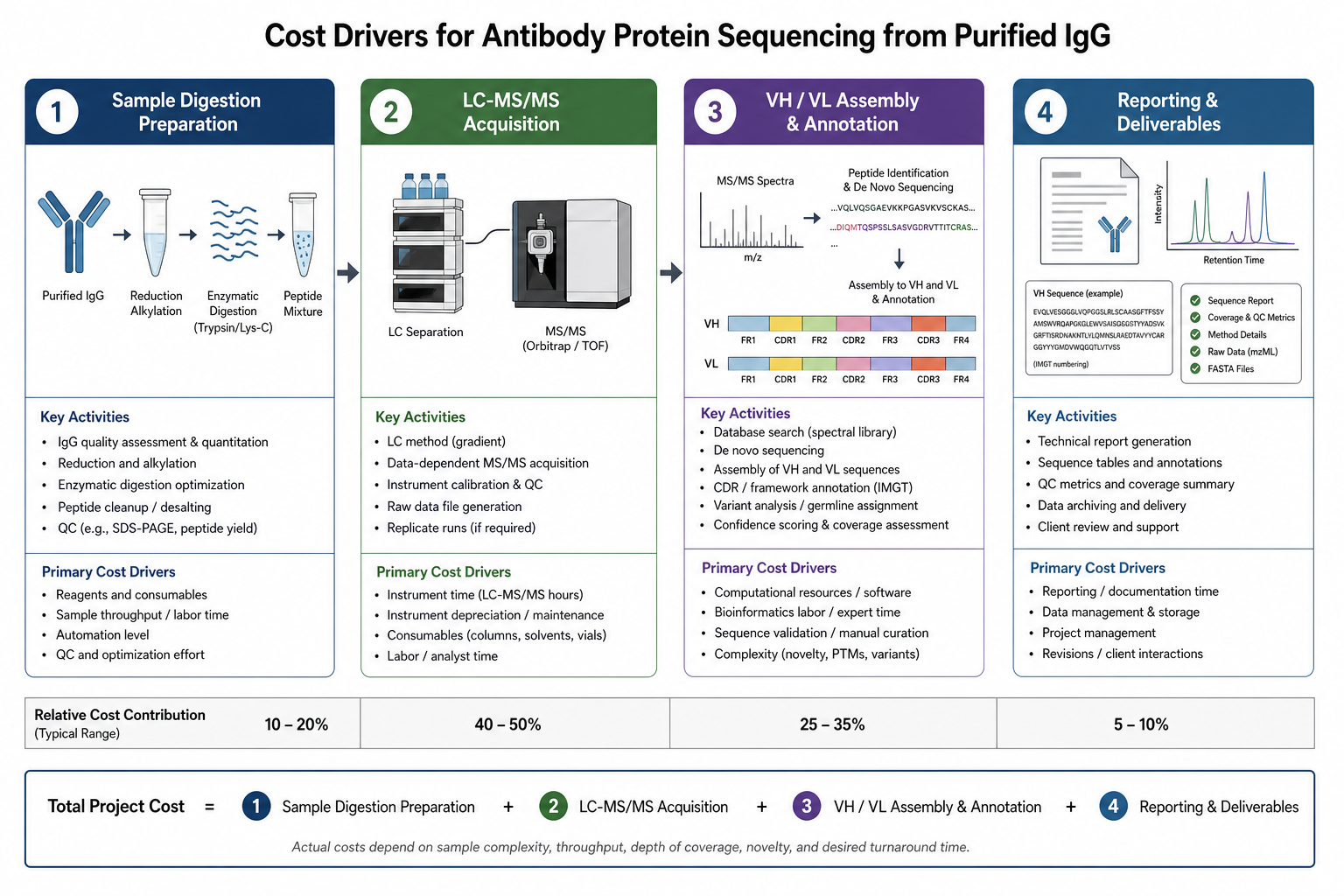
Figure 1. Request an itemized quote that separates IgG prep, LC-MS/MS, annotation, and reporting components.
What a Strong Vendor Proposal Should Include
Price alone is a weak selection criterion. A useful provider should offer clear value across six areas:
1. Feasibility Review Before Sample Shipment
2. Transparent Purified IgG Submission Requirements
3. Documented Digestion and LC-MS/MS Workflow
4. Expert VH/VL Assembly and CDR Annotation
5. Deliverables Matched to Expression or Documentation Use
6. Responsive Project Communication and Milestone Updates
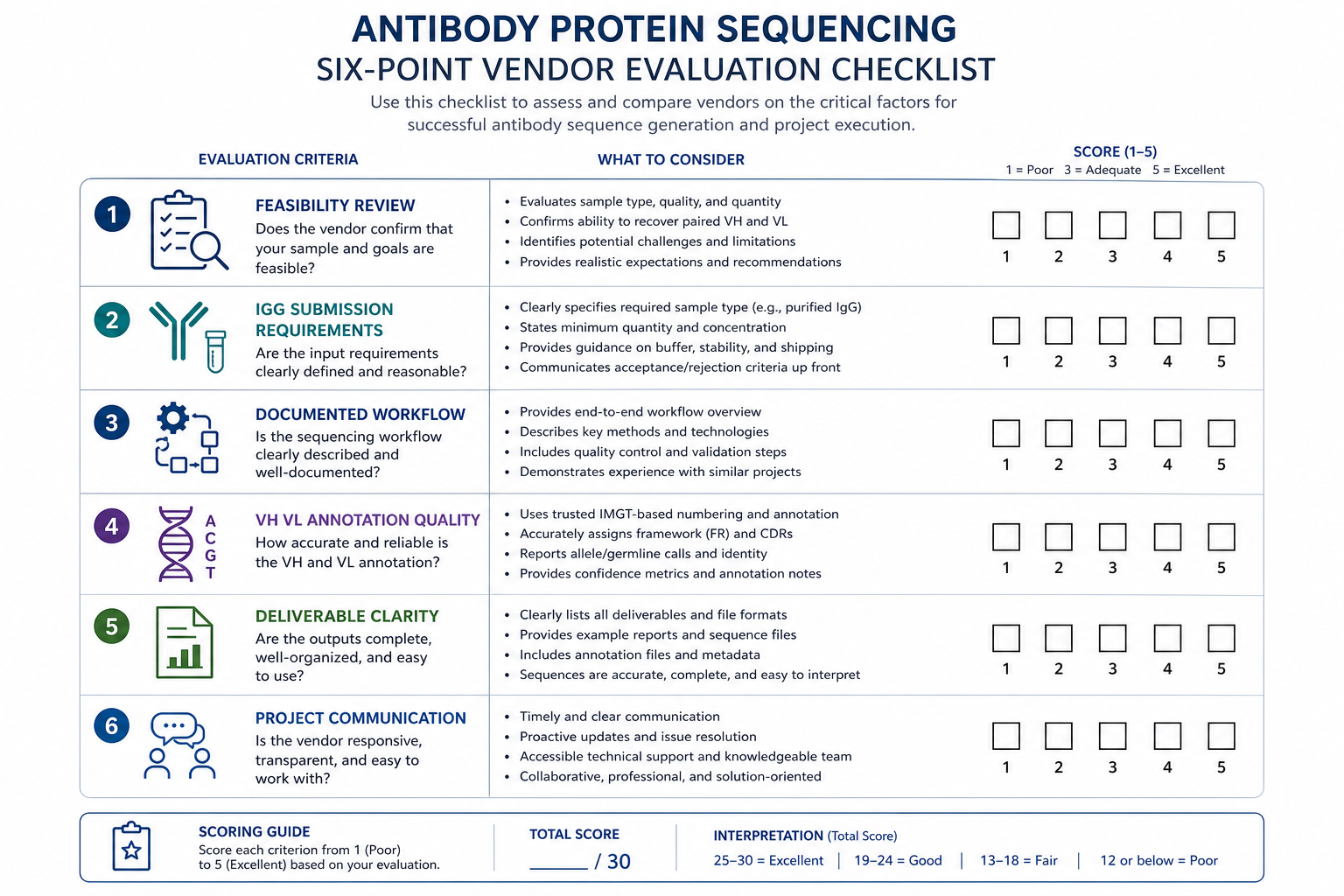
Figure 2. Vendor selection should balance IgG sequencing experience, annotation quality, and deliverable clarity.
Timeline Planning for IgG-Based Recovery
Turnaround depends on IgG purity, isotype, glycosylation level, coverage requirements, and reporting scope. A pure recombinant IgG with complete metadata may move faster than a legacy sample requiring repeat digestion and extended manual review.
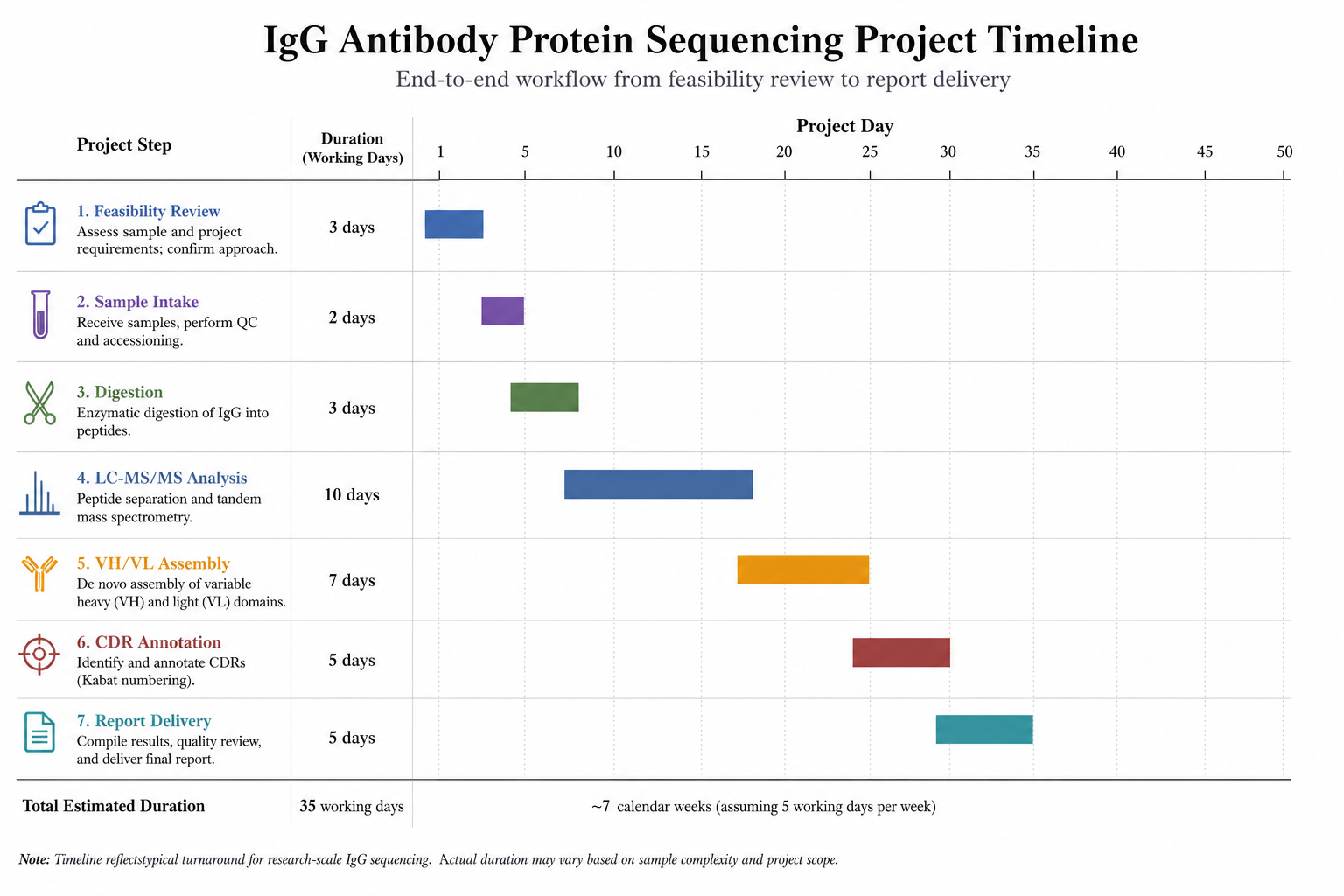
Figure 3. Confirm milestones and delivery expectations before shipping purified IgG.
Rush services, additional validation, and custom reporting can shorten or extend this schedule. Teams planning recombinant handoff or documentation deadlines should confirm dates before internal milestones are fixed. For grant or procurement review, attach the vendor scope summary so reviewers can see which deliverables are included in the base fee versus optional add-ons.
Red Flags in Vendor Proposals
When evaluating IgG-based sequence recovery providers, watch for these warning signs:
- no feasibility review before sample submission
- unclear purity or amount requirements
- quotes that do not explain what is included
- no mention of CDR annotation or coverage map delivery
- promise of guaranteed success without sample review
- no path for hybridoma PCR fallback if IgG recovery stalls
- poor responsiveness during scoping discussions
Specialized antibody sequencing is not interchangeable with routine protein ID. Vague proposals often lead to repeated submissions, missed deadlines, or sequence data that cannot support expression design.
When to Budget for Follow-Up Work
Some projects require more than initial VH/VL recovery. Plan follow-up scope when the decision standard is high.
Consider adding:
- for reference-backed confirmation
- for focused CDR documentation
- if viable cells remain and a faster PCR route is possible
Validation should be scoped upfront, not treated as an unexpected add-on after the first report.
Frequently Asked Questions
1. Why is IgG-based antibody sequencing more expensive than routine protein ID?
The workflow includes multi-enzyme digestion, variable-region LC-MS/MS depth, VH/VL assembly, and CDR annotation, not just database searching.
2. Can I reduce cost by submitting less IgG?
Not safely in most cases. Insufficient material can prevent repeat acquisition and increase total cost through rework.
3. Should I request coverage maps and annotated spectra?
Yes, if the data will support documentation, audit review, or expression design decisions.
4. Is the lowest quote the best choice?
Not necessarily. A low quote that excludes manual review or usable deliverables may cost more when the project must be repeated.
5. Can one provider support IgG sequencing and hybridoma fallback?
Yes. A provider with broader capability can often support both routes within one project plan.
Conclusion
Planning an antibody protein sequencing project requires more than comparing headline prices. IgG purity, digestion strategy, LC-MS/MS coverage, CDR annotation, deliverable format, and timeline all influence both cost and success. The best provider is the one that can define scope clearly, review feasibility before sample intake, and deliver VH/VL evidence that matches the project's decision standard.
For legacy IgG rescue, recombinant verification, and documentation support, MtoZ Biolabs provides scoped De Novo Antibody Sequencing Service proposals with milestone planning, coverage maps, CDR annotation, and report-ready deliverables. Contact the technical team to Request a project assessment and receive a quote aligned with IgG purity, isotype, and delivery requirements.
How to order?




