






PhIP-Seq: What It Is and When Researchers Should Use It
In antibody-related research, one of the most difficult questions is not always whether antibodies are present, but what they are recognizing. A serum sample may show a clear immune signal, yet the antigen, peptide region, or epitope behind that signal may remain unknown. This is a common challenge in autoimmune disease studies, infectious disease serology, vaccine response analysis, and antibody biomarker discovery.
Targeted methods such as ELISA, Western blotting, and immunofluorescence are valuable when researchers already know what antigen they want to test. However, they become less efficient when the possible antigen space is large or when the project goal is discovery rather than confirmation.
Phage immunoprecipitation sequencing, usually referred to as PhIP-Seq, was developed for this type of question. Instead of testing one antigen at a time, PhIP-Seq uses large phage-displayed peptide libraries to profile antibody binding at scale. It can help researchers identify candidate antibody-reactive peptides, compare immune recognition patterns across sample groups, and narrow down regions for downstream validation.
What Question Does PhIP-Seq Answer
A practical way to understand PhIP-Seq is to start with the research question it addresses:
Which peptide antigens are being recognized by antibodies in this sample?
This makes PhIP-Seq especially useful when the antibody response is biologically important, but the target is not fully defined. For example, researchers may want to know whether patients with an autoimmune condition share antibody reactivity against specific protein regions, whether vaccinated individuals show different peptide-level recognition patterns, or whether infection history leaves detectable serological signatures.
PhIP-Seq does not replace targeted validation assays. Instead, it helps generate candidate antigen or epitope information that can guide the next stage of validation.
How PhIP-Seq Works
The PhIP-Seq workflow links antibody binding to DNA sequencing readout. A phage display library is first prepared or selected based on the research question. Each phage clone displays a peptide and carries the DNA sequence that encodes that peptide.
When an antibody-containing sample, such as serum or plasma, is incubated with the library, antibodies bind to the peptide sequences they recognize. The antibody-bound phage particles are then captured by immunoprecipitation. After enrichment, the DNA from these phage clones is sequenced, and bioinformatics analysis is used to identify which peptides are enriched in each sample or sample group.
A typical PhIP-Seq workflow includes:
1. Selection or construction of a phage-displayed peptide library
2.Incubation with antibody-containing samples
3. Immunoprecipitation of antibody-bound phage particles
4.Sequencing of enriched phage clones
5.Mapping of sequencing reads to peptide identities
6.Statistical analysis and candidate prioritization
7.Downstream validation of selected candidates
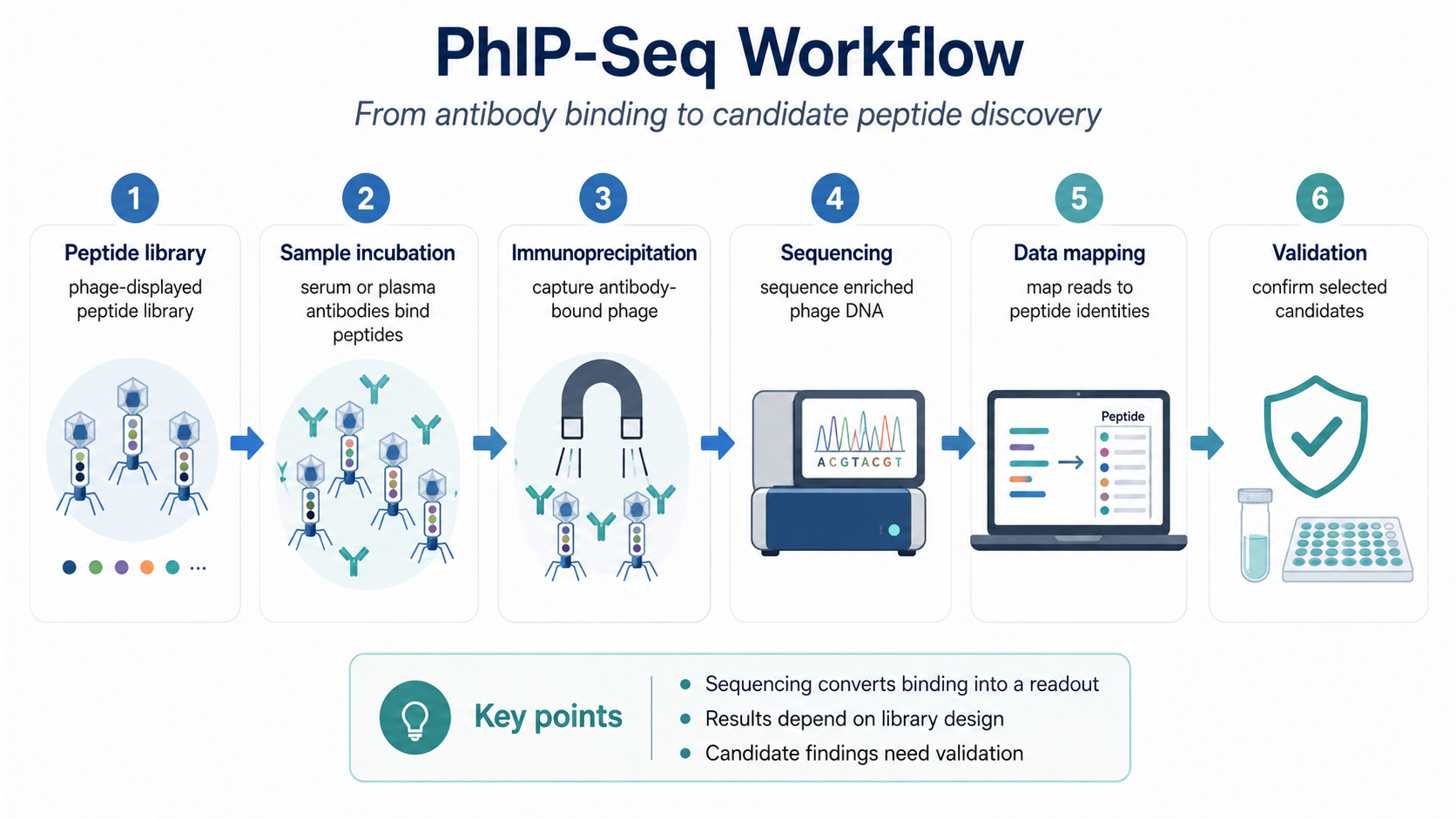
Figure1. PhIP-Seq Workflow
The most important point is that PhIP-Seq results depend strongly on library design. The assay can only detect antibody binding to peptides represented in the library. For this reason, library selection should be matched to the biological question, whether the project focuses on the human proteome, pathogen-derived peptides, viral antigens, custom targets, or focused epitope regions.
Related Services
Sequencing and Antibody Analysis
Characterization and Confirmation
When Should Researchers Use PhIP-Seq
PhIP-Seq is most appropriate when researchers need broad antibody profiling rather than single-target testing. It is particularly useful in discovery-oriented projects where the target antigen is unknown, the number of possible antigens is large, or the goal is to compare antibody recognition patterns across groups.
Researchers may consider PhIP-Seq in the following situations.
1. Unknown or Partially Defined Antibody Targets
In autoimmune disease research, antibody targets are often heterogeneous or incompletely characterized. PhIP-Seq can screen large peptide libraries to identify candidate autoantigens or antibody-reactive regions that predefined antigen assays may not capture.
2. Broad Serological Profiling
For infectious disease or vaccine studies, researchers may need to evaluate antibody responses across many pathogen-derived peptides rather than measure binding to a single antigen. PhIP-Seq can provide a broader view of peptide-level immune recognition.
3. Epitope Discovery
Because PhIP-Seq is based on displayed peptides, it can help identify linear antibody-binding regions. These candidate regions can then be tested using peptide arrays, ELISA, Western blotting, or other validation methods.
4. Cohort Comparison
PhIP-Seq can be used to compare antibody enrichment patterns between disease and control groups, vaccinated and unvaccinated cohorts, treatment groups, or longitudinal samples. This makes it useful for exploratory immune profiling and candidate biomarker discovery.
5. Biomarker Exploration
In biomarker-related studies, PhIP-Seq can help identify antibody-reactive peptides that differ between sample groups. These findings should be treated as candidates, not final biomarkers, until validated in independent cohorts.
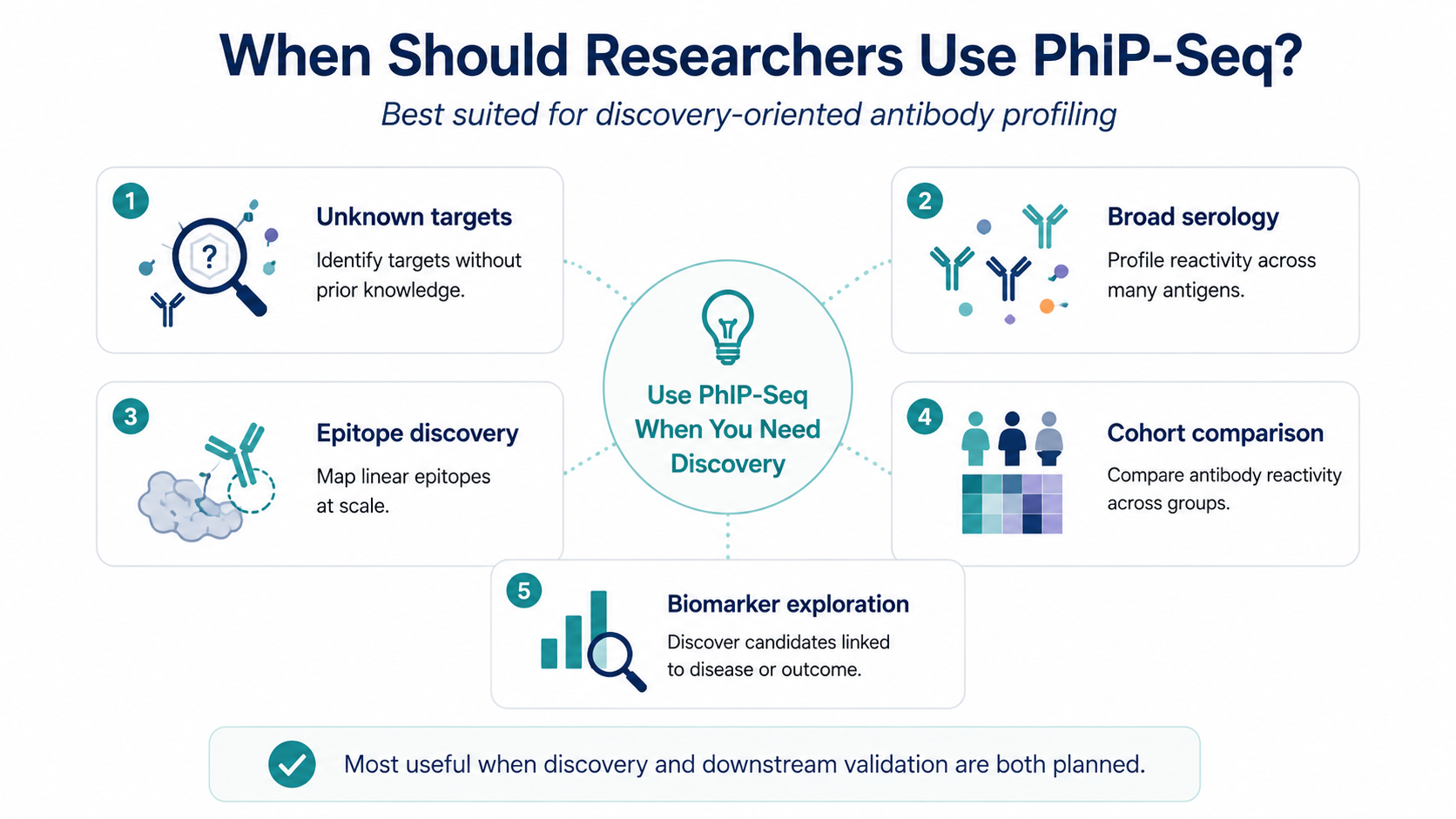
Figure2. When Should Researchers Use PhIP-Seq
When PhIP-Seq May Not Be Necessary
PhIP-Seq is not the best choice for every antibody project. If the research question involves one known antigen and the goal is to confirm antibody binding, targeted methods such as ELISA or Western blotting may be more direct and cost-effective.
PhIP-Seq may also be less suitable when the key epitope is conformational and cannot be represented by linear peptides. In these cases, structural or protein-based validation methods may be needed.
Researchers should also be cautious when sample numbers are too limited, group design is weak, or downstream validation is not planned. PhIP-Seq can generate useful discovery data, but the biological value of the results depends on appropriate experimental design and follow-up confirmation.
PhIP-Seq vs Traditional Antibody Detection Methods
PhIP-Seq and traditional antibody assays answer different questions. ELISA is useful when the antigen is known. Western blotting can support target confirmation at the protein level. Immunofluorescence provides a cellular staining context. Peptide arrays are useful for testing defined peptide panels.
PhIP-Seq is different because it is designed for broader discovery. It is most valuable when researchers need to screen many potential peptide antigens in parallel and identify candidates for further validation.
| Method | Best Used For | Main Advantage | Main Limitation |
| ELISA | Known antigen-antibody testing | Targeted and quantitative | Requires predefined antigen |
| Western blotting | Protein-level recognition confirmation | Provides molecular weight context | Lower throughput |
| Immunofluorescence | Cellular staining analysis | Shows localization pattern | Limited discovery capability |
| Peptide array | Focused peptide validation | Suitable for defined peptide panels | Limited by panel design |
| PhIP-Seq | Broad antibody profiling and epitope discovery | Screens large peptide libraries | Candidate results require validation |
In many projects, these methods are complementary. PhIP-Seq can identify candidate peptides, while targeted assays can confirm selected findings.
What to Consider Before Starting a PhIP-Seq Project
Before choosing PhIP-Seq, researchers should evaluate the project from three angles: the biological question, the sample design, and the validation plan.
First, the biological question should be discovery-oriented. PhIP-Seq is most useful when researchers want to explore unknown or broad antibody recognition patterns.
Second, the sample design should support meaningful comparison. For case-control or cohort studies, sample grouping, control selection, metadata quality, and replicate strategy all affect interpretation.
Third, downstream validation should be planned early. Candidate peptides identified by PhIP-Seq are usually identified using independent methods. Without validation, the results should be interpreted as exploratory findings.
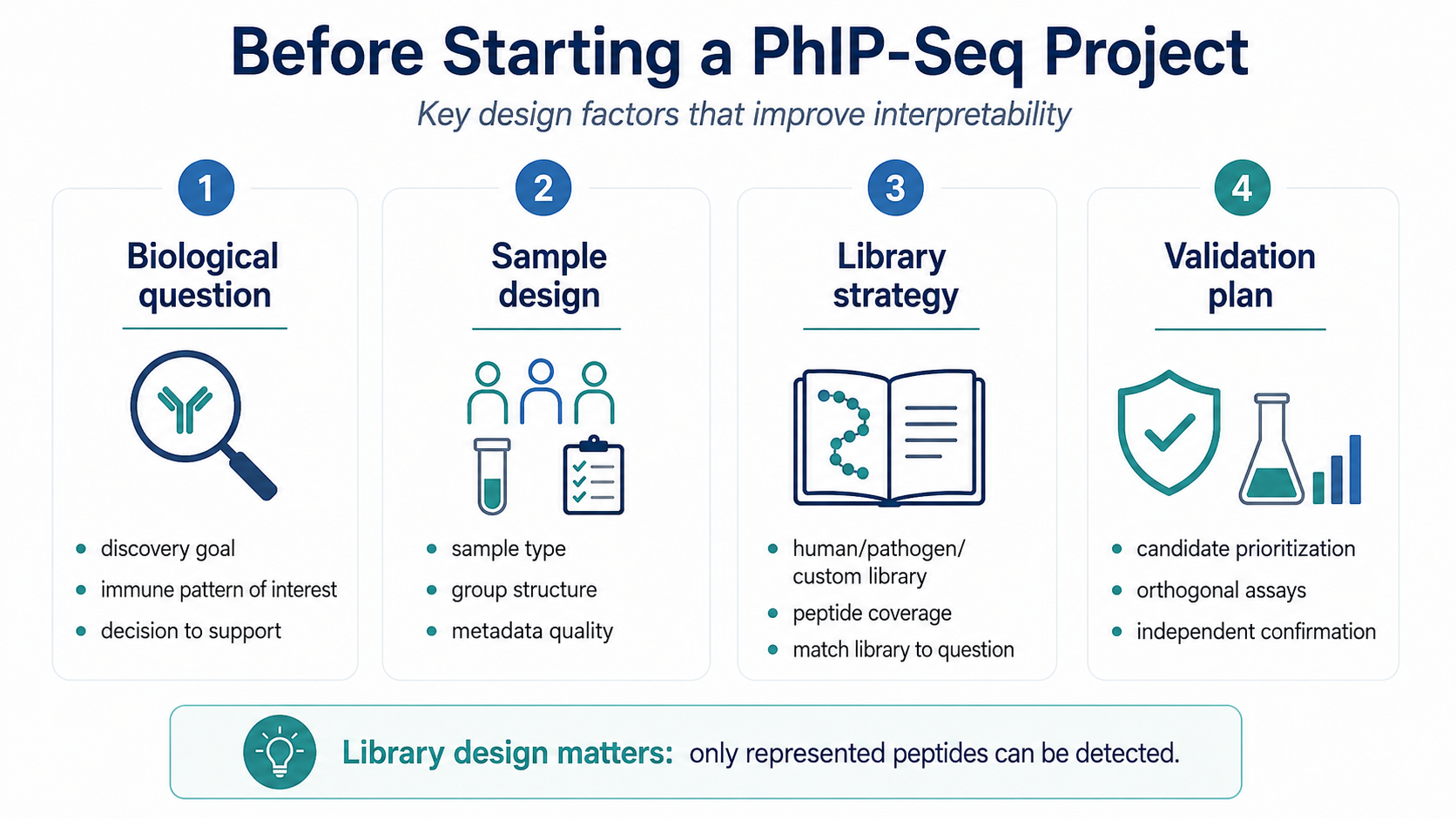
Figure3. Before Starting a PhIP-Seq Project
Important project design factors include:
-
sample type and volume
-
sample storage condition
-
disease, infection, vaccination, or treatment status
-
number of biological groups
-
control selection
-
library type
-
sequencing depth
-
statistical comparison strategy
-
validation method.
A well-designed PhIP-Seq project should connect the screening strategy to a clear downstream research decision.
How MtoZ Biolabs Supports PhIP-Seq Projects
MtoZ Biolabs provides PhIP-Seq analysis support for researchers working on antibody profiling, epitope discovery, infectious disease serology, autoimmune disease research, vaccine response analysis, and biomarker discovery.
Depending on the project goal, our team can help evaluate sample type, library strategy, cohort design, sequencing analysis, candidate prioritization, and downstream validation options. This is especially useful when researchers are unsure whether PhIP-Seq alone is sufficient or whether it should be combined with targeted validation methods.
Frequently Asked Questions
1. Can PhIP-Seq identify unknown antibody targets?
PhIP-Seq can help identify candidate antibody-reactive peptides from large phage-displayed peptide libraries. However, the method only detects peptides represented in the library, and candidate targets should be validated with independent assays.
2. Is PhIP-Seq suitable for biomarker discovery?
Yes. PhIP-Seq can support biomarker discovery by comparing antibody recognition patterns between sample groups. The results are best treated as candidate findings that require validation in independent cohorts or orthogonal assays.
3. What sample types are commonly used for PhIP-Seq?
Serum and plasma are commonly used because they contain circulating antibodies. Other antibody-containing biological fluids may also be considered depending on the research question, sample quality, and expected antibody abundance.
4. Does PhIP-Seq replace ELISA?
No. PhIP-Seq is mainly used for discovery and broad profiling, while ELISA is commonly used for targeted validation. In many workflows, PhIP-Seq identifies candidates, and ELISA helps validate selected targets.
5. Can PhIP-Seq detect conformational epitopes?
PhIP-Seq is generally better suited for linear epitope discovery because it uses peptide display. Antibodies that recognize conformational epitopes may require additional protein-based or structural validation methods.
Conclusion
PhIP-Seq is valuable when researchers need to move beyond single-antigen testing and explore antibody recognition across a broad peptide space. It is particularly useful for unknown target discovery, epitope mapping, serological profiling, cohort comparison, and biomarker exploration. MtoZ Biolabs provides PhIP-Seq analysis support covering library design, sample processing, sequencing, and bioinformatics analysis. Researchers can consult the technical team to evaluate sample type, study design, and project feasibility.
How to order?




