






Peptide Stability Testing Service
MtoZ Biolabs provides specialized Peptide Stability Testing Service designed to assess peptide integrity under a wide range of environmental, formulation, and stress conditions. Stability is a critical factor affecting peptide storage, handling, bioactivity, and suitability for experimental or therapeutic use. Our service combines controlled stress testing, multi-condition stability evaluation, and analytical quantification to support confident decision-making during peptide drug development.
What is Peptide Stability Testing?
Peptides exhibit unique stability characteristics influenced by their amino acid sequence, environmental exposure, and storage conditions. Despite being stored at low temperatures (such as -20 °C or -80 °C), peptides can degrade through processes such as oxidation, hydrolysis, deamidation, and aggregation, leading to loss of activity and the formation of undesired byproducts.
Peptide stability is typically evaluated under a variety of conditions to simulate real-world scenarios, such as different pH levels, temperature fluctuations, light exposure, and the presence of various solvents. These factors can influence peptide degradation rates and guide decisions regarding optimal storage and formulation strategies. A comprehensive stability assessment examines how peptides perform over time, helping researchers identify vulnerabilities, improve formulation compatibility, and define recommended storage conditions for long-term use.
Peptide Stability Testing Service at MtoZ Biolabs
MtoZ Biolabs evaluates peptide stability using a combination of analytical strategies designed to capture both structural changes and quantitative degradation kinetics. Depending on peptide characteristics and project goals, the following methods may be applied:
● HPLC
Used to quantify intact peptide levels, resolve degradation peaks, and establish stability-indicating chromatographic methods.
● LC-MS
Provides high-resolution identification of degradation products and structural modifications, enabling pathway and mechanism analysis.
● UV-Vis Spectrophotometry
Supports rapid concentration checks and systematic monitoring of time-dependent degradation trends.
● Circular Dichroism (CD)
Applied when secondary structure or conformational stability is relevant to peptide performance.
● Fluorescence-Based Measurements
Useful for peptides prone to aggregation or sensitive to light exposure.
● Condition-Specific Stability Evaluation
Testing under defined temperature stress, pH variation, oxidative conditions, enzymatic exposure, or light sensitivity to generate a comprehensive stability profile.
This integrated analytical framework ensures accurate characterization of peptide behavior across storage, handling, and application-specific conditions.
Why Choose MtoZ Biolabs?
✅ Extensive Condition Coverage: Testing across temperature stress, oxidative environments, pH variation, enzymatic exposure, and light sensitivity provides comprehensive degradation insight.
✅ Efficient Sample Utilization: Optimized workflows minimize peptide consumption while enabling robust condition-specific evaluations.
✅ Customized Study Designs: Testing conditions are tailored to match storage needs, accelerated stability programs, or assay-specific workflows.
✅ Experienced Technical Support: Our scientific team provides consultation throughout the study, from experimental design to data interpretation.
✅ One-Time-Charge: Our pricing is transparent, no hidden fees or additional costs.
Applications of Peptide Stability Testing Service
· Formulation Development: Determine suitable buffer systems, pH conditions, and excipients for peptide stability.
· Quality Control and Shelf-Life Studies: Support batch consistency and product release specifications.
· Bioassay and Method Development: Ensure peptide integrity during storage and experimental workflows.
· Preclinical Research: Evaluate peptide behavior in environments relevant to pharmacokinetics or biological testing.
Start Your Project with MtoZ Biolabs
MtoZ Biolabs provides reliable, data-driven stability results that support peptide discovery, formulation development, and preclinical planning.
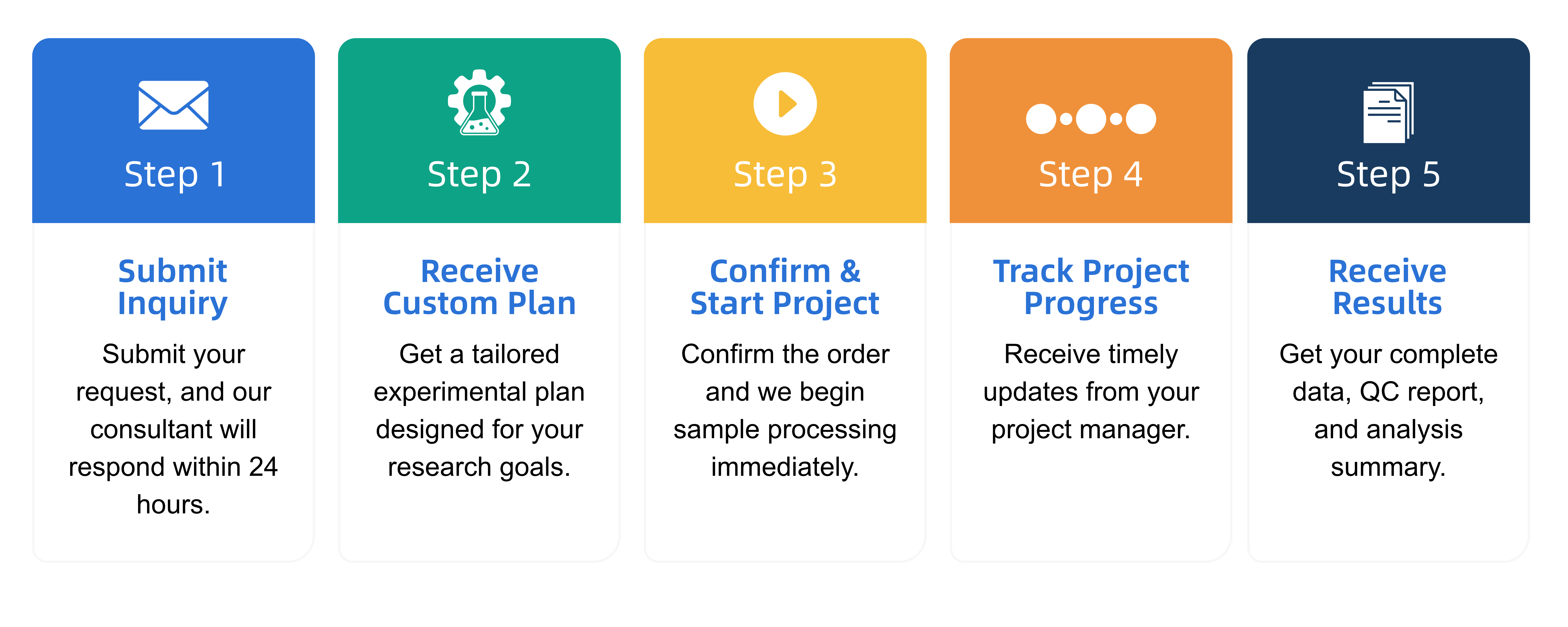
Contact us to initiate your Peptide Stability Testing Service, and our scientific team will provide a customized testing plan aligned with your research goals.
FAQ
Q1: What types of samples are suitable?
We can assess linear, cyclic, hydrophobic, modified, therapeutic, and labeled peptides. Peptides containing unusual modifications or low solubility can also be evaluated with adjusted testing conditions.
Q2: What is the service general workflow?
Q3: What data formats are provided?
· Time-course degradation profiles
· HPLC chromatograms and LC-MS spectra
· Identified degradation products when applicable
· Recommended storage and handling conditions
All data are provided in standard formats (Excel, PDF, and instrument raw files) suitable for publication and further bioinformatics analysis.
Q4: How should I prepare my samples?
Provide peptides as lyophilized powders whenever possible. Ensure vials are sealed and protected from moisture. Include purity, sequence, and modification details. Ship samples on dry ice to maintain stability.
If you are unsure about sample preparation, our team is available for consultation and can guide you through the process to ensure optimal results.
Related Services
How to order?




