






Peptide Sequence Analysis: Methods, Workflow, and Applications in Protein Research
Introduction
Protein research often depends on peptide-level sequence evidence long before a full structural model or release package is complete. A recombinant protein may need identity confirmation at the amino acid level. A purified research reagent may show unexpected bands on SDS-PAGE. A therapeutic protein program may need to verify that observed peptides match the intended sequence after expression, purification, or storage. In each case, the underlying need is the same: convert peptide measurements into sequence information that supports protein-level conclusions.
Peptide sequence analysis is the set of analytical methods used to determine, confirm, or map amino acid order from peptide-level data in protein research. Workflows may combine enzymatic digestion, LC-MS/MS identification, database searching, de novo interpretation, Edman degradation, and coverage mapping depending on whether the protein sequence is known, partially known, or unknown. For discovery, QC, comparability, and mechanism studies, peptide sequence analysis provides the primary structure evidence that links experimental observations to protein identity.
Peptide sequence analysis is not identical to whole-protein sequencing or intact mass measurement alone. It is the peptide-focused interpretation layer that supports protein identification, modification review, sequence confirmation, and batch comparison. Understanding the main methods, workflow steps, and protein research applications helps teams choose the right analysis route before sample amount and project timeline are committed.
What Peptide Sequence Analysis Means in Protein Research
In protein research workflows, peptide sequence analysis answers several related questions. Does the observed peptide set match the expected protein sequence? Which residues carry modifications or sequence differences? Can an unknown peptide be assigned confidently enough to support protein identification? Is there enough sequence coverage to compare two protein preparations?
Bottom-up analysis is the most common starting point. The protein is digested into peptides, the fragments are analyzed by LC-MS/MS, and the resulting spectra are interpreted against a reference sequence or by de novo methods. Recovered outputs may include peptide-spectrum matches, partial or full peptide sequences, N-terminal readouts, modification localizations, and coverage maps across protein domains. Project scope should define whether the goal is broad protein identification, targeted confirmation of a known construct, or investigation of a specific sequence variant.
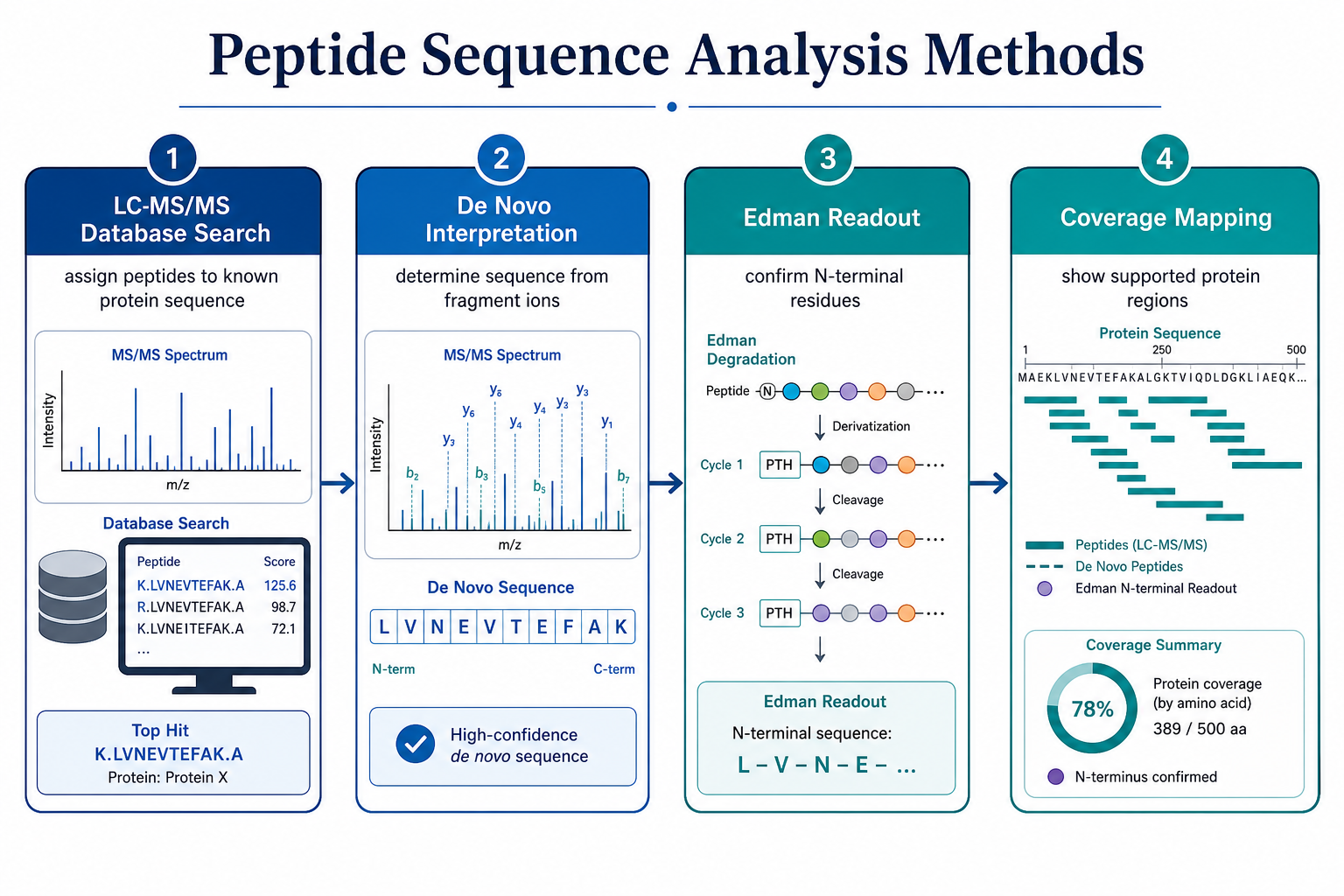
Figure 1. Peptide sequence analysis in protein research combines digestion, LC-MS/MS, database search, de novo interpretation, and Edman confirmation depending on project scope.
Core Methods for Peptide Sequence Analysis
Protein research projects rarely rely on one method alone. The most suitable route depends on whether a reference sequence exists and how much purity the peptide sample provides.
LC-MS/MS with database searching
When a protein or construct sequence is available, LC-MS/MS spectra can be searched against an in silico peptide library generated from that reference. This method is efficient for recombinant proteins, therapeutic candidates, and other samples where the expected sequence is known. Confidence depends on digestion design, mass accuracy, modification parameters, and database completeness. Unexpected peptides may still require follow-up interpretation.
De novo peptide interpretation
De novo analysis infers amino acid order from fragment ion patterns without requiring a prior database match. In protein research, it is useful for unmatched gel bands, novel protein regions, poorly annotated systems, and sequence tags that support protein identification when genomic data are limited. Results should be reviewed carefully before they are used for cloning, reporting, or mechanistic claims.
Edman-based sequence readout
Edman degradation provides stepwise N-terminal amino acid identification for purified peptides. It remains valuable for confirming short sequences, evaluating blocked termini, and validating uncertain N-terminal assignments from mass spectrometry data. Sample purity is essential because mixed peptides produce overlapping cycle signals.
Peptide coverage mapping
Coverage mapping places identified peptides onto a reference protein sequence to show which regions are supported by experimental evidence. This method is widely used in protein research when the question is whether a expressed or purified product matches the intended construct and where modifications or clipped forms occur. Coverage mapping is especially useful when the protein is known but complete confirmation is still required.
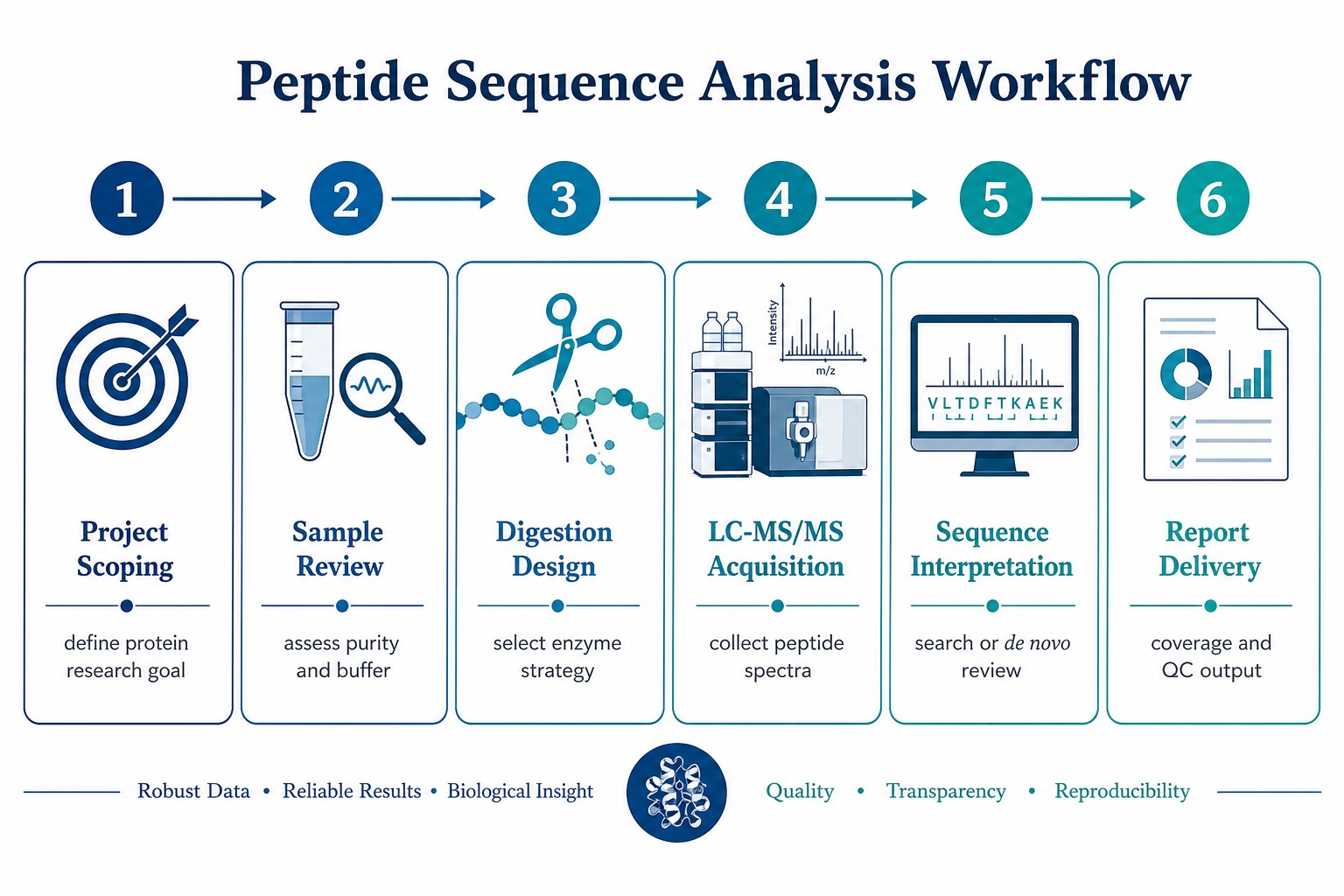
Figure 2. A peptide sequence analysis workflow links sample preparation, digestion, LC-MS/MS acquisition, interpretation, and reporting to the protein research question.
Standard Peptide Sequence Analysis Workflow
A robust peptide sequence analysis project follows a defined sequence of steps from feasibility review through report delivery.
Project scoping defines whether the goal is protein identification, construct confirmation, modification mapping, comparability review, or unknown peptide characterization. Sample feasibility review assesses purity, concentration, buffer composition, and whether the protein can be digested efficiently. Digestion design selects enzyme strategy, reduction and alkylation conditions, and any enrichment required for modified peptides. LC-MS/MS acquisition generates precursor and fragment ion data suited to peptide length and sample complexity. Sequence interpretation applies database searching, de novo analysis, or both, followed by expert review of critical assignments. Coverage or confirmation reporting documents supported regions, ambiguous residues, and QC limitations. Biological interpretation connects peptide evidence to the protein research decision the project must support.
Sample type strongly affects the first viable route. Purified recombinant proteins with known sequences are often suitable for reference-based mapping. Complex mixtures, low-abundance targets, or samples without reliable references may require fractionation, deeper acquisition, or de novo follow-up.
Related Services
Protein research teams often pair peptide sequence analysis with adjacent primary structure and identification services. Relevant options include:
Peptide Identification Service
Protein Full Sequence Coverage Analysis Service
Primary Structure Analysis Service
Researchers planning peptide sequence analysis for protein research can consult MtoZ Biolabs to review sample type, reference availability, and the reporting format required before analysis begins.
Sample and Project Design Considerations
Peptide sequence analysis success depends on how well the sample and project design match the chosen method. Common starting contexts include:
- Purified recombinant protein. Known construct sequence supports efficient reference-based analysis.
- Research protein mixture. Fractionation or targeted enrichment may be needed before confident assignment.
- Therapeutic protein or antibody sample. Comparability and modification review often require broader digestion planning.
- Gel band or column fraction. Single-peptide or low-complexity fractions improve sequencing confidence.
- Synthetic or custom peptide control. Direct LC-MS/MS or Edman confirmation may be sufficient.
- Protein with limited annotation. Custom database construction or de novo interpretation may be required.
These considerations support planning but do not replace sample-specific feasibility review before digestion and acquisition begin.
Method Comparison for Protein Research Goals
Different protein research questions call for different sequence analysis routes. The table below summarizes common choices without replacing project-specific workflow design.
|
Method |
Typical Protein Research Use |
Main Technical Strength |
Main Technical Limitation |
|---|---|---|---|
|
LC-MS/MS database search |
Recombinant protein confirmation |
Efficient PSM assignment against known sequence |
Weak when reference is incomplete |
|
De novo interpretation |
Unknown bands or novel proteins |
Sequence inference without prior entry |
Requires strong spectra and review |
|
Edman degradation |
Short peptide or N-terminal confirmation |
Direct stepwise readout |
Low throughput for complex mixtures |
|
Coverage mapping |
Construct verification and comparability |
Shows supported and unsupported regions |
Depends on reference accuracy |
|
Multi-enzyme digestion plus MS/MS |
Low-coverage or complex proteins |
Broader peptide evidence |
More complex data review |
Core Technical Advantages and Current Limitations
Core Technical Advantages
Residue-level support for protein conclusions.
Peptide sequence analysis links protein research observations to amino acid-level evidence.
Flexible method selection.
Database search, de novo interpretation, Edman readout, and coverage mapping can be combined as needed.
Compatibility with diverse protein samples.
The same analytical framework can support recombinant proteins, antibodies, research reagents, and complex biological mixtures when scope is defined appropriately.
Traceable reporting for QC and publication.
PSM tables, spectra, coverage maps, and modification notes support internal review and external documentation.
Current Limitations
Incomplete coverage can limit protein claims.
Unsupported regions may remain even when major peptides are identified confidently.
Mixtures reduce assignment confidence.
Co-purified proteins or peptides can produce ambiguous spectra and false inference.
Modification complexity increases review burden.
Labile or unexpected PTMs can reduce automated assignment quality.
Protein inference is not automatic functional proof.
Sequence evidence must still be interpreted within the biological context of the study.
Applications in Protein Research
Peptide sequence analysis supports a wide range of protein research applications beyond routine identification alone. Laboratories use it to confirm that an expressed construct produces the expected product, to localize modifications that may affect stability or activity, to compare protein preparations after process changes, and to generate sequence tags that support protein assignment in discovery experiments.
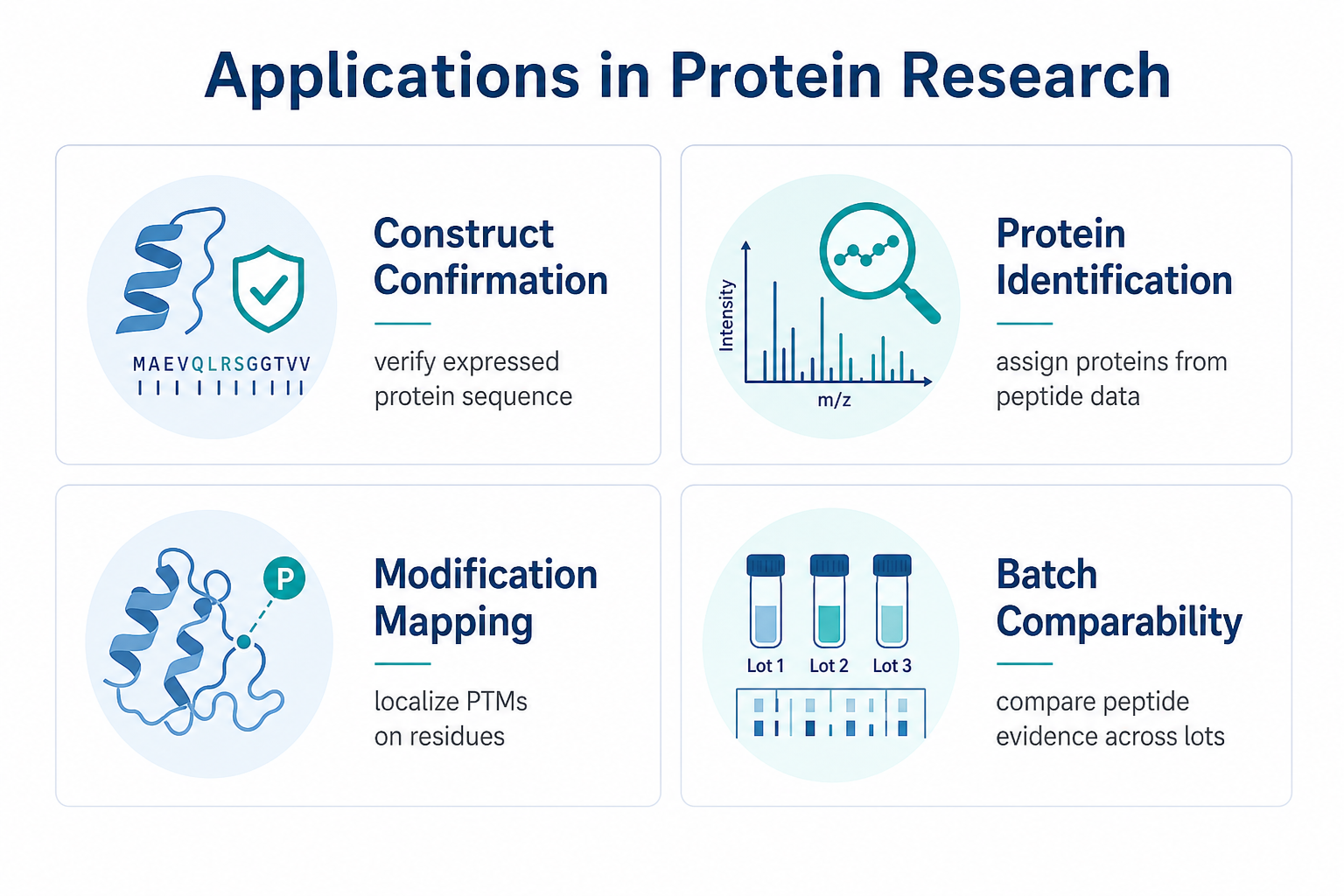
Figure 3. Peptide sequence analysis supports construct confirmation, protein identification, modification mapping, and comparability review in protein research.
|
Protein Research Application |
What Peptide Sequence Analysis Provides |
Complementary Evidence Often Still Needed |
|---|---|---|
|
Recombinant construct confirmation |
Peptide evidence mapped to intended sequence |
Expression yield and functional assay data |
|
Protein identification from mixtures |
Sequence tags and PSM-supported assignments |
Additional peptides or orthogonal proteomics |
|
Modification site mapping |
Localized PTM assignments on specific residues |
Activity or stability studies |
|
Batch or process comparability |
Peptide-level differences between preparations |
Higher-order structure and potency review |
|
Unknown protein region analysis |
De novo or partial sequence information |
Gene cloning or transcript support |
|
Research reagent QC |
Confirmation of major sequence features |
Purity assessment and storage stability data |
These applications show why peptide sequence analysis remains a core capability in protein research laboratories. It provides the sequence evidence needed to move from observed protein behavior to informed interpretation of identity, heterogeneity, and comparability.
Expected Deliverables and Validation
A useful peptide sequence analysis report should include more than a list of peptide names. Common deliverables include:
- peptide-spectrum match table with scores and modifications
- coverage map or sequence confirmation summary
- de novo peptide report for unmatched features when applicable
- Edman cycle data for targeted N-terminal projects
- modification localization notes with confidence comments
- QC summary on unsupported regions, ambiguous calls, and sample limitations
Validation should match the research claim. Construct confirmation may require coverage of critical domains. Comparability studies may require consistent peptide comparison criteria across batches. Discovery projects may accept sequence tags only when the goal is candidate nomination rather than definitive protein assignment. Useful validation steps may include replicate LC-MS/MS runs, synthetic peptide standards, independent Edman confirmation, or orthogonal intact mass and mapping data.
Researchers should treat low-confidence assignments cautiously, especially when peptide evidence will support publication, reagent release, or mechanistic interpretation.
Frequently Asked Questions
1. What is peptide sequence analysis in protein research?
Peptide sequence analysis is the process of determining, confirming, or mapping peptide amino acid sequences to support protein identification, construct verification, modification review, or comparability assessment.
2. How is peptide sequence analysis different from whole-protein sequencing?
Peptide sequence analysis works at the peptide level, often after digestion or purification. Whole-protein sequencing aims to define much or all of the protein sequence through broader experimental and interpretive workflows.
3. When is database searching enough for peptide sequence analysis?
Database searching is usually sufficient when the protein sequence is known and the sample can be digested into peptides that produce high-quality MS/MS spectra against that reference.
4. When is de novo interpretation required?
De novo interpretation is most useful when database searching does not confidently assign key spectra, such as for unknown protein regions, poorly annotated systems, or unexpected gel-band peptides.
5. What sample information is most important before analysis begins?
Protein source, reference sequence availability, estimated purity, buffer composition, known modifications, and the intended use of the sequence report are the most important planning inputs.
Conclusion
Peptide sequence analysis provides the amino acid-level evidence that protein research teams need to confirm identity, map modifications, compare preparations, and interpret unknown features. By combining digestion, LC-MS/MS, database searching, de novo interpretation, Edman readout, and coverage mapping where appropriate, the workflow supports recombinant protein verification, therapeutic protein review, discovery identification, and research reagent QC. Reliable outcomes depend on matching the method to the protein research question, preparing samples for the chosen route, and validating sequence assignments before they are used for biological or documentation claims. Researchers planning peptide sequence analysis can contact MtoZ Biolabs to review sample status, reference data, and the reporting format required for the next protein research milestone.
How to order?




