






Peptide Characterization Service
-
Original mass spectrometry and chromatographic data files;
-
Analysis result tables (Excel format);
-
Spectrum and peak plot image files (TIFF or PNG format);
-
Comprehensive analysis report (PDF format), including experimental conditions and structural interpretation.
MtoZ Biolabs utilizes advanced multi-analytical platforms and has launched the peptide characterization service which enables systematic analysis of peptide molecular weight, amino acid sequence, structural modifications, and purity. This service is widely applied in peptide drug development, protein research, and quality control, providing a solid scientific foundation for peptide structure identification and functional validation.
Overview
Peptides are biomolecules composed of two or more amino acids linked by peptide bonds, existing between amino acids and proteins, and are widely distributed in living organisms. They play crucial roles in physiological processes such as cellular signal transduction, immune regulation, and metabolic control. With the advancement of synthesis and analytical technologies, peptides have found broad applications in drug development, biomarker discovery, and functional research. Peptide characterization is a key step in ensuring structural accuracy, purity, and consistent activity, playing an essential role in quality assessment and functional validation.
Peptide Characterization Service at MtoZ Biolabs
1. Molecular Weight
Accurately determines the molecular weight of peptides using high-resolution mass spectrometry to verify the correctness of synthesis or expression.
2. Composition
Analyzes the amino acid composition and relative content of peptides, providing fundamental data for structural confirmation and functional studies.
3. Structural Characterization
Utilizes techniques such as LC-MS/MS and NMR to elucidate peptide sequences, secondary structures, and modification features, ensuring structural integrity.
4. Biological Function
Evaluates peptide activity and interactions with receptors or target molecules, supporting functional studies and efficacy validation.
5. Isoelectric Point
Determines the isoelectric point of peptides to predict charge states and stability under varying pH conditions.
6. Immunology
Analyzes the immunogenicity and antigenic properties of peptides, offering references for vaccine design and immunological research.
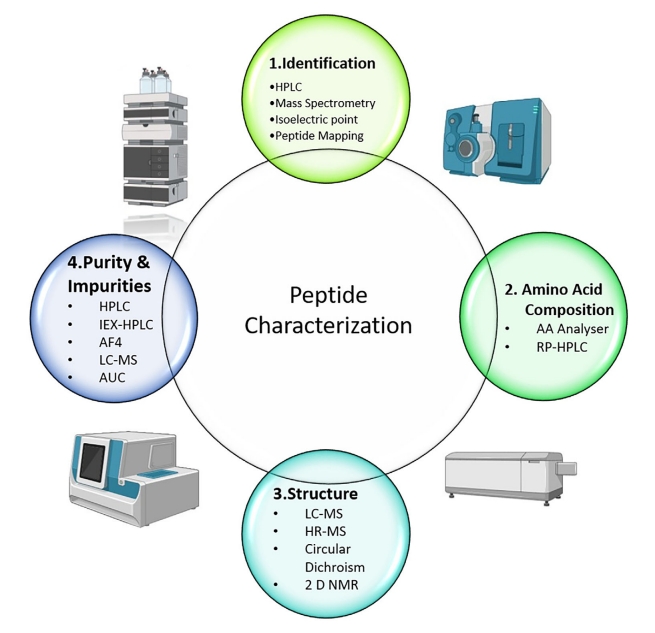
Giri, T. et al. Separation Science Plus, 2025.
Figure 1. Various Techniques for Peptide Characterization.
Workflow of Peptide Characterization Service
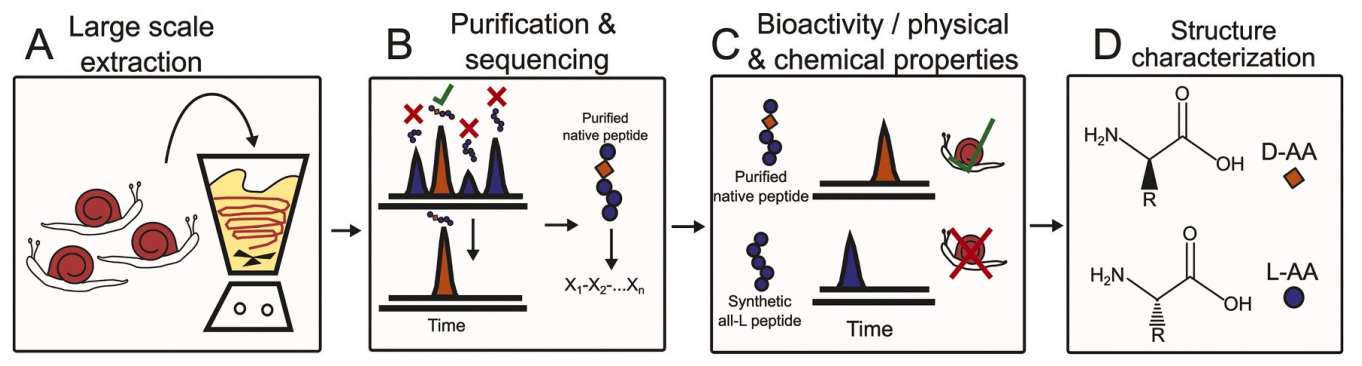
Mast, D H. et al. BBA - Proteins and Proteomics, 2021.
Figure 2. The Workflow of Peptide Characterization.
Why Choose MtoZ Biolabs?
✅ High-precision detection: Combines multi-platform mass spectrometry and spectroscopic technologies to achieve accurate determination of molecular weight and structure.
✅ Multidimensional structural analysis: Simultaneously obtains sequence information, conformational features, and modification status.
✅ High data reliability: Standardized operating procedures ensure stable and reproducible results.
✅ Professional technical support: Customized solutions provided by an experienced protein and peptide analysis team.
✅ One-stop analytical service: Covers the entire process from sample preparation and detection to data interpretation and report delivery.
Applications of Peptide Characterization Service
1. Protein Degradation and Metabolism Research
Used to identify peptide fragments generated during protein degradation, revealing metabolic pathways and degradation mechanisms.
2. Signal Pathway Analysis
Analyzes expression and modification changes of endogenous signaling peptides to support studies of cellular communication and regulatory networks.
3. Biomarker Discovery
Screens disease-associated molecules through peptide-level analysis, providing a foundation for diagnosis and biomonitoring.
4. Biological Function Research
Supports studies of peptide roles in signal transduction, receptor recognition, and enzymatic reactions.
5. Structural Modification and Optimization
Monitors structural changes of peptides after chemical or enzymatic modification to evaluate stability and bioactivity improvements.
Deliverables
1. Comprehensive Experimental Details
2. Materials, Instruments, and Methods
3. Peptide Characterization Results
4. Mass Spectrometry and Chromatographic Data and Spectra
5. Comprehensive Analysis Report
6. Raw Data Files
FAQ
Q1: What types of samples are suitable?
A1: The peptide characterization service is suitable for various types of peptide samples, including synthetic peptides, recombinant peptides, and naturally derived peptides. To ensure analytical accuracy, it is recommended that samples have high purity, be free of salts, buffers, or surfactant residues, and remain stable without signs of degradation.
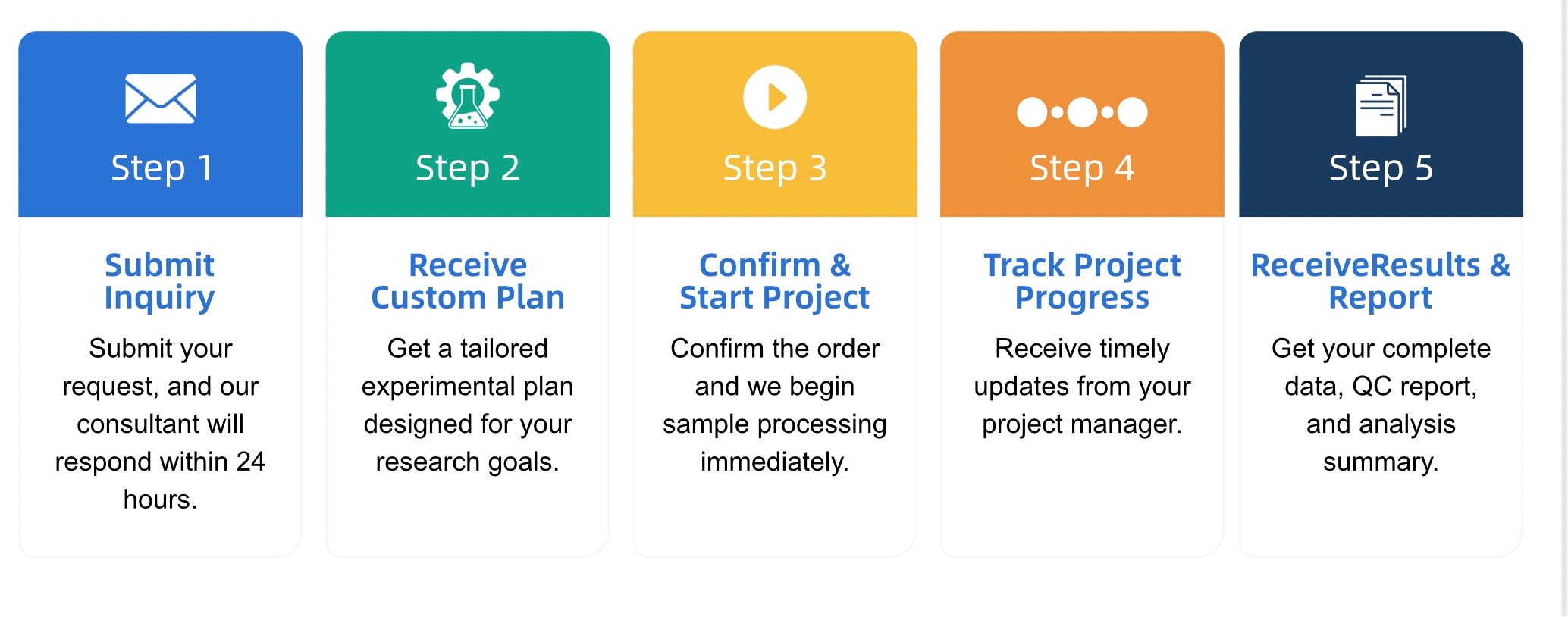
Q2: What is the service general workflow?
A2:
Q3: What data formats are provided?
A3: The service deliverables include standardized, multi-format data results to facilitate scientific analysis and record keeping. Typical deliverables include:
If special analytical requirements exist, data formats can be customized according to project specifications.
Q4: How should I prepare the samples?
A4: To ensure analytical quality and reproducibility, sample preparation should follow these requirements:
(1) Purity requirement: Avoid high salt, buffer, or other contaminants;
(2) Storage conditions: Store at -20℃ for short-term and -80℃for long-term preservation;
(3) Transportation: Use cold chain or dry ice shipping, ensuring containers are sealed and leak-proof;
(4) Supplementary information: Provide sample source, concentration, and intended analytical goals to optimize detection parameters.
For more information, please refer to Sample Submission Guidelines for Proteomics, Sample Submission Guidelines for Metabolomics.
Start Your Project with MtoZ Biolabs
Contact us to discuss your experimental design or request a quote. Whether you are exploring the structural characteristics of peptides or studying their physicochemical properties and biological functions, MtoZ Biolabs can provide you with comprehensive and reliable characterization and analytical support.
How to order?




