






N-Terminal Sequencing Routes Compared: Edman Degradation, MS Analysis, and Peptide Mapping for QC
Introduction
N-terminal QC projects rarely fail because teams lack analytical capability. They fail because the selected route does not match the sample chemistry or the evidence standard required for the next decision. One team may need a direct ten-residue N-terminal read for lot release. Another may need to characterize a blocked recombinant terminus. A third may only need confirmation that processing removed a signal peptide correctly when a full reference sequence already exists.
N-terminal sequencing can be performed by Edman degradation, MS-based terminal analysis, or indirectly through peptide mapping when N-terminal peptides are identified confidently. Each route begins from different assumptions and produces different types of evidence. Matching the route to sample purity, N-terminal accessibility, and documentation requirements is the central decision.
If your team is selecting an N-terminal analysis strategy before samples are prepared, MtoZ Biolabs can Compare N-terminal sequencing routes across Edman, MS, and peptide mapping workflows.
Related Services
| Customer Need | Recommended Service Direction |
| Need N-terminal sequence analysis | N-Terminal Sequencing Service |
| Need Edman degradation protein sequencing | Protein Sequencing Service by Edman Degradation |
| Need Edman-based N-terminal workflow | Edman Degradation for N-Terminal Sequence Analysis Service |
| Need blocked N-terminus handling | N-Terminal Sequencing (N-Terminal Unblocked) Service |
| Need MS-based N-terminal confirmation | MS-Based Protein N-Terminal Sequence Analysis Service |
| Need biopharmaceutical N-terminal QC | Biopharmaceutical N-Terminal Sequencing Service |
Start With the QC Question
Method selection usually begins with one of four project scenarios:
1. Direct N-terminal Confirmation of Purified Protein or Peptide
A short read from the true N-terminus is sufficient for release or verification.
2. Blocked or Modified N-terminus Suspected
Standard Edman coupling may fail without pretreatment or an MS-based route.
3. Reference Sequence Already Exists
The goal is confirmation rather than discovery of an unknown terminus.
4. Biopharmaceutical Documentation Requires Orthogonal Evidence
Two independent N- terminal methods may be preferred.
These scenarios lead to different default routes. Clean, unblocked purified material often favors Edman degradation. Blocked, complex, or reference-backed confirmation projects may favor MS analysis or peptide mapping.
Route Comparison at a Glance
| Decision Factor | Edman Degradation | MS N-Terminal Analysis | Peptide Mapping |
| Core readout | Sequential cycle- based N-terminal residues | N-terminal peptide identification by MS/MS | N-terminal peptide among full digest coverage |
| Best sample condition | Purified protein or peptide with accessible N- terminus | Purified material; blocked termini may still be approachable | Reference sequence available |
| Typical read length | Short to moderate N- terminal read | Depends on enrichment and coverage design | Depends on N- terminal peptide recovery |
| Strong fit for QC confirmation | Excellent for direct N-terminal reads | Strong when terminus is modified or blocked | Strong when full reference confirmation is acceptable |
| Common bottleneck | Blocked N-terminus, purity, cycle fade | Digest design, enrichment, interpretation | N-terminal peptide may be missed in complex digests |
| Ideal deliverable | Cycle-based N- terminal sequence | MS peptide evidence for N-terminal region | Coverage map including N-terminal peptides |
When Edman Degradation Is the Better Fit
Edman-based N-terminal sequencing is usually the preferred first step when:
-
purified protein or peptide material is available
-
the N-terminus is expected to be free and unblocked
-
the project requires direct cycle-based N-terminal evidence
-
a short read length is sufficient for lot release or verification
-
regulatory or internal SOPs specify Edman for N-terminal QC
Strengths include direct readout from the N-terminus outward and long-established acceptance in protein and biopharmaceutical QC workflows. For recombinant products with predictable processing and clean purification, Edman degradation is often efficient and easy to document.
Limitations include sensitivity to blocking modifications, limited read length, and dependence on sample purity. Leucine and isoleucine may not be distinguished in standard PTH-HPLC systems.
Teams with unblocked purified material may review Protein Sequencing Service by Edman Degradation or Edman Degradation for N-Terminal Sequence Analysis Service.
When MS N-Terminal Analysis Is the Better Fit
MS-based N-terminal analysis is often preferable when:
-
the N-terminus is blocked or modified
-
a reference sequence exists and confirmation is the goal
-
Edman cycles fail in early residues despite good purity
-
orthogonal confirmation is needed alongside Edman data
-
broader contextual peptide evidence is required
MS-Based Protein N-Terminal Sequence Analysis Service can be especially useful when standard Edman coupling does not proceed. Strengths include flexibility with modified termini and compatibility with broader proteomics workflows.
Limitations include more complex sample prep, dependence on digestion or enrichment strategy, and often less direct cycle-by-cycle visual evidence than Edman degradation.
When Peptide Mapping Is Sufficient
Peptide Mapping Service can support N-terminal confirmation when a reference sequence exists and the N-terminal peptide is recovered confidently in the digest. This route is often acceptable for internal QC when direct Edman evidence is not specified in the SOP.
Peptide mapping is weaker as a standalone N-terminal method when:
-
the N-terminal peptide is small, modified, or poorly recovered
-
direct cycle-based evidence is required for release documentation
-
processing heterogeneity must be distinguished at the terminus
In those cases, dedicated N-terminal sequencing by Edman or MS is usually preferable.
Combined Strategies in Biopharmaceutical QC
Some projects benefit from using multiple routes. Edman sequencing can provide direct N-terminal cycle data, while MS confirms processing variants, truncations, or modified termini that Edman alone cannot explain. Peptide mapping adds broader sequence coverage when a reference exists.
For example, a recombinant therapeutic may pass Edman sequencing for the first five residues while MS N-terminal analysis reveals a minor truncated variant. A biosimilar comparability package may use Edman for direct cycle evidence and peptide mapping for broader confirmation.
When documentation must withstand regulatory review, define which N-terminal evidence satisfies the SOP before selecting a single route. Biopharmaceutical N-Terminal Sequencing Service workflows often combine method selection with report formatting aligned to QC requirements.
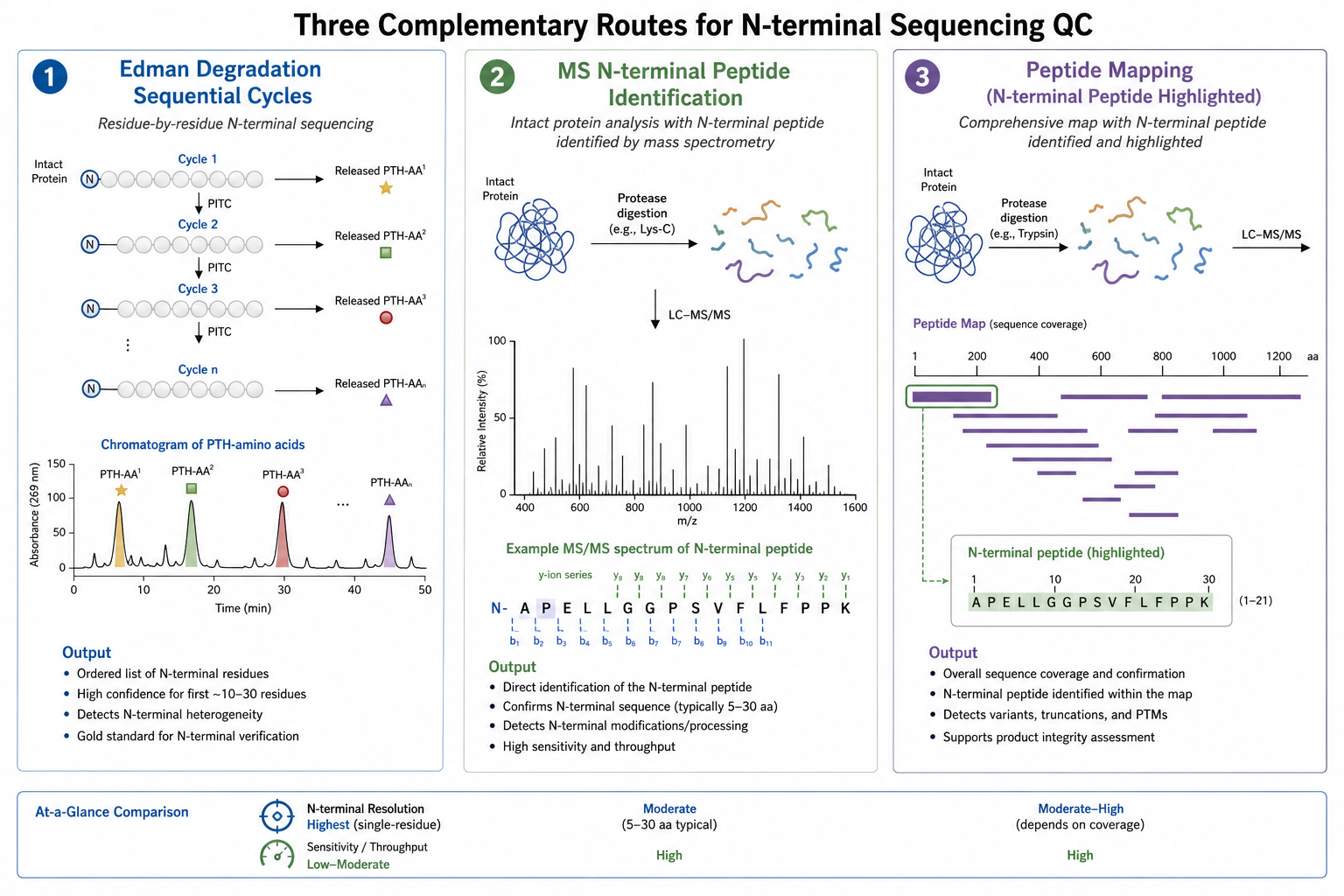
Figure 1. N-terminal accessibility, reference availability, and documentation requirements determine the preferred sequencing route.
Decision Recommendations by Project Goal
Choose Edman degradation when:
-
the N-terminus is expected to be free
-
a direct short N-terminal read satisfies the QC requirement
-
cycle-based evidence is preferred for release documentation
Choose MS N-terminal analysis when:
-
the N-terminus may be blocked or modified
-
Edman cycles fail in early residues
-
orthogonal peptide-level confirmation is needed
Choose peptide mapping when:
-
full sequence reference exists
-
N-terminal confirmation is one part of broader coverage QC
Consider combined evidence when:
-
the product is a biologic with high documentation standards
-
processing heterogeneity must be evaluated thoroughly
Practical Examples by Sample Type
1. Unblocked Recombinant Protein After Signal Peptide Removal
Purified material with expected free N-terminus. Edman sequencing for five to ten cycles is often sufficient for lot release.
2. Synthetic Peptide with Suspected Pyroglutamate
Cycle-one failure despite good HPLC purity. MS-based N-terminal analysis or unblocking pretreatment may be required.
3. Reference-backed Biosimilar
Full sequence known. Peptide mapping or MS N-terminal confirmation may satisfy QC, with Edman added when direct cycle evidence is specified.
4. Gel-purified Protein on PVDF
Band appears clean but co-migrating contaminants are present. Additional purification may be needed before confident N-terminal sequencing.
In-house teams sometimes default to peptide mapping because the reference sequence is already on file. That can work when the N-terminal peptide is recovered cleanly. When the SOP specifies direct terminal evidence or when early Edman cycles fail, a dedicated N-terminal route is usually the faster path to an auditable result.
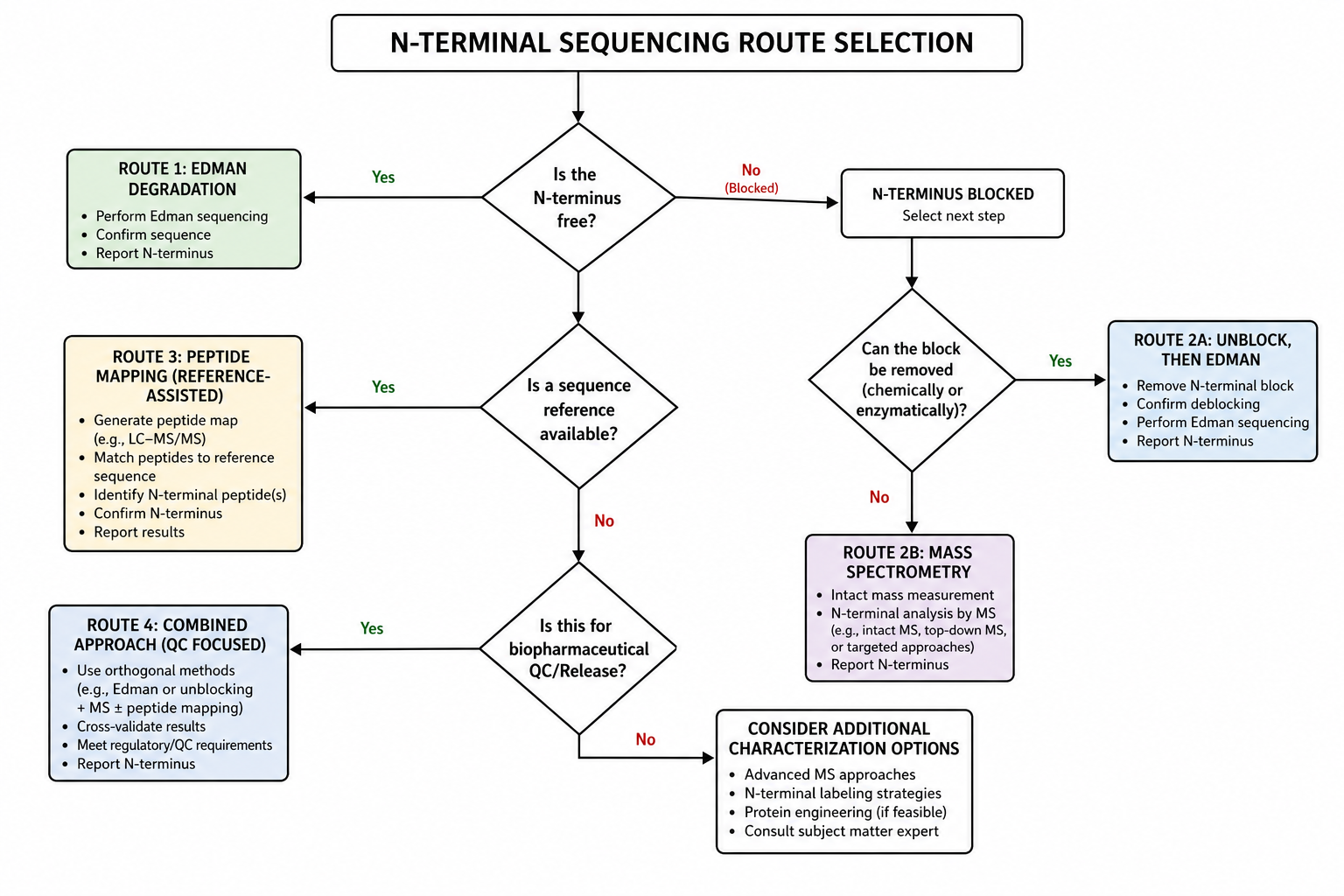
Figure 2. Blocking status, reference availability, and QC evidence requirements determine the preferred N-terminal route.
Frequently Asked Questions
1. Is Edman always the first choice for N-terminal sequencing?
Not when the N-terminus is blocked or when MS-based confirmation is better matched to the sample and SOP.
2. Can peptide mapping replace dedicated N-terminal sequencing?
Sometimes for internal QC when the N-terminal peptide is recovered confidently. Direct N- terminal routes are preferred when cycle evidence is required.
3. Can both Edman and MS be used on one sample?
Yes. Many biopharmaceutical workflows use Edman for direct cycles and MS for orthogonal confirmation.
4. What if my sample is only available on PVDF?
PVDF blots are common Edman substrates when bands are clean and load is sufficient.
5. Does N-terminal sequencing support biosimilar documentation?
Yes, when purified material is available and the required read length is defined clearly during scoping.
Conclusion
N-terminal sequencing routes answer overlapping but distinct QC needs. Edman degradation is usually the stronger first choice for direct N-terminal reads from unblocked purified material. MS analysis becomes preferable when modifications or blocking are central to the project. Peptide mapping can support N-terminal confirmation when reference coverage is sufficient and direct cycle evidence is not required.
MtoZ Biolabs can match the N-terminal workflow to sample chemistry and QC goal across N- Terminal Sequencing Service, MS-Based Protein N-Terminal Sequence Analysis Service, and Biopharmaceutical N-Terminal Sequencing Service. Contact the technical team to compare options before sample submission.
How to order?




