






N-Terminal Sequencing Methods Compared: Edman Degradation vs Mass Spectrometry
Introduction
Researchers who need N-terminal evidence often begin with a simple assumption: one assay should read the first residues and answer the question. In practice, the main N-terminal sequencing methods split into two major routes. Sequential Edman chemistry reads the protein terminus directly, one residue per cycle. MS-based approaches infer terminal sequence through intact mass measurement, terminal peptide identification, or LC-MS/MS analysis of selected fragments.
The choice is not about which platform is more modern. Edman chemistry asks what residue is released from the accessible N-terminus in each cycle. Mass spectrometry asks whether the observed mass and fragment evidence support the proposed mature start. Selecting the wrong route can waste sample on failed cycle one, miss a blocked terminus that MS could address, or produce a terminal report that does not meet the project's reporting standard.
Related Services
| Research Need | Recommended Service Direction |
| Direct N-terminal residue readout | N-Terminal Sequencing Service |
| Classical Edman-based terminal analysis | Protein Sequencing Service by Edman Degradation |
| Terminal evidence within mapped proteins | Peptide Mapping Service |
| MS-based protein sequence confirmation | Protein Sequencing Service by Mass Spectrometry |
| Broader sequence recovery from unknown proteins | De Novo Protein Sequencing Service |
When the best N-terminal route is unclear, MtoZ Biolabs can help evaluate whether Edman chemistry, MS-based terminal analysis, mapping workflows, or a combined approach best matches the sample, accessibility, and reporting goal.
When Researchers Face This Decision
The comparison usually appears at a specific project gate. A recombinant team may need to confirm that a secretion leader was removed. A QC group may need terminal identity documentation for lot release. A discovery group may face an unknown gel band and need the first residues to guide identification. A biopharmaceutical program may need terminal confirmation plus internal peptide coverage in one characterization package.
In each case, the practical question is whether direct Edman readout is feasible or whether an MS- based path provides the better option because the N-terminus is blocked, the protein is large, or terminal evidence must be integrated with broader mapping data. That question should be answered before sample preparation and method commitment.
Four Comparison Dimensions That Matter Most
A useful comparison should focus on decision-relevant differences rather than generic instrument descriptions. Four dimensions matter most for N-terminal projects: N-terminus accessibility, sample type, reporting depth, and required terminal certainty.
1. N-terminus Accessibility
Edman chemistry requires a free alpha-amino group at cycle one. N- terminal acetylation, pyroglutamate formation, and some other modifications can block direct Edman readout. MS-based analysis can sometimes recover terminal evidence through intact mass comparison, terminal peptide identification, or alternative digestion strategies.
2. Sample Type
Edman is strongest on purified protein or a well-resolved band with one dominant N-terminal sequence. MS routes can support larger proteins, blocked termini, and projects where terminal confirmation must fit into mapping or broader protein characterization.
3. Reporting Depth
A short confirmed N-terminal stretch may be enough for clone screening. Biopharmaceutical QC, publication, or comparability review may require annotated peptide evidence, intact mass support, or orthogonal confirmation beyond cycle readout alone.
4. Terminal Certainty
Edman provides direct residue-by-residue evidence when cycle one succeeds. MS provides strong support when the correct N-terminal peptide is confidently identified and interpreted against a reference or high-quality spectrum. Neither route should be treated as automatic proof without sample-fit review.
Method Comparison at a Glance
The table below summarizes how the two main N-terminal sequencing methods differ on the dimensions most teams use during project planning.
| Method | Typical Use | Reference Needed? | Main Strength | Main Limitation |
| Edman degradation | Direct N- terminal readout on purified protein | Helpful but not required for cycle one | Stepwise residue identification from the terminus | Blocked or modified N- termini can stop cycle one |
| Intact mass MS | Fast mature- start mass check | Yes, expected sequence or processing model | Efficient when mass difference is diagnostic | Does not localize sequence when multiple forms overlap |
| Terminal peptide mapping | Terminal confirmation plus internal coverage | Usually yes | Integrates terminal evidence into broader QC | Depends on digestion design and peptide detectability |
| Combined Edman plus MS | High-stakes terminal documentation | Often yes | Orthogonal support for mature start assignment | Higher scope than single-method confirmation |
Hybrid approaches are common. A project may begin with Edman on purified material, then move to MS-based terminal peptide analysis if cycle one fails or if additional coverage is required.
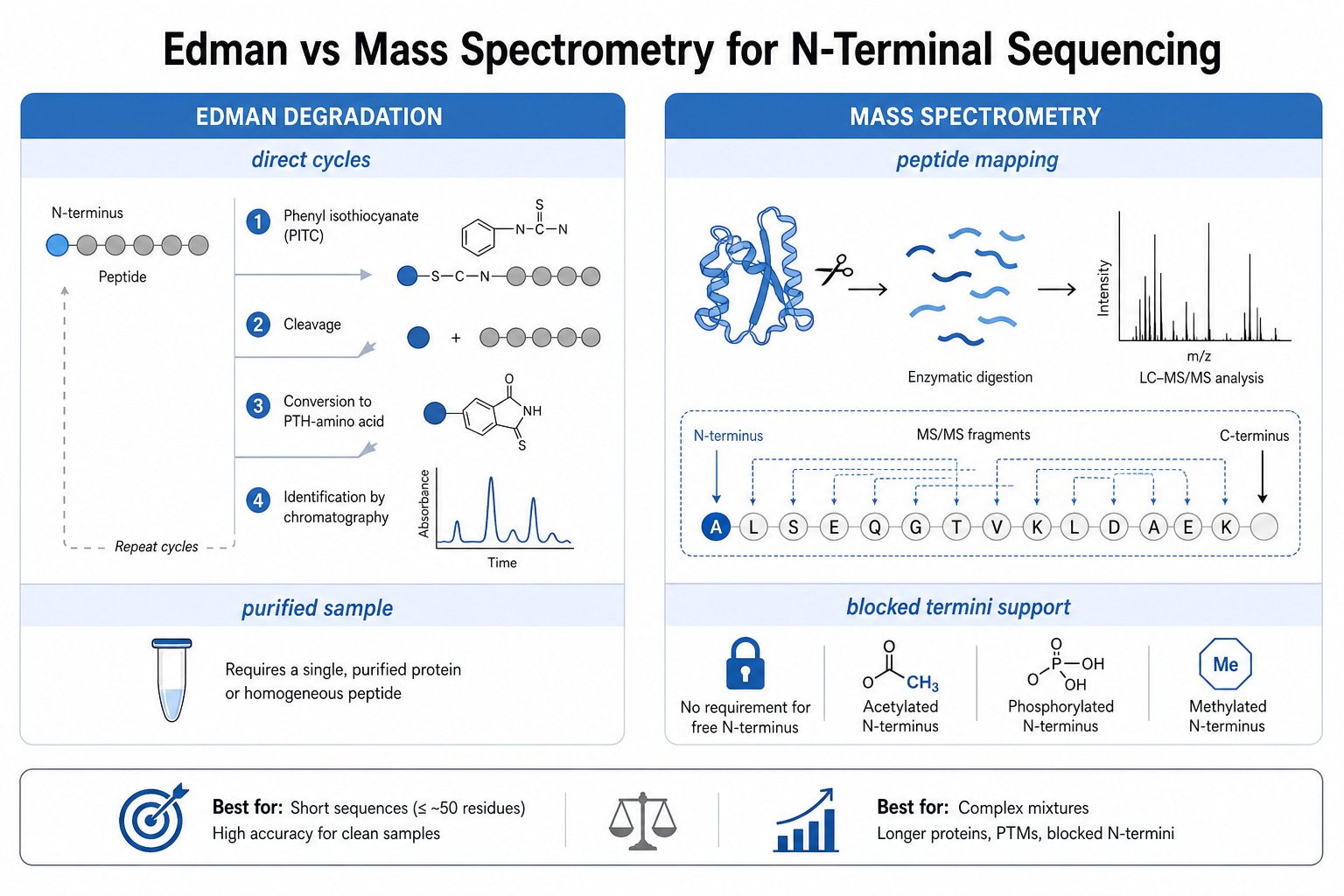
Figure 1. Core differences between Edman degradation and mass spectrometry for terminal sequence confirmation
Researchers should compare N-terminal sequencing methods by the decision behind the project, not by habit or instrument availability alone. A workflow optimized for one purified recombinant product may be the wrong standard for a blocked terminus or an unknown gel band.
How Edman Chemistry Performs in Practice
Sequential Edman analysis selectively modifies the N-terminal residue, cleaves it as a phenylthiohydantoin derivative, identifies that residue, and exposes the next residue for the following cycle. The result is a direct readout from the protein terminus outward.
The approach is often the best first choice when the sample is purified, the N-terminus is free, and the project needs straightforward terminal sequence confirmation. It is widely used for recombinant mature-start verification, secretion leader removal checks, and biopharmaceutical N-terminal QC when cycle one is expected to succeed.
The main weakness appears when the terminus is blocked or when the sample contains competing N-terminal sequences from contaminating proteins. Signal loss can also accumulate over many cycles, so most projects focus on the first several residues rather than long N-terminal coverage. Edman is therefore a targeted terminal method, not a substitute for full protein sequencing.
How MS-Based Terminal Analysis Performs in Practice
LC-MS/MS and related MS workflows support N-terminal confirmation in several ways. Intact mass analysis compares the observed protein mass with the mass predicted for the mature start after leader or tag removal. Terminal peptide identification locates the protein start after digestion with an enzyme chosen to preserve terminal information. MS/MS can confirm the sequence of those peptides when reference interpretation or spectrum review is available.
The MS route is often preferred when Edman cycle one fails, when the protein is too large for simple terminal readout alone, or when the project already requires mapping for QC or comparability. MS can also help distinguish intact product from truncated forms when migration or expression artifacts are suspected.
The main weakness is that MS terminal evidence is usually indirect compared with Edman cycle readout. It depends on digestion design, peptide detectability, reference quality, and manual interpretation of the correct N-terminal peptide among many detected ions. MS is powerful, but it is not automatically simpler than Edman when the only need is a short direct readout on clean material.
Which Approach Fits Different Study Goals
The best choice depends on what the study must prove.
Choose Edman chemistry when the sample is purified, the N-terminus is expected to be free, and the goal is direct confirmation of the first residues at the mature start.
Choose an MS-based route when the N-terminus may be blocked, the project needs intact mass support, or terminal evidence must be integrated with mapping or broader protein characterization.
Choose a combined workflow when the terminal decision is high stakes and orthogonal evidence is worth the added scope. Edman can provide direct cycle evidence when feasible, while MS can confirm mass consistency or identify the N-terminal peptide if cycle one fails.
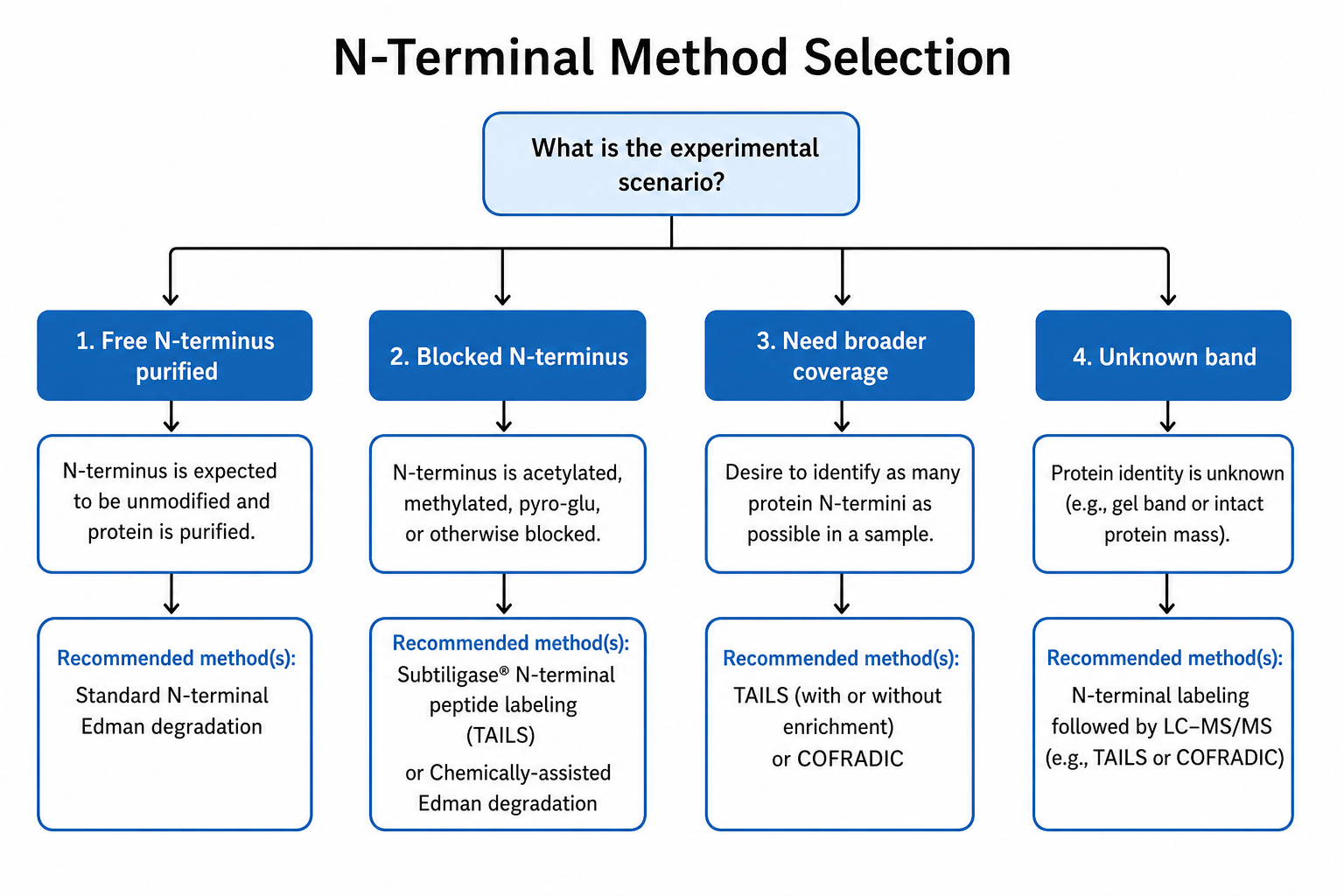 Figure 2. Decision flow for choosing Edman chemistry, MS-based analysis, or a combined route
Reporting depth should be defined before method selection. If the project only needs to know whether a leader sequence was removed, Edman on purified protein may be enough. If the project needs documented peptide evidence, mass consistency, and audit-ready reporting, an MS-based or hybrid route should be planned from the start.
Research Goal and Method Fit
| Research Goal | Usually Best Starting Point | When to Add a Second Method |
| Recombinant mature start confirmation | Edman chemistry on purified sample | Add intact mass or terminal peptide ID if cycle one is weak |
| Biopharmaceutical terminal QC | Hybrid Edman plus mapping | Add repeat analysis or orthogonal digestion if ambiguity remains |
| Blocked N- terminus investigation | MS-based terminal peptide analysis | Consider chemical treatment or broader mapping if peptides are not detected |
| Unknown gel band terminal lead | Band cleanup then Edman or MS terminal readout | Escalate to de novo protein sequencing if identification is required |
| Comparability across production lots | Mapping with terminal peptide focus | Add Edman if direct cycle evidence is still required |
| Tag or leader removal verification | Edman chemistry when terminus is free | Add intact mass comparison for mass- level support |
A strict either-or choice is not always necessary. The most efficient project design often uses Edman when direct readout is feasible and reserves MS-based analysis for blocked termini, larger proteins, or reporting packages that require peptide-level documentation.
Limitations to Keep in Mind
Neither route among common N-terminal sequencing methods is universally superior. Edman chemistry depends on terminus accessibility, sample purity, and sufficient material for the planned number of cycles. MS-based workflows depend on digestion strategy, peptide detection, reference quality, and expert interpretation of the correct terminal peptide.
Researchers should also avoid comparing the two methods only by how many residues are reported. Terminal confirmation and full protein characterization are not the same deliverable. A workflow optimized for a short Edman readout may be insufficient when the real need is a documented N-terminal peptide within a mapped biopharmaceutical product.
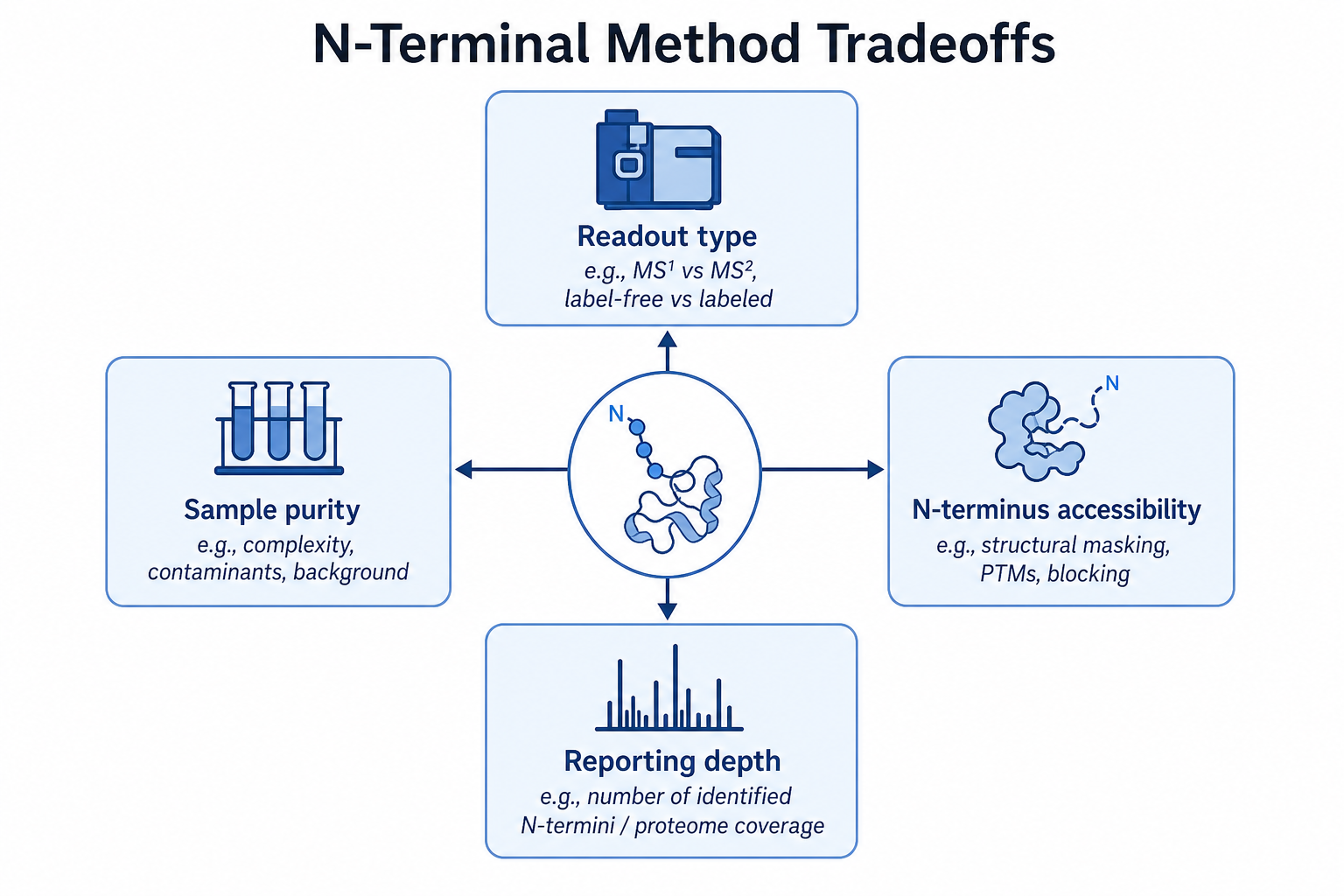
Figure 3. Key tradeoffs to weigh when selecting an N-terminal sequencing method
Before starting analysis, confirm whether the N-terminus is likely to be free, whether the sample is sufficiently pure, whether a reference mature start exists, and whether the final report must support QC, publication, or comparability review.
Frequently Asked Questions
1. Is Edman degradation better than mass spectrometry for N-terminal sequencing?
Neither method is better in all cases. Edman degradation is better for direct terminal readout on purified protein with a free N-terminus. Mass spectrometry is better when the terminus is blocked, when intact mass or peptide evidence is needed, or when terminal confirmation must fit into a broader mapping package.
2. Can MS replace Edman degradation?
MS can replace Edman in some blocked-terminus or mapping projects, but it does not make Edman obsolete. For clean purified samples needing direct cycle evidence, Edman remains efficient and interpretable.
3. When should a project use both Edman and MS?
A combined workflow is useful when terminal identity is high stakes, when Edman may fail at cycle one, or when QC documentation requires both direct cycle readout and peptide-level or intact mass support.
4. Which method is faster?
Edman is often faster for a short direct readout on purified protein when cycle one succeeds. MS- based analysis may take longer because digestion, LC-MS/MS acquisition, and peptide interpretation are involved, but it can save time overall if Edman would fail on a blocked terminus.
5. Which approach is better for recombinant protein QC?
Recombinant QC often starts with Edman chemistry when the mature start must be confirmed on purified material. Mass spectrometry is often added when mapping, intact mass comparison, or blocked-terminus investigation is also required.
Conclusion
N-terminal sequencing methods serve different analytical needs. Edman degradation fits direct terminal readout on purified protein when the N-terminus is accessible. Mass spectrometry fits blocked termini, larger proteins, and projects that require intact mass or mapping support for terminal sequence confirmation. Combined workflows often provide the best balance when terminal identity must be documented at a higher evidence standard.
If your project sits at the boundary between direct Edman readout and MS-based terminal analysis, contact MtoZ Biolabs to discuss N-terminal sequencing, Edman analysis, mapping workflows, or an integrated characterization package.
How to order?




