






Label-Free vs DIA vs TMT for Lysosomal Proteomics
- inventory of proteins in lysosome-enriched fractions with flexible sample addition
- broader comparative quantification across many samples with improved completeness
- tightly matched multiplex comparison of predefined groups in one labeled set
- starting material: cells, tissue, or client-enriched lysosome fractions
- whether lysosome enrichment is included or already completed
- species and approximate sample amount
- group number, replicate number, and whether the cohort is closed
- quantitative claim: inventory, differential ranking, or multiplexed relative comparison
- whether standard differential analysis plus GO, KEGG, and PPI outputs are sufficient
- one-sentence quantitative objective for the lysosomal proteomics study
- sample type, species, and enrichment status
- planned groups and replicates
- whether late sample addition is likely
- preferred report depth: identification and differential tables, plus GO, KEGG, and PPI
- any need for later orthogonal validation, scoped separately
Introduction
Lysosomal proteomics projects often stall at quantification design rather than at enrichment itself. A team may already plan lysosome enrichment from cells or tissue, yet still need to choose among Label-free, DIA, and TMT routes. Sample number, group structure, and the exact quantitative claim all change which strategy is the better fit.
Label-free, DIA, and TMT are all supported for lysosome-enriched proteomics analysis. They do not answer identical project questions. This article compares the three options for lysosomal proteomics and outlines a practical decision path based on cohort design and quantitative goals.
The Decision Question Behind Quantification Choice
The first question is not which platform sounds most advanced. The first question is what quantitative decision the lysosomal proteomics dataset must support.
Common decision targets include:
Enrichment quality remains upstream of all three choices. Poor lysosome enrichment cannot be rescued by quantification chemistry alone.
Label-Free Lysosomal Proteomics
Label-free lysosomal proteomics analyzes each lysosome-enriched sample independently and compares protein abundances across runs after identification and quantification processing.
Best fit
Label-free is useful for pilots, evolving cohorts, and studies that may add samples after the first batch. It is also practical when multiplexing chemistry is unnecessary for the current claim.
Strengths
Sample sets can expand without redesigning a labeling map. Individual sample acquisition supports flexible study logistics. The route is often suitable for early discovery when group structure is still being refined.
Limits
Run-to-run variability must be managed with matched enrichment, acquisition, and normalization. Missing values can increase as cohort size grows. Comparative power depends strongly on replicate design and processing consistency.
Label-free is therefore a strong default when flexibility matters more than multiplexed co-acquisition.
DIA Lysosomal Proteomics
DIA lysosomal proteomics acquires fragment-ion information across wide precursor windows, supporting broader and more consistent quantification across lysosome-enriched samples. Analysis can use tools such as Spectronaut or DIA-NN, depending on project setup.
Best fit
DIA is useful when the project needs reproducible quantification across a larger sample series and wants stronger completeness than many label-free discovery designs provide.
Strengths
DIA often improves quantification consistency across cohorts. It supports discovery-scale comparative lysosomal proteomics when sample numbers and group contrasts are defined. It remains compatible with lysosome-enriched inputs prepared from cells, tissue, or client-enriched fractions.
Limits
DIA still depends on matched enrichment and adequate protein input. It does not remove the need for biological replicates. It also does not resolve membrane versus luminal lysosomal proteins as separate reported classes.
DIA is a practical choice when the quantitative goal is broad comparative profiling with improved cross-sample consistency.
TMT Lysosomal Proteomics
TMT lysosomal proteomics labels peptides from different samples with isobaric tags, then analyzes them together in multiplexed sets. Relative abundances are inferred from reporter ions within matched channels.
Best fit
TMT is useful when comparison groups are predefined and benefit from co-analyzed multiplex channels, such as matched treatment series or compact case-control designs.
Strengths
Multiplexing supports direct relative comparison within a labeled set. Channel structure can improve throughput for defined cohorts. Matched processing within a TMT batch helps control some technical variation.
Limits
Sample maps must be locked before labeling. Adding late samples usually requires a new batch design. Ratio compression and batch structure need careful planning. As with Label-free and DIA, enrichment imbalance across arms can still create false biological signals.
TMT is strongest when the cohort is closed and the comparison map is clear before acquisition.
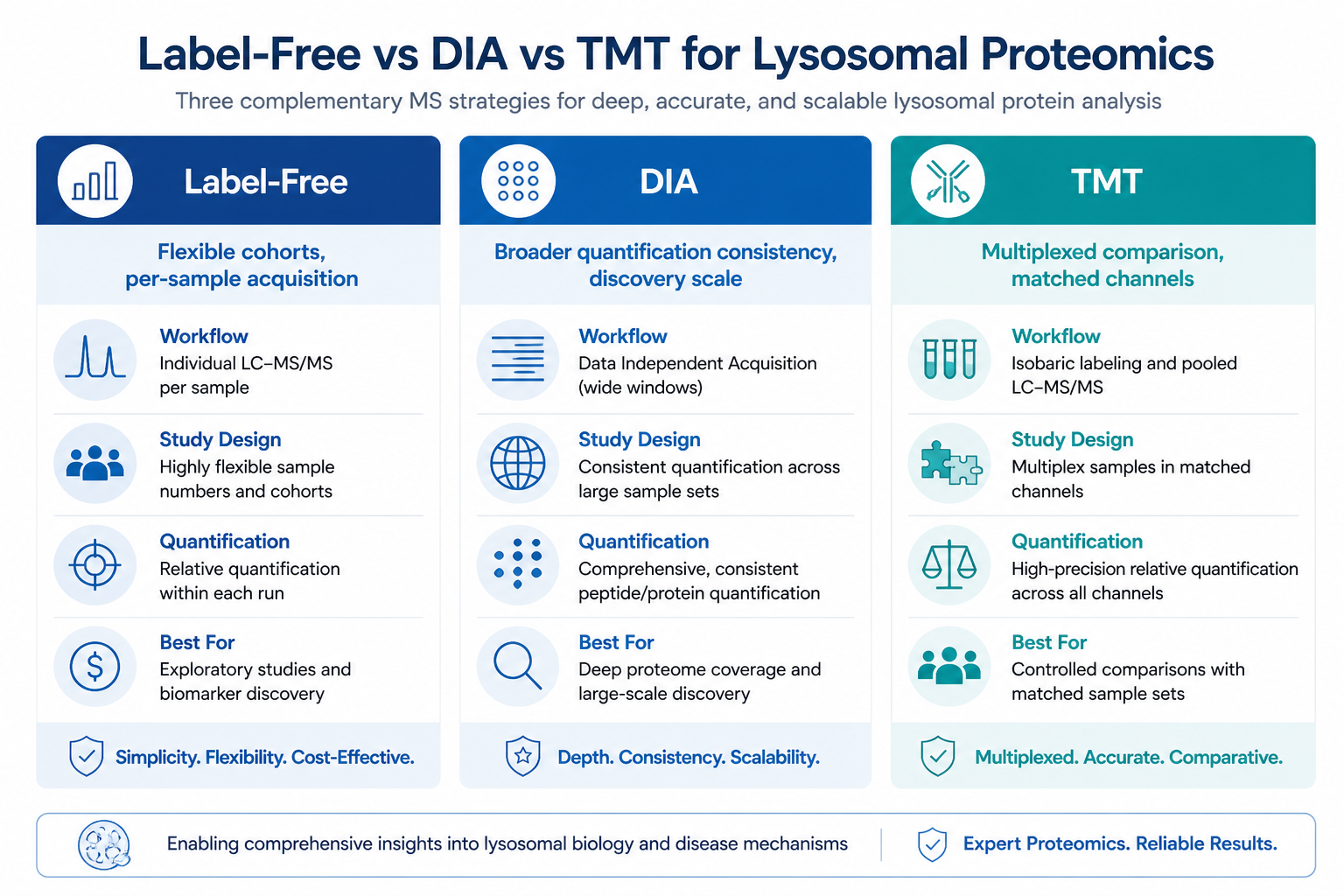
Figure 1. Label-free emphasizes cohort flexibility, DIA emphasizes broader quantification consistency, and TMT emphasizes matched multiplex comparison.
Side-by-Side Comparison for Project Design
|
Decision Factor |
Label-Free |
DIA |
TMT |
|---|---|---|---|
|
Typical use |
Pilots and flexible cohorts |
Broader comparative quantification |
Predefined multiplex comparisons |
|
Sample-map flexibility |
High |
Moderate to high |
Lower after labels are set |
|
Comparative style |
Across separate acquisitions |
Across DIA runs with higher completeness goals |
Within labeled channels |
|
Best when |
Cohort may still expand |
Many samples need consistent quantification |
Groups are locked and co-analyzed |
|
Main caution |
Missing values and run effects |
Still needs matched enrichment and replicates |
Batch map and ratio behavior |
No single route is universally best. The fit depends on sample number, group structure, and whether the quantitative claim requires multiplexed co-measurement.
Scenario-Based Recommendations
Scenario 1: Early lysosomal discovery with changing sample lists
Choose Label-free when the study is still adding conditions or biological replicates and needs maximum intake flexibility.
Scenario 2: Larger comparative cohort with discovery-scale quantification
Choose DIA when the priority is broader, more consistent quantification across many lysosome-enriched samples.
Scenario 3: Compact, predefined group comparison
Choose TMT when channels can be mapped in advance and co-analysis within a labeled set supports the decision.
Scenario 4: Mixed needs across project phases
Some programs start with Label-free pilots, then move to DIA or TMT once group structure and quantitative claims are locked. Method switching should be planned deliberately, not improvised after enrichment.
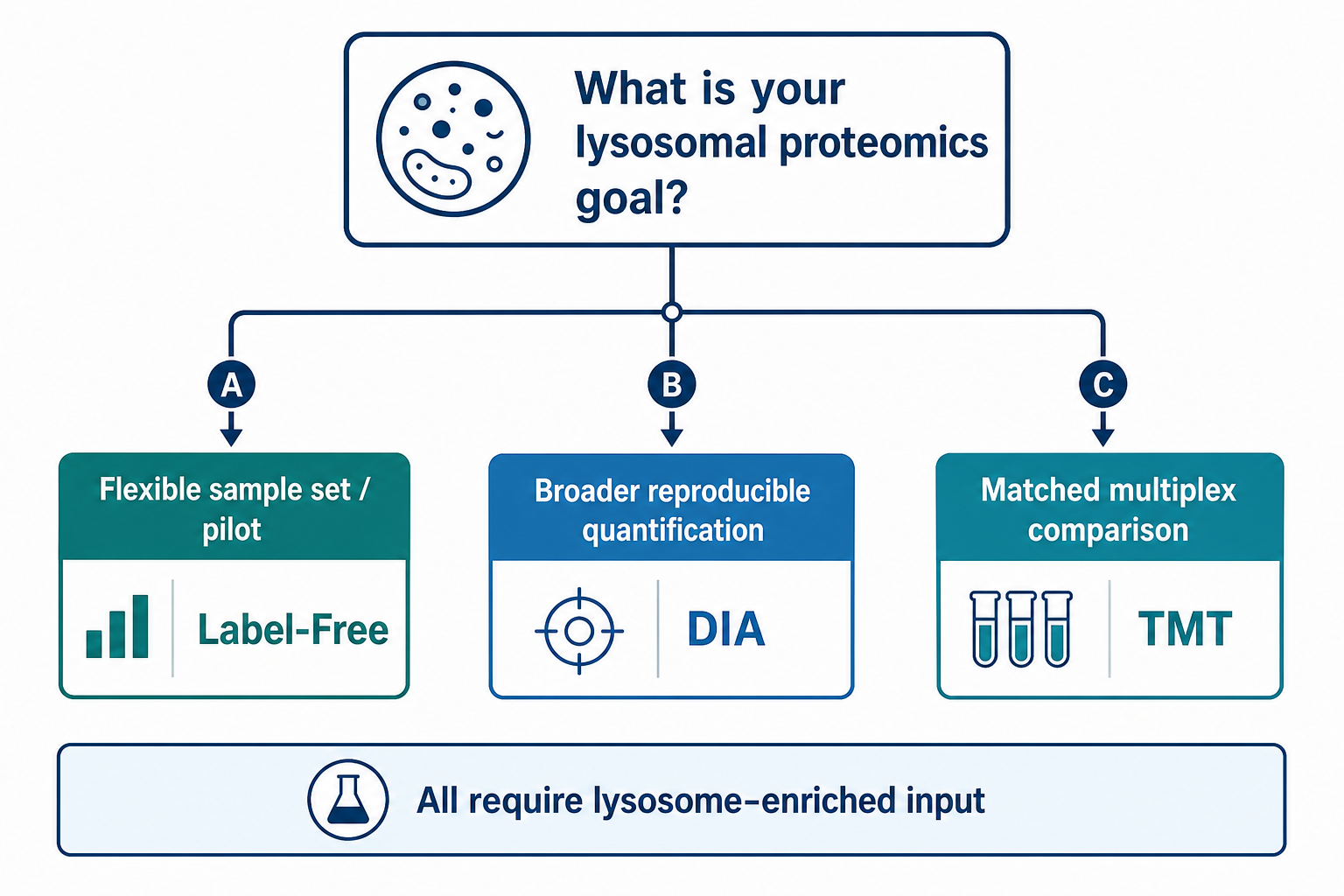
Figure 2. Quantification choice for lysosomal proteomics depends on cohort flexibility, comparative breadth, and whether multiplex matching is required.
Design Inputs That Matter More Than Platform Preference
Before choosing Label-free, DIA, or TMT, confirm:
For cell and tissue inputs, enrichment can be included in the service path. For serum, plasma, CSF, urine, and similar fluids, clients should complete lysosome-component separation before submission. Suggested planning amounts include about 1 x 10^7 cells, 20 to 50 mg tissue, or 20 to 50 ug protein from enriched fractions. Store samples at −80°C and ship on dry ice.
Related Services
Mitochondrial Proteomics Services
What to Prepare Before Locking the Quantification Route
Assemble the following before method selection:
MtoZ Biolabs supports Label-free, DIA, and TMT designs for lysosomal proteomics analysis, together with lysosome enrichment for suitable cell and tissue inputs and bioinformatics interpretation. The technical team can help match quantification chemistry to cohort structure and the organelle-level claim under study.
To compare Label-free, DIA, and TMT for your lysosomal proteomics project, contact MtoZ Biolabs with sample type, enrichment status, group design, sample number, and the quantitative decision the dataset must support.
Frequently Asked Questions
Are Label-free, DIA, and TMT all available for lysosomal proteomics?
Yes. All three quantification strategies are supported for lysosome-enriched proteomics designs.
Which option is best for a small pilot?
Label-free is often the most flexible starting point when sample lists may still change.
When should DIA be preferred over Label-free?
Prefer DIA when broader, more consistent quantification across a larger comparative cohort is the main goal.
When is TMT the better choice?
Choose TMT when groups are predefined and multiplexed co-analysis within labeled channels fits the comparison design.
Does quantification mode separate lysosomal membrane proteins from luminal proteins?
No. Standard lysosomal proteomics analysis does not report those classes as separately resolved categories, regardless of Label-free, DIA, or TMT choice.
Conclusion
Label-free, DIA, and TMT are complementary quantification routes for lysosomal proteomics, not interchangeable labels for the same experiment. Label-free favors flexible cohorts, DIA favors broader comparative consistency, and TMT favors matched multiplexed comparisons in closed designs.
The highest-value choice is made after enrichment strategy, sample number, group structure, and quantitative claims are clear. Teams comparing these options can review cohort design with MtoZ Biolabs and select the lysosomal proteomics quantification route that fits the project decision rather than a default platform preference.
How to order?




