






Label-Free Quantitative Proteomics: LFQ-Based Protein Quantification
Label-free quantitative proteomics (LFQ) is a mass spectrometry-based approach that measures relative protein abundance without introducing isotope or chemical labels into peptides. Unlike label-based strategies such as TMT, LFQ analyzes samples without labeling reagents and derives quantitative information directly from peptide signals generated during LC-MS/MS analysis. Each sample can be analyzed independently, providing flexibility for studies with different sample numbers and experimental designs.
LFQ can be implemented with different mass spectrometry acquisition strategies. In DDA-based LFQ, quantitative information is commonly derived from precursor ion intensities measured at the MS1 level. In DIA-based LFQ, quantitative information is extracted from systematically acquired fragment-ion data. Researchers who already have defined groups and a relative comparison objective can also review the MtoZ Biolabs Label-Free Quantitative Proteomics Service for project-specific feasibility and analysis planning.
What LFQ Quantification Is Designed to Answer
LFQ is designed to compare the relative abundance of the same proteins across different samples and identify proteins associated with biological differences.
Common applications include:
- Treatment versus control comparisons;
- Disease versus healthy group comparisons;
- Phenotype-associated protein profiling;
- Time-course or condition-dependent protein analysis.
LFQ provides relative quantitative information within a defined experimental design. It does not directly provide calibrated protein concentration. When a study requires absolute amounts of predefined proteins, targeted quantitative approaches with standards and calibration should be considered.
How Label-Free Quantitative Proteomics Works
In an LFQ workflow, proteins are extracted and digested into peptides before LC-MS/MS analysis. Unlike label-based approaches, samples are analyzed without isotope or chemical labeling, and quantitative information is obtained directly from mass spectrometry signals.
LFQ can be performed using different acquisition strategies. In DDA-based LFQ, peptide precursor ions are quantified based on MS1 signal intensity or chromatographic peak areas. In DIA-based LFQ, quantitative information is extracted from systematically acquired fragment-ion data. The acquisition strategy determines how peptide signals are collected, while LFQ defines the overall label-free quantification approach.
After acquisition, peptide signals are matched to peptide identities through database-based identification. Quantitative features are aligned across samples and normalized to reduce technical variation. Peptide-level measurements are then summarized into protein-level abundance values for relative comparison. Modern LFQ workflows, such as MaxLFQ, improve quantitative reliability through optimized peptide ratio calculation and normalization strategies, enabling robust proteome-wide label-free quantification (Cox et al., 2014). These approaches build on earlier computational platforms that integrated peptide identification with protein-level quantification (Cox and Mann, 2008).
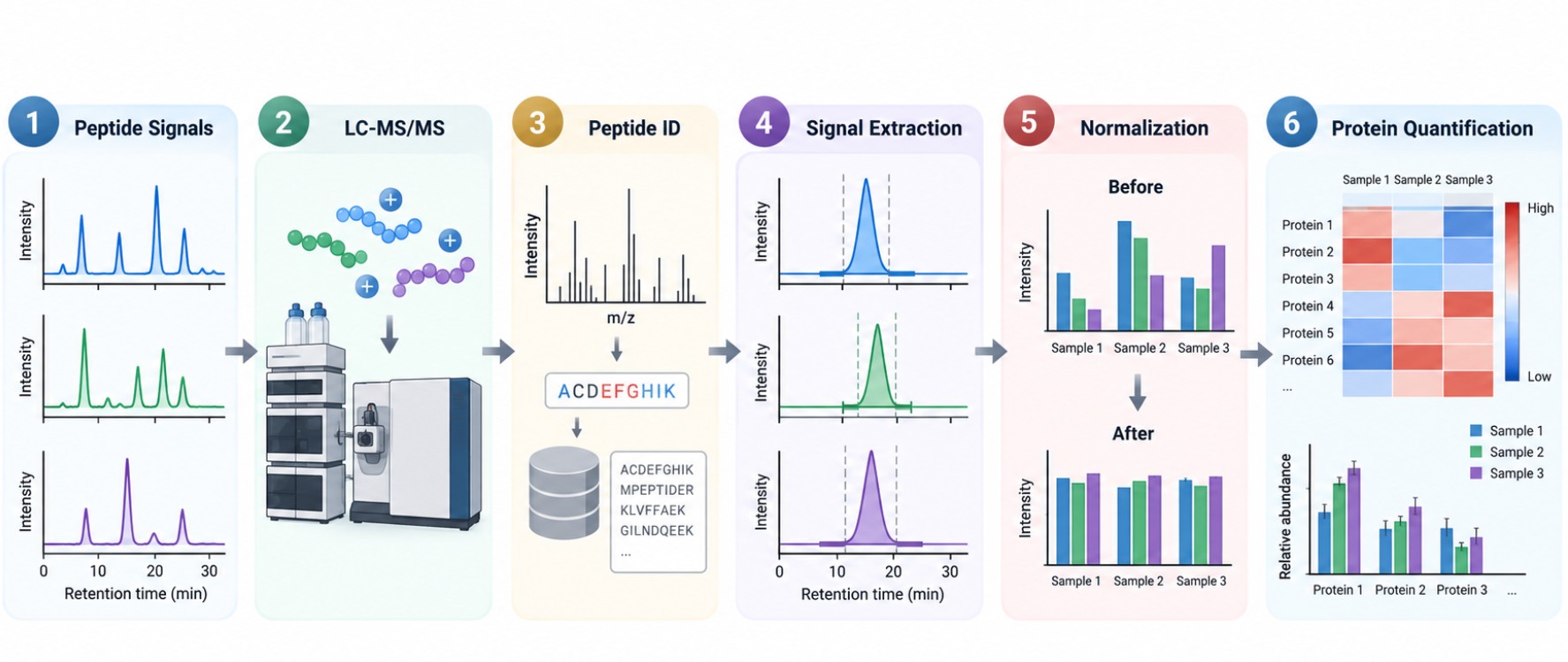
Figure 1. Overview of Label-Free Quantitative Proteomics Quantification Principle.
LFQ Data Quality Considerations and Result Reliability
Because LFQ analyzes each sample independently, ensuring that data from different samples can be accurately compared is an important part of the analysis. Data processing steps such as feature alignment, normalization, and missing-value evaluation help improve the reliability of quantitative comparisons.
During LC-MS/MS analysis, the same peptide may show slight differences in retention time or signal intensity between runs. Feature alignment helps match corresponding peptide signals across samples, while normalization reduces systematic differences caused by technical variation.
Missing values may occur when certain peptides are not consistently detected across samples, especially for low-abundance proteins. These differences can result from limited signal intensity, sample preparation variation, chromatography performance, interference, or acquisition characteristics. Therefore, missing values should be interpreted together with experimental evidence rather than directly considered as biological differences.
Reliable LFQ results also depend on appropriate experimental design. Biological replicates, randomized sample acquisition order, and quality-control samples help monitor technical variation and improve confidence in protein abundance comparisons.
When DDA-Based LFQ Fits a Study
LFQ is suitable when researchers need relative protein abundance comparison without isotope or chemical labeling. The appropriate LFQ workflow depends on sample scale, quantitative requirements, and study objectives.
| Study requirement | LFQ strategy to consider |
|---|---|
| Large-scale studies with more than 20 samples and no fixed multiplexing requirement | DDA-based LFQ can provide flexible sample-by-sample quantitative analysis |
| Limited sample amount requiring deeper protein profiling | DIA-based LFQ workflows can be evaluated based on sample characteristics and project goals |
| Studies requiring high quantitative reproducibility and low technical variation | DIA-based LFQ can be considered when a more standardized quantitative workflow is preferred |
Typical planning amounts are more than 20 ug total protein and more than 0.5 ug/uL, with 50 ug commonly used. These figures help size extraction and digestion. They are planning guides, not acceptance thresholds. Matrix complexity, detergent carryover, degradation, contaminants, and reference-database availability should be reviewed together with protein amount.
Other quantitative strategies may be considered when research goals differ. TMT is suitable for multiplexed comparison of predefined sample groups, while PRM/MRM is considered when targeted measurement of selected proteins or peptides is required.
Choosing an appropriate quantitative strategy requires consideration of multiple factors, including study objectives, sample number, quantitative requirements, and whether the project focuses on discovery or targeted measurement. Researchers can explore How to Choose a Quantitative Proteomics Strategy for a detailed comparison of different quantitative workflows and method-selection considerations. A broader perspective on quantitative proteomics methods, strategies, workflows, and applications is available in Quantitative Proteomics: Methods, Strategies, Workflow, and Applications, which covers label-based quantification, label-free approaches, DIA, targeted proteomics, and other quantitative strategies.
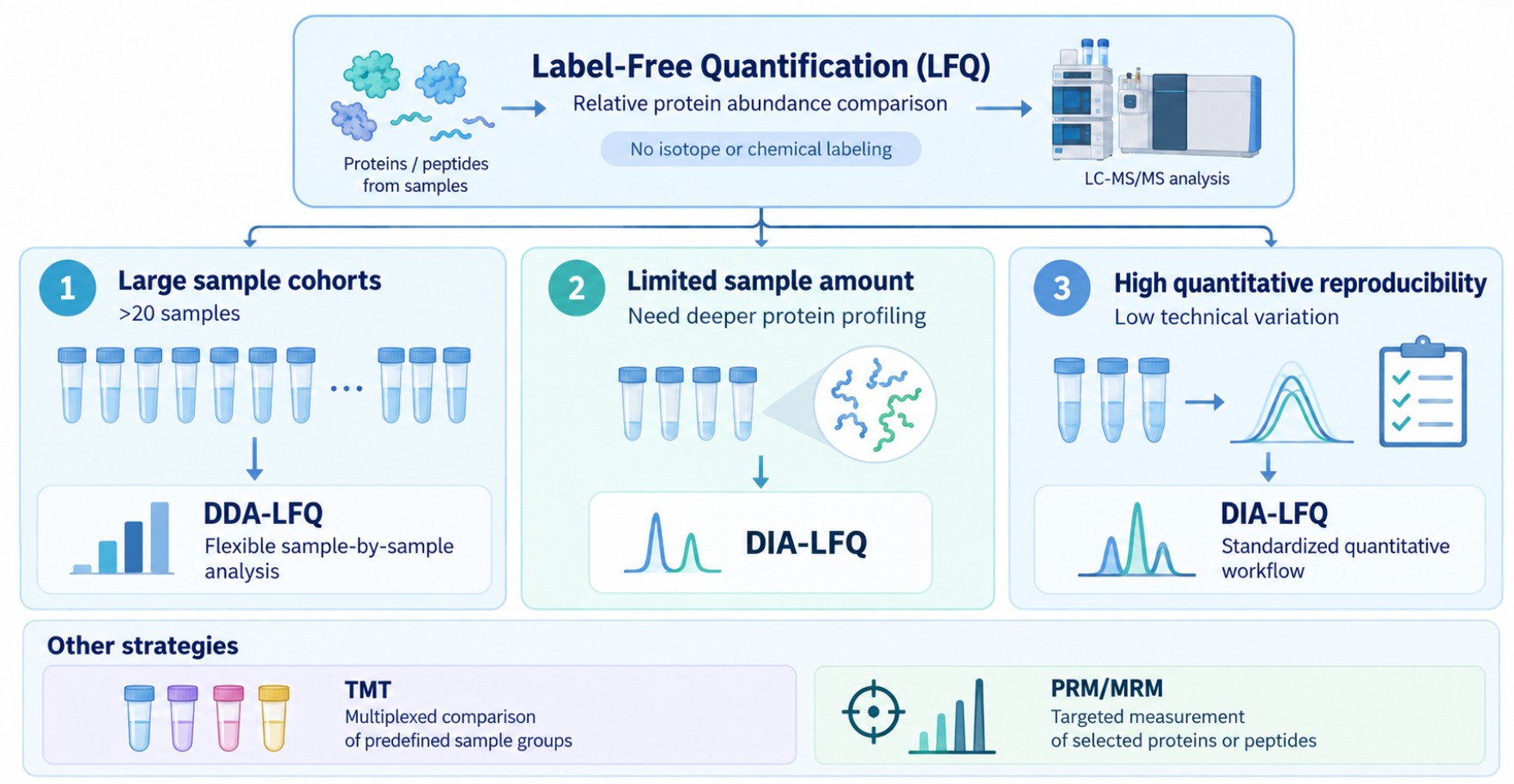
Figure 2. LFQ Strategy Selection for Different Research Requirements.
Frequently Asked Questions
1. Is LFQ the same as DIA?
No. LFQ describes a label-free quantitative strategy, while DIA describes a mass spectrometry acquisition mode. LFQ can be performed using different acquisition strategies, including DDA-based and DIA-based workflows.
2. How much protein is required for LFQ proteomics?
Typical LFQ planning references include more than 20 μg total protein, with 50 μg commonly used. The actual requirement depends on sample type, protein concentration, sample complexity, and overall experimental design.
3. Can additional samples be added after the initial LFQ analysis?
Additional samples can be added if they are analyzed using a consistent experimental workflow, including comparable sample preparation, LC-MS/MS conditions, and data processing procedures. For large studies or extended sample collections, the experimental design and batch organization should be planned in advance to maintain reliable comparison across samples.
4. Can LFQ provide absolute protein concentration?
LFQ primarily provides relative protein abundance comparisons. Absolute protein concentration requires targeted quantitative approaches with suitable standards and calibration.
Conclusion
Label-free quantitative proteomics (LFQ) provides a flexible approach for comparing relative protein abundance across biological samples without isotope or chemical labeling. By combining appropriate experimental design, LC-MS/MS analysis, and quantitative data processing, LFQ supports a wide range of discovery-scale proteomics studies. The suitable LFQ workflow depends on factors such as sample number, quantitative requirements, and study objectives. DDA-based and DIA-based LFQ approaches can be considered according to different experimental needs.
Researchers with defined sample groups and a relative quantification objective can explore the Label-Free Quantitative Proteomics Service to evaluate project feasibility, workflow design, and analysis options.
Reference
- J. Cox, M. Mann (2008). MaxQuant enables high peptide identification rates, individualized p.p.b.-range mass accuracies and proteome-wide protein quantification. Nat. Biotechnol., 26, 1367-1372. https://doi.org/10.1038/nbt.1511
- J. Cox, M.Y. Hein, C.A. Luber, I. Paron, N. Nagaraj, M. Mann (2014). Accurate Proteome-wide Label-free Quantification by Delayed Normalization and Maximal Peptide Ratio Extraction, Termed MaxLFQ. Mol. Cell. Proteomics, 13, 2513-2526. https://doi.org/10.1074/mcp.M113.031591
How to order?




