






The Role of Immunopeptidomics in Cancer Vaccine Development: Neoantigens, MHC Presentation, and Clinical Translation
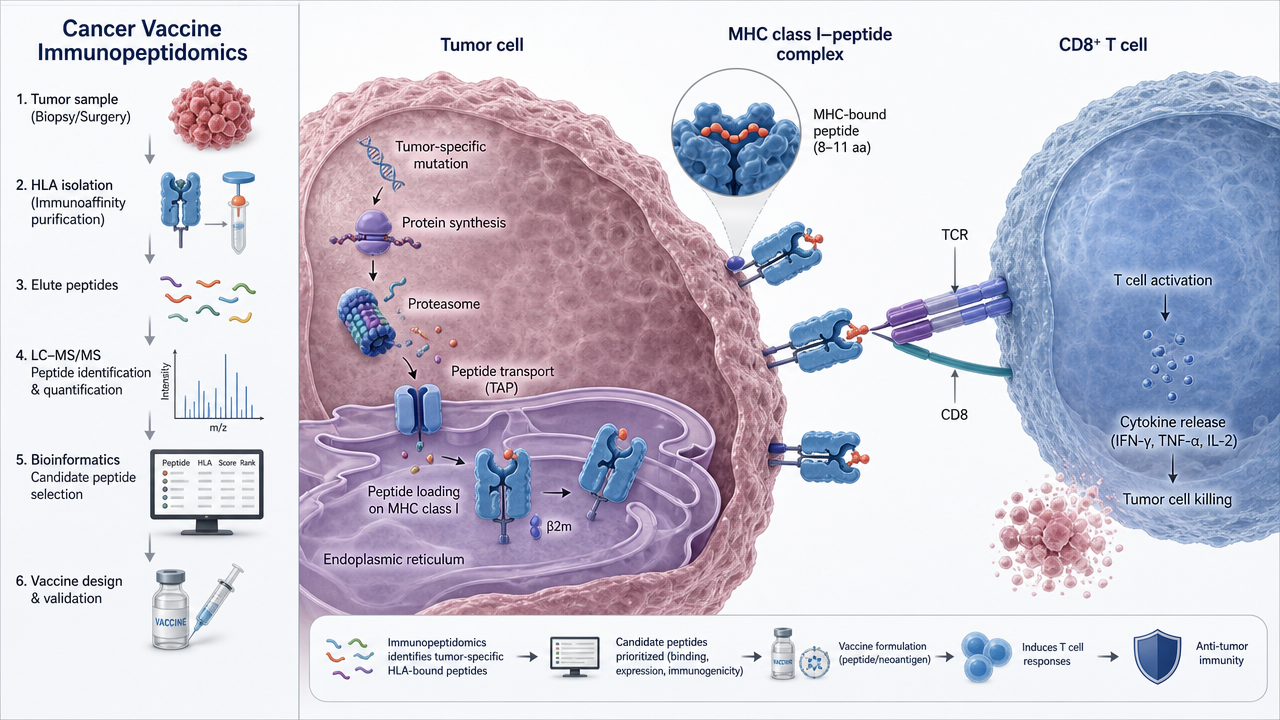
Cancer vaccines need antigens that are tumor-relevant, presented on MHC, and capable of activating cytotoxic T cells. Immunopeptidomics identifies endogenous MHC-bound peptides directly from tumor material.
Key Takeaways
- Predictions alone miss which peptides are presented on HLA.
- MHC peptidome enrichment enables empirical neoantigen validation.
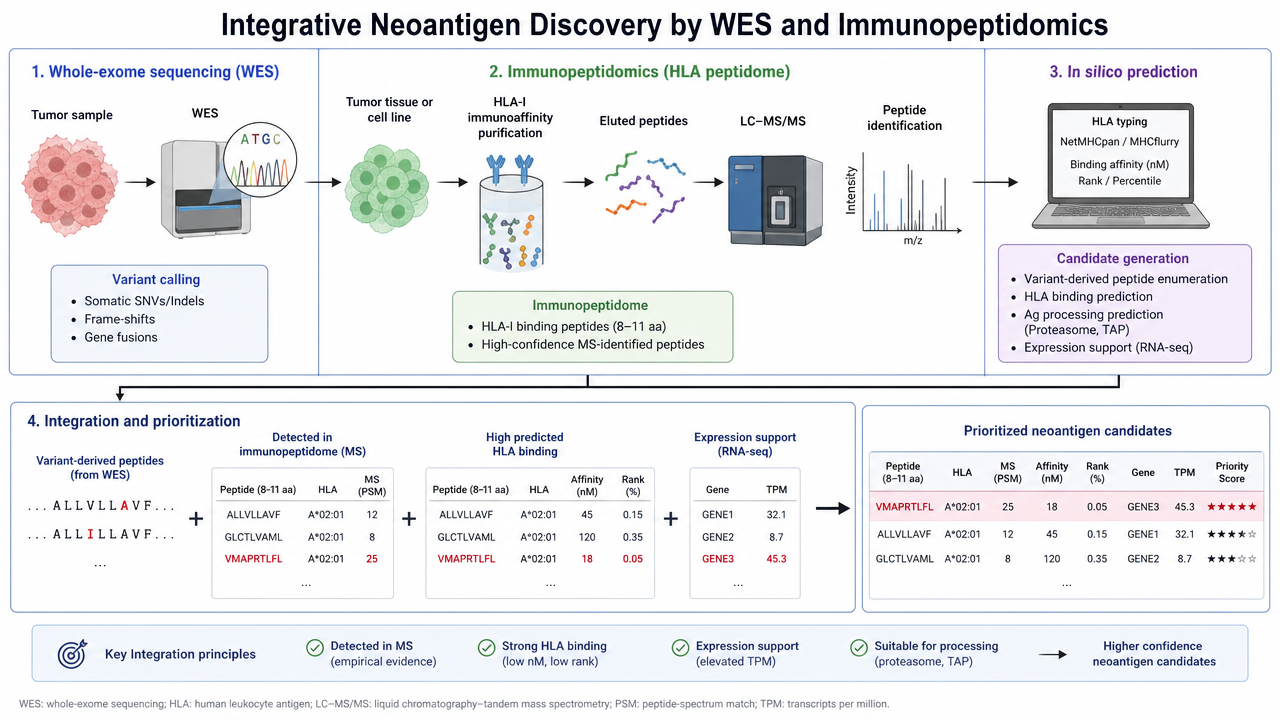
- WES/WGS integration links peptides to somatic mutations.
- Quantitative presentation guides peptide and formulation choice.
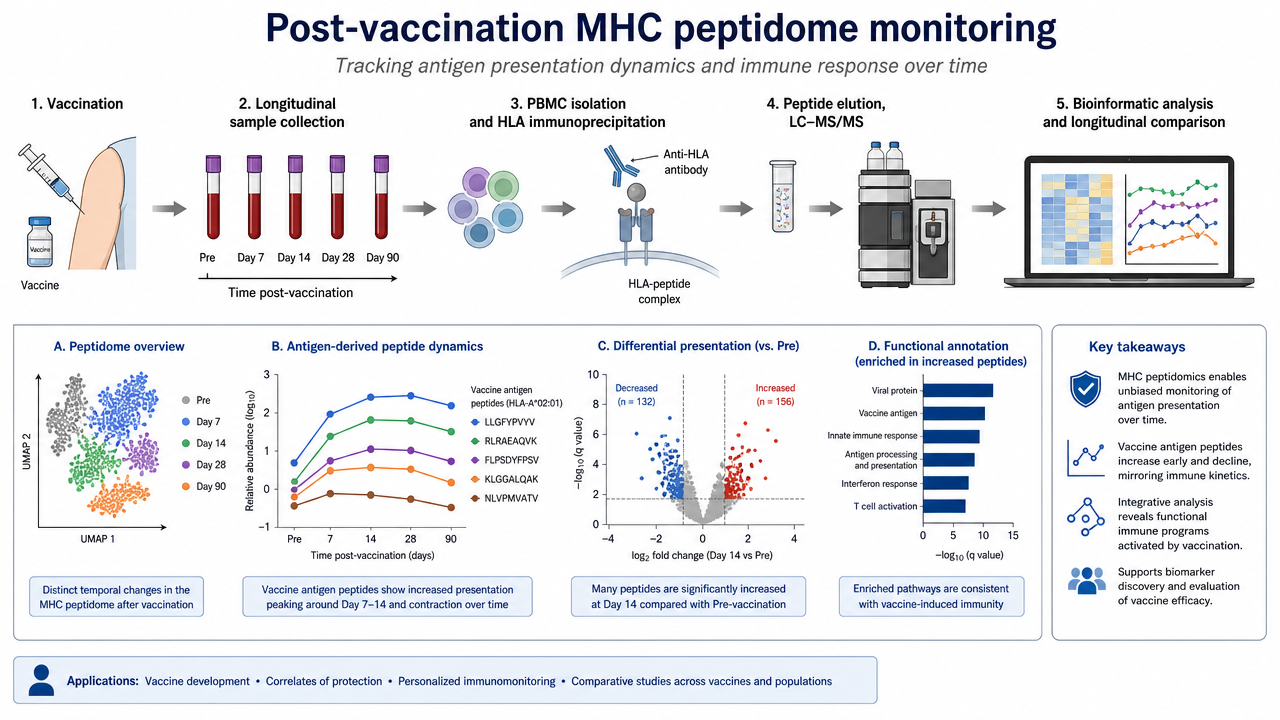
- Longitudinal peptidomics monitors post-vaccination presentation.
Related Services
Integrated Immunopeptidomics Analysis Service
MHC-binding Peptides Identification Service
How Immunopeptidomics Supports Vaccine Programs?
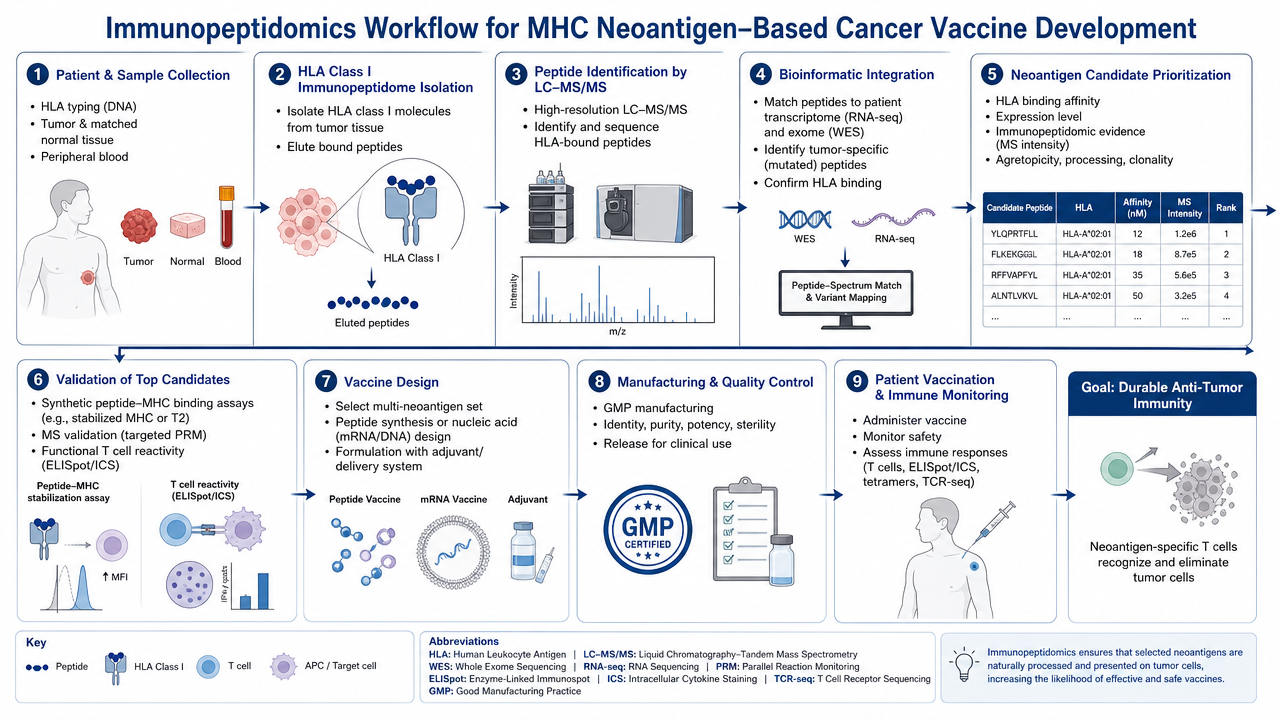
1. Neoantigen Identification
Enrich HLA peptides from tumors; intersect with WES/WGS mutations; validate with T-cell assays.
2. Shared Antigens
Cohort immunopeptidomics reveals recurrent TAAs for off-the-shelf vaccine libraries.
Monitoring and Outlook
Post-vaccination peptidomics checks whether intended peptides enter the presented repertoire.
FAQ
How is this different from mutation calling?
It measures peptides displayed on MHC, not only DNA mutations.
Conclusion
Immunopeptidomics provides an empirical presentation layer for credible cancer vaccine antigen selection.
Submit Inquiry
How to order?




