






Immunopeptide Screening Service
- Development of peptide-based vaccines and immune adjuvants
- Discovery of peptides that modulate inflammation and autoimmunity
- Identification of antiviral or antibacterial therapeutic peptides
- Screening of tumor-specific immunogenic peptides
- Understanding immune signaling mechanisms and peptide–receptor interactions
- Supporting personalized immunotherapy and drug discovery
MtoZ Biolabs provides comprehensive Immunopeptide Screening Services that combine advanced molecular display technologies, high-throughput peptide library screening, and immunological validation assays to identify peptides that regulate, activate, or suppress immune functions. Our solutions cover multiple immunologically active peptide classes, including Immunomodulatory Peptides, Antimicrobial Peptides, Antiviral Peptides, and Antitumor Peptides, enabling precise discovery of bioactive candidates for immune-related disease research and therapeutic development.
What Is Immunopeptide?
Immunopeptides are short bioactive sequences that modulate immune system activity by interacting with immune receptors, cytokines, or cell-surface molecules. They play critical roles in coordinating both innate and adaptive immune responses, bridging cellular signaling and defense mechanisms. These peptides influence inflammation, infection resistance, and immune tolerance, making them key players in immune regulation, vaccine development, and cancer immunotherapy.
Immunopeptide Screening involves systematically identifying peptides that exhibit specific immunological activities or interactions. Through the screening of diverse peptide libraries against immune cell models or disease-relevant targets, researchers can pinpoint peptides that promote immune activation, suppress overactive responses, or modulate signaling pathways in a controlled and therapeutic manner. This process is vital for advancing immunotherapy, vaccine design, and autoimmune disease research, providing molecular tools with clinical potential.
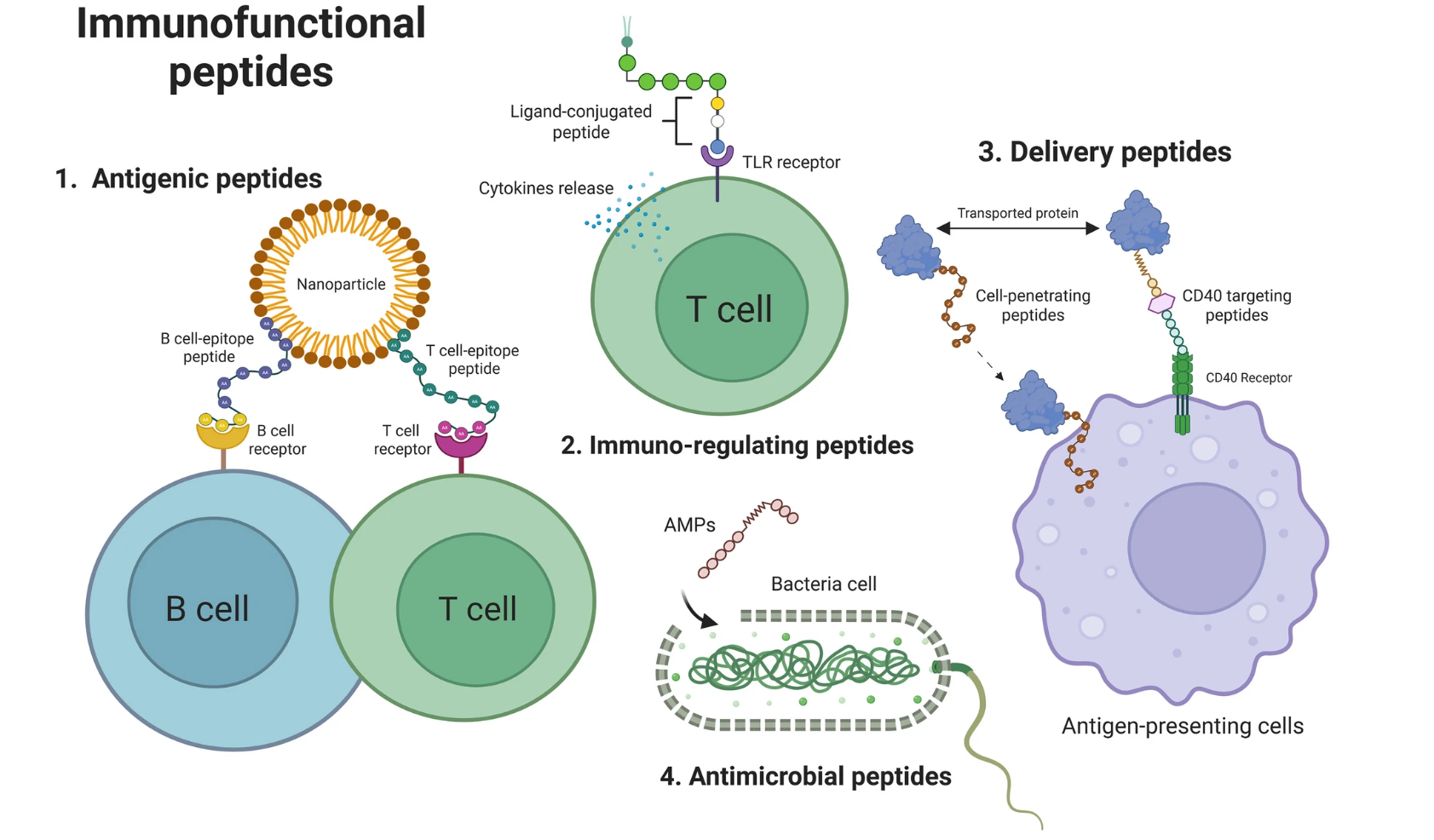
Pratama, A. C. et al. Anim Dis. 2025.
Figure 1. Innovative Functional Immunopeptides
Principle of Immunopeptide Screening
1. Molecular Display Systems: We utilize phage, yeast, bacterial, and cell surface display technologies to screen large-scale natural and synthetic peptide libraries.
2. High-Throughput Screening Platforms: Our automated systems employ microfluidic and liquid-handling technologies for efficient, large-scale peptide evaluation under physiological conditions. These platforms incorporate specialized assays for quantifying biological activity even in challenging models with limited cytopathic effects.
3. Advanced Mass Spectrometry: We implement high-resolution LC-MS/MS analysis for precise peptide identification, sequence verification, modification assessment, and purity determination.
4. Bioinformatics and Computational Analysis: Our integrated bioinformatics pipeline supports peptide structure-activity analysis, predictive modeling, sequence motif optimization, and mechanism interpretation.
Immunopeptide Screening Service at MtoZ Biolabs
MtoZ Biolabs has established a robust immunopeptide screening platform that combines multiple technologies to address the diverse needs of research and therapeutic development. Our service integrates high-throughput screening methodologies with advanced analytical techniques to deliver comprehensive immunopeptide characterization.
Core Service Components
💠Immunomodulatory Peptides Screening Service
This service focuses on identifying peptides that can modulate immune responses, particularly those with anti-inflammatory properties. We employ advanced molecular display systems and high-throughput screening technologies to discover peptides that can regulate inflammatory signaling pathways and reduce pro-inflammatory cytokine production.
💠Antimicrobial Peptide Discovery Service
We screen for host defense peptides (HDPs), naturally occurring polypeptides composed of cationic and hydrophobic amino acids that adopt an amphipathic conformation upon contact with membranes. The service characterizes peptide behavior against both bacterial and fungal species, with particular focus on membrane disruption mechanisms and intracellular targets unique to different microbial classes.
💠Antiviral Peptides Screening Service
This service targets the identification of peptides capable of inhibiting viral entry, replication, and transmission. We utilize molecular display systems and cell-based assays to discover antiviral peptides (AVPs) that act through diverse mechanisms against multiple virus families, including influenza, HIV, hepatitis, and coronaviruses. The screening process evaluates peptide efficacy while assessing cytotoxicity and stability profiles.
💠Antitumor Peptides Screening Service
Our platform includes specialized screening for peptides targeting tumor cells or their specific proteins for diagnostic and therapeutic applications. We employ bacterial surface display technology combined with sorting flow cytometry to efficiently identify peptides that bind to tumor cells or immune checkpoints, supporting advances in cancer immunotherapy.
Why Choose MtoZ Biolabs
✔️Integrated Multi-Display Platforms: Phage, yeast, bacterial, and cell surface display enable comprehensive screening coverage.
✔️Extensive Peptide Library Resources: Access to diverse natural and synthetic libraries for broad immune target exploration.
✔️High Analytical Accuracy: LC-MS/MS and bioinformatics integration ensure precise identification and interpretation.
✔️Customizable Workflow: Flexible experimental design tailored to target molecules and research objectives.
✔️Experienced Scientific Team: Experts with strong immunology and proteomics backgrounds ensure project reliability.
Applications of Immunopeptide Screening Service
Immunopeptide screening supports diverse research and therapeutic objectives:
FAQ
Q1: What types of samples are suitable?
Our Immunopeptide Screening Service accepts a variety of biological and synthetic materials, including recombinant immune proteins, peptide libraries, cell or tissue lysates, and serum or plasma samples. Both natural and synthetic sources can be analyzed as long as the target molecules are well characterized and compatible with downstream assays.
Q2: How should I prepare my samples?
1. Ensure samples are freshly prepared or snap-frozen.
2. Avoid using detergents, reducing agents, or preservatives that may interfere with LC-MS/MS analysis.
3. Store samples at –80 °C before shipment.
4. Transport samples on dry ice to maintain stability during delivery.
For more information, please refer to Sample Submission Guidelines for Proteomics.
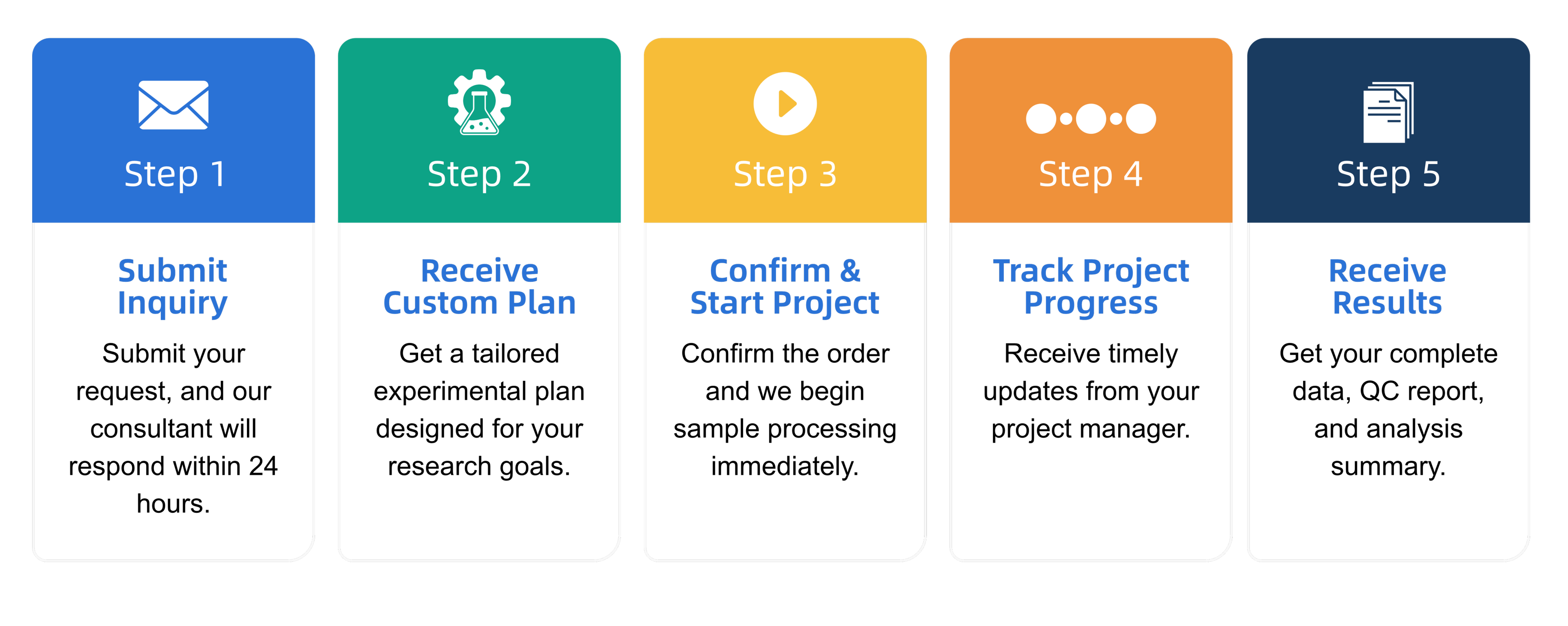
Q3: What is the service general workflow?
Q4: What data formats are provided?
1. Comprehensive result reports in PDF format, including experimental workflow, screening results, and interpretation.
2. Raw and processed data supplied in Excel or CSV files for convenient reanalysis and comparison.
3. Sequence and spectral data from LC-MS/MS provided in FASTA and mzML formats for compatibility with major bioinformatics tools.
4. Visual outputs delivered in PNG or TIFF formats.
5. Additional formats can be provided upon request to meet publication or project-specific requirements.
Start Your Project with MtoZ Biolabs
Contact us today to discuss your immunopeptide screening needs and explore tailored research solutions. Our technical specialists are available to provide a free business assessment.
How to order?




