






Immunomodulatory Peptides Screening Service
- Discovery of therapeutic peptides for autoimmune and inflammatory diseases
- Identification of vaccine adjuvant candidates
- Development of immune checkpoint modulators
- Screening of immunosuppressive peptides for transplantation studies
MtoZ Biolabs offers Immunomodulatory Peptides Screening Services dedicated to discovering bioactive peptides that regulate immune responses. Through high-throughput screening, functional immune assays, and proteomic validation, we help researchers efficiently identify peptides capable of activating, suppressing, or fine-tuning immune functions for therapeutic development and immunological research. The Peptides Screening Service provides a full workflow covering peptide library screening, immune activity evaluation, and data-driven validation of promising candidates.
What Is Immunomodulatory Peptide?
Immunomodulatory peptides (IMPs) are short peptide sequences that regulate innate and adaptive immune responses. They act on immune cells such as macrophages, T cells, and dendritic cells to enhance or suppress cytokine production and signal transduction pathways. These peptides can activate immune defense mechanisms against infections or tumors and help control excessive inflammation and autoimmune reactions.
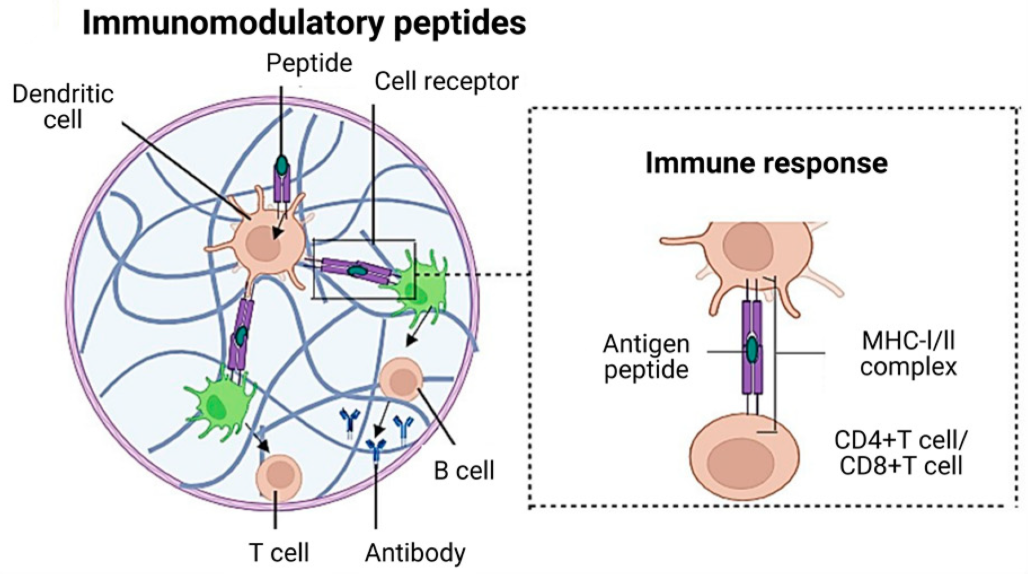
Kapat, K. et al. Biomedicines. 2024.
Figure 1. Mechanism of Immunomodulatory Peptides Eliciting Immune-Cell Response
Systematic screening and characterization of Immunomodulatory peptides provide new strategies for developing peptide-based therapeutics for conditions such as autoimmune diseases, chronic inflammation, allergy, and cancer. By uncovering peptides with precise immunoregulatory functions, researchers can identify safer and more targeted alternatives to conventional small-molecule or antibody-based drugs.
Immunomodulatory Peptides Screening Service at MtoZ Biolabs
MtoZ Biolabs offers an integrated peptide screening pipeline that combines display-based technologies, functional assays, and proteomic characterization to accelerate the discovery of immunomodulatory peptides. Our Immunomodulatory Peptides Screening Service is designed to help clients identify peptides that modulate specific immune pathways or cytokine networks.
💠High-Throughput Library Screening: Phage, yeast, bacterial, and cell surface display technologies are used to screen large peptide libraries for candidates with immunomodulatory potential.
💠In Vitro Immune Assays: Validated through co-culture with immune cell lines or primary immune cells to assess their impact on cytokine secretion, immune activation, and suppression.
💠Quantitative Profiling: LC-MS/MS analysis provides high-resolution identification and quantification of selected peptides.
💠Functional Verification: Peptides are further characterized for receptor binding and pathway modulation using flow cytometry, ELISA, and transcriptomic profiling.
This approach enables the efficient identification of peptides that can regulate immune signaling with minimal cytotoxicity, providing reliable candidates for downstream drug development or therapeutic evaluation.
Why Choose MtoZ Biolabs
✔️Extensive Peptide Libraries: Access to both natural and synthetic libraries encompassing diverse structural and functional peptide classes.
✔️Customized Analysis: Tailored workflows based on research goals, target immune pathways, and experimental models.
✔️Expert Scientific Team: Highly experienced researchers providing technical support from design to data interpretation.
✔️One-Time-Charge: Our pricing is transparent, no hidden fees or additional costs.
Applications of Immunomodulatory Peptides Screening Service
Immunomodulatory peptide screening has broad applications in both basic and translational research, including:
FAQ
Q1: What types of samples are suitable?
We accept a wide range of sample types, including recombinant or expressed peptides, protein targets, biological fluids, tissue, and immune cell samples. For specialized sample types, please contact MtoZ Biolabs for tailored support.
Q2: How should I prepare my samples?
1. Ensure samples are freshly prepared or snap-frozen.
2. Avoid using detergents, reducing agents, or preservatives that may interfere with LC-MS/MS analysis.
3. Store samples at –80 °C before shipment.
4. Transport samples on dry ice to maintain stability during delivery.
For more information, please refer to Sample Submission Guidelines for Proteomics.
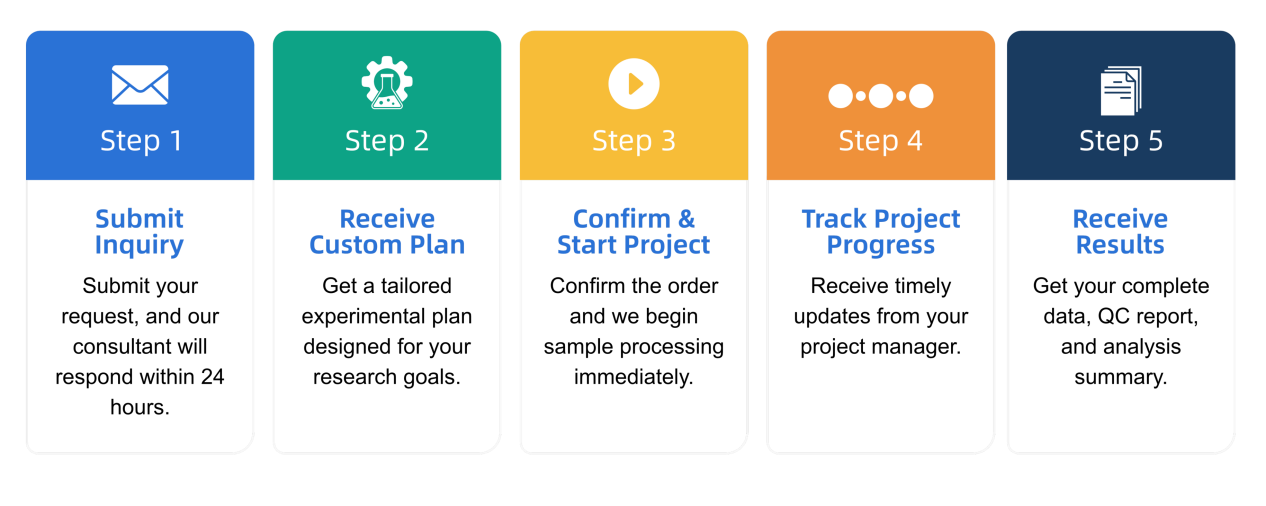
Q3: What is the service general workflow?
Q4: What data formats are provided?
1. Comprehensive result reports provided in PDF format, including experimental workflow, screening results, and interpretation.
2. Raw and processed data files available in Excel or CSV format for convenient secondary analysis.
3. Sequence and spectral data from LC-MS/MS or peptide identification provided in standard formats such as FASTA and mzML.
4. Visual data outputs, including activity curves and comparison charts, delivered in high-resolution image formats such as PNG or TIFF.
5. Additional formats can be provided upon request to meet specific analysis or publication requirements.
Start Your Project with MtoZ Biolabs
MtoZ Biolabs provides end-to-end Immunomodulatory Peptides Screening Services combining advanced peptide display technologies, functional immune assays, and precision proteomics. Whether you are exploring immune activation, suppression, or modulation, our team delivers high-quality, reproducible data to accelerate the discovery of novel immunotherapeutic peptides.
Contact us today to discuss your project or request a detailed quote.
How to order?




