






Immunoglobulin (IG) or antibody glycosylation
Introduction
Immunoglobulins and antibodies are central to adaptive immunity, and most immunoglobulin classes are glycoproteins. Carbohydrate structures attached to IgG, IgA, IgM, IgE, and IgD can influence stability, receptor interaction, mucosal transport, complement activation, and effector signaling. A serum proteomics team may profile total immunoglobulin glycosylation to study inflammation. A biologics group may characterize Fc glycans on a monoclonal IgG therapeutic. An immunology lab may compare glycan patterns on IgA and IgG in mucosal samples.
Immunoglobulin glycosylation, often discussed interchangeably with antibody glycosylation in research and biopharmaceutical contexts, refers to the attachment and structural variation of glycans on immunoglobulin polypeptides. The terms overlap because antibodies are immunoglobulins, but usage differs by field. Immunologists often refer to immunoglobulin glycosylation when discussing multiple antibody classes in serum or tissue. Biologics developers more often refer to antibody glycosylation when focusing on monoclonal IgG products and Fc quality attributes.
Understanding immunoglobulin or antibody glycosylation helps teams define which immunoglobulin class is under study, which glycosylation sites matter for that class, and which analytical workflow fits the biological or product question.
Immunoglobulin Glycosylation and Antibody Glycosylation: How the Terms Relate
Immunoglobulins are antigen-binding glycoproteins produced by B cells. Antibodies are immunoglobulins that recognize specific antigens. In practice, antibody glycosylation usually refers to glycan structures on immunoglobulin molecules, most commonly IgG in therapeutic and autoimmunity research.
The terms are related but not identical in scope.
Immunoglobulin glycosylation encompasses glycan variation across IgG, IgA, IgM, IgE, and IgD, including polyclonal serum immunoglobulins and class-specific biology.
Antibody glycosylation often emphasizes antigen-specific or monoclonal immunoglobulins, especially IgG Fc glycosylation in therapeutic antibody development.
Research on serum immunoglobulin glycosylation may report class-level or total IgG glycan trends in disease. Biologics characterization usually focuses on a defined monoclonal IgG sequence produced under controlled manufacturing conditions.
Both terms describe post-translational glycan attachment, glycoform heterogeneity, and the analytical need to profile glycan structure rather than assume a single uniform carbohydrate composition.
Where Glycosylation Occurs on Immunoglobulins
Glycosylation site location varies by immunoglobulin class, molecular form, and sequence context.
IgG glycosylation
IgG is the most studied immunoglobulin class in glycosylation research and therapeutic development. The conserved N-glycosylation site at Asn297 in the Fc CH2 domain is the primary focus because Fc glycans influence receptor binding, complement interaction, and effector function. Some IgG formats may contain additional N-linked or O-linked sites depending on sequence engineering.
IgA glycosylation
IgA exists in monomeric and dimeric forms and plays a major role in mucosal immunity. IgA molecules carry N-linked glycans on heavy chains and may contain O-glycans in hinge or secretory component-associated regions depending on subclass and form. IgA glycosylation can influence stability, receptor interaction, and mucosal transport biology.
IgM glycosylation
IgM is pentameric or hexameric and contains multiple heavy chain glycosylation sites. IgM glycans have been studied in relation to complement activation, antigen recognition context, and disease-associated serology. The multimeric structure adds complexity to intact glycoform analysis.
IgE and IgD glycosylation
IgE and IgD are less abundant but biologically important in allergy and B cell biology. IgE glycosylation has been linked to receptor interaction and allergic inflammation in research settings. IgD glycosylation is less extensively characterized but contributes to immunoglobulin heterogeneity in specialized immune contexts.
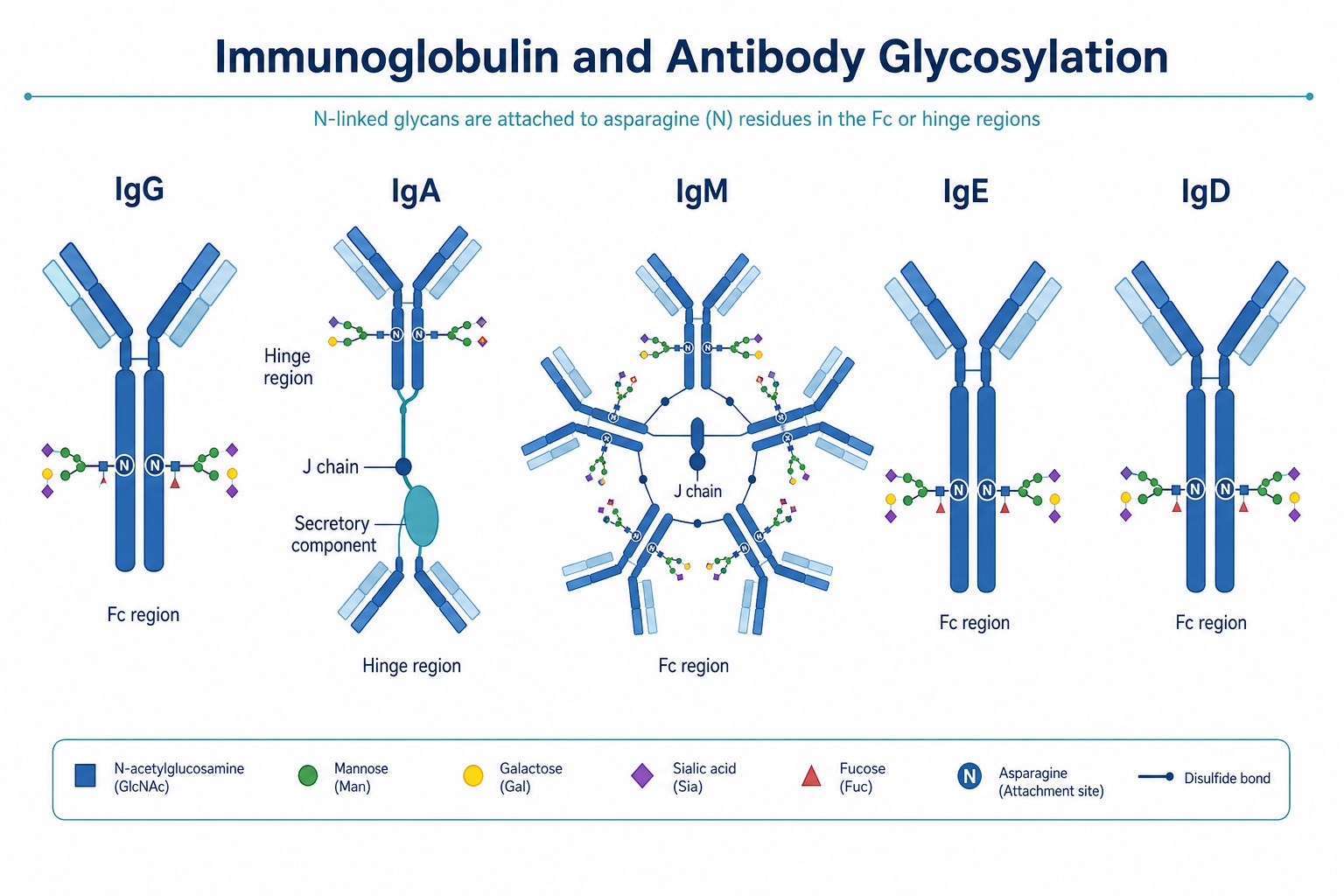
Figure 1. Immunoglobulin glycosylation varies across IgG, IgA, IgM, IgE, and IgD, with class-specific glycan locations and functional relevance.
Major Glycan Types on Immunoglobulins
Immunoglobulin glycosylation is dominated by N-linked glycans, with O-linked glycans present in selected classes and regions.
N-linked glycosylation
N-linked glycans attach to asparagine residues within the Asn-X-Ser/Thr consensus motif. On IgG, Fc N-glycans are the best-characterized immunoglobulin glycans. On other classes, multiple N-linked sites may contribute to structural heterogeneity and functional modulation.
O-linked glycosylation
O-linked glycans attach to serine or threonine residues and are more prominent on some IgA and IgD forms. O-glycans increase structural diversity and may require dedicated enrichment and mapping workflows compared with standard Fc N-glycan profiling.
Glycoform heterogeneity
Immunoglobulins in biological samples exist as glycoform mixtures. The same glycosylation site may carry high-mannose, hybrid, or complex glycan structures with variable fucose, galactose, and sialic acid content. Reporting therefore emphasizes glycan distributions, site occupancy, and class-specific patterns rather than a single structure.
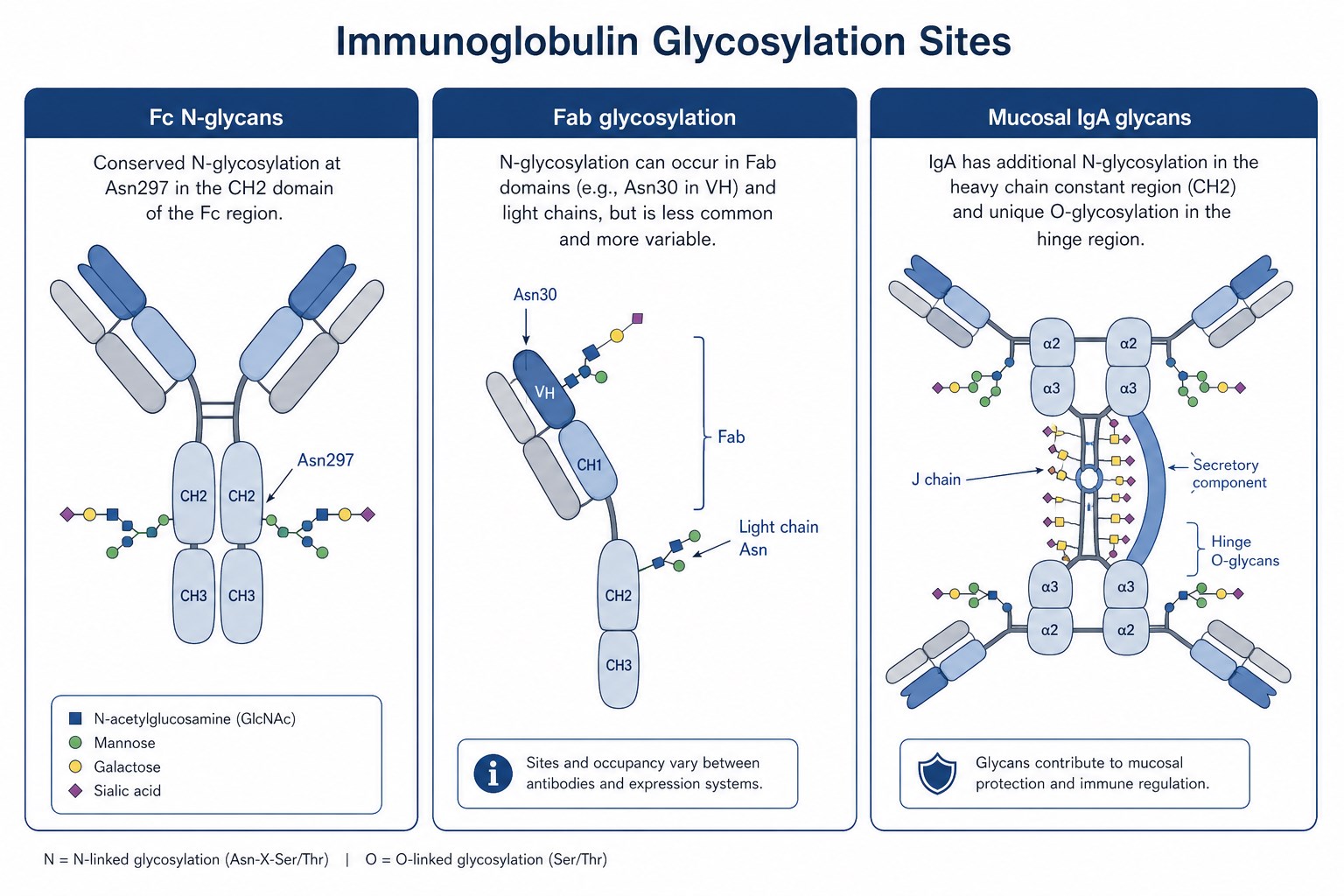
Figure 2. Immunoglobulin glycosylation may occur on Fc N-glycans, Fab-associated sites, and class-specific regions such as mucosal IgA glycans.
Why Immunoglobulin Glycosylation Matters
Immunoglobulin glycosylation affects both physiological immunity and product quality in biologics.
In immune biology, glycans modulate effector function, receptor engagement, complement activation, clearance, and interactions with lectin pathways. Changes in IgG glycosylation have been linked to inflammation, infection response, vaccination, pregnancy, aging, and autoimmune disease. IgA and IgM glycosylation contribute to mucosal and early immune response contexts.
In therapeutic development, monoclonal antibody glycosylation is a critical quality attribute because Fc glycans can influence efficacy, safety, pharmacokinetics, and batch comparability. Glycan control is essential for effector-enhanced, effector-silent, and standard IgG therapeutics alike.
In diagnostic and translational research, immunoglobulin glycan profiling may provide disease-associated signatures when interpreted with appropriate cohort design and class specificity.
Class-Specific Glycosylation Features
Different immunoglobulin classes present distinct glycosylation review priorities.
|
Immunoglobulin Class |
Common Glycosylation Focus |
Typical Research or Product Context |
|---|---|---|
|
IgG |
Fc Asn297 N-glycans |
Therapeutic mAbs, autoimmunity, serum IgG profiling |
|
IgA |
Heavy chain N-glycans and hinge-related glycans |
Mucosal immunity, secretory IgA |
|
IgM |
Multiple heavy chain N-glycans |
Complement-related immunity, pentamer structure |
|
IgE |
Fc region glycans |
Allergy and effector cell interaction |
|
IgD |
Class-specific N- and O-glycans |
B cell biology, specialized immune settings |
IgG dominates biopharmaceutical glycosylation analysis because most therapeutic antibodies are IgG-based. Immunoglobulin glycosylation research in serum or tissue often requires explicit class consideration because pooling all immunoglobulins can obscure class-specific biology.
Standard Approaches to Immunoglobulin Glycosylation Analysis
Immunoglobulin or antibody glycosylation is characterized using workflows selected for class, sample matrix, and analytical depth.
Class selection or enrichment may be required when the study target is IgA, IgM, or another class rather than total IgG. Affinity purification, chromatography, or class-specific isolation improves interpretability in polyclonal samples.
Sample preparation must account for serum, plasma, cell culture supernatant, purified immunoglobulin, or monoclonal antibody drug substance. Matrix components can interfere with digestion, glycan release, and LC-MS performance.
Released glycan profiling cleaves N-glycans enzymatically and reports glycan composition. This approach is widely used for population-level immunoglobulin glycan comparisons.
Glycopeptide LC-MS/MS maps glycan structures to specific peptides and residues. It is the primary route for site-specific immunoglobulin glycan assignment on purified material.
Intact or subunit mass analysis reports global glycoform distributions on intact immunoglobulins or domain fragments. It is useful for rapid comparability screening of monoclonal antibodies and complex multimeric forms when method resolution supports it.
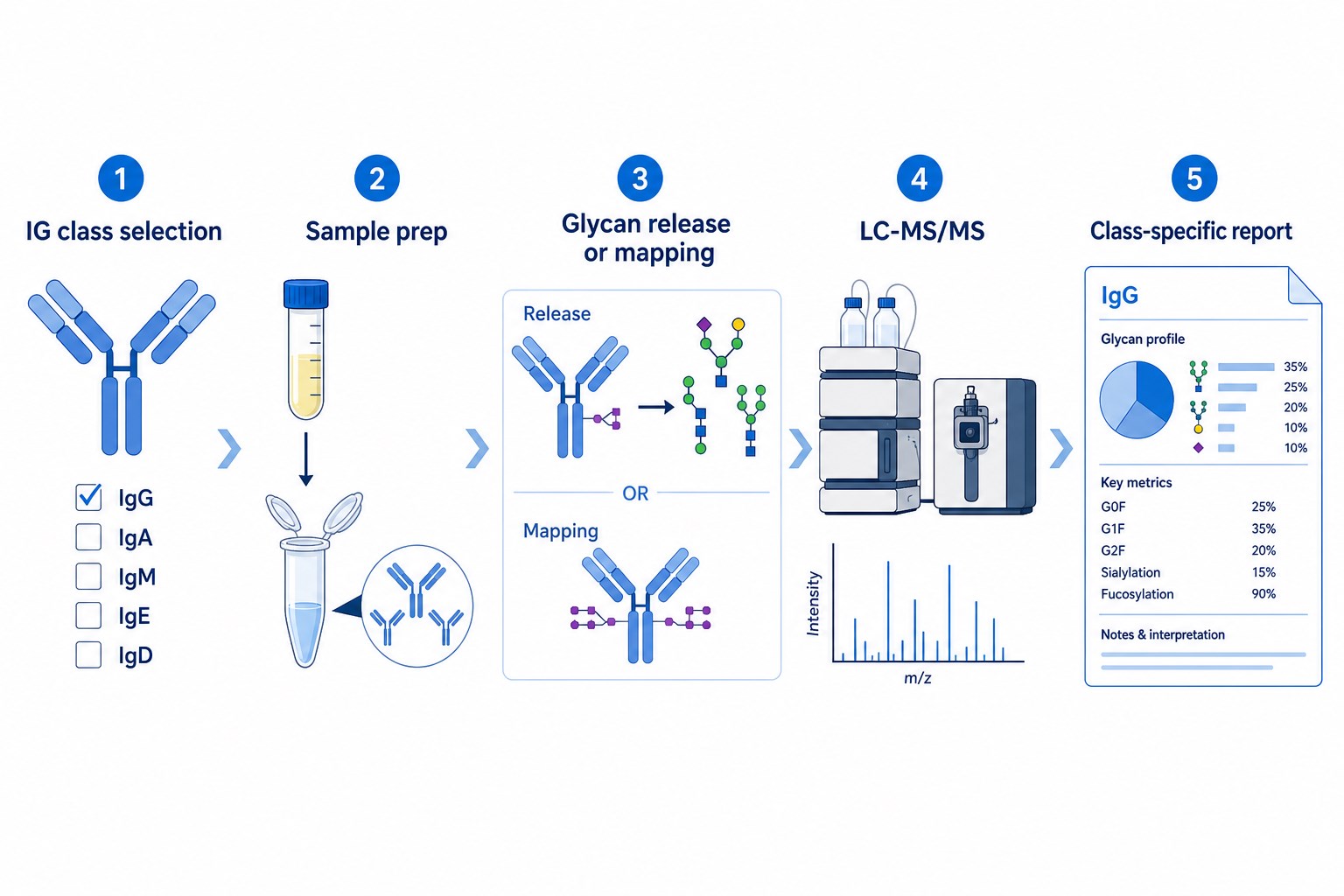
Figure 3. Immunoglobulin glycosylation analysis typically includes class selection, sample preparation, glycan profiling or mapping, and class-aware reporting.
Related Services
Protein Glycosylation Analysis Service
Glycosylation Site Analysis Service
Comprehensive Glycosylation Analysis Service
Protein Drug Glycosylation Analysis Service
Teams studying immunoglobulin or antibody glycosylation can consult MtoZ Biolabs to review immunoglobulin class, sample type, and the analytical depth required for the project goal.
Immunoglobulin Glycosylation in Research and Biologics
Immunoglobulin glycosylation appears in two major settings with different analytical expectations.
In human immunology and disease research, glycan profiling often examines polyclonal immunoglobulins in serum or tissue. The goal may be to identify inflammation-associated IgG glycan shifts, compare healthy and disease cohorts, or study class-specific glycan biology in mucosal or allergic contexts.
In biopharmaceutical development, antibody glycosylation analysis focuses on a defined monoclonal IgG product. The goal is to characterize Fc glycoforms, confirm lot consistency, support comparability, and document glycan control strategy for regulatory review.
The analytical language overlaps, but sample complexity and reporting requirements differ. Polyclonal immunoglobulin studies must address class heterogeneity and cohort variables. Monoclonal antibody studies emphasize reproducibility, site-specific Fc mapping, and batch comparison against qualified reference material.
Core Technical Value and Analytical Limitations
Core Technical Value
Connects immunology terminology with glycan biology.
Clarifies how immunoglobulin class context shapes glycosylation interpretation.
Supports both research and therapeutic workflows.
Applicable to serum immunoglobulin profiling and monoclonal antibody characterization.
Enables site-specific and compositional review.
Combines released glycan profiling, glycopeptide mapping, and intact glycoform analysis as needed.
Captures class-specific functional relevance.
Recognizes that IgG Fc glycans, IgA mucosal glycans, and IgM multimer glycans serve different biological roles.
Integrates with broader protein characterization.
Complements peptide mapping, intact mass analysis, and functional assays in immunoglobulin studies.
Analytical Limitations
Polyclonal samples complicate class attribution.
Total immunoglobulin glycan data may not reflect a single immunoglobulin class without enrichment.
Multimeric forms increase structural complexity.
IgM and some IgA forms require careful method design for intact glycoform interpretation.
O-glycan analysis may need specialized workflows.
O-linked immunoglobulin glycans are not always captured by standard Fc N-glycan release alone.
Biological context strongly affects interpretation.
Disease state, treatment, and sample matrix influence immunoglobulin glycan profiles in research samples.
Functional relevance requires follow-up.
Glycan profiling alone does not confirm effector or clinical outcome without appropriate validation.
Sample and Method Planning Considerations
Immunoglobulin glycosylation projects should define several parameters before analysis begins.
- immunoglobulin class or whether total IgG is the target
- sample type: serum, plasma, purified immunoglobulin, or monoclonal antibody material
- polyclonal research sample versus defined biologic product
- required reporting depth: global profile, site mapping, or batch comparison
- need for class enrichment or antigen-specific purification
- orthogonal assays such as functional or peptide mapping support
Clear scoping prevents misalignment between the analytical method and the immunoglobulin biology under study.
Frequently Asked Questions
1. Are immunoglobulin glycosylation and antibody glycosylation the same?
They overlap. Antibodies are immunoglobulins, but immunoglobulin glycosylation often refers to glycan variation across antibody classes, while antibody glycosylation often emphasizes monoclonal IgG in research or biologics.
2. Which immunoglobulin class is most studied for glycosylation?
IgG is the most studied class because of its role in therapeutic antibodies, autoimmune disease research, and systemic immunity.
3. Where do glycans attach on IgG?
The conserved Fc N-glycosylation site at Asn297 is the primary glycan location on standard IgG molecules.
4. Do IgA and IgM also carry glycans?
Yes. IgA and IgM carry N-linked glycans on heavy chains, and IgA may also contain O-linked glycans depending on form and subclass.
5. How is immunoglobulin glycosylation analyzed?
Common methods include released glycan profiling, glycopeptide LC-MS/MS, and intact or subunit mass analysis, often with class enrichment when needed.
6. Why does immunoglobulin class matter in glycosylation studies?
Each class has distinct structure, glycosylation sites, and functional roles, so class context affects both biology and analytical design.
Conclusion
Immunoglobulin glycosylation and antibody glycosylation describe the attachment and structural variation of glycans on immune system glycoproteins that mediate antigen recognition and effector function. Although the terms are often used interchangeably, immunoglobulin glycosylation broadly covers IgG, IgA, IgM, IgE, and IgD, whereas antibody glycosylation more commonly refers to monoclonal or antigen-specific immunoglobulins in research and biopharmaceutical settings.
Reliable characterization depends on defining immunoglobulin class, selecting sample preparation and enrichment strategies suited to the matrix, and applying glycan profiling or site-specific mapping workflows matched to the project goal. Whether the focus is serum immunoglobulin biology or monoclonal antibody quality review, glycosylation provides essential structural context for functional and comparability interpretation. Teams planning immunoglobulin or antibody glycosylation analysis can contact MtoZ Biolabs to review sample status and the analytical approach best suited to their program.
How to order?




