






Hybridoma Sequencing: Principles and Applications for Monoclonal Antibody Characterization
Introduction
Monoclonal antibody characterization often begins with binding data, isotype information, and production records. Yet many legacy hybridoma projects still lack a reliable genetic record of the antibody that produced the observed activity. A productive hybridoma may bind antigen in ELISA, support an established assay, or remain stored in a freezer, while the exact heavy-chain and light- chain variable region sequences are missing, incomplete, or never archived.
Hybridoma sequencing addresses this gap by recovering antibody sequence information directly from hybridoma-derived nucleic acids. The method uses viable hybridoma cells or high-quality RNA as input, converts immunoglobulin transcripts to cDNA, amplifies variable regions by PCR, and assembles VH and VL sequences with CDR annotation. For monoclonal antibody characterization, this workflow provides primary structure evidence that complements functional assays, supports recombinant redevelopment, and strengthens sequence documentation for internal QC and intellectual property needs.
Hybridoma sequencing is not a binding assay and does not replace epitope mapping or affinity measurement. It is a molecular identity workflow. Understanding its principles, deliverables, and limits helps teams decide when cell-based sequence recovery is the right characterization step and when protein-level antibody sequencing should be considered instead.
Related Services
| Service Area | Recommended Service |
| Hybridoma sequencing | Hybridoma Antibody Sequencing Service |
| PCR-based antibody sequencing | PCR Based Antibody Sequencing Service |
| De novo antibody sequencing | De Novo Antibody Sequencing Service |
| Full antibody sequencing | Antibody Sequencing Service |
| IgG sequencing | IgG Antibody Sequencing Service |
| Protein-level confirmation | Peptide Mapping Service |
Researchers planning monoclonal antibody characterization can consult MtoZ Biolabs to review hybridoma status, species and isotype metadata, and the expected VH/VL deliverable before samples are submitted.
What Hybridoma Sequencing Means in Monoclonal Antibody Characterization
In characterization workflows, hybridoma sequencing answers a specific question: what VH and VL sequences are encoded by the hybridoma that produces this monoclonal antibody?
Binding assays describe how an antibody interacts with antigen. Hybridoma sequencing describes the molecular identity of the immunoglobulin chains, especially the variable regions that define specificity. That distinction matters because characterization programs often need both layers of evidence. A clone may show stable binding while sequence records are absent. A stored hybridoma may still grow while productivity declines. A recombinant redevelopment plan may require VH and VL sequences before vector design can begin.
The most important recovered regions are usually the variable heavy (VH) and variable light (VL) domains. These regions contain complementarity-determining regions (CDRs) that contact antigen. Framework regions provide structural support around the CDRs. Constant regions may also be relevant when isotype confirmation, effector function, or full IgG re-expression is part of the characterization plan. Project scope should therefore define whether variable-region recovery, broader chain coverage, or both are required.
Core Principles of Hybridoma Sequencing
Hybridoma sequencing is a transcript-based recovery workflow. It depends on immunoglobulin mRNA produced by the hybridoma rather than on peptide fragmentation of purified antibody protein.
The workflow begins with feasibility review. Cell viability, passage history, species, isotype, and monoclonality assumptions all affect success. RNA is then extracted from hybridoma cells and converted to cDNA. Variable regions are amplified using primers matched to the immunoglobulin gene family of the source species. Heavy-chain and light-chain amplicons are sequenced by Sanger or NGS methods and assembled into VH and VL contigs.
Bioinformatics analysis assigns framework and CDR boundaries, identifies germline gene usage where applicable, and flags ambiguous segments. Expert review remains important because primer mismatch, mixed clones, RNA degradation, or incomplete metadata can reduce confidence in the final sequence report.
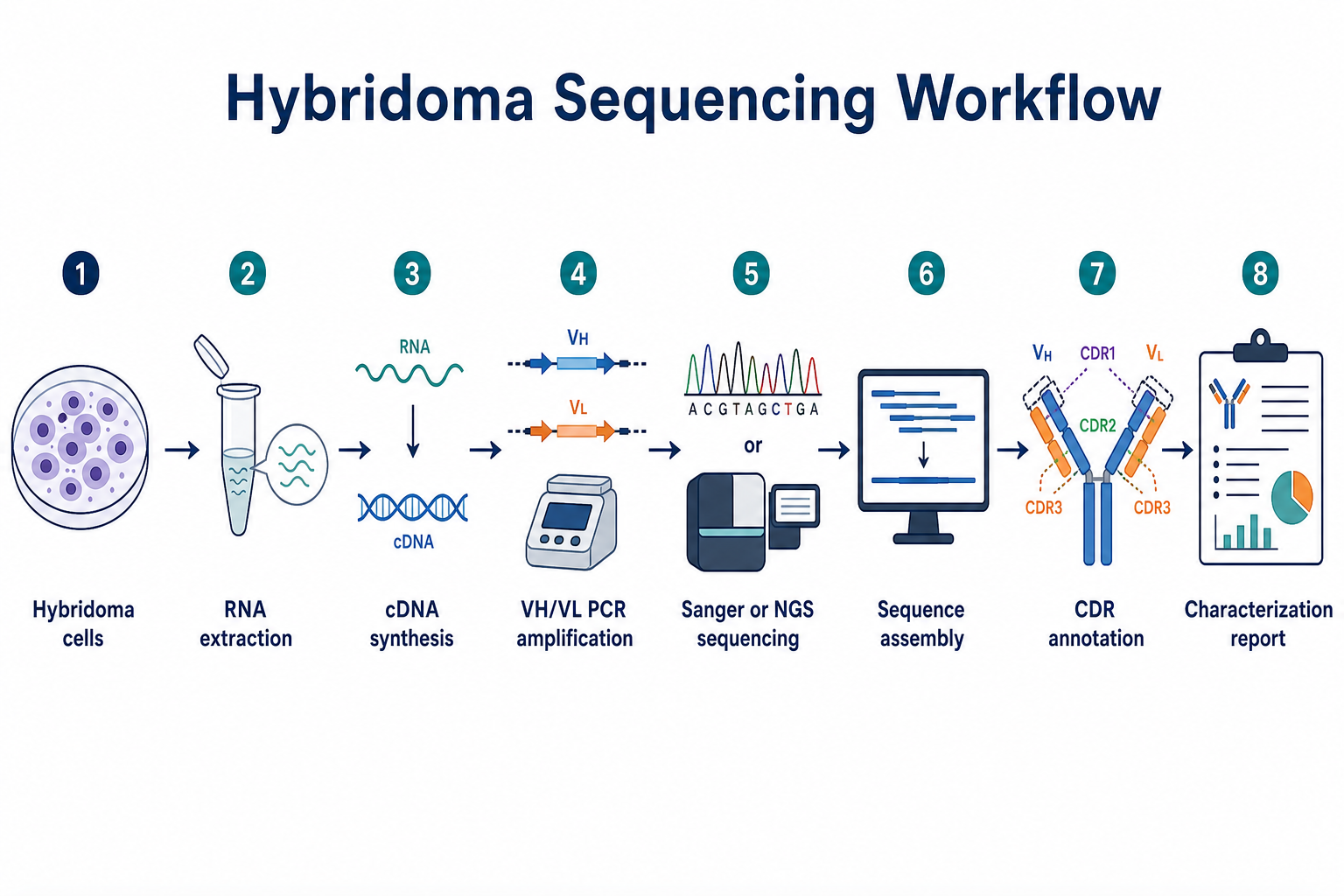
Figure 1. Hybridoma sequencing converts viable cell material into annotated VH and VL sequence evidence for monoclonal antibody characterization.
1. RNA Quality and Transcript Integrity
RNA integrity is central to hybridoma sequencing success. Degraded RNA, delayed processing after harvest, or stressed cultures can reduce amplification yield and assembly confidence. Feasibility review should consider concentration, integrity indicators when available, and whether a healthier culture expansion is needed before extraction.
2. Primer Strategy and Species Matching
PCR amplification depends on accurate species and isotype assumptions. Primer design must cover the relevant immunoglobulin gene families for the hybridoma source. Incorrect metadata can lead to failed amplification or off-target products. Legacy records should be verified when possible before primer selection.
3. Monoclonality and Sequence Ambiguity
Hybridoma sequencing assumes that the recovered sequence represents a single productive clone. Mixed cultures, unstable subclones, or insufficient subcloning can produce overlapping VH or VL evidence. Monoclonality should be confirmed before sequencing when the downstream use requires a single defined sequence for expression design.
Standard Hybridoma Sequencing Workflow
A robust hybridoma sequencing project follows a defined sequence of steps. Each step affects coverage, annotation quality, and report usability for characterization or redevelopment.
1. Project Scoping
Define whether VH/VL recovery, CDR annotation, germline assignment, or broader chain coverage is required.
2. Sample Feasibility Review
Assess cell viability, passage number, species, isotype, and available metadata.
3. RNA Extraction and QC
Obtain sufficient RNA with acceptable integrity for reverse transcription.
4. cDNA Synthesis and PCR Amplification
Amplify heavy-chain and light-chain variable regions with appropriate primer sets.
5. Sequencing Read Generation
Generate Sanger traces or NGS reads from amplicons.
6. Assembly and CDR Annotation
Build VH and VL contigs and assign framework and CDR boundaries.
7. Report Delivery and Validation Notes
Document confidence levels, ambiguous regions, and recommended follow-up.
Sample type strongly affects entry point. Viable hybridoma cultures are the most common starting material. Frozen vials may also work when viability and RNA integrity remain acceptable after thaw. In some cases, hybridoma-derived RNA or cDNA may be submitted directly if extraction quality is already confirmed.
Material Requirements by Starting Sample
The table below summarizes practical starting material considerations. It supports project planning but does not replace sample-specific feasibility review.
| Starting Material | Typical Input Consideration | Main Advantage | Main Risk |
| Viable hybridoma culture | Healthy low- passage cells in active growth | Direct access to fresh immunoglobulin transcripts | Stress or overgrowth can reduce RNA quality |
| Frozen hybridoma vial | Thawed cells with acceptable post- thaw viability | Useful for archived clone recovery | Repeated freeze-thaw can lower success rates |
| Hybridoma- derivedRNA | High-integrity RNA with confirmed concentration | Skips in-lab extraction when quality is already verified | Degraded RNA limits amplification |
| Hybridoma- derived cDNA | Ready template for variable- region PCR | Efficient when amplification design is confirmed | Depends on upstream RNA quality and metadata accuracy |
| Purified monoclonal antibody only | Not a hybridoma sequencing input | Protein-level route may still characterize the antibody | Genetic recovery from cells or RNA is not possible without nucleic acid source |
This material logic is especially important in characterization rescue projects, where the only remaining sample type determines whether hybridoma sequencing remains feasible.
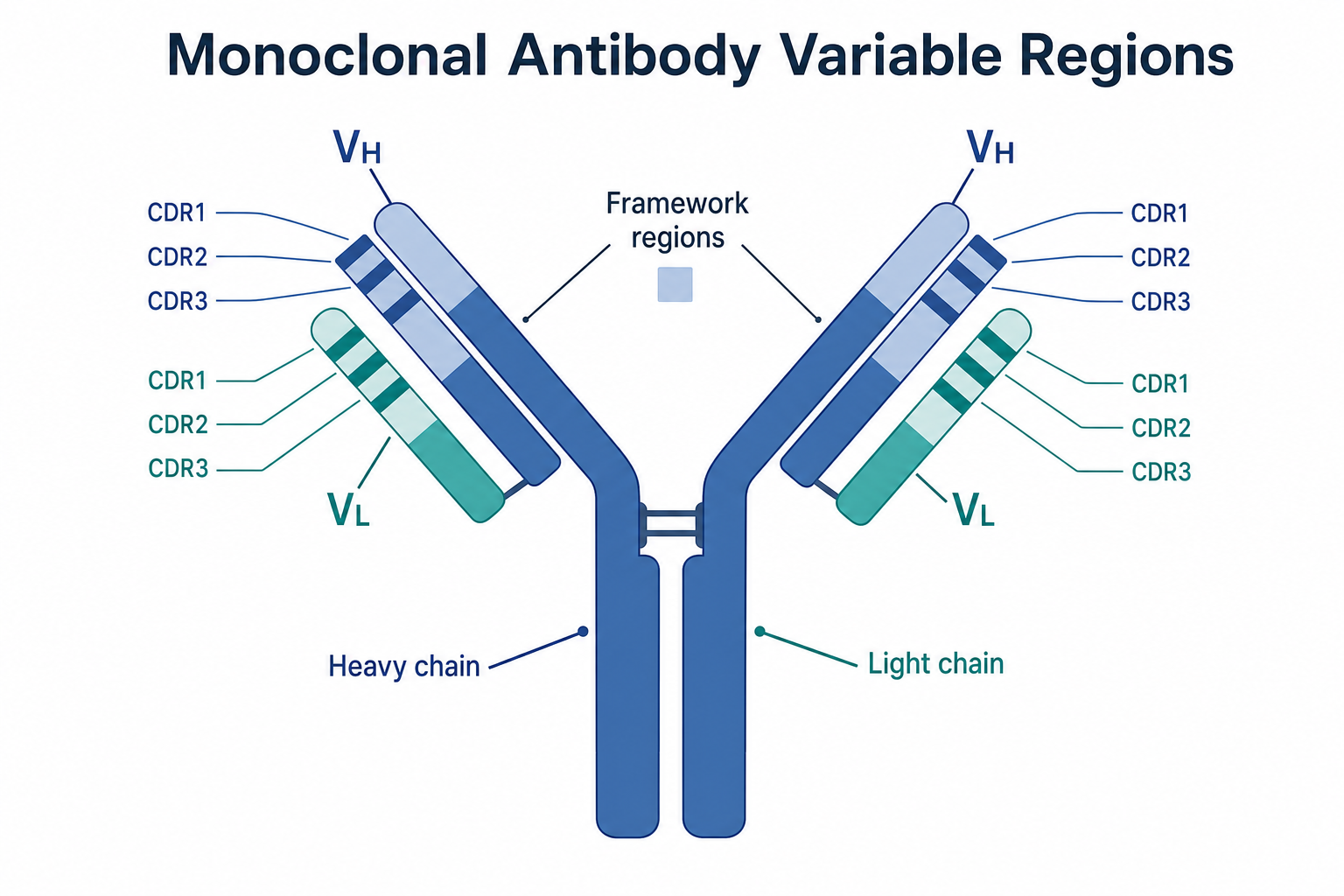
Figure 2. Hybridoma sequencing deliverables usually focus on VH, VL, and CDR-level annotation for monoclonal antibody characterization.
Core Advantages and Current Limitations
1. Core Advantages
(1) Transcript-level identity from the producing clone
Hybridoma sequencing reads the sequence encoded by the cells that secrete the antibody, which is valuable for clone backup and recombinant vector design.
(2) Efficient VH/VL and CDR recovery
The workflow is optimized for variable-region characterization rather than generic protein identification.
(3) Strong fit when viable hybridoma material remains
PCR-based recovery is often faster and more direct than protein-level de novo assembly when cell or RNA material is accessible.
(4) Support for monoclonal antibody documentation
Sequence evidence strengthens internal records, publication support, and redevelopment planning.
2. Current Limitations
(1) Dependence on cell or RNA quality
Low viability, degraded RNA, or poor culture condition can reduce recovery success.
(2) Monoclonality requirements
Mixed or unstable cultures can produce ambiguous sequence evidence.
(3) Not a substitute for functional characterization
Binding, specificity, and developability still require appropriate assays after sequence recovery.
(4) Limited utility after cell loss
When hybridoma cells and usable RNA are gone, de novo antibody sequencing from purified IgG may be required.
Hybridoma sequencing is powerful for molecular characterization, but the evidence level depends on sample quality, project design, and validation strategy.
Applications in Monoclonal Antibody Characterization
Hybridoma sequencing supports multiple characterization and redevelopment scenarios. Teams may need sequence recovery during clone rescue, before recombinant vector design, or while documenting a monoclonal antibody for internal QC and external reporting. In each case, the value of sequencing is molecular identity evidence from the producing hybridoma rather than a direct measure of binding performance.
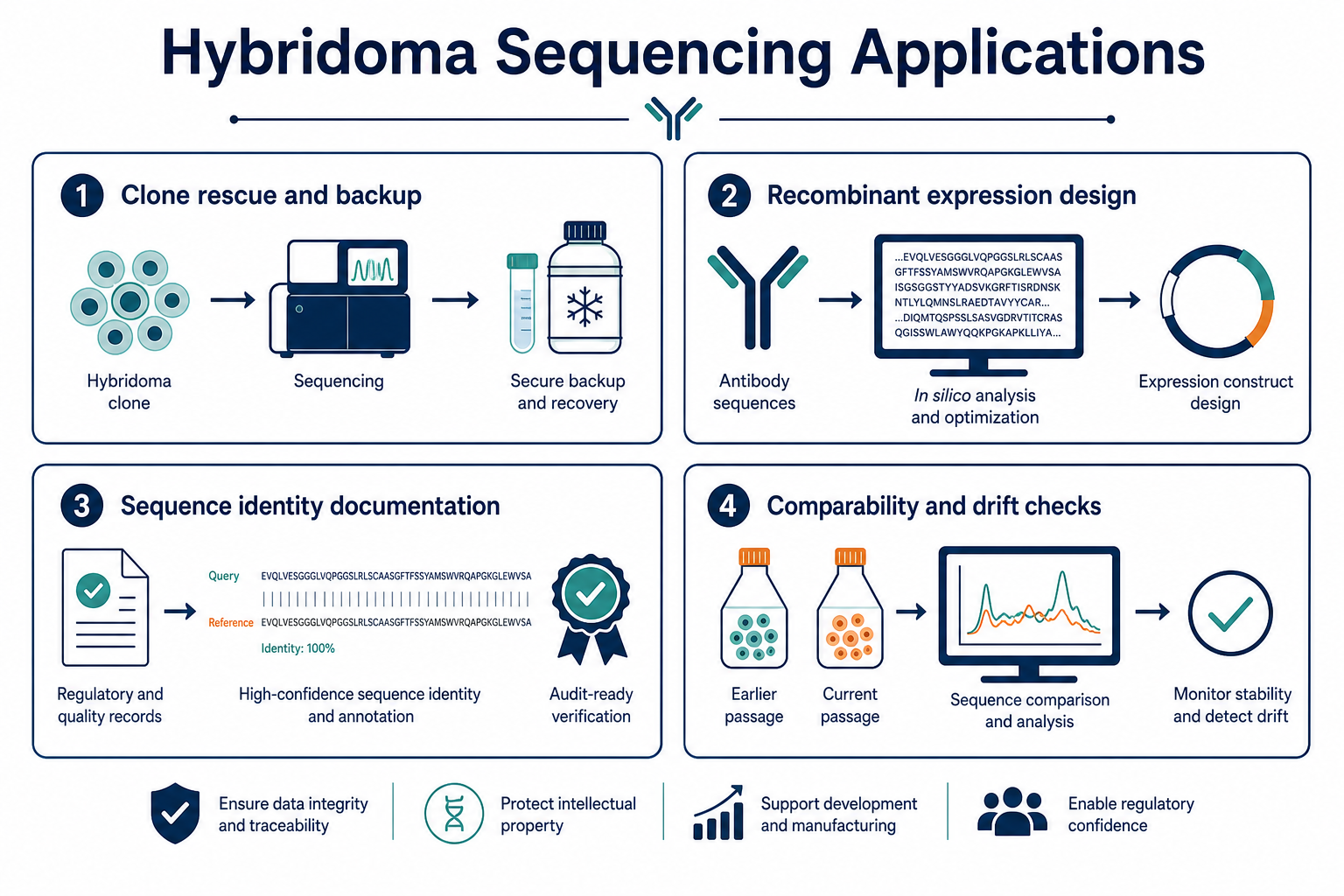
Figure 3. Hybridoma sequencing supports clone rescue, recombinant planning, sequence documentation, and comparability review in monoclonal antibody characterization programs.
Project teams should also define what complementary evidence remains necessary after sequence recovery. Binding confirmation, expression QC, and developability review often continue even when VH and VL sequences are available. The table below links common characterization scenarios to typical sequencing deliverables and the follow-up evidence that may still be required.
| Characterization Scenario | What Hybridoma Sequencing Provides | Complementary Evidence Often Still Needed |
| Legacy hybridoma rescue | Annotated VH and VL sequences for redevelopment | Binding confirmation after recombinant expression |
| Recombinant expression planning | Variable-region sequences for vector design | Expression yield and product QC |
| Clone backup before instability | Archived primary structure from producing cells | Productivity monitoring and cell bank management |
| Sequence drift or identity checks | Transcript-level comparison against historical records | Functional comparability assays |
| Patent or publication support | Documented VH, VL, and CDR annotation | Experimental data supporting utility and specificity |
| Isotype and format redevelopment | Framework and variable-region basis for engineering | Developability and stability assessment |
These applications show why hybridoma sequencing is often treated as a foundational characterization step rather than a standalone endpoint. Sequence recovery defines molecular identity. Functional, structural, and developability characterization may still require additional assays.
Expected Deliverables and Validation
A useful hybridoma sequencing report should include more than a sequence string. Characterization-focused deliverables often include:
-
annotated VH and VL sequences
-
CDR1, CDR2, and CDR3 boundaries
-
framework region annotation
-
germline gene assignment where applicable
-
raw sequencing reads or trace files when required by the project
-
QC notes on RNA quality, assembly confidence, and ambiguous regions
Validation should match the intended use. For expression design, CDR accuracy and clean VH/VL pairing matter most. For documentation, transparent reporting of unsupported regions may be sufficient if the goal is archival evidence rather than immediate cloning. Useful validation steps may include replicate amplification, independent primer strategies for uncertain regions, and orthogonal protein-level confirmation when purified antibody is also available.
Researchers should treat low-confidence CDR segments cautiously, especially when the sequence will be used directly for expression construct design or patent claims.
How Hybridoma Sequencing Fits Broader Characterization Programs
Monoclonal antibody characterization often combines multiple evidence types. Binding assays define functional behavior. Intact mass analysis, peptide mapping, or glycan profiling may describe product form. Hybridoma sequencing adds genetic identity from the producing clone when that material is still available.
The strongest programs define the downstream use before sequencing begins. A report intended for vector construction requires higher confidence in CDR boundaries than a report intended only for internal sequence archiving. Likewise, a rescue project with limited cell material may need feasibility review before expansion, extraction, and amplification are attempted.
When hybridoma cells are no longer accessible, characterization should shift to protein-level routes such as de novo antibody sequencing or peptide mapping, depending on whether the sequence is unknown or a reference already exists.
Future Outlook
Hybridoma sequencing continues to benefit from improved primer coverage strategies, better NGS read handling for variable regions, and more integrated genetic plus proteomic characterization workflows. Laboratories are increasingly using sequence recovery not only for rescue, but also as a standard archival step when a monoclonal hybridoma is first selected. At the same time, expert review remains important because antibody variable regions are diverse, somatically mutated, and sensitive to sample-specific constraints.
For many teams, outsourcing hybridoma sequencing provides access to feasibility review, optimized amplification workflows, and reporting formats suited to characterization, redevelopment, or documentation needs without building every capability internally.
Frequently Asked Questions
1. What is hybridoma sequencing?
Hybridoma sequencing is a PCR-based workflow that recovers VH and VL sequences from hybridoma-derived RNA or cDNA. It is used to characterize the molecular identity of a monoclonal antibody produced by a hybridoma cell line.
2. How does hybridoma sequencing support monoclonal antibody characterization?
It provides primary structure evidence for the variable regions that define antibody specificity. This complements binding assays and supports clone backup, recombinant planning, and sequence documentation.
3. Can hybridoma sequencing work from frozen cell stocks?
Yes, when post-thaw viability and RNA integrity remain acceptable. Feasibility review before shipment or expansion is recommended.
4. Does hybridoma sequencing prove binding activity?
No. It identifies molecular sequence. Binding, specificity, and functional performance should be confirmed with appropriate assays.
5. What if hybridoma cells are no longer available?
If purified monoclonal antibody remains, de novo antibody sequencing or related protein-level workflows may be the appropriate characterization route.
Conclusion
Hybridoma sequencing provides a practical way to recover VH and VL sequence information for monoclonal antibody characterization when viable hybridoma material or high-quality RNA remains available. By combining RNA extraction, targeted PCR amplification, sequence assembly, and CDR annotation, the workflow supports clone rescue, recombinant redevelopment, identity documentation, and comparability review. It does not replace functional characterization, and it is not the right route when only purified antibody remains without genetic source material. The strongest outcomes come from matching the workflow to sample type, defining deliverable scope early, and validating the recovered sequence for the intended characterization use. Researchers planning hybridoma sequencing for monoclonal antibody characterization can contact MtoZ Biolabs to review cell status, project goals, and the best validation path before sample submission.
How to order?




