






Hybridoma Sequencing: How Antibody Variable Region Recovery Works
Introduction
Hybridoma cell lines remain a common source of monoclonal antibodies in discovery, diagnostics, and early development. A hybridoma may produce a useful binder, yet the exact heavy-chain and light-chain variable region sequences may be missing from lab records. Without VH and VL sequence information, teams cannot reliably move to recombinant expression, antibody engineering, sequence documentation, or long-term cell line backup.
Hybridoma sequencing is the process of recovering antibody sequence information from hybridoma-derived material, most often by extracting RNA from viable cells, converting it to cDNA, amplifying immunoglobulin variable regions, and assembling VH and VL sequences with CDR annotation. The method is widely used for hybridoma rescue, clone backup, and sequence documentation when nucleic acid material from the producing cells is still available.
For teams evaluating whether a hybridoma culture can support sequence recovery, the main question is not simply whether sequencing is possible. It is whether the cell material, RNA quality, and project goal fit a PCR-based hybridoma workflow. MtoZ Biolabs can review hybridoma fit before samples are shipped or cultures are expanded.
What Question Does Hybridoma Sequencing Answer?
At its core, hybridoma sequencing answers a practical question: what VH and VL sequences define the antibody produced by this hybridoma?
This differs from binding assays such as ELISA, SPR, or flow cytometry, which assess how an antibody interacts with a target. The workflow describes the molecular identity of the antibody encoded by the hybridoma, especially the variable regions that determine binding specificity.
The method is especially relevant when researchers need to:
-
recover VH and VL sequences from an existing hybridoma cell line
-
document antibody sequence before recombinant expression
-
confirm that a stored hybridoma still matches an historical sequence record
-
create a sequence backup before cell line loss or productivity decline
-
support patent, publication, or internal QC documentation
When only purified antibody is available and hybridoma cells are no longer accessible, or protein-level LC-MS/MS recovery may be the better route. When only purified antibody is available and hybridoma cells are no longer accessible, or protein-level LC-MS/MS recovery may be the better route. When viable hybridoma cells or high-quality RNA remain available, PCR-based recovery is often the most direct option.
Related Services
| Customer Need | Recommended Service Direction |
|---|---|
| Need sequence recovery from hybridoma cells | |
| Need PCR-based antibody sequence from cells or cDNA | |
| Need sequence recovery from purified antibody only | |
| Need full antibody sequencing support | |
| Need protein-level confirmation |
How Hybridoma Sequencing Works
The workflow typically begins with viable hybridoma cells or high-quality RNA extracted from those cells. RNA is converted to cDNA, and immunoglobulin variable regions are amplified using primers designed for the relevant species and antibody isotype. Heavy-chain and light-chain amplicons are then sequenced and assembled into VH and VL contigs.
Bioinformatics analysis assigns framework and complementarity-determining region boundaries, identifies germline gene usage where applicable, and flags ambiguous or low-confidence segments. Expert review remains important because primer mismatch, mixed clones, or partial degradation can affect sequence confidence.
A typical recovery workflow includes:
1. feasibility review of cell viability, passage history, and species or isotype information
2. RNA extraction and cDNA synthesis
3. PCR amplification of VH and VL regions
4. Sanger or NGS read generation
5. sequence assembly and CDR annotation
6. QC review and report delivery
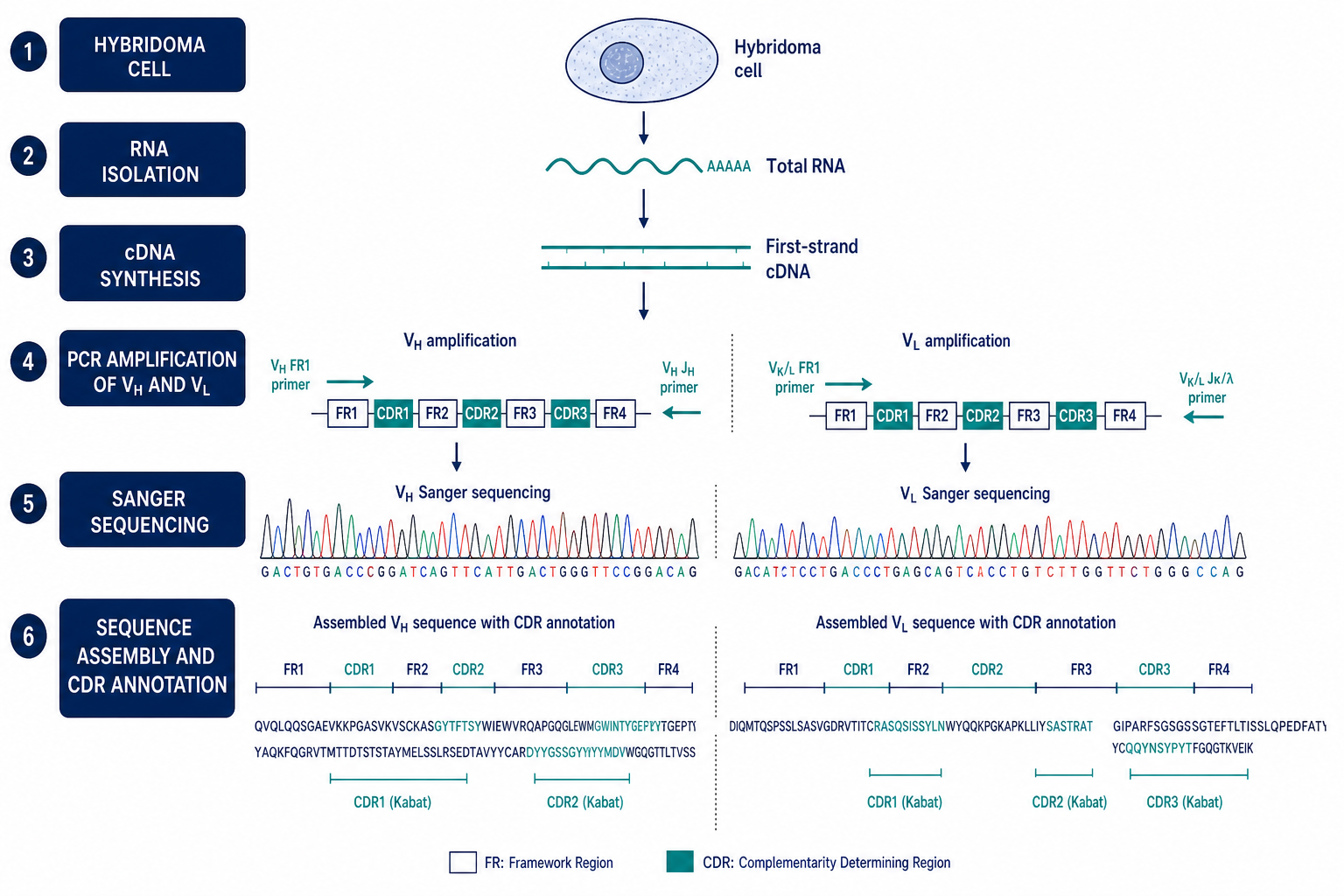
Figure 1. PCR-based hybridoma recovery converts viable cell material into annotated VH and VL sequence evidence.
The quality of the final sequence depends on cell health, RNA integrity, primer coverage, monoclonality, and the completeness of project metadata. For expression-critical projects, even a small error in CDR assignment can affect binding or developability.
Antibody Regions Commonly Recovered
Most cell-based recovery projects focus on variable regions rather than full constant-domain sequence recovery, although project scope can be expanded when needed.
Researchers typically expect recovery of:
1. heavy-chain variable region (VH)
2. light-chain variable region (VL)
3. CDR1, CDR2, and CDR3 annotation
4. framework region boundaries
5. germline gene assignment when applicable
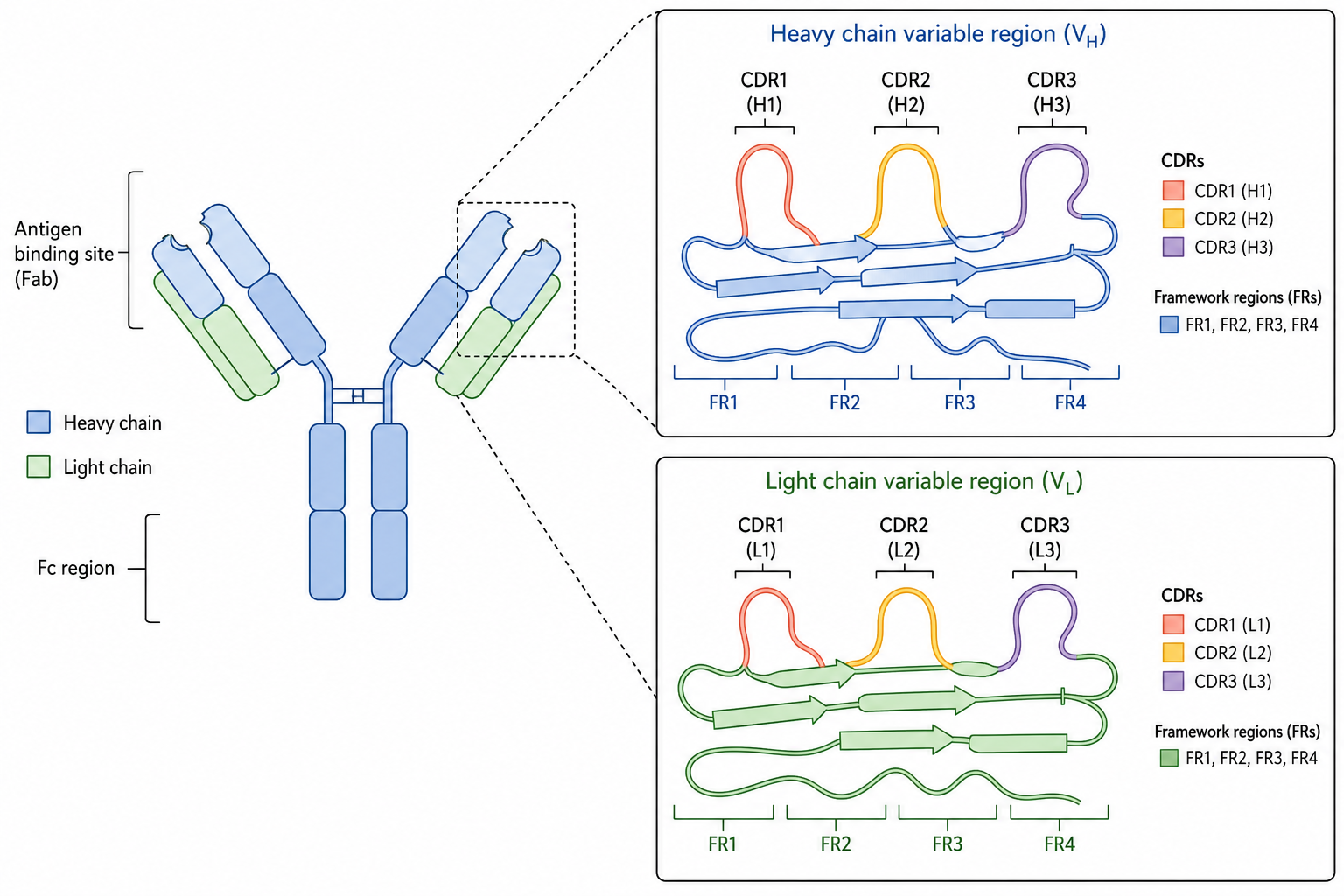
Figure 2. Deliverables usually center on VH, VL, and CDR-level annotation.
If the downstream goal is recombinant antibody production, the recovered VH and VL sequences can be cloned into an appropriate expression vector. If the goal is documentation only, annotated sequence files and method notes may be sufficient.
Core Advantages and Current Limitations
Core Advantages
Efficient when hybridoma cells are available. PCR-based recovery from RNA is often faster and more straightforward than protein-level de novo assembly when viable material exists.
Direct transcript-level evidence. The method reads the sequence encoded by the producing cells, which is valuable for clone backup and recombinant vector design.
Strong support for VH/VL and CDR annotation. The workflow is optimized for variable region recovery rather than generic protein identification.
Useful for hybridoma rescue and documentation. Teams can preserve sequence information even if productivity later declines or cell stocks are limited.
Current Limitations
Dependent on cell or RNA quality. Low viability, degraded RNA, or repeated freeze-thaw cycles can reduce success rates.
Monoclonality matters. Mixed or unstable hybridoma cultures can produce ambiguous sequence evidence.
Not ideal when only protein is available. If hybridoma cells are lost, protein-level or may be required.
Sequence recovery does not prove binding. Functional activity should still be confirmed after recombinant expression or continued culture testing.
Typical Application Scenarios
Cell-based VH/VL recovery is most useful when a monoclonal antibody exists in hybridoma form, but sequence information is incomplete or missing.
Researchers may consider this approach in the following situations:
1. Hybridoma rescue. A legacy hybridoma must be converted into a recombinant antibody workflow.
2. Recombinant expression planning. VH and VL sequences are needed before vector construction and stable cell line development.
3. Patent or publication documentation. Sequence evidence must be recorded for IP or manuscript support.
4. Cell line drift checks. A stored hybridoma must be compared against an expected historical sequence.
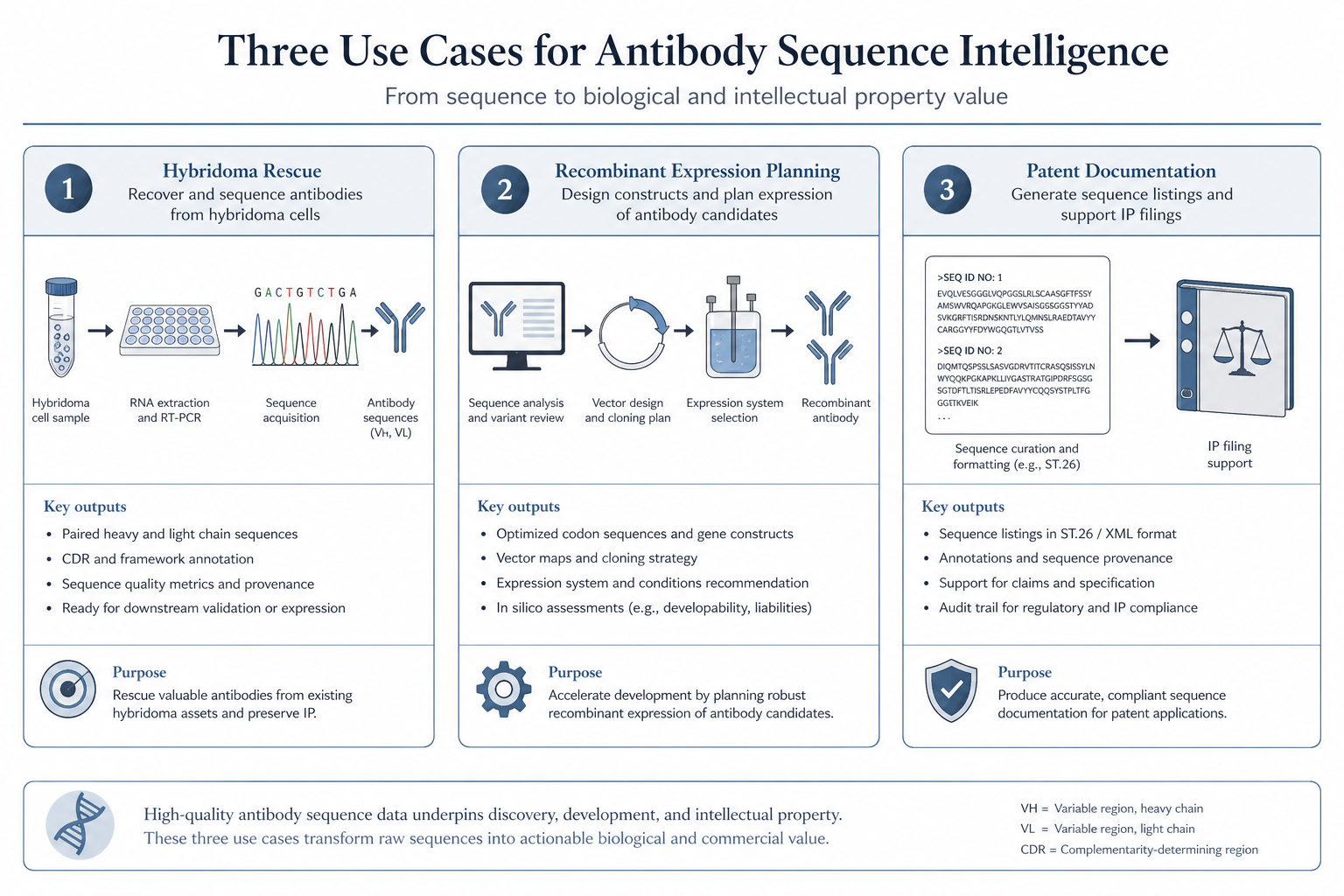
Figure 3. This workflow is most valuable when viable cell material and sequence documentation needs align.
What Results Should Researchers Expect?
A strong sequence recovery report should include more than a sequence string. Useful deliverables often include:
-
annotated VH and VL sequences
-
CDR and framework region annotation
-
raw sequencing reads or trace files when required
-
germline gene assignment where applicable
-
QC notes on RNA quality, assembly confidence, and any ambiguous regions
-
recommendations for validation or expression follow-up
Researchers should treat low-confidence CDR segments with caution, especially when the sequence will be used directly in expression construct design.
Frequently Asked Questions
Can recovery work from frozen cell stocks?
Yes, if viability and RNA integrity remain acceptable after thaw. Feasibility review before shipment is recommended.
Does the workflow recover full-length antibody sequence?
Many projects focus on VH and VL variable regions. Full-length sequence recovery may require expanded scope or complementary protein-level analysis.
Is hybridoma sequencing the same as PCR based antibody sequencing?
PCR-based antibody sequencing is a common application when the starting material is hybridoma cells or RNA from those cells.
Can the method detect mixed clones?
Ambiguous or overlapping sequence evidence may indicate mixed cultures. Monoclonality should be confirmed before sequencing when possible.
Does sequence recovery prove binding activity?
No. Sequencing identifies molecular identity. Binding should be verified through functional assays or expression testing.
Conclusion
Hybridoma sequencing provides a practical route to VH and VL recovery when viable hybridoma material is still available. By combining RNA extraction, targeted PCR amplification, sequence assembly, and CDR annotation, the method supports hybridoma rescue, recombinant planning, and sequence documentation. It is not the best choice when only purified antibody remains, but it is often the most efficient option when hybridoma cells can still be accessed.
For hybridoma rescue, clone backup, or recombinant expression planning, MtoZ Biolabs provides support covering feasibility review, PCR-based recovery, CDR annotation, and report-ready sequence deliverables. Researchers can contact the technical team to evaluate cell status, species and isotype information, and the best validation path before samples are submitted.
How to order?




