






How to Prepare Serum, Plasma, and CSF Samples for Proteomics Analysis?
Prepare serum, plasma, and CSF for proteomics by locking one matrix per study arm, collecting with a matrix-matched protocol, and keeping processing and freeze history consistent across all samples.
For plasma, prefer EDTA or citrate as the anticoagulant and avoid heparin. Confirm submission amount, storage temperature, and shipping conditions with the laboratory before the first collection day. Do not mix serum and plasma in the same comparison unless the design explicitly requires that contrast.
Serum/plasma/CSF protein analysis is sensitive to pre-analytical chemistry. The preparation goal is not to invent a perfect tube, but to make every comparison arm experience the same collection path so later protein differences are more likely to reflect biology rather than handling.
Why Preparation Decisions Come Before LC-MS/MS
Many avoidable biofluid proteomics problems originate from collection and processing decisions made before data analysis. A team may finalize the disease-versus-control design and still leave anticoagulant choice undecided. Another team may freeze serum and plasma together under one label set. A third team may collect CSF carefully, then thaw aliquots repeatedly for other assays before proteomics shipment.
Those decisions change the protein profile before digestion begins. Clotting reduces or alters fibrinogen and other coagulation-related proteins and can release platelet-associated proteins, making serum composition different from plasma. Plasma chemistry depends on the anticoagulant. CSF is a CNS-proximal matrix with a different contamination risk profile. If those differences are uncontrolled, differential lists become harder to defend.
Treat preparation as part of study design. Lock the matrix, the anticoagulant rule, the processing window, and the freeze plan before the first participant or animal is sampled. Confirm submission amount and shipping method with the laboratory at the same time.
Sample Matrix: Serum vs Plasma vs CSF
Use the matrix below to decide what must stay matched before LC-MS/MS.
|
Item |
Serum |
Plasma |
CSF |
|---|---|---|---|
|
How the matrix is obtained |
Blood is clotted, then clarified |
Blood is collected with anticoagulant, then clarified |
CSF is collected under the study site’s approved collection protocol |
|
Key pre-analytical risk |
Incomplete clotting or delayed separation |
Wrong anticoagulant or mixed anticoagulant types |
Blood contamination, residual cells, or processing delay |
|
Anticoagulant rule |
Not applicable |
Prefer EDTA or citrate; avoid heparin |
Not applicable |
|
Within-study matching rule |
Same clotting and separation window |
Same anticoagulant across all plasma arms |
Same collection, cell-removal, aliquoting, and freezing workflow |
|
Common project use |
Circulating protein profiling |
Circulating protein profiling with coagulation factors retained |
CNS-proximal protein profiling |
|
What usually should not change mid-study |
Tube type, clotting window, separation timing |
Anticoagulant type, tube type, and separation timing |
Collection route handling, aliquot plan, freeze timing |
Keep one primary matrix for the main comparison. Serum/plasma/CSF proteomics can support biomarker discovery and differential protein analysis, but matrix mixing creates chemistry differences that are easy to misread as biology.
If a project truly needs serum-versus-plasma contrast, design that contrast explicitly, label it clearly, and analyze it as a matrix comparison rather than as a disease effect. Do not bury mixed matrices inside a disease-versus-control list.
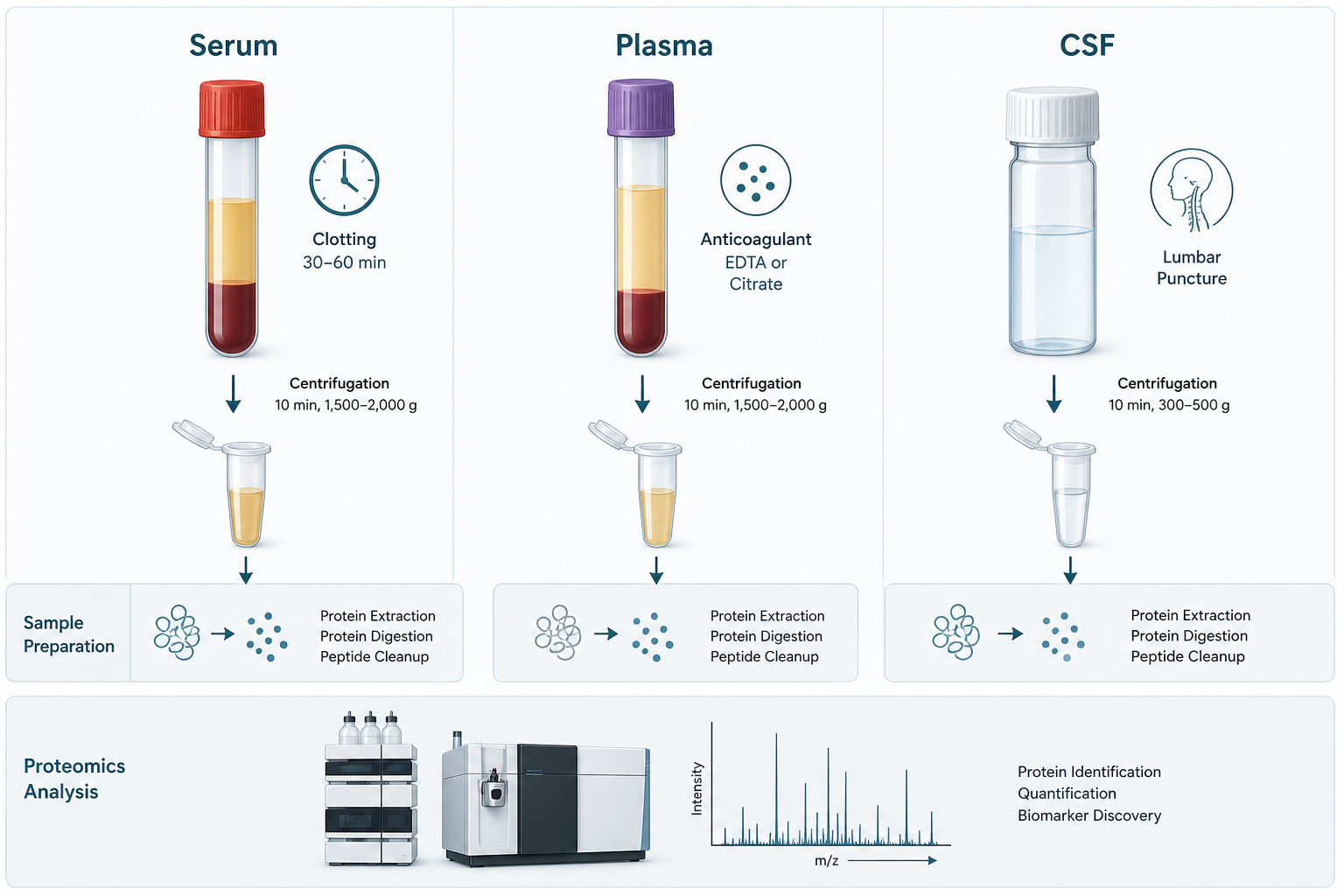
Figure 1. Serum, plasma, and CSF differ in collection chemistry; match matrix and handling before proteomics.
Collection and Processing Checklist
Serum
Collect blood into a serum-compatible tube that is used for every serum arm in the study.
Allow clotting under a fixed protocol shared by all study arms. Incomplete clotting leaves residual cells or delayed fibrin formation that can change the clarified fraction.
Separate the serum by centrifugation under matched conditions. Keep the time from collection to separation consistent whenever the clinical or animal workflow allows.
Aliquot promptly into labeled tubes according to the confirmed submission plan, minimizing unnecessary thawing and transfer. Freeze without repeated thaw cycles.
Record clotting notes when clotting is visibly incomplete or delayed. Those notes help later interpretation if an outlier appears.
Plasma
Collect blood into tubes containing the chosen anticoagulant.
Prefer EDTA or citrate. Avoid heparin for proteomics submissions.
Use one anticoagulant for the entire project. Do not switch between EDTA, citrate, and heparin within the same study. Anticoagulant switching is one of the most common hidden batch effects in plasma proteomics.
Invert tubes gently according to the tube manufacturer guidance so anticoagulant mixes without unnecessary hemolysis.
Separate plasma under matched centrifugation conditions, aliquot, and freeze promptly. Keep the interval from draw to freeze as consistent as the site workflow allows.
If multiple sites collect plasma, circulate one written anticoagulant and processing rule before site activation.
CSF
Collect CSF only under an approved protocol for the study site.
Blood contamination can introduce abundant blood-derived proteins and obscure the native CSF profile. Record traumatic collection, red-blood-cell information, collection order, and visible discoloration where available.
Aliquot promptly and freeze without repeated thaw cycles. Because CSF volume is often limited, allocate aliquots according to the primary study endpoint and laboratory-confirmed input needs and which aliquots, if any, are reserved for other assays.
Visible discoloration should be documented, but appearance alone should not be used to rule out blood contamination. Pink or red discoloration should be documented even when the sample is still submitted after laboratory review.
Do not assume CSF can follow a serum SOP. The collection route, contamination risk, and protein context are different, even though freeze discipline is shared.
Shared rules for all three matrices
Confirm recommended submission amount with the laboratory before collection. Do not rely on informal volume estimates copied from unrelated projects, metabolomics studies, or clinical chemistry panels.
Keep freeze history matched across comparison groups. A control set frozen once and a disease set thawed three times for other assays are no longer matched biofluids.
Samples with severe hemolysis, marked lipemia, visible contamination, or substantial precipitation should be flagged for laboratory review using consistent criteria across all study groups.
For human or pathogen-related materials, infectious samples are not accepted. Disclose sample origin and any known biosafety risks to the laboratory before shipment.
Use a unique aliquot ID linked to matrix, subject or animal ID, study arm, time point, collection site and date, and plasma anticoagulant where applicable. Ambiguous labels are a preparation failure even when the liquid looks perfect.
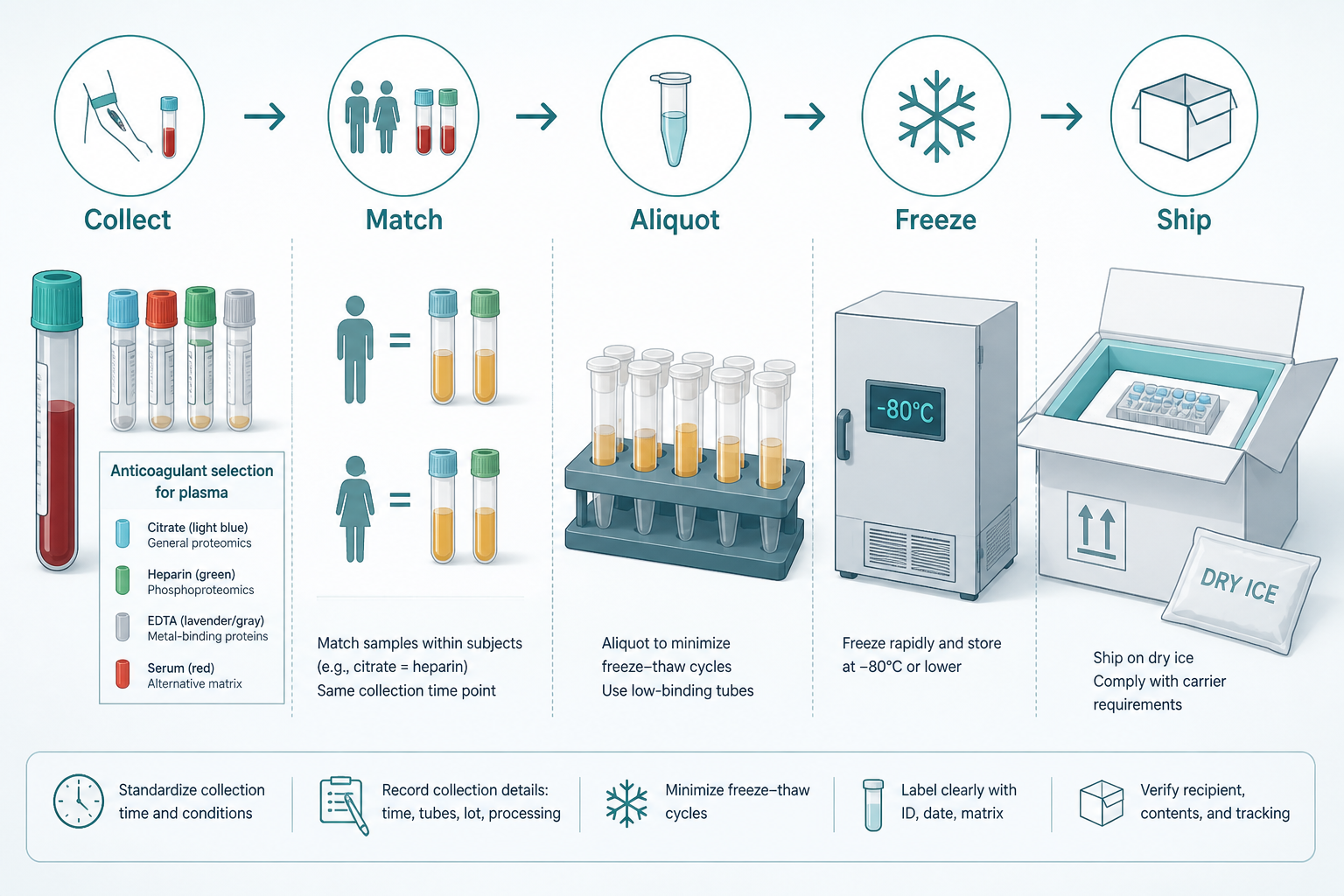
Figure 2. A matched collection, anticoagulant, aliquot, and freeze plan is the core preparation checklist.
Plasma Anticoagulant Decision Guide
Plasma preparation succeeds or fails on anticoagulant discipline.
Prefer EDTA or citrate when the project is destined for serum/plasma/CSF proteomics through a plasma route. Avoid heparin. Keep the same anticoagulant across all plasma samples, including pilot samples, replacements, and late-enrolled subjects.
Choose the anticoagulant before the first draw, write it into the collection SOP, and train every collector on that rule. If a site already stocked heparin tubes, replace the stock before proteomics collection begins rather than accepting mixed tubes for convenience.
Historical heparin samples should not be merged with EDTA- or citrate-plasma samples in the primary biological comparison. They may be evaluated only as a separately interpreted set if scientifically justified.
Serum projects should not borrow plasma anticoagulant language. Serum has no anticoagulant step, but it still needs a matched clotting and separation window.
Pre-Shipment Information to Prepare
Before arranging shipment, assemble a short submission pack:
- matrix type for each vial: serum, plasma, or CSF
- species and study-arm labels
- plasma anticoagulant, if applicable
- collection date and freeze date
- aliquot count and approximate remaining volume after local use
- known hemolysis, lipemia, or discoloration notes
- ethics or safety documents required for human or pathogen-related materials
- whether any aliquot was thawed before for another assay
Ask the laboratory to confirm storage temperature and shipping method for your matrix before the first freeze. Local habits should not replace matrix-specific shipping guidance.
Include a simple vial map when many aliquots look identical, connecting external labels to study IDs.
If backup aliquots remain on site, note which backups still match the shipped freeze history. A backup thawed for another assay is no longer an equivalent proteomics reserve.
Common Preparation Failures and How to Prevent Them
Failure 1: serum and plasma mixed under one “blood” label.
Prevention: force matrix selection in the sample inventory before collection kits are ordered.
Failure 2: heparin plasma entered into an EDTA or citrate cohort.
Prevention: approve one anticoagulant in writing and inspect tube stock at each site.
Failure 3: unmatched freeze-thaw history between arms.
Prevention: reserve proteomics aliquots at first freeze and block those aliquots from other assays.
Failure 4: CSF blood contamination is not documented.
Prevention: record traumatic collection, red-blood-cell information, collection order, and appearance, then apply predefined review criteria across groups.
Failure 5: submission amount decided after collection is finished.
Prevention: confirm laboratory submission amount before the first draw.
These failures are preparation problems. They are easier to prevent with a matrix checklist than to repair after LC-MS/MS.
Related Services
Complementary
Blood/Plasma/Serum Proteomics Solutions
Use after serum or plasma samples are prepared for circulating protein analysis.
Complementary
Cerebrospinal Fluid (CSF) Protein Quantitative Proteomics Solutions
Use when the prepared matrix is CSF and CNS-proximal protein comparison is the goal.
Next step
Biofluid Biomarker Discovery Solutions
Consider after proteomics candidate lists are generated and biomarker follow-up is needed.
Frequently Asked Questions
1. Can serum and plasma be mixed in one proteomics comparison?
Only if the study is designed to compare those matrices directly. For disease-versus-control protein changes, keep one matrix throughout. Mixed matrices create chemistry differences that can look like biological signals.
2. Which plasma anticoagulant should be used?
Prefer EDTA or citrate. Avoid heparin. Keep the same anticoagulant across all plasma samples in the project, including replacements and multi-site collections.
3. What volume should be collected for serum, plasma, or CSF proteomics?
Confirm the recommended submission amount with the laboratory before collection. Do not reuse volume targets from unrelated assays, older projects, or different omics methods.
4. What preparation problems most often damage serum/plasma/CSF protein analysis?
Repeated freeze-thaw, mixed anticoagulants, severe hemolysis or lipemia, unmatched processing windows across study arms, and unclear matrix labels.
5. Is CSF handled the same way as serum or plasma?
No. CSF needs its own approved collection protocol and contamination control. The shared rule is still matched aliquoting and freeze history, but the collection risks are not interchangeable with blood-derived matrices.
6. What information should travel with the shipment?
Matrix type, study-arm labels, plasma anticoagulant when applicable, collection and freeze dates, appearance notes, and any thaw history. Missing anticoagulant or matrix notes are common reasons intake review stalls.
7. Can historical biofluids be added to a new proteomics cohort?
Only after checking matrix match, anticoagulant match, and freeze history. If those variables differ, analyze historical samples as a separate set or redesign the comparison before shipment.
Conclusion
Serum, plasma, and CSF sample preparation for proteomics succeeds when matrix choice, anticoagulant rules, and freeze history are locked before the first draw. Prefer EDTA or citrate for plasma, avoid heparin, and confirm submission amount plus shipping conditions with the laboratory in advance.
Use the sample matrix and checklist above as the project-preparation baseline, then contact MtoZ Biolabs to align collection plans with the intended serum/plasma/CSF proteomics design.
How to order?




