






How to Prepare a Protein Sample for Edman Sequencing: Purity, Transfer, and N-Terminal Accessibility
Introduction
Edman sequencing failures often begin before the sequencer starts. A project may have a valid N- terminal question and an acceptable sample amount, yet still return weak cycle-one signal, ambiguous early residues, or a shorter read than planned. In many cases, the problem is not the instrument. It is sample preparation. Purity, transfer quality, loading format, and N-terminal accessibility all determine whether the chemistry can read the first residues reliably.
Preparing protein for Edman sequencing is different from preparing material for routine peptide mapping or database-assisted LC-MS/MS. Edman degradation requires a free N-terminus, clean early-cycle signal, and enough loaded material to survive sequential chemistry. A complex mixture, poor PVDF transfer, incompatible salts, or a blocked N-terminus can all stop the workflow before meaningful sequence data are obtained.
A structured preparation workflow reduces repeat submissions and improves the chance of obtaining a usable N-terminal read for QC, peptide release, recombinant verification, or biopharmaceutical documentation.
Related Services
| Service Area | Recommended Service |
| Edman degradation sequencing | Protein Sequencing Service by Edman Degradation |
| N-terminal sequencing | N-Terminal Sequencing Service |
| Edman-based N-terminal analysis | Edman Degradation for N-Terminal Sequence Analysis Service |
| Blocked N-terminus handling | N-Terminal Sequencing (N-Terminal Unblocked) Service |
| MS-based N-terminal confirmation | MS-Based Protein N-Terminal Sequence Analysis Service |
| Biopharmaceutical N-terminal QC | Biopharmaceutical N-Terminal Sequencing Service |
Teams preparing a first Edman sequencing submission can consult MtoZ Biolabs to review sample purity, presentation format, and N-terminal accessibility before material is transferred or shipped.
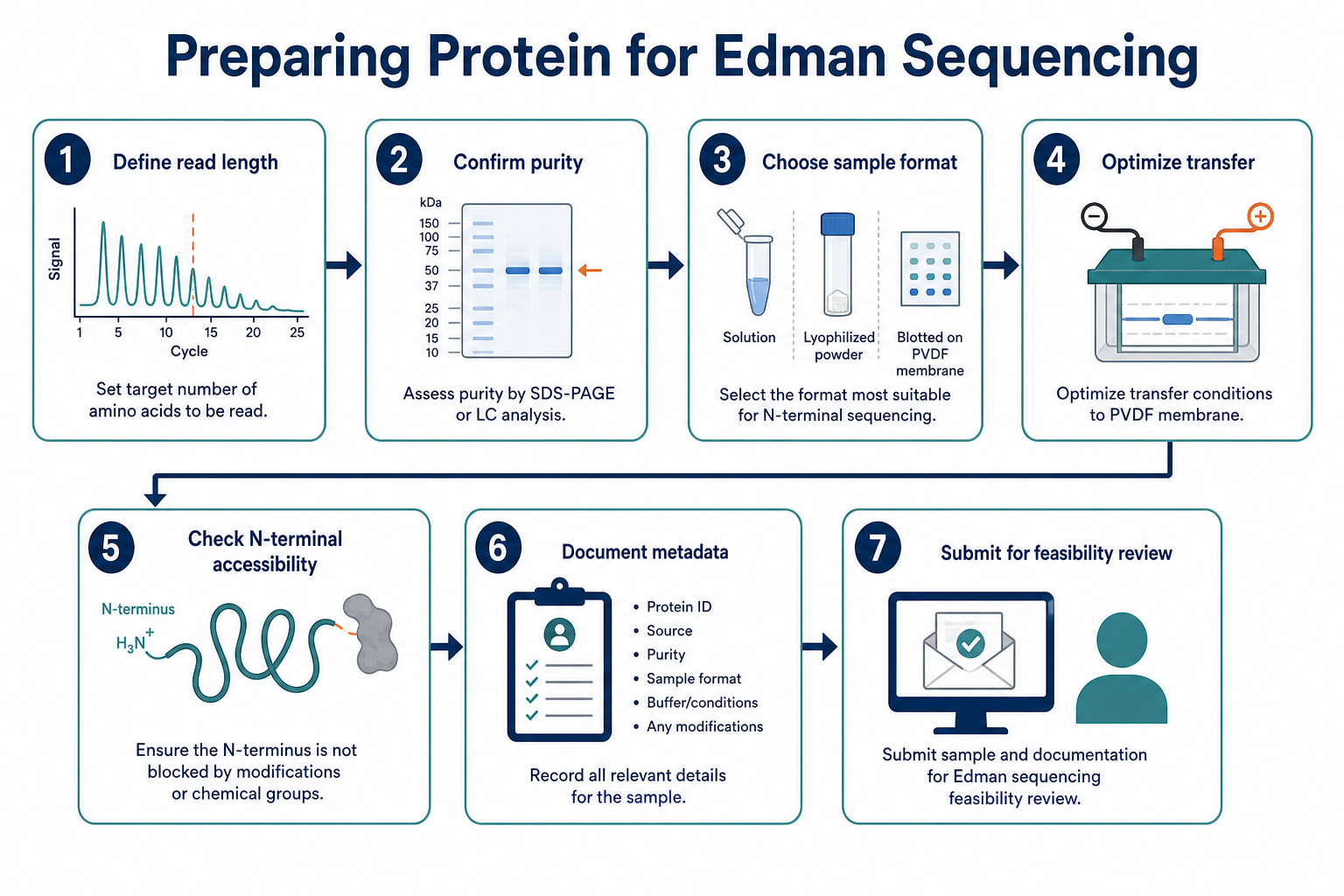
Figure 1. Edman sample preparation moves from read-length definition and purity review through transfer optimization, N-terminal accessibility checks, and feasibility review.
Common Pain Points Before Starting
Researchers often begin Edman sequencing after encountering one or more of these preparation problems:
-
the target protein band is visible, but co-migrating contaminants are also present
-
PVDF transfer appears uneven or incomplete
-
cycle one produces no confident residue assignment
-
early cycles are weak even though the sample amount seemed sufficient
-
the expected N-terminus does not match the observed read
-
the sample was stored in a buffer incompatible with blotting or sequencer loading
-
the project requires ten cycles, but signal fades after only two or three residues
These issues are common with gel-purified recombinant proteins, synthetic peptides, legacy biologic material, and samples with suspected N-terminal modification. The practical question is not whether Edman sequencing is theoretically possible. The question is whether the sample has been prepared so that the N-terminus is accessible, sufficiently pure, and adequately loaded.
Why Edman Sample Preparation Fails Early
Most early preparation failures fall into three groups that match the title of this article.
1. Purity Problems
Co-purifying proteins, free peptides, albumin, or other background proteins can dominate sequencer response and obscure the target N-terminal signal.
2. Transfer or Presentation Problems
Incomplete PVDF transfer, poor band excision, inadequate washing, or incompatible salts can reduce the amount of usable protein presented to the sequencer.
3. N-terminal Accessibility Problems
Acetylation, pyroglutamate formation, or other blocking modifications prevent efficient cycle one chemistry even when purity and amount appear acceptable.
Understanding these root causes helps researchers fix preparation before resubmitting material or increasing cycle count without addressing the underlying issue.
Step 1: Define the N-Terminal Read and Downstream Use
Before purification or transfer begins, define what the Edman run must deliver.
-
How many N-terminal residues are required for the decision?
-
Is the goal release testing, mature start-site verification, or documentation support?
-
Is a short read of three to five residues enough, or are ten or more cycles required?
-
Will the result be compared against an expected N-terminal reference?
A feasibility review should match preparation effort to read depth. A short QC read on a clean synthetic peptide requires different preparation than a longer read on a recombinant protein with suspected processing heterogeneity.
Step 2: Confirm Sample Purity
Purity is the highest-leverage preparation step for Edman sequencing.
1. Review Gel or Chromatography Evidence
Inspect SDS-PAGE, IEF, or HPLC traces before submission. A dominant target band does not guarantee success if nearby contaminants are abundant enough to interfere with cycle-one chemistry.
2. Purify Further When Needed
Additional affinity cleanup, desalting, buffer exchange, or HPLC fractionation may be required before the target N-terminus can be read cleanly.
3. Avoid Unnecessary Sample Complexity
Do not submit whole lysates or crude culture supernatants when a purified fraction is required for reliable Edman analysis.
Highly pure protein, synthetic peptide, or a clean HPLC fraction generally gives the best chance of a strong early-cycle read.
Step 3: Choose the Right Sample Presentation Format
Edman sequencing can be performed from several presentation formats. The best choice depends on sample type, amount, and lab workflow.
| Sample Presentation | Best Use Case | Main Preparation Focus |
| PVDF membrane blot | Gel-purified protein or peptide | Clean band excision and efficient transfer |
| Liquid purified protein | High-purity recombinant or peptide sample | Buffer compatibility and sufficient amount |
| HPLC fraction | Synthetic peptide or purified protein fraction | Fraction purity and timely handling |
| Preloaded sequencer support | Provider-prepared or specialized formats | Follow provider instructions exactly |
The table above helps match format to sample type. It supports planning but does not replace provider-specific feasibility review.
Step 4: Optimize Transfer and Loading for PVDF-Based Samples
For gel-based samples, transfer quality often determines whether enough protein reaches the membrane in a sequencer-compatible form.
1. Excise Bands Precisely
Cut only the target band region. Avoid including neighboring lanes, high-background regions, or multiple co-migrating bands when possible.
2. Use Appropriate Transfer Conditions
Optimize transfer time, membrane type, and current for protein size. Incomplete transfer is a common cause of weak cycle-one signal.
3. Wash Away Interfering Contaminants
Remove SDS, salts, and staining reagents according to established blot preparation practice before sequencer loading.
4. Confirm Visual Transfer When Possible
Staining or other visual confirmation helps verify that material is present on the membrane before submission.
5. Load Enough Material for Planned Cycles
Low sample load may support only a very short read. Discuss amount requirements with the provider before excising the only available band.
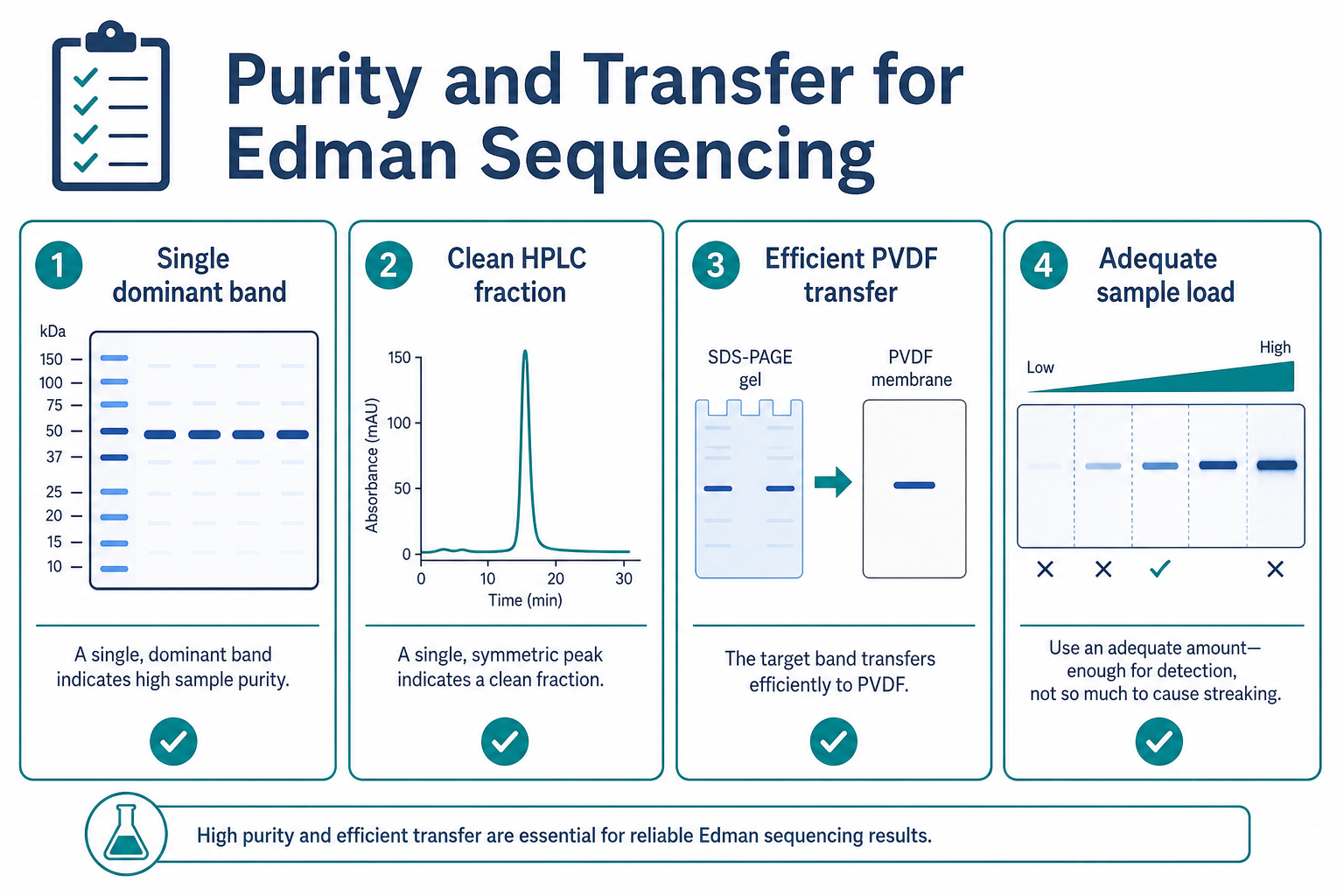
Figure 2. Strong Edman preparation usually depends on purity, clean fractionation, efficient PVDF transfer, and adequate sample load.
Step 5: Assess N-Terminal Accessibility
Even a pure, well-transferred sample can fail if the N-terminus is not accessible to Edman chemistry.
1. Confirm Whether a Free N-terminus Is Expected
Review expression system, synthesis route, and processing history. Eukaryotic expression, peptide synthesis, and storage conditions can all influence N-terminal state.
2. Screen for Common Blocking Modifications
N-terminal acetylation, pyroglutamate formation, formylation, and some chemical modifications can block PITC coupling at cycle one.
3. Document Suspected Blocking Before Submission
If blocking is likely, discuss pretreatment options or MS-based N-terminal analysis before repeating a standard Edman run.
4. Do Not Assume Cycle-one Failure Means Low Purity Alone
A blocked N-terminus can produce a preparation that looks acceptable by gel but still fails Edman chemistry.
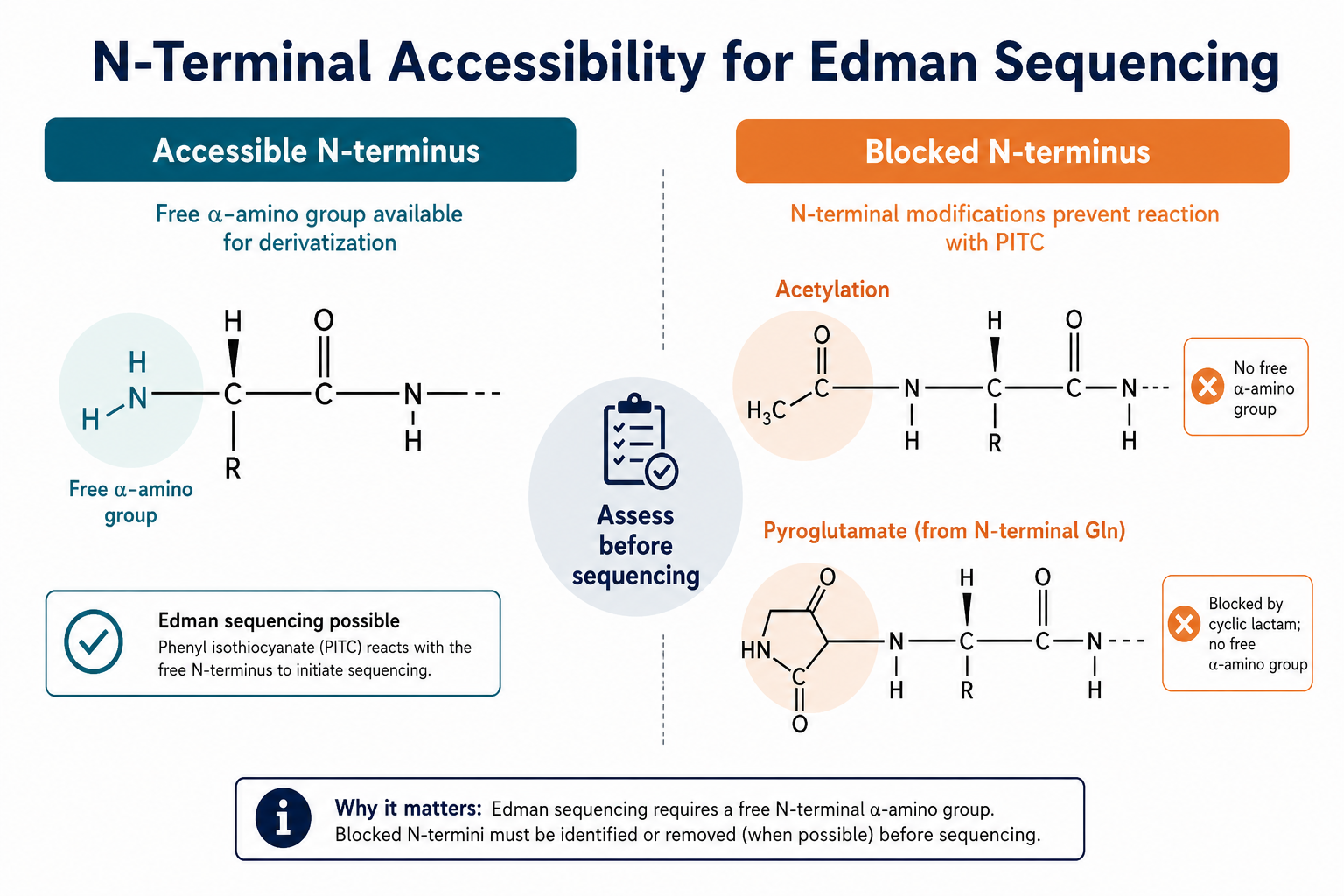
Figure 3. N-terminal accessibility should be assessed before sequencing because blocked termini can prevent successful cycle-one chemistry.
Step 6: Prepare Buffers, Storage, and Shipment Details
Sample handling after purification matters.
-
exchange or remove incompatible salts and detergents when possible
-
avoid unnecessary freeze-thaw cycles if alternative aliquots are available
-
document buffer composition, concentration, and storage temperature
-
ship PVDF pieces or liquid samples according to provider guidance
-
include expected N-terminal sequence, expression host, and modification concerns in the submission notes
Incomplete metadata can delay troubleshooting if early cycles are weak or ambiguous.
Step 7: Request Feasibility Review Before the Final Run
A feasibility-ready submission package often includes:
-
sample type and presentation format
-
purity estimate or QC trace
-
amount available and backup material status
-
requested number of Edman cycles
-
expected N-terminal sequence if known
-
expression system, synthesis method, or processing notes
-
prior failed attempts or suspected blocking status
Feasibility review before the final run helps match cycle count, preparation route, and reporting needs to the actual sample condition.
Pre-Submission Preparation Checklist
| Preparation Item | What to Verify | Common Mistake |
| Read depth | Number of cycles required for the decision | Requesting long reads without enough material |
| Purity | Dominant target band or clean fraction | Submitting crude or contaminated material |
| Presentation format | PVDF, liquid, or HPLC fraction fit | Using the wrong format for sample type |
| Transfer quality | Complete, clean PVDF transfer | Weak transfer from overstained or overloaded gels |
| Sample load | Enough protein for planned cycles | Excising too little material |
| N-terminal state | Free N-terminus or blocking risk | Repeating Edman without checking for acetylation or pyroglutamate |
| Metadata | Buffer, host, expected sequence, storage history | Shipping sample without context |
Completing this checklist before submission often prevents the most common repeat runs.
Expected Results and How to Judge Success
A successful preparation should support one of the following outcomes depending on project scope.
1. Strong Early-cycle Signal
Clear residue assignment in the first one to three cycles is the most important sign of good preparation.
2. Readable Short N-terminal Sequence
Useful for peptide release, start-site confirmation, or internal QC.
3. Longer Read with Documented Fade
Acceptable when later-cycle loss is expected and the required read depth is still achieved.
Success should be judged by early-cycle quality and fit with the stated use, not by cycle count alone. A shorter clean read is more valuable than a long ambiguous trace.
Troubleshooting Common Preparation Problems
| Problem | Likely Cause | Recommended Fix |
| No cycle-one assignment | Blocked N-terminus | Review modifications; consider pretreatment or MS route |
| Weak early cycles | Low load or poor transfer | Increase material, improve PVDF transfer, or reprep band |
| Ambiguous early residues | Contamination or mixed termini | Improve purity, confirm single dominant product |
| Fast signal loss after two to three cycles | Normal fade or low starting load | Reduce requested read depth or increase load |
| Sequence mismatch | Wrong band, processing variant, or impurity | Reconfirm purity and expected mature N-terminus |
| Poor blot performance | Residual SDS or salts | Improve washing and buffer cleanup |
If preparation fixes do not improve early-cycle quality, the project may need an alternative N- terminal workflow rather than another identical submission.
Key Precautions
Do not assume that a visible gel band guarantees Edman success. Purity, transfer, and N-terminal accessibility still matter.
Do not submit the only sample aliquot without feasibility review when the preparation is difficult or the N-terminus may be blocked.
Do not increase cycle count as the first troubleshooting step when cycle one already failed. Do not omit expression host, synthesis route, or storage history from submission notes.
For blocked or modified termini, plan an alternative route before consuming limited material on repeated standard Edman runs.
Frequently Asked Questions
1. How pure does a protein sample need to be for Edman sequencing?
The target protein or peptide should be the dominant component presented to the sequencer. Co-purifying proteins or peptides can interfere with early-cycle interpretation.
2. Is PVDF transfer always required?
No. Liquid purified protein or HPLC fractions can also be used when the format is compatible with the provider workflow. PVDF is common for gel-purified samples.
3. What causes cycle-one failure in Edman sequencing?
A blocked N-terminus is a frequent cause. Low sample load, poor transfer, and contamination are also common.
4. Can Edman sequencing work on synthetic peptides?
Yes, when the peptide is sufficiently pure and the N-terminus is accessible. Synthetic peptides are a common Edman application.
5. How much sample should be submitted?
Requirements vary by sample type, format, and requested cycle count. A feasibility review before submission is recommended.
Conclusion
Preparing a protein sample for Edman sequencing depends on three linked factors: purity, transfer or presentation quality, and N-terminal accessibility. Clean material, efficient PVDF transfer or appropriate liquid presentation, and a free N-terminus give the best chance of a reliable early-cycle read. Weak or failed results often trace back to contamination, poor loading, or blocked termini rather than to the sequencing concept itself. The strongest outcomes come from defining read depth early, preparing the sample deliberately, and requesting feasibility review before limited material is used. Researchers preparing N-terminal confirmation by Edman degradation can contact MtoZ Biolabs to review sample readiness and align preparation with the required N-terminal read.
How to order?




