






How to Improve Disulfide Bond Mapping Accuracy: From Non-Reducing Digestion to MS/MS Validation
Introduction
Disulfide bond mapping projects often produce peptide data that look complete yet fail to support confident connectivity decisions. A non-reduced digest may yield candidate disulfide-linked peptides, but ambiguous precursor matches, weak MS/MS fragmentation, or sample handling artifacts can undermine assignment accuracy. A comparability team may see profile differences that reflect preparation variability rather than true connectivity change. A CMC group may receive a connectivity table without enough spectral support for critical hinge-linked peptides.
Improving disulfide bond mapping accuracy requires control from non-reducing digestion through MS/MS validation and expert review. Accuracy depends on preserving native linkages during sample prep, generating recoverable disulfide-linked peptides, acquiring interpretable tandem mass spectra, and applying validation criteria before bonds are reported as confirmed. Teams that focus only on increasing peptide identifications often report more features while leaving critical disulfide assignments unresolved.
The sections below outline where mapping accuracy is most often lost and which workflow changes produce the strongest improvement from digestion through MS/MS validation.
Why Disulfide Bond Mapping Accuracy Is Often Low
Most accuracy problems trace to a limited set of workflow weaknesses rather than instrument failure alone.
Disulfide scrambling or partial reduction during prep.
Harsh denaturation, improper pH, heat exposure, or repeated freeze-thaw can rearrange or cleave disulfide bonds before analysis, creating false connectivity differences.
Suboptimal non-reducing digestion conditions.
Enzyme lot variability, incomplete digestion, or conditions that inadvertently reduce cysteines can reduce recovery of informative linked peptides.
Poor recovery of hinge or domain-bridged peptides.
Disulfide-linked tryptic peptides may be too large, poorly ionizing, or low in abundance, leading to missing or weak MS/MS evidence.
Overreliance on precursor mass alone.
Multiple cysteine pairings can match a observed mass within tolerance, so mass match without fragment validation increases false assignment risk.
Insufficient MS/MS acquisition depth.
Short gradients, low replicate coverage, or inadequate fragmentation settings leave disulfide-linked peptides with unusable spectra.
Automated acceptance without validation rules.
Software assignments for crosslinked peptides often require manual review and predefined confidence thresholds before reporting.
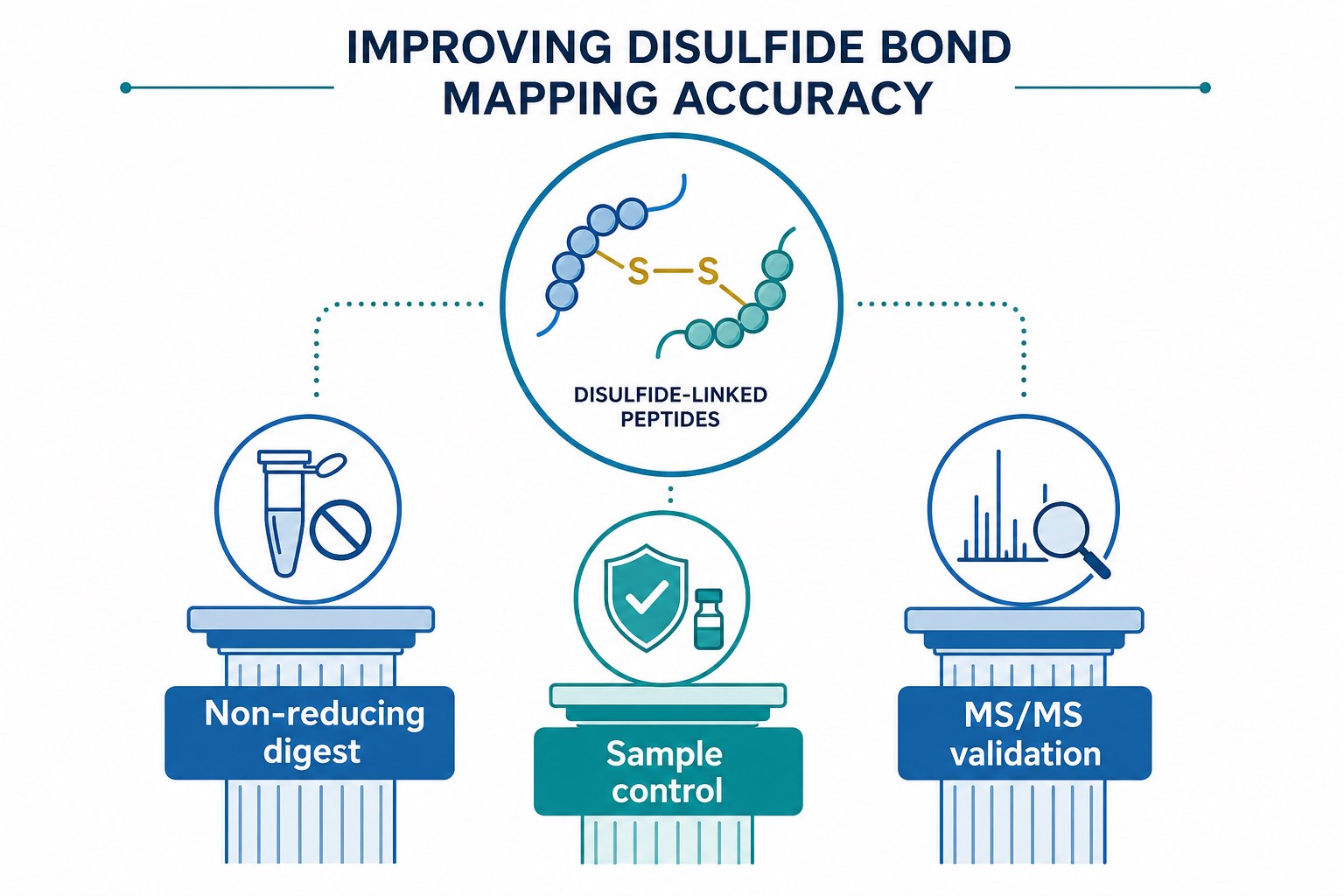
Figure 1. Disulfide bond mapping accuracy depends on non-reducing digestion control, sample handling, and rigorous MS/MS validation.
How to Improve Accuracy from Non-Reducing Digestion to MS/MS Validation
Accuracy improves when digestion, acquisition, and review standards are planned as one integrated system rather than corrected after weak assignments appear in the first report.
Control non-reducing digestion conditions
Use qualified enzymes and reagents with documented storage and lot tracking. Define fixed digestion time, temperature, and buffer conditions in an SOP and avoid ad hoc changes between comparative samples. Omit reducing agents from non-reducing workflows and verify that denaturing conditions do not promote scrambling. For difficult proteins, evaluate alternate proteases or multi-enzyme strategies that produce smaller, better ionizing disulfide-linked peptides.
Stabilize sample preparation and matrix handling
Document sample type, buffer, excipients, storage history, and freeze-thaw count before digestion begins. Remove or neutralize matrix components that interfere with digestion, chromatography, or ionization when feasible. Use consistent cleanup and desalting steps so comparative lots are prepared under the same conditions. Accuracy begins with input material that reflects native connectivity rather than prep-induced artifacts.
Optimize LC-MS/MS acquisition for linked peptides
Extend LC gradient length and acquisition time when hinge or domain-bridged peptides are central to the project. Use resolution and mass accuracy settings suited to crosslinked peptide detection. Include replicate injections or duplicate sample preparation when small connectivity differences must be distinguished from analytical noise. Target acquisition toward regions known to contain critical disulfide-linked peptides when prior mapping identifies coverage gaps.
Validate assignments with MS/MS fragment evidence
Require MS/MS support for confirmed disulfide bond calls rather than reporting based on precursor mass alone. Review fragment ions that support one or both peptide backbones in a linked pair. Grade assignments as confirmed, provisional, or unsupported based on predefined spectral quality criteria. Compare non-reduced results with reduced and alkylated control digests to confirm that linked peptides disappear or shift as expected upon reduction.
Apply structured expert review and QC gates
Define review thresholds before data analysis begins, including minimum fragment coverage, retention time consistency, and replicate behavior for critical bonds. Manually inspect hinge-linked and low-abundance disulfide peptides even when software scores appear acceptable. Exclude weak or ambiguous spectra from final connectivity tables unless explicitly reported as provisional with limitations noted.
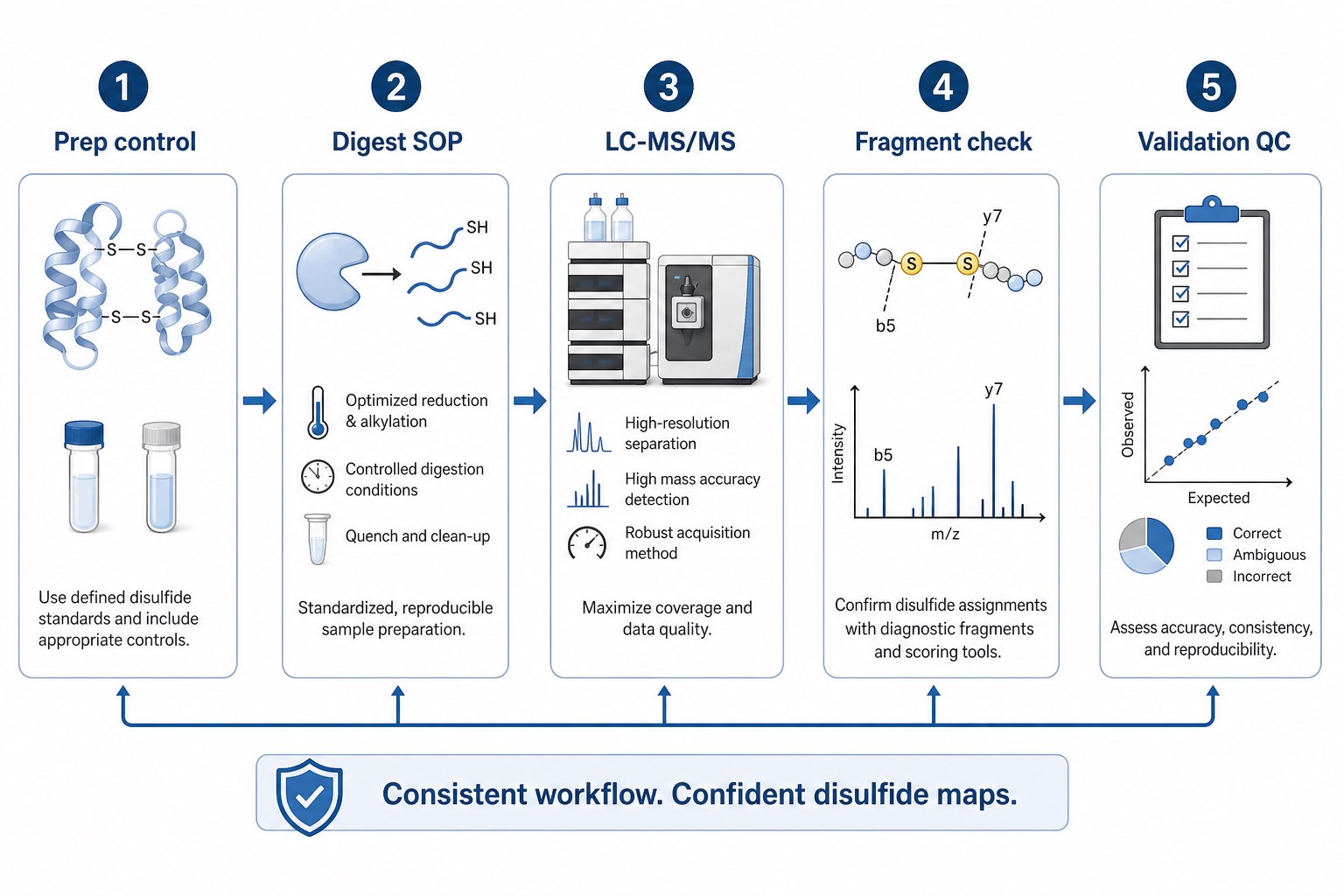
Figure 2. Improving mapping accuracy requires controlled preparation, standardized non-reducing digestion, LC-MS/MS acquisition, fragment validation, and structured QC.
Related Services
Disulfide Bond Analysis Service
Protein Disulfide Bond Analysis Service
Biopharmaceutical Disulfide Bond Analysis Service
Comprehensive Peptide Mapping Service
Teams seeking more accurate disulfide bond mapping can consult MtoZ Biolabs to review non-reducing digestion strategy, LC-MS/MS validation design, and reporting standards for the project goal.
Accuracy Controls by Workflow Stage
Different workflow stages require different accuracy controls. The table below summarizes practical focus areas.
|
Workflow Stage |
Common Accuracy Risk |
Improvement Control |
|---|---|---|
|
Sample intake |
Scrambling, partial reduction |
Controlled handling and prep SOP |
|
Non-reducing digestion |
Incomplete or variable digest |
Qualified reagents and fixed conditions |
|
Peptide recovery |
Large or low-abundance linked peptides |
Multi-enzyme or optimized LC conditions |
|
LC-MS/MS acquisition |
Weak or missing MS/MS |
Extended gradients and replicate runs |
|
Assignment logic |
Precursor-only calling |
Require fragment-based validation |
|
Final reporting |
Overstated confidence |
Confirmed vs provisional grading |
Accuracy improves when the same validation logic is applied across all samples in a comparison set.
MS/MS Validation Criteria for Disulfide Assignments
MS/MS validation is the decisive step for accurate disulfide bond mapping. Useful validation criteria include:
Precursor mass must match the proposed disulfide-linked peptide pair within defined ppm or dalton tolerance.
Retention time should be reproducible across replicate injections or duplicate preparations when reference behavior is established.
MS/MS spectra should contain interpretable fragment ions supporting the assigned linkage when spectral quality allows.
Reduced control digests should show loss or expected shift of the linked peptide when reduction removes the disulfide bond.
Ambiguous matches with multiple plausible cysteine pairs should be downgraded to provisional status pending additional evidence.
Critical hinge or interchain bonds should meet stricter review thresholds than low-risk intrachain assignments when project standards require it.
Validation criteria should be defined before reporting rather than adjusted after results are reviewed.
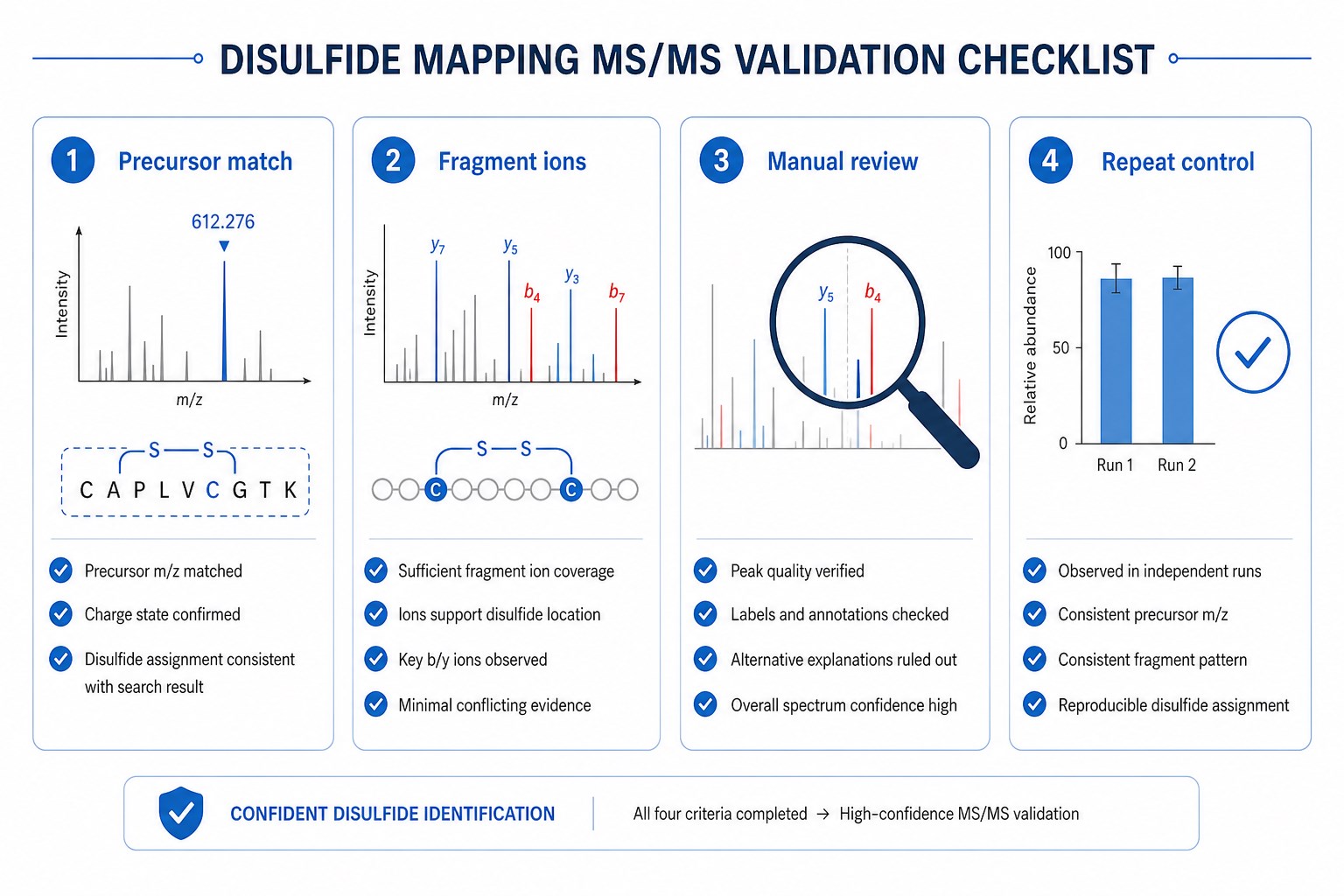
Figure 3. MS/MS validation for disulfide mapping should include precursor matching, fragment ion review, manual inspection, and repeat controls.
Core Benefits and Remaining Limits
Core Benefits
Fewer false connectivity assignments.
Fragment-based validation reduces overcalling from precursor mass alone.
Better comparability confidence.
Controlled digestion and review standards distinguish true linkage change from prep variability.
Stronger CMC and investigation support.
Accurate mapping reports are more defensible when spectral evidence and QC gates are documented.
Reduced repeat analysis.
Early prep and digestion control prevent failed runs caused by scrambling or poor recovery.
Clearer reporting language.
Confirmed versus provisional grading improves decision usability for development teams.
Remaining Limits
Some linked peptides may remain unsupported.
Large or poorly fragmenting species may stay near method limits even with optimized workflows.
Isoform mixtures add complexity.
Products with coexisting connectivity patterns require careful reporting beyond binary assignment.
Validation standards vary by project stage.
Exploratory mapping may accept provisional bonds that CMC packages would not.
Expert review remains essential.
Software alone rarely achieves high-confidence disulfide calling for complex linked peptides.
Accuracy improvement does not replace orthogonal methods when needed.
Middle-down or intact MS may still be required for unsupported regions.
Sample and Method Planning for Accurate Mapping
Before starting an accuracy-focused disulfide mapping study, teams should define:
- expected disulfide architecture and critical bonds requiring validation
- non-reducing digestion SOP and enzyme strategy
- sample matrix handling and cleanup requirements
- LC-MS/MS acquisition depth and replicate design
- MS/MS validation thresholds for confirmed versus provisional bonds
- need for paired reduced control digests and repeat preparations
- reporting format suitable for comparability, investigation, or CMC use
Feasibility review is most effective when accuracy requirements are defined before the first non-reduced digest is prepared.
Frequently Asked Questions
1. What most often reduces disulfide bond mapping accuracy?
Disulfide scrambling during sample prep, variable non-reducing digestion, and assignment based on precursor mass without MS/MS validation are the most common causes.
2. Why is non-reducing digestion control so important?
Native disulfide bonds must remain intact during digestion for linked peptides to reflect true connectivity in the sample.
3. Is MS/MS validation always required?
High-confidence reporting should require MS/MS fragment support for confirmed bonds, especially for hinge-linked and interchain peptides.
4. How do reduced control digests improve accuracy?
They show whether linked peptides behave as expected upon reduction, helping distinguish true disulfide-linked species from artifacts.
5. Can multi-enzyme digestion improve accuracy?
Yes. Alternative proteases can improve recovery and fragmentation of difficult disulfide-linked regions missed by trypsin alone.
6. Should all assigned bonds be reported as confirmed?
No. Assignments should be graded by validation strength, with provisional or unsupported bonds clearly labeled in the final report.
Conclusion
Improving disulfide bond mapping accuracy requires disciplined control from non-reducing digestion through MS/MS validation and expert review. Stable sample preparation, standardized digest conditions, optimized LC-MS/MS acquisition, and fragment-based validation criteria reduce false assignments and strengthen comparability conclusions.
Teams that define validation thresholds before analysis and report confirmed versus provisional bonds transparently produce mapping data that better support protein characterization, investigation, and CMC decisions. Accuracy should be treated as a workflow design goal rather than assumed from instrument performance alone. Groups planning higher-confidence disulfide bond mapping can contact MtoZ Biolabs to review digestion strategy, MS/MS validation design, and reporting standards suited to their program.
How to order?




