






How to Improve Antibody Glycosylation Analysis Reproducibility: From Sample Preparation to LC-MS Data Review
Introduction
Antibody glycosylation analysis often produces technically valid data that still fails to reproduce across repeats, operators, or laboratories. A released glycan profile may shift when sample cleanup differs slightly between runs. A glycopeptide LC-MS/MS assignment may change when enrichment recovery varies. A lot comparison may look inconsistent when system suitability checks are incomplete or when LC-MS review criteria are not documented. In each case, the problem is frequently workflow reproducibility rather than instrument capability alone.
Reproducibility in antibody glycosylation analysis depends on control across sample preparation, digestion or glycan release, enrichment, LC-MS/MS acquisition, data processing, and expert review. Small deviations in buffer composition, enzyme activity, labeling efficiency, column performance, or search parameters can alter glycoform distributions and site assignments enough to affect comparability, CMC review, or publication-quality reporting.
Improving reproducibility from sample preparation through LC-MS data review helps biologics, analytical, and research teams generate glycan evidence that can be repeated, compared across batches, and defended during internal or regulatory review. The sections below identify where variability most often enters antibody glycosylation workflows and which controls produce the strongest improvement.
Why Antibody Glycosylation Analysis Loses Reproducibility
Most reproducibility problems in glycosylation analysis trace to a limited set of workflow weaknesses rather than mass spectrometer failure alone.
Inconsistent sample preparation.
Variable purity, concentration, buffer composition, freeze-thaw history, or cleanup steps can change digestion efficiency, glycan release yield, and enrichment recovery.
Poorly controlled digestion or release chemistry.
Enzyme lot differences, reaction time, temperature, denaturing conditions, and incomplete PNGase F release can shift glycan recovery and glycopeptide representation.
Enrichment variability.
HILIC, lectin affinity, and graphitized carbon workflows are sensitive to loading, wash conditions, and column state. Inconsistent enrichment is a common source of glycopeptide mapping drift.
LC-MS/MS acquisition drift.
Column age, mobile phase preparation, calibration status, gradient consistency, and injection volume can alter retention time alignment and glycopeptide quantitation.
Undocumented data processing rules.
Different glycan composition assignment thresholds, software versions, or manual curation standards can produce different final reports from the same raw data.
Insufficient system suitability and reference controls.
Without qualified reference material, blank checks, and run-to-run suitability criteria, it is difficult to distinguish true glycan change from analytical variability.
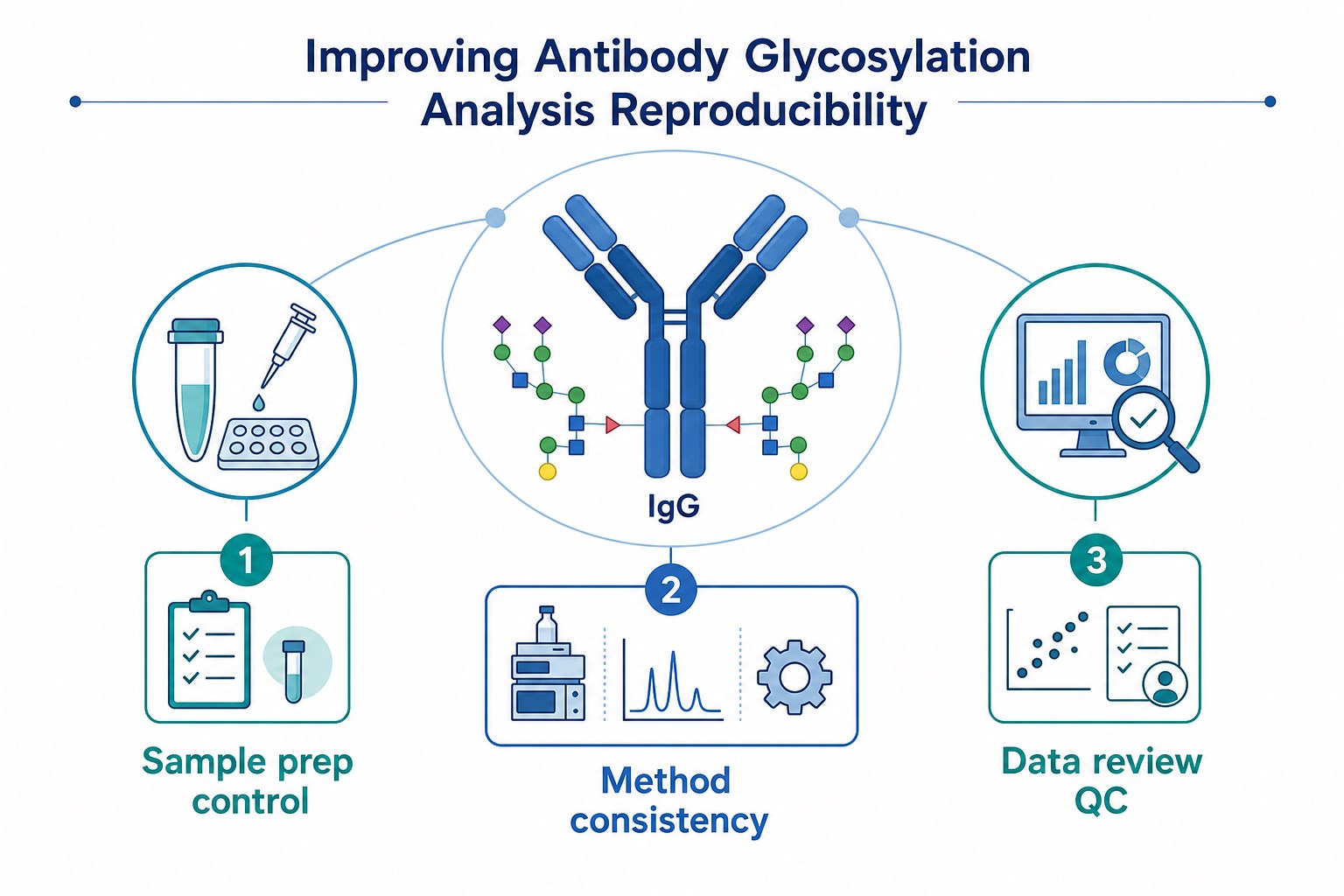
Figure 1. Antibody glycosylation analysis reproducibility is most often reduced by sample preparation variability, enrichment inconsistency, LC-MS drift, and undocumented data review standards.
How to Improve Reproducibility from Sample Preparation to LC-MS Review
Reproducibility improves when sample handling, method execution, and review criteria are planned as one integrated system rather than corrected after inconsistent results appear.
Standardize sample intake and feasibility review
Document antibody format, sample type, concentration, buffer, excipients, storage history, and number of freeze-thaw cycles before analysis begins. Use consistent cleanup protocols for drug substance and drug product matrices that interfere with digestion or glycan release. Confirm protein amount with a qualified method and apply the same minimum input criteria for every repeat. Reproducibility starts before the first enzymatic step.
Control digestion, release, and labeling steps
Use qualified enzymes and reagents with defined storage conditions and lot tracking. Keep reduction, alkylation, protease digestion, PNGase F release, and labeling reaction times and temperatures within documented ranges. Prepare reagents on the same schedule and avoid ad hoc changes between comparative runs. For released glycan workflows, control labeling efficiency and quenching steps because they directly affect quantitation.
Stabilize enrichment and LC-MS/MS acquisition
Condition enrichment columns and LC columns according to SOP and replace them at defined intervals. Monitor loading amounts, wash stringency, and recovery for glycopeptide enrichment workflows. For LC-MS/MS, maintain calibration schedules, use consistent gradient programs, and include system suitability samples at the start of each batch. Track retention time and peak area variation for key Fc glycopeptides or released glycan markers across runs.
Define glycan identification and reporting rules before data review
Set criteria for glycan composition assignment, site localization confidence, occupancy reporting, and exclusion of low-quality spectra before manual review begins. Use the same software version, parameter set, and reference glycan library for all samples in a comparison set. Document how missing values, low-abundance glycoforms, and ambiguous assignments are handled in the final table.
Apply structured LC-MS data review and QC gates
Review raw extracted ion chromatograms, MS/MS spectra, and quantitation tables against predefined acceptance criteria. Confirm that reference standards, blanks, and repeat injections perform within expected ranges before reporting sample results. For lot comparison studies, require that analytical variability remains smaller than the biological or process change under evaluation.
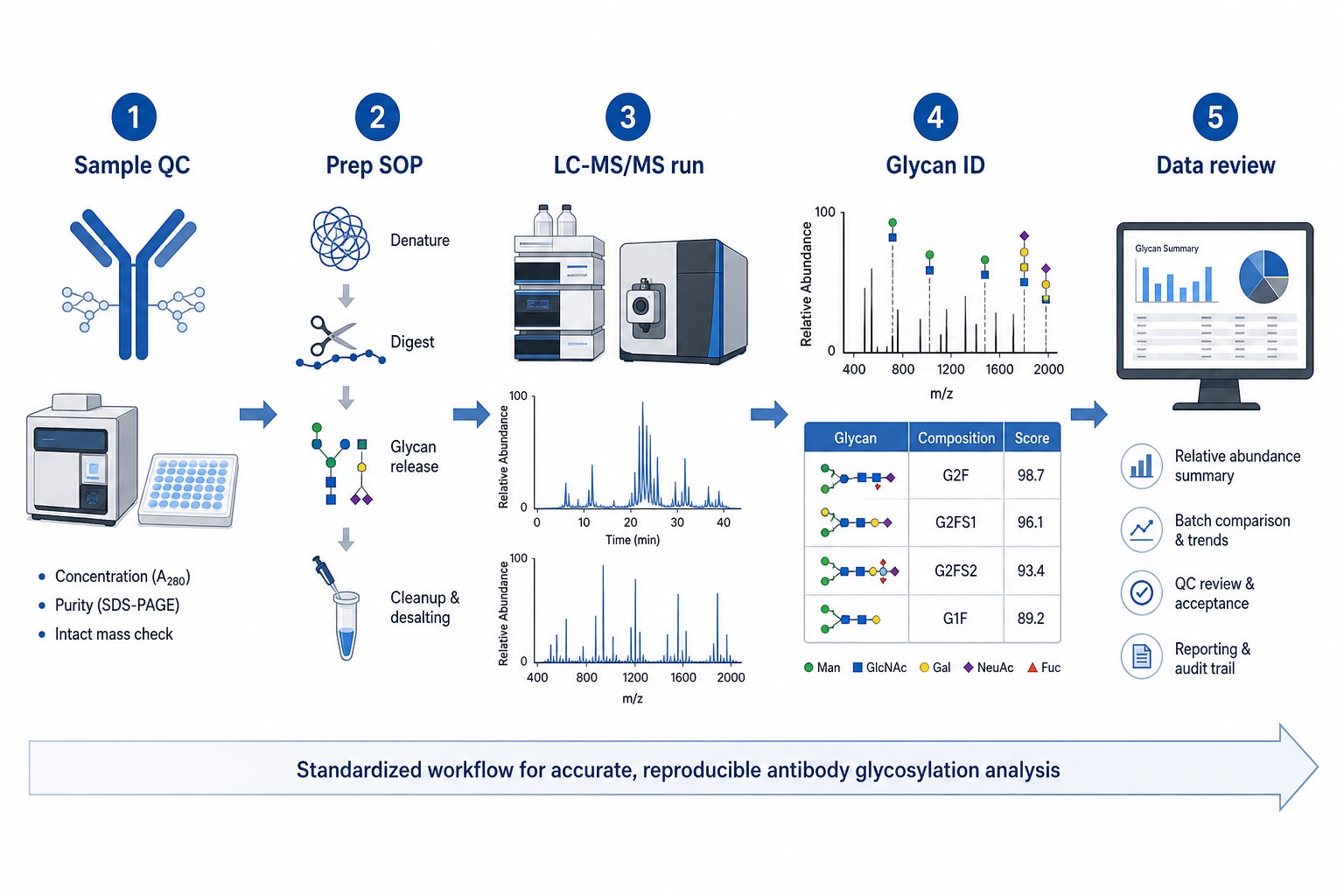
Figure 2. A reproducibility-focused workflow standardizes sample QC, preparation SOPs, LC-MS/MS execution, glycan identification, and structured data review.
Related Services
Protein Glycosylation Analysis Service
Protein Drug Glycosylation Analysis Service
Glycosylation Site Analysis Service
Comprehensive Glycosylation Analysis Service
Teams seeking more reproducible antibody glycosylation analysis can consult MtoZ Biolabs to review sample preparation strategy, LC-MS/MS workflow design, and data review standards for the project goal.
Reproducibility Controls by Workflow Stage
Different workflow stages require different control points. The table below summarizes practical focus areas.
|
Workflow Stage |
Common Variability Source |
Reproducibility Control |
|---|---|---|
|
Sample intake |
Buffer, excipients, freeze-thaw |
Standardized cleanup and intake form |
|
Digestion or release |
Enzyme lot, reaction time |
Qualified reagents and fixed SOP |
|
Enrichment |
Column state, loading amount |
Conditioning, loading QC, recovery check |
|
LC-MS/MS acquisition |
Calibration, gradient drift |
System suitability and reference runs |
|
Data processing |
Software settings, curation rules |
Locked parameter set and review SOP |
|
Final reporting |
Inconsistent exclusion logic |
Predefined reporting and QC gates |
Reproducibility is strongest when the same control logic is applied across all samples in a comparison set, not only for test articles.
Essential QC Elements for Repeatable Glycosylation Analysis
Several QC elements should be present in every reproducible glycosylation program.
Batch and reagent tracking
Track enzyme lots, labeling reagents, column serial numbers, and mobile phase preparation dates. Reproducibility investigations are faster when reagent and batch metadata are complete.
Reference standards and system suitability
Include qualified antibody reference material, released glycan standards, or glycopeptide markers where available. System suitability checks should confirm retention time, peak shape, sensitivity, and background before unknown samples are reported.
Repeat analysis and bracketing design
Use repeat injections, duplicate sample preparation, or bracketed reference runs when the decision depends on small glycan differences between lots or conditions.
Documented review thresholds
Define acceptance ranges for key glycan attributes, minimum spectral quality for glycopeptide assignment, and rules for reporting low-abundance glycoforms. Reviewers should apply the same thresholds consistently.
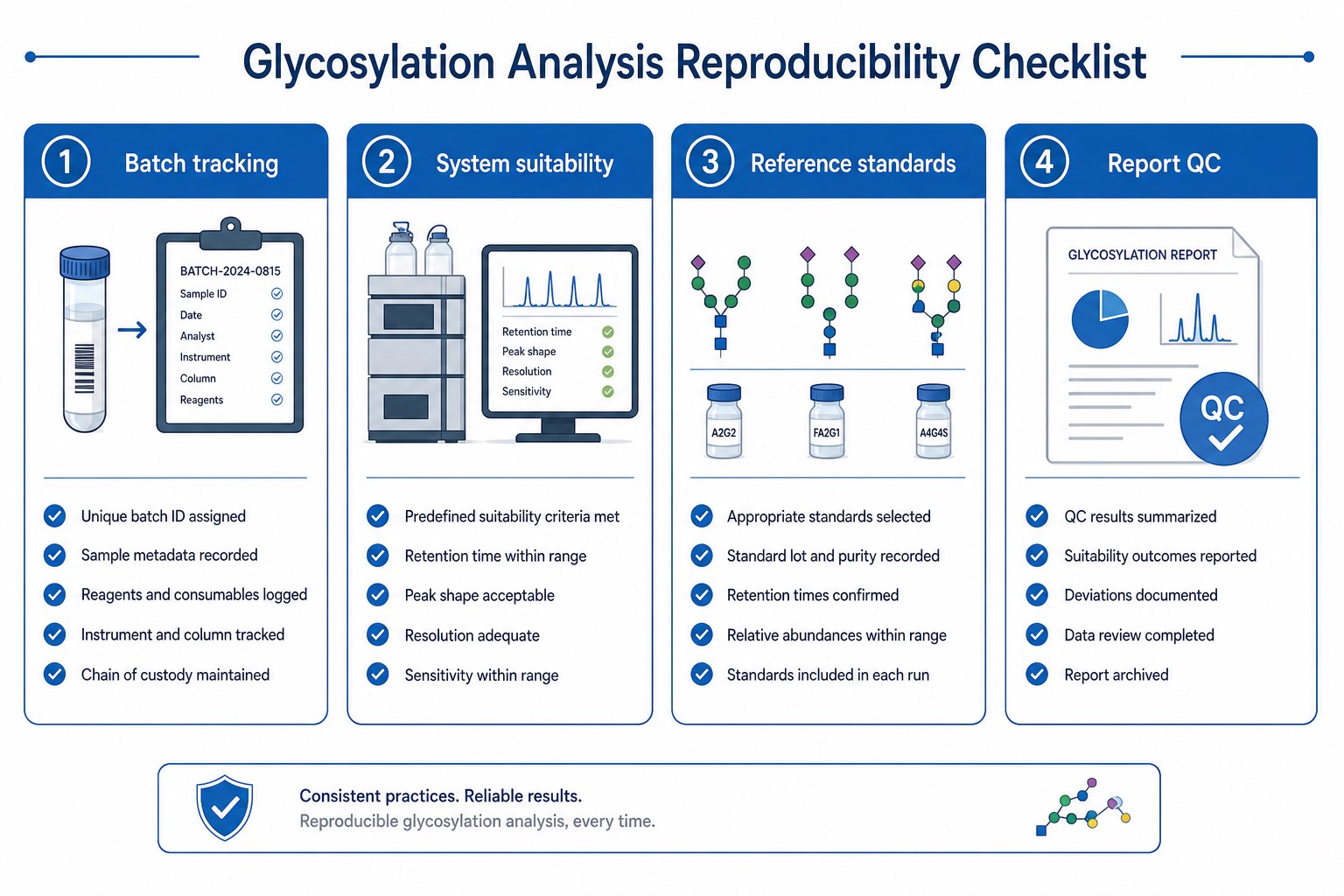
Figure 3. Repeatable glycosylation analysis depends on batch tracking, system suitability, reference standards, and structured report QC.
Core Benefits and Remaining Limits
Core Benefits
Stronger lot-to-lot comparison confidence.
Controlled workflows reduce false glycan differences caused by analytical drift.
Better cross-run and cross-lab alignment.
Documented SOPs and review criteria improve comparability of repeated analyses.
Higher trust in CMC and comparability data.
Reproducible glycan reporting supports process change and biosimilar review.
Reduced repeat testing and material loss.
Early QC gates prevent reporting from failed or inconsistent runs.
Clearer audit trail for regulatory review.
Batch records, reference controls, and review logs strengthen documentation quality.
Remaining Limits
Biological glycan heterogeneity remains.
Reproducible analysis reports distributions consistently but cannot eliminate natural glycoform variation.
Matrix effects may persist.
Highly formulated drug product may still require additional cleanup despite standardized prep.
Low-abundance glycoforms stay challenging.
Minor species may remain near method detection limits even with strong QC.
Method transfer requires requalification.
A reproducible workflow in one laboratory still needs suitability confirmation after transfer.
Functional relevance still needs orthogonal assays.
Reproducible glycan data do not replace ADCC, CDC, or pharmacokinetic confirmation when function is critical.
Sample and Method Planning for Reproducible Studies
Before starting a reproducibility-focused glycosylation study, teams should define:
- antibody format and sample type across all comparison materials
- identical cleanup and preparation SOP for all samples in the set
- analytical route: released glycan, glycopeptide mapping, intact analysis, or combined
- reference standard and system suitability requirements
- LC-MS/MS batch design including blanks and repeat controls
- data review criteria and reporting thresholds
- acceptable variability limits for key monitored glycan attributes
Feasibility review is most effective when it addresses reproducibility requirements before the first comparative run rather than after inconsistent data appear.
Frequently Asked Questions
1. What causes poor reproducibility in antibody glycosylation analysis?
Variability most often arises from inconsistent sample preparation, enrichment recovery differences, LC-MS/MS drift, and undocumented data review rules.
2. Which step has the greatest impact on reproducibility?
Sample preparation and controlled digestion or glycan release usually have the largest upstream impact because later steps cannot fully correct poor input material.
3. How can glycopeptide LC-MS/MS results be made more repeatable?
Use qualified enzymes, stable enrichment conditions, system suitability controls, and locked data processing and review criteria across all samples in a set.
4. Are reference standards necessary?
Qualified reference material and suitability checks greatly improve the ability to distinguish analytical drift from true glycan change.
5. Should low-quality spectra be included in the final report?
No. Predefined spectral quality and assignment thresholds should exclude unreliable glycan calls before reporting.
6. Can reproducibility improvements support regulatory characterization?
Yes. Documented SOPs, QC records, and consistent LC-MS review strengthen glycan data used in CMC, comparability, and biosimilar packages.
Conclusion
Improving antibody glycosylation analysis reproducibility requires control from sample preparation through LC-MS data review, not only stable instrument performance. Standardized sample intake, qualified digestion or release chemistry, consistent enrichment and acquisition, and structured data review criteria reduce variability that otherwise obscures true glycan differences between lots, processes, or conditions.
Teams that define QC gates, reference controls, and reporting thresholds before analysis begin produce glycan data that is easier to repeat, compare, and defend in biotherapeutic characterization programs. Reproducibility should be treated as a core design requirement rather than a post hoc correction after inconsistent results appear. Groups planning antibody glycosylation analysis with stronger repeatability can contact MtoZ Biolabs to review workflow design, QC strategy, and LC-MS data review standards suited to their program.
How to order?




