






How to Choose a Disulfide Bond Mapping Service: Key Deliverables, Sample Requirements, and Cost Drivers
Introduction
Disulfide bond mapping is often outsourced when internal teams lack non-reducing LC-MS/MS capacity, hinge-region expertise, or time to build a validated connectivity workflow. Service options vary widely. One provider may offer fast intact mass screening with limited site assignment. Another may deliver detailed non-reducing peptide mapping but without the documentation needed for comparability review. A lower-cost quote may omit feasibility assessment and repeat prep when formulated drug product interferes with digestion.
Choosing a disulfide bond mapping service requires more than comparing price and turnaround. The best provider for an exploratory identity check may not fit a CMC package requiring validated MS/MS evidence for hinge-linked peptides. Teams should evaluate deliverables, sample requirements, QC practices, and cost drivers before samples are shipped.
This guide explains how to choose a disulfide bond mapping service by defining project goals first, then reviewing key deliverables, sample requirements, and the factors that most strongly influence scope and cost.
When Teams Need to Evaluate Disulfide Mapping Services
Service evaluation usually becomes necessary when external support is needed for a time-bound characterization, comparability, or investigation milestone.
Common scenarios include monoclonal antibody development requiring confirmation of interchain and intrachain disulfides; fusion protein programs needing domain junction connectivity evidence; comparability assessment after process, purification, or site changes; investigation of mass anomalies or suspected disulfide scrambling; and CMC or regulatory documentation requiring structured connectivity reporting with method context.
In each case, service selection should follow the decision the data must support rather than defaulting to the simplest listed assay.
Three Evaluation Areas That Matter Most
A practical service comparison should focus on deliverables, sample requirements, and cost drivers rather than marketing descriptions alone.
Deliverables.
Confirm whether the provider reports confirmed cysteine pairs, provisional assignments, reduced control data, and QC commentary suited to the project stage.
Sample requirements.
Review expected sample type, amount, purity, buffer compatibility, and feasibility steps before non-reducing digestion begins.
Cost drivers.
Understand how product complexity, method depth, number of comparators, and reporting level affect scope and pricing.
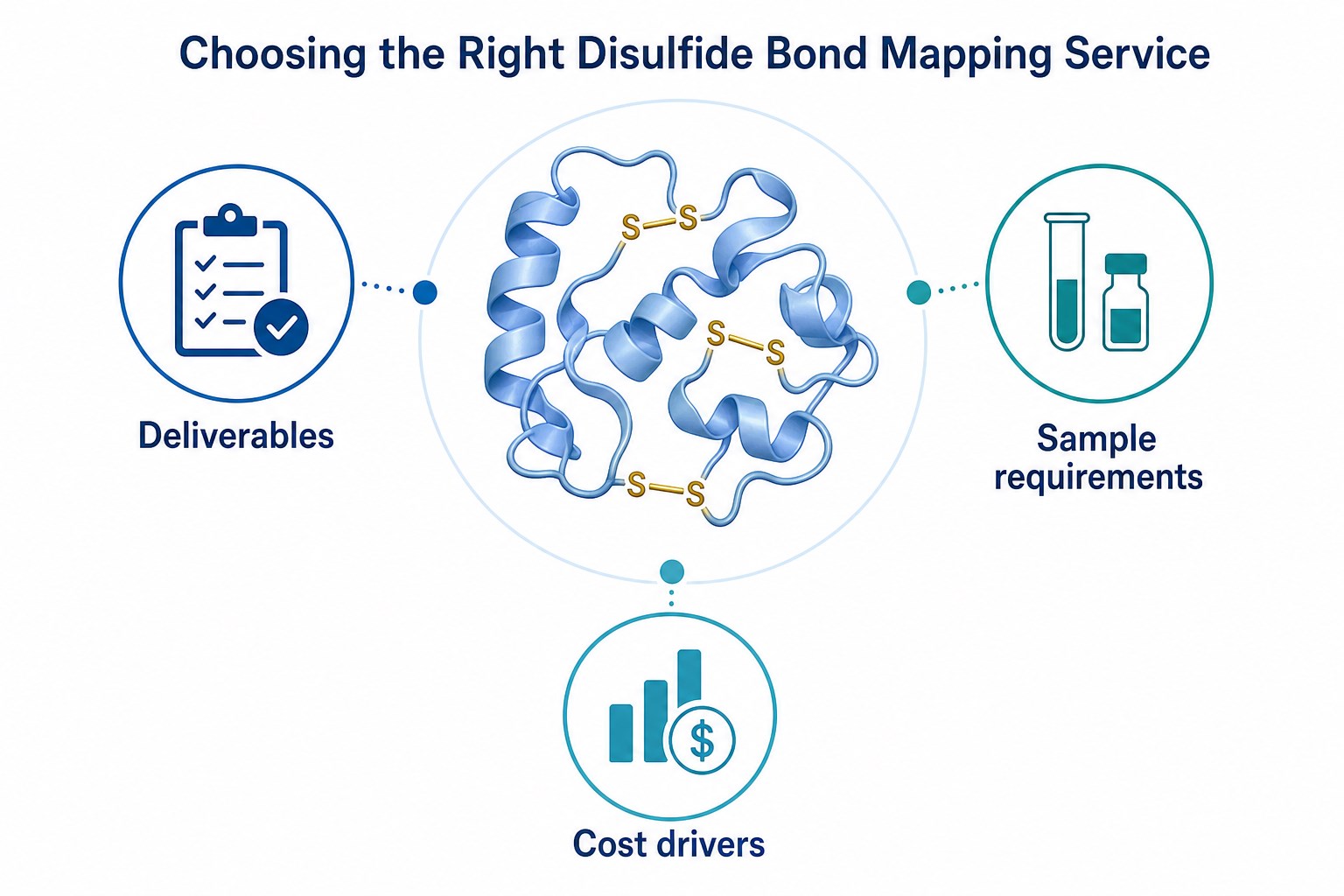
Figure 1. Choosing a disulfide mapping service requires balanced review of deliverables, sample requirements, and cost drivers.
Step 1: Define the Mapping Goal Before Requesting Quotes
Unclear project objectives are the most common cause of service mismatch. Before contacting providers, teams should define:
- whether site-specific disulfide assignment, comparability review, or investigation is the primary goal
- product format such as IgG, IgG2, fusion protein, or enzyme
- sample type: research material, drug substance, or drug product
- need for non-reducing mapping alone or paired reduced and non-reduced analysis
- expected reporting depth for exploratory, CMC, or regulatory use
- availability of reference, baseline, or comparator lots
A provider cannot recommend appropriate scope if the decision context is undefined. Goal definition also prevents paying for full hinge-region MS/MS validation when a screening-level connectivity check would suffice, or selecting a basic package when comparability requires documented bond-level evidence.
Step 2: Review Key Deliverables
Deliverables should match project stage and intended use. A strong disulfide bond mapping report typically includes some or all of the following depending on scope.
- connectivity map with assigned cysteine pairs
- list of supporting disulfide-linked peptides
- confidence grading such as confirmed, provisional, or unsupported bonds
- reduced digest coverage summary when paired analysis is performed
- annotated spectra or review notes for critical linkages
- comparison to expected disulfide architecture
- method summary covering digestion, LC-MS/MS, and review criteria
- interpretation relative to identity, comparability, or investigation goals
For comparability or CMC projects, deliverables should clarify whether reference and test samples were analyzed under the same batch conditions and how provisional bonds are reported. Request sample report formats before award so deliverable depth can be compared directly across providers.
Step 3: Understand Sample Requirements
Sample requirements strongly affect whether mapping succeeds on the first attempt. Strong providers review feasibility before method lock-in.
Teams should be prepared to supply:
- mature protein sequence and expected disulfide pairs
- product format and chain or domain composition
- sample type and formulation matrix
- protein concentration and available volume
- buffer, excipients, detergents, and storage history
- comparator or reference material if lot comparison is required
Drug substance with mild buffer components is usually simpler than drug product with stabilizers or surfactants that may require cleanup before non-reducing digestion. Insufficient sample amount can limit repeat analysis or paired reduced and non-reduced workflows. Incomplete metadata is a frequent cause of repeat submissions and delayed reporting.
Step 4: Evaluate QC and Mapping Capability
Quality practices distinguish specialized disulfide mapping providers from generic peptide mapping vendors.
Ask whether the provider routinely performs non-reducing workflows on biotherapeutic samples rather than only reduced sequence mapping.
Confirm whether feasibility review is included before sample acceptance.
Review whether expert manual MS/MS validation is part of disulfide-linked peptide assignment.
Determine whether scrambled or partial reduction risks are addressed through documented prep SOPs.
Assess experience with complex formats such as IgG2 hinge isoforms, fusion proteins, and multi-domain products.
QC capability matters because disulfide assignment often cannot rely on automated software output alone.
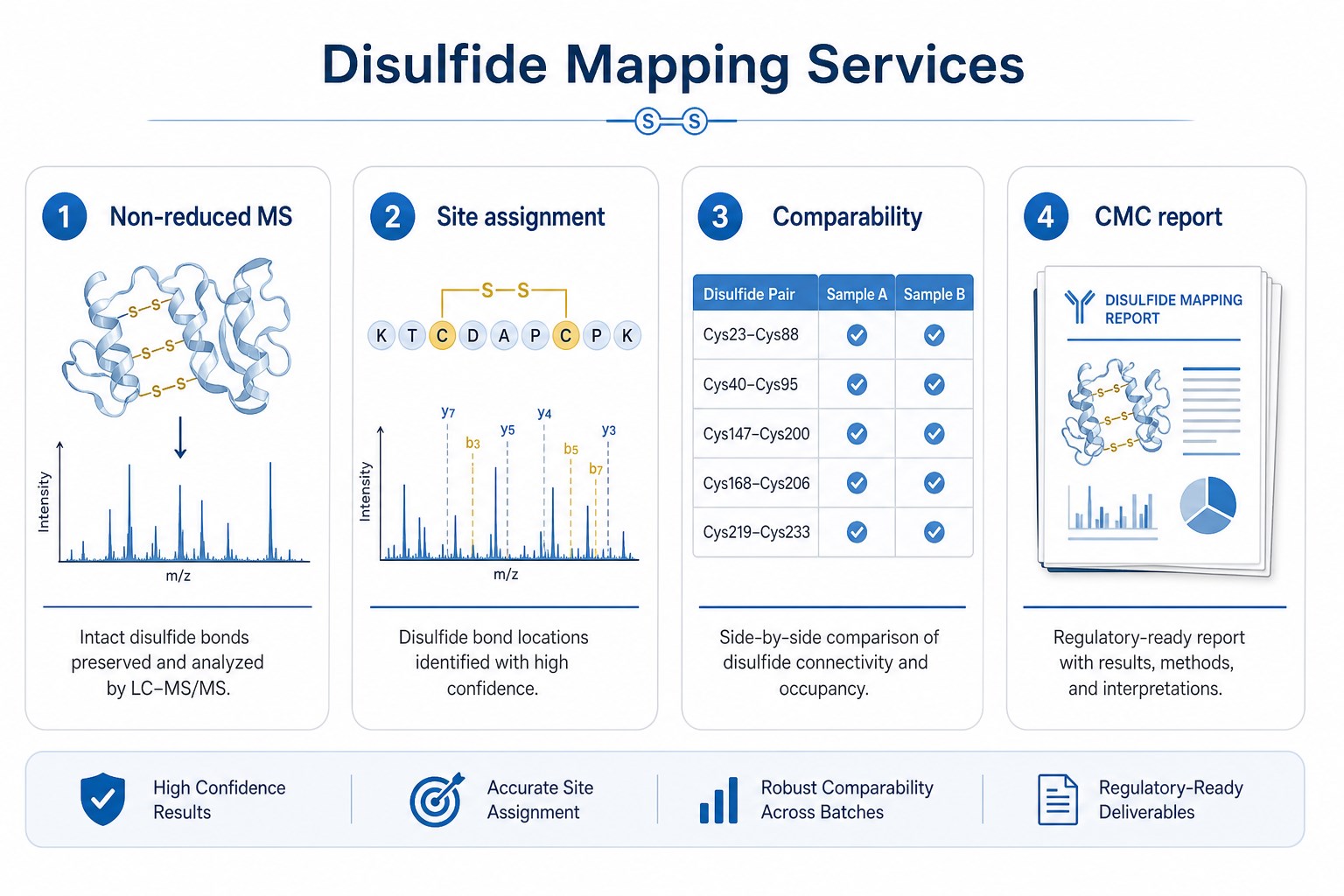
Figure 2. Service evaluation should compare non-reducing MS capability, site assignment depth, comparability support, and CMC reporting level.
Step 5: Understand Cost Drivers
Disulfide bond mapping cost is driven by scope rather than a single fixed assay price.
Sample matrix complexity
Purified research protein is usually the simplest matrix. Drug substance may require buffer adjustment. Drug product often increases prep time and feasibility work because excipients interfere with digestion or ionization.
Method depth
Intact mass screening costs less than full non-reducing LC-MS/MS with MS/MS validation for hinge and interchain bonds. Paired reduced and non-reduced analysis, multi-enzyme follow-up, and targeted re-analysis increase scope.
Number of samples and comparators
Single-sample confirmation costs less than multi-lot comparability studies requiring bracketed analysis, repeat controls, and side-by-side reporting.
Reporting and documentation level
Exploratory summaries cost less than CMC-oriented reports with method context, confidence grading, and structured comparability tables.
Turnaround and repeat risk
Expedited timelines may cost more, especially when feasibility review or repeat preparation is likely for complex matrices.
Cost evaluation should compare total project value, including feasibility support, reporting usefulness, and repeat risk, rather than the lowest unit price alone.
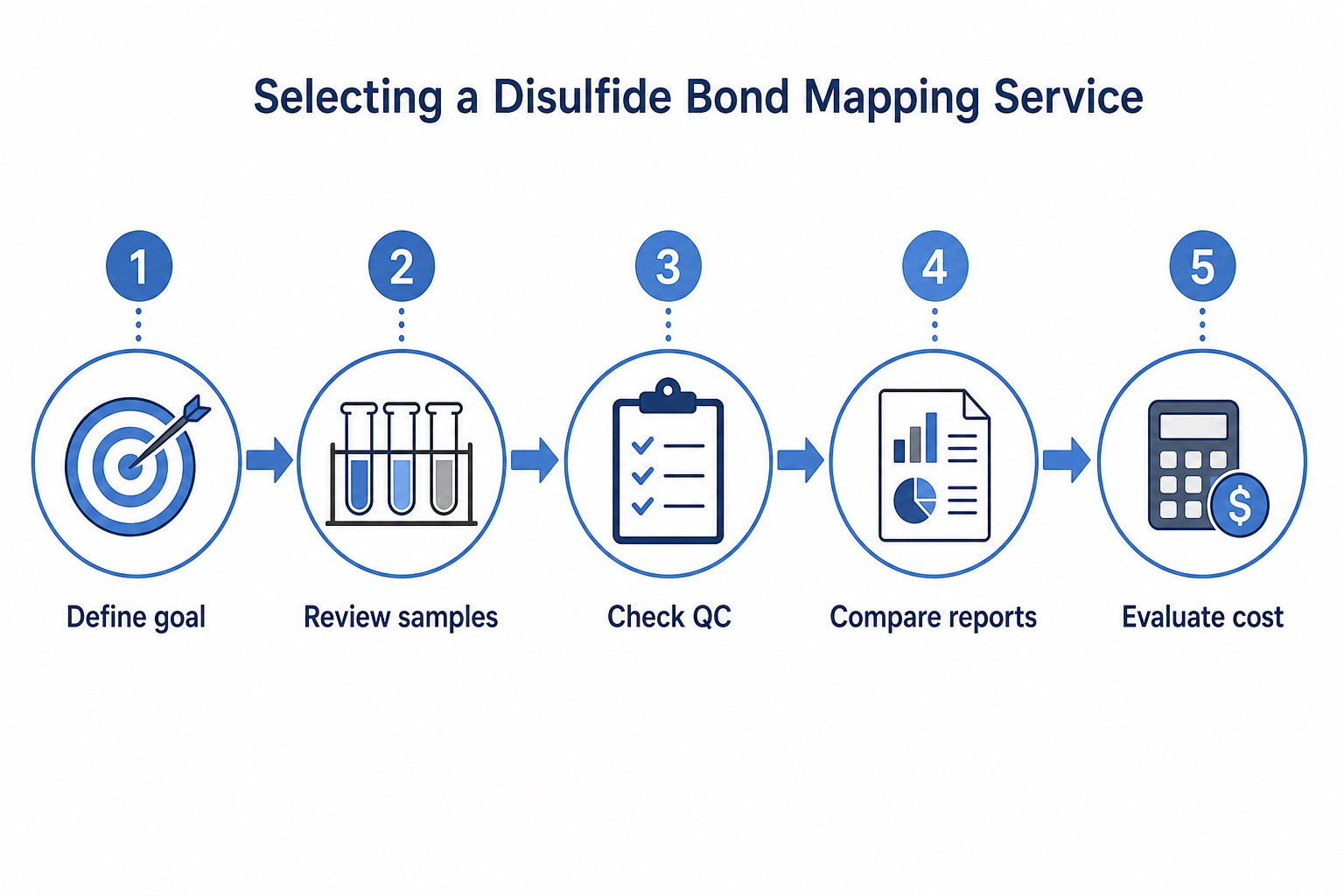
Figure 3. A structured service selection workflow moves from goal definition through sample review, QC comparison, report evaluation, and cost review.
Related Services
Disulfide Bond Analysis Service
Protein Disulfide Bond Analysis Service
Biopharmaceutical Disulfide Bond Analysis Service
Comprehensive Peptide Mapping Service
Teams evaluating disulfide bond mapping providers can consult MtoZ Biolabs to review project goal, sample status, and the service scope best matched to characterization or comparability needs.
Service Comparison by Project Type
Different project types prioritize different service features.
|
Project Type |
Priority Deliverable |
Sample Requirement Emphasis |
Main Cost Driver |
|---|---|---|---|
|
Early identity check |
Major bond confirmation |
Purified material, moderate amount |
Method depth |
|
IgG2 or complex mAb |
Isoform-aware connectivity |
Non-reducing prep feasibility |
Expert review time |
|
Comparability study |
Side-by-side bond comparison |
Reference and test in same batch |
Number of lots |
|
Investigation of mass shift |
Provisional vs confirmed grading |
Detailed matrix and handling history |
Follow-up analysis |
|
CMC documentation |
Method context and QC notes |
Well-documented drug substance or DS |
Reporting depth |
The lowest-cost option rarely matches the highest-documentation need.
Questions to Ask Before Awarding a Project
Several questions help distinguish strong disulfide mapping providers from generic assay vendors.
- Do you routinely perform non-reducing disulfide mapping on biotherapeutic samples?
- Is feasibility review included before method lock-in?
- Will disulfide assignments be supported by MS/MS validation and manual review?
- Can you provide a sample report showing confirmed versus provisional bond grading?
- How do you handle drug product matrices with excipients or detergents?
- Can reference and test samples be analyzed in the same batch for comparability work?
- What factors will drive scope and cost for this project?
Clear answers reduce the risk of repeat analysis, incomplete reporting, and method mismatch.
Common Selection Mistakes to Avoid
Selecting intact mass screening alone when site-specific disulfide assignment is required for the decision.
Choosing the lowest quote without reviewing deliverable format, QC practices, or repeat history on similar matrices.
Submitting formulated drug product without feasibility review and discovering later that cleanup expands scope.
Assuming all mapping reports are equivalent when one provider delivers exploratory summaries and another delivers CMC-oriented documentation.
Omitting comparator lots from the initial scope and needing a second project for meaningful comparability analysis.
Avoiding these mistakes often saves more time and cost than selecting the fastest initial turnaround.
Frequently Asked Questions
1. What is the most important factor when choosing a disulfide mapping service?
Method fit for the project goal is most important. The service must match required connectivity depth and intended use of the data.
2. What deliverables should a strong report include?
At minimum, assigned bonds with supporting peptide evidence, confidence grading, method summary, and interpretation relative to the project goal.
3. What sample information is usually required?
Sequence, expected disulfide architecture, sample type, concentration, buffer composition, storage history, and comparator availability if applicable.
4. Why do disulfide mapping costs vary widely?
Cost varies with sample matrix, method depth, number of comparators, MS/MS validation requirements, and reporting level.
5. Is non-reducing peptide mapping always necessary?
Site-specific disulfide assignment usually requires non-reducing mapping. Intact mass alone may suffice only for screening-level review.
6. Can one service package support CMC comparability?
Yes, when scope includes appropriate reference and test analysis, MS/MS validation, and reporting depth suited to comparability review.
Conclusion
Choosing a disulfide bond mapping service requires structured evaluation of deliverables, sample requirements, and cost drivers aligned with the project decision. Non-reducing LC-MS/MS mapping, paired reduced controls, and expert MS/MS validation each add value when connectivity evidence must support development, comparability, or CMC documentation.
Teams that define mapping goals first, compare reporting depth honestly, and ask targeted questions about QC and biotherapeutic experience are more likely to receive data that support identity confirmation, lot comparison, and investigation without repeat testing. Cost should be evaluated as total project value rather than lowest quoted price alone. Groups selecting a disulfide bond mapping partner can contact MtoZ Biolabs to review sample status, service scope, and the reporting package best matched to their program stage.
How to order?




