






How to Choose an AP-MS Service Provider for Your Project
- Bait-centered discovery when the lab lacks stable AP-MS enrichment and analysis workflow
- Comparative interactome projects that require matched bait, control, and contrast arms processed under consistent chemistry
- Pilot feasibility testing before the lab invests in constructs, stable lines, or repeat purifications
- LC-MS/MS analysis of externally prepared enrichments when in-house MS is limited but pull-down material exists
- Validation-oriented projects that need ranked shortlists and technical review rather than raw identification tables alone
- What is the bait format: tagged construct, endogenous antibody capture, or immobilized recombinant bait?
- What sample material exists now: lysate-ready cultures, enriched eluates, or only a planned construct?
- What comparisons are required: discovery only, mutant contrast, treatment arms, or validation shortlist generation?
- What deliverable must the dataset support: exploratory list, ranked candidates, comparative report, or manuscript-ready interpretation support?
- Which parts of the AP-MS workflow are included in this proposal: enrichment, controls, digestion, LC-MS/MS, and analysis review?
- Has the provider handled this bait format and control type before?
- How are empty-tag, isotype, or other required controls processed relative to bait samples?
- What replicate structure does the provider recommend for the intended claim level?
- What happens if bait recovery is low or missing in pilot material?
- What deliverables are included: raw IDs, filtered tables, ranked candidates, or comparative summaries?
- Who reviews bait design, sample labels, and arm structure before work begins?
- Can the provider support validation planning for top candidates after the initial dataset?
- Bait sequence context, tag, expression system, and induction plan if applicable
- Experimental arms including bait, controls, and any mutant or treatment contrasts
- Sample type and current status: live cultures, frozen pellets, or pre-enriched eluates
- Known constraints: antibody availability, sample amount, timing of biological state
- Intended claim level: discovery shortlist, comparative remodeling, or validation support
- Orthogonal assays planned for top candidates, if any
- No discussion of controls despite a tagged-bait discovery goal
- Scope ambiguity between enrichment, MS, and analysis review
- No bait recovery or sample QC checkpoint before full-scale analysis
- Promises of direct binding proof from AP-MS alone
- Inability to explain how bait and control arms will be processed comparably
- Deliverable language limited to “protein list” without specificity filtering context
- Questions about bait format, arms, and controls before quoting
- Explicit scope boundaries for enrichment, MS, and interpretation
- Recommendations on replicate structure tied to the project claim
- Realistic language about co-enrichment evidence and validation needs
- Defined reporting content and follow-up options for candidate review
- Enrichment included or client-supplied
- Number of arms and controls covered
- Biological replicate handling
- LC-MS/MS analysis scope across arms
- Filtering or ranking included or excluded
- Technical review and consultation included or excluded
- Repeat policy if bait recovery fails or controls are mismatched
- Internal scope statement defines bait, arms, controls, and deliverable
- Provider scope model matches sample status and in-house capabilities
- Control design is defined for the bait format and comparison goal
- Replicate structure matches the intended claim level
- Deliverables are specified beyond a raw protein table when ranking is required
- Proposal explains matched processing across compared arms
- Interpretation and troubleshooting support are defined if needed
- Validation route for top candidates is identified before full-scale work
Introduction
Choosing an AP-MS service provider is not the same as choosing a generic proteomics lab. Affinity purification mass spectrometry combines bait-directed enrichment, matched controls, LC-MS/MS identification, and specificity review into one decision chain. A provider that excels at unfractionated proteomics may still be a poor fit if your project needs control-based interactome analysis, comparative bait arms, or validation-oriented shortlist delivery.
Teams often start vendor comparison with price and turnaround time. Those factors matter, but they are difficult to interpret when proposals use different scope definitions. One quote may cover enrichment only; another may include empty-tag control processing, replicate analysis, and ranked candidate output. This article explains how to choose an AP-MS service provider for your project by matching provider scope to bait format, sample status, control design, and the claim level your dataset must support.
When Outsourcing AP-MS Makes Sense
Outsourcing is most valuable when the project needs interaction MS capability that is not available in-house, or when internal capacity is better spent on biology than on enrichment optimization and LC-MS/MS method setup. Common outsourcing scenarios include:
Outsourcing is less helpful when the biological question is still undefined, when no control design is feasible, or when the project only requires confirmation of one known partner—in those cases, targeted Co-IP or a narrower assay route may be more efficient than full AP-MS vendor screening.
Define Your Project Scope Before Contacting Providers
Provider fit starts with an internal scope statement. A useful brief answers four questions before any quote request:
A provider cannot assess fit accurately from “we need AP-MS on our bait” alone. Teams that define arms, controls, and deliverables upfront receive proposals that can be compared on substance rather than on headline price.
Service Scope Models to Compare
AP-MS providers often operate under different scope models. The right model depends on what your lab already performs well.
|
Scope model |
Provider typically handles |
Client lab typically handles |
Best when |
|---|---|---|---|
|
Full AP-MS workflow |
Enrichment, controls, digestion, LC-MS/MS, candidate review |
Bait design input, sample context, validation follow-up |
No in-house enrichment or interaction MS workflow |
|
Enrichment plus MS |
Pull-down or IP enrichment and LC-MS/MS analysis |
Construct generation, culture, initial bait QC |
Lab can generate cells but not MS |
|
MS analysis only |
LC-MS/MS on submitted enrichments |
All upstream enrichment and control generation |
Eluates already prepared with documented handling |
|
Consultation-led design plus execution |
Experiment design review, control planning, scoped execution |
Biological system expertise, construct decisions |
First AP-MS project or complex comparative design |
Compare proposals at the scope-model level first. A lower-cost MS-only quote is not equivalent to a full-workflow quote if your team still needs control design, enrichment troubleshooting, and matched processing across arms.
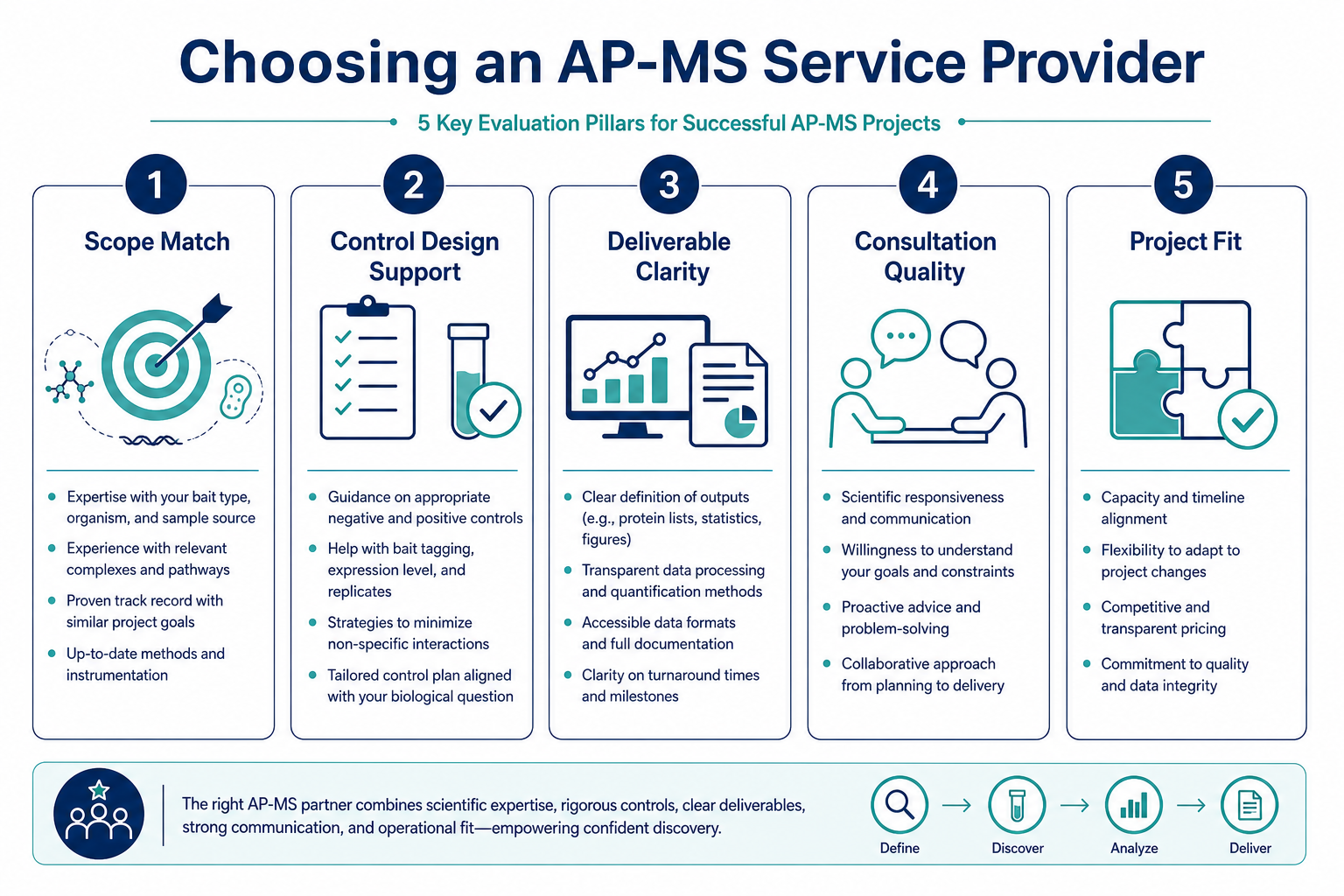
Figure 1. Evaluate AP-MS providers on scope match, control design support, deliverable clarity, and consultation quality—not price alone.
Technical Criteria That Matter Most
Once scope is clear, compare providers on technical fit rather than generic proteomics credentials.
Bait format and control experience
Ask whether the provider routinely handles your bait type. Tagged-bait AP-MS with empty-tag controls, antibody capture IP-MS-style workflows, and recombinant pull-down MS each require different background models. A provider experienced with one format may still need a revised plan for another.
Control and replicate planning
Strong AP-MS providers discuss controls before samples are shipped. Empty-tag, isotype, bead-only, or treatment-matched controls should be defined in the proposal when they are required for specificity filtering. Providers that treat controls as optional add-ons often deliver lists that are difficult to interpret as interactomes.
Matched processing across arms
Comparative AP-MS depends on matched lysis, wash, elution, digestion, and LC-MS/MS handling across bait and control arms. Ask how the provider prevents arm-to-arm asymmetry in enrichment chemistry and analysis depth when mutant, treatment, or panel contrasts are included.
Deliverable definition
Clarify what the project returns. Raw protein tables, bait-control contrast output, replicate-aware ranking, contaminant filtering logic, and validation shortlist recommendations are not the same deliverable. The provider should define reporting content in the proposal so the dataset matches the claim level you need.
Interpretation support
Some projects stop at identification; others require help deciding which candidates are worth reciprocal Co-IP or domain mapping. If your team lacks interaction proteomics interpretation experience, prefer providers that include technical review of bait recovery, control quality, and candidate prioritization rather than data transfer alone.
Questions to Ask Before Awarding the Project
Use these questions during provider screening:
Clear answers reduce the risk of paying for MS depth on a poorly defined enrichment design.
Information to Prepare for a Useful Technical Review
Providers can assess fit faster when clients share structured project information:
MtoZ Biolabs uses this information to determine whether AP-MS scope, control design, and deliverables align with the project before samples are generated or shipped.
Proposal Red Flags and Green Flags
Proposal review is part of provider selection, not a formality after the decision is made.
Red flags include:
Green flags include:
A strong proposal may cost more than a minimal MS quote while reducing repeat enrichment risk.
Full-Service, Specialist, and Generalist Providers
Not every outsourcing route fits every AP-MS project. Generalist CROs with broad service menus may handle standard sample submission workflows well but offer less interaction-specific consultation when control design or bait troubleshooting is the main risk. University core facilities may provide LC-MS/MS access at lower cost but often lack AP-MS-specific experimental design support or commercial project management for multi-arm interaction studies.
Specialist interaction proteomics providers are often a better fit when the project needs consultation on bait format, control arms, and candidate interpretation rather than instrument time alone. The best provider is not always the largest; it is the one whose scope and review process match the weakest step in your current workflow.
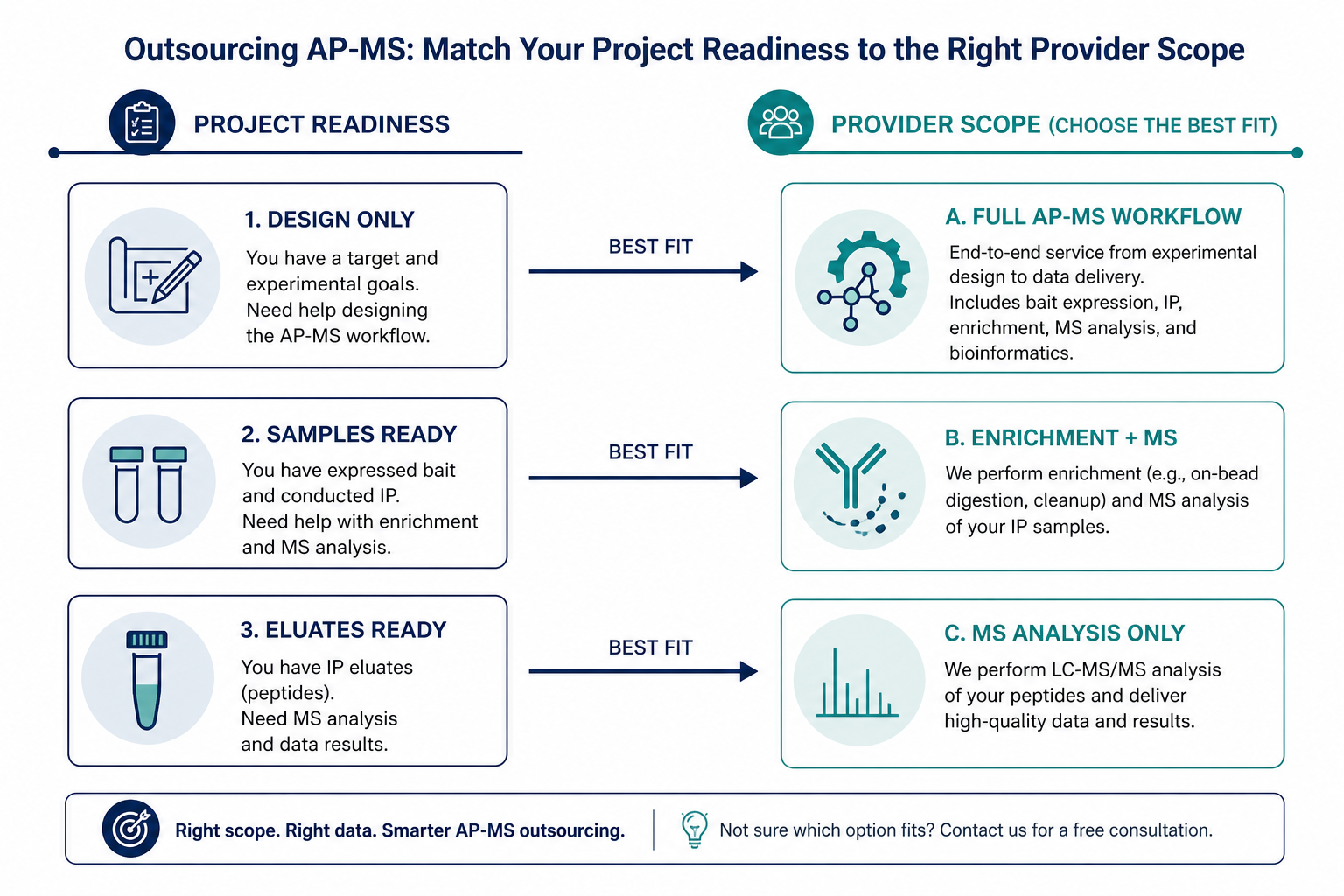
Figure 2. Match provider scope to project readiness: design support, enrichment execution, MS analysis, or full workflow.
How to Compare Quotes Without Misreading Cost
Price comparison works only when scope, arms, controls, replicates, and deliverables are aligned. When reviewing multiple proposals, build a comparison table with the same rows for each provider:
If one proposal excludes control processing or analysis review, treat the gap as project risk rather than savings. Repeat enrichment and delayed interpretation often cost more than a better-scoped initial proposal.
When to Request a Pilot Before Full-Scale AP-MS
A pilot project is reasonable when bait expression is unproven, capture chemistry is untested in the current system, or control feasibility is uncertain. Pilots should still include at least one primary control arm when the goal is specificity assessment rather than raw identification count.
Use pilot results to judge provider fit on communication, bait recovery review, and realistic interpretation language before committing to a larger comparative panel. Providers that treat pilots as scaled-down experiments with defined review points are often easier to partner with on full projects.
Affinity Purification-Mass Spectrometry Service
MS-Based Protein-Protein Interaction Analysis Service
Related Services
Next Step
Affinity Purification-Mass Spectrometry Service
Submit bait format, control plan, and sample status for AP-MS scope review before choosing a final workflow.
Complementary
Co-Immunoprecipitation Protein Interaction Analysis Service
Use after AP-MS candidate nomination when the provider selection depends on whether validation will follow discovery.
Alternative
IP-MS Protein Interactomics Analysis Service
Consider when endogenous bait capture fits the project better than tagged AP-MS and provider scope must be evaluated for antibody-based enrichment.
Provider Selection Checklist
Use this checklist before awarding an AP-MS project:
Teams that complete this review can compare providers on project fit rather than on incomplete quotes.
Frequently Asked Questions
1. What should I look for first in an AP-MS service provider?
Start with scope match: whether the provider covers the steps your project still needs, including control design, enrichment, LC-MS/MS, and candidate review if required.
2. Is the cheapest AP-MS quote usually the best value?
Not necessarily. Lower-cost quotes may exclude controls, replicate analysis, or interpretation support, which increases repeat experiment risk.
3. Can I send only enriched samples for AP-MS analysis?
Yes, when enrichment and controls were generated with documented matched handling. MS-only providers fit this model; full design review may still be needed before analysis begins.
4. Should the provider help design controls?
For discovery or comparative AP-MS, yes. Control design should be discussed before sample generation whenever bait-specific filtering is required.
5. What project information should I send before requesting a quote?
Share bait format, experimental arms, control plan, sample type and status, comparison goals, and the deliverable level the project must support.
6. When should I run a pilot AP-MS project with a new provider?
When bait expression, capture chemistry, or control feasibility is unproven, or when you need to evaluate provider communication and recovery review before a larger panel.
Conclusion
Choosing an AP-MS service provider requires comparing scope, control design support, deliverables, and consultation quality—not proteomics branding alone. Define your bait format, experimental arms, and intended claim level first, then evaluate whether each provider covers enrichment, matched controls, LC-MS/MS, and the analysis depth your project needs.
Strong providers ask technical questions before quoting, define deliverables clearly, and use realistic language about co-enrichment evidence and validation. Researchers planning outsourced AP-MS can review the Affinity Purification-Mass Spectrometry Service page or contact MtoZ Biolabs with bait design, control plan, sample status, and deliverable goals for a project fit assessment.
How to order?




