






How to Choose an N-Terminal Sequencing Strategy for Recombinant Proteins and Unknown Bands
-
Is the goal mature start confirmation, tag removal verification, or identification of an unknown band?
-
How many N-terminal residues must be reported with confidence?
-
Is an expected sequence available for comparison?
-
Will the result support clone screening, lot release, publication, or exploratory identification only?
-
Is full protein sequence eventually required if terminal readout is inconclusive?
Introduction
N-terminal sequence questions often arrive in two very different forms. A recombinant protein team may need to confirm that a secretion leader, affinity tag, or propeptide was removed as designed. A discovery team may instead face an unknown protein band on SDS-PAGE and need the first residues to guide identification, cloning, or follow-up proteomics.
Both cases involve terminal sequence analysis, but the right strategy is not the same. Recombinant projects usually have an expected mature start and a purified target. Unknown- band projects may lack reference sequence, require gel-band enrichment, or need escalation to broader protein sequencing if terminal readout alone is insufficient. Choosing the wrong path wastes sample, delays decisions, and can produce a terminal report that does not answer the real biological question.
A dependable N-terminal sequencing strategy begins before the sample is submitted. Define the evidence goal, classify the sample type, check whether the N-terminus is accessible, select the method path, and plan validation. The sections below provide a practical framework for recombinant proteins and unknown bands.
Related Services
| Research Need | Recommended Service Direction |
| Direct N-terminal residue readout | N-Terminal Sequencing Service |
| Classical Edman-based terminal analysis | Protein Sequencing Service by Edman Degradation |
| Broader sequence recovery from unknown proteins | De Novo Protein Sequencing Service |
| Terminal evidence within a mapped protein | Peptide Mapping Service |
| MS-based protein sequence confirmation | Protein Sequencing Service by Mass Spectrometry |
For projects where sample purity, N-terminal blocking, or reporting depth is uncertain, MtoZ Biolabs can help compare Edman chemistry, MS-based terminal analysis, peptide mapping, and broader sequencing options before samples are prepared.
Why Strategy Choice Matters
Most failed terminal projects share a small set of root causes. The sample may be a mixed gel band rather than a purified protein. The N-terminus may be acetylated or cyclized, making Edman cycle one impossible without an alternative route. The project may request only two residues when the real question requires distinguishing uncleaved tag from mature start. Or the team may choose terminal sequencing when the unknown band actually needs de novo protein sequencing because no reference exists.
Another common issue is treating all N-terminal work as a fixed assay. Recombinant confirmation is usually fastest when the expected mature start is known and the sample is clean. Unknown- band work often needs tighter band excision, more feasibility review, and a backup plan if terminal readout is blocked or ambiguous.
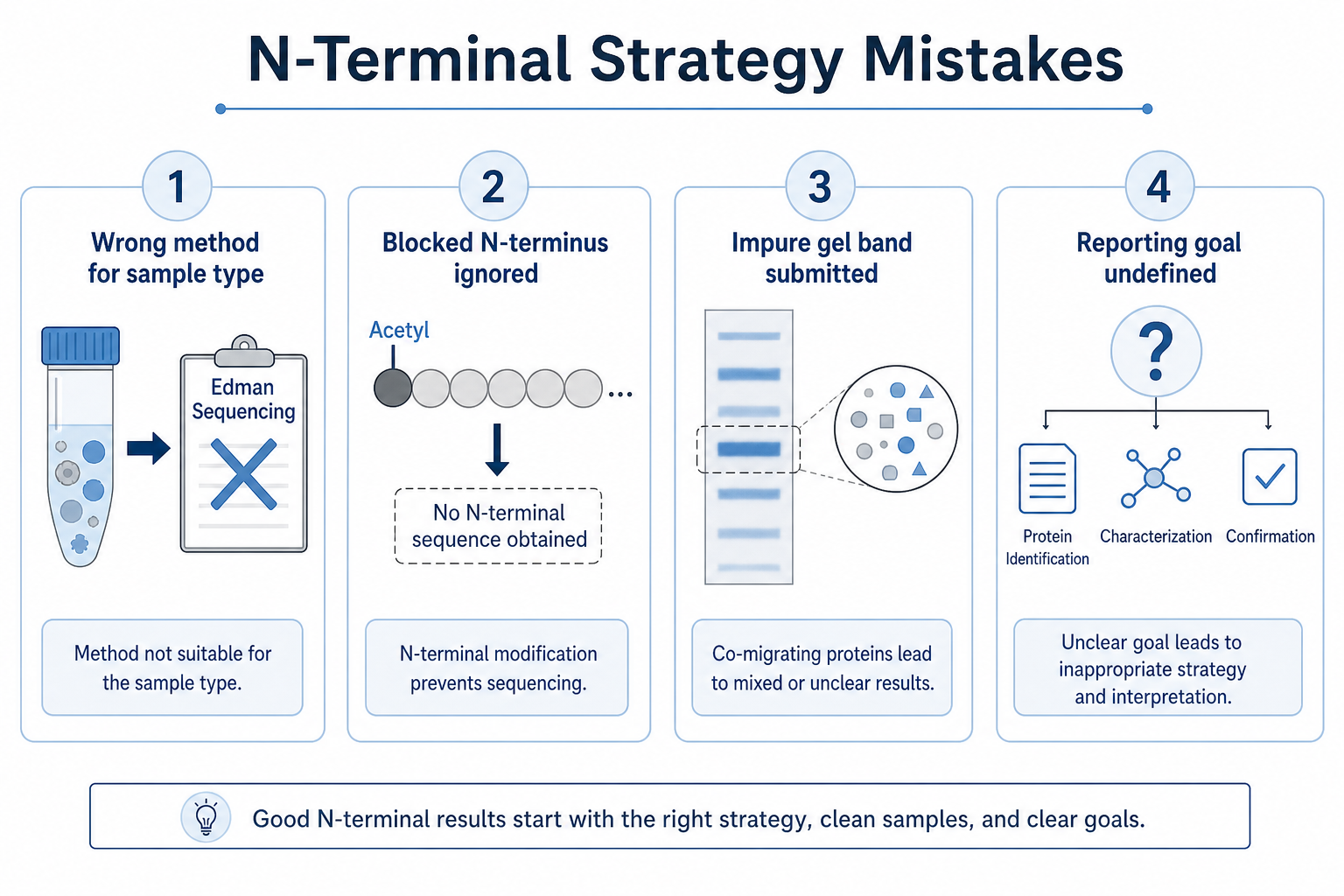
Figure 1. Common strategy mistakes that reduce terminal sequence confidence
Method mismatch is a hidden failure mode. Edman chemistry is efficient for a free N-terminus on purified material. MS-based terminal peptide analysis may be better when the terminus is blocked or when terminal evidence must fit into a larger characterization package. Unknown bands with no reference may require terminal readout only as a first step, not the final answer.
Step 1: Define the Terminal Evidence Goal
Before choosing a method, define what the result must support.
Useful planning questions include:
A recombinant clone-screening project may need only the first five to eight residues. A biopharmaceutical QC project may need documented terminal identity with clearer traceability. An unknown-band project may need enough terminal evidence to design database searches, PCR primers, or a follow-up de novo sequencing plan.
Narrow goals improve efficiency. A broad goal without purified material, accessibility review, or validation planning often ends in repeat submission.
Step 2: Classify the Sample as Recombinant or Unknown Band
Sample type is the largest branch point in any N-terminal sequencing strategy.
Recombinant samples usually come from expression cultures with a known construct design. The scientific question is whether the purified product begins at the intended mature residue after leader, tag, or propeptide processing. Purity, buffer composition, and expression system details matter, but a reference sequence is often available.
Unknown band samples usually come from gel electrophoresis, enrichment fractions, or crude lysates. The scientific question is what protein or fragment the band represents and where its N- terminus begins. Reference sequence may be absent, incomplete, or misleading if the band is a degradation product, splice variant, or contaminant.
The same gel image can hide very different strategy needs. A single sharp recombinant product band is not equivalent to a faint unknown band in a complex lysate.
Strategy Guide by Sample Scenario
The table below summarizes common starting points. It supports planning but does not replace sample-specific feasibility review.
| Sample Scenario | Likely Question | Preferred First Strategy | Common Backup Route |
| Purified recombinant material with expected mature start | Was leader or tag removed correctly? | Edman chemistry on purified sample | N-terminal peptide mapping by LC-MS/MS |
| Expressed product with suspected blocked N-terminus | Why did Edman fail at cycle one? | MS-based terminal peptide analysis | Chemical treatment or broader peptide mapping |
| Sharp unknown protein band from SDS-PAGE | What is the N- terminal start of this band? | Band excision, cleanup, then Edman or MS terminal readout | De novo protein sequencing if reference is absent |
| Weak or mixed unknown band | Is terminal readout feasible at all? | Improve purification or enrichment first | Intact mass plus targeted proteomics follow- up |
| Known construct but unexpected migration | Is the band intact product or truncated form? | Terminal readout plus intact mass comparison | Peptide mapping across the expected sequence |
These scenarios show why strategy selection should happen before the sample is shipped, not after the first failed run.
Step 3: Check N-Terminus Accessibility and Sample Quality
Even the right method fails on the wrong sample. Before committing to Edman analysis, review whether the protein N-terminus is likely to be free. N-terminal acetylation, pyroglutamate formation, and some other modifications can block cycle one. If blocking is likely, plan an MS- based route from the start rather than spending the only sample on unsuccessful Edman attempts.
Sample quality requirements differ by route but share common themes:
| Sample Factor | Recommended Condition | Why It Matters |
| Purity | Single dominant band or chromatographic peak | Competing N-termini reduce interpretability |
| Band excision | Tight excision for unknown gel bands | Nearby contaminating proteins create mixed terminal signals |
| Sample amount | Enough for planned cycles or MS replicates | Low input limits read depth and repeat analysis |
| Buffer or stain | Compatible with downstream cleanup | Some detergents, salts, or stains interfere with analysis |
| Reference information | Construct sequence or predicted mature start | Enables meaningful terminal sequence confirmation |
| Backup plan | Defined if terminus is blocked or ambiguous | Prevents project stall after one failed attempt |
For expressed products, share expression system, tag design, predicted cleavage site, and purification method. For unknown bands, share gel conditions, approximate molecular weight, species or sample source, and any prior identification attempts.
Step 4: Choose Edman, MS-Based Terminal Analysis, or Broader Sequencing
Once the goal and sample type are clear, select the analytical path.
Edman chemistry is usually the first choice for purified recombinant material with a free N- terminus. It provides direct residue-by-residue readout and is efficient for mature start confirmation when sample purity is high.
MS-based terminal analysis is often better when the N-terminus is blocked, when the protein is too large for simple terminal readout alone, or when terminal evidence must be integrated with peptide mapping or intact mass data. LC-MS/MS of N-terminal peptides can localize terminal residues within a larger sequence context.
Peptide mapping is useful when a reference sequence exists and the project needs terminal confirmation plus internal coverage. It is commonly chosen for biopharmaceutical characterization rather than for unknown proteins with no reference.
De novo protein sequencing becomes the better strategic choice when the unknown protein band has no reliable reference and terminal readout alone will not support identification or cloning decisions. In that case, terminal work may still be valuable as supporting evidence, but it should not be treated as the complete solution.
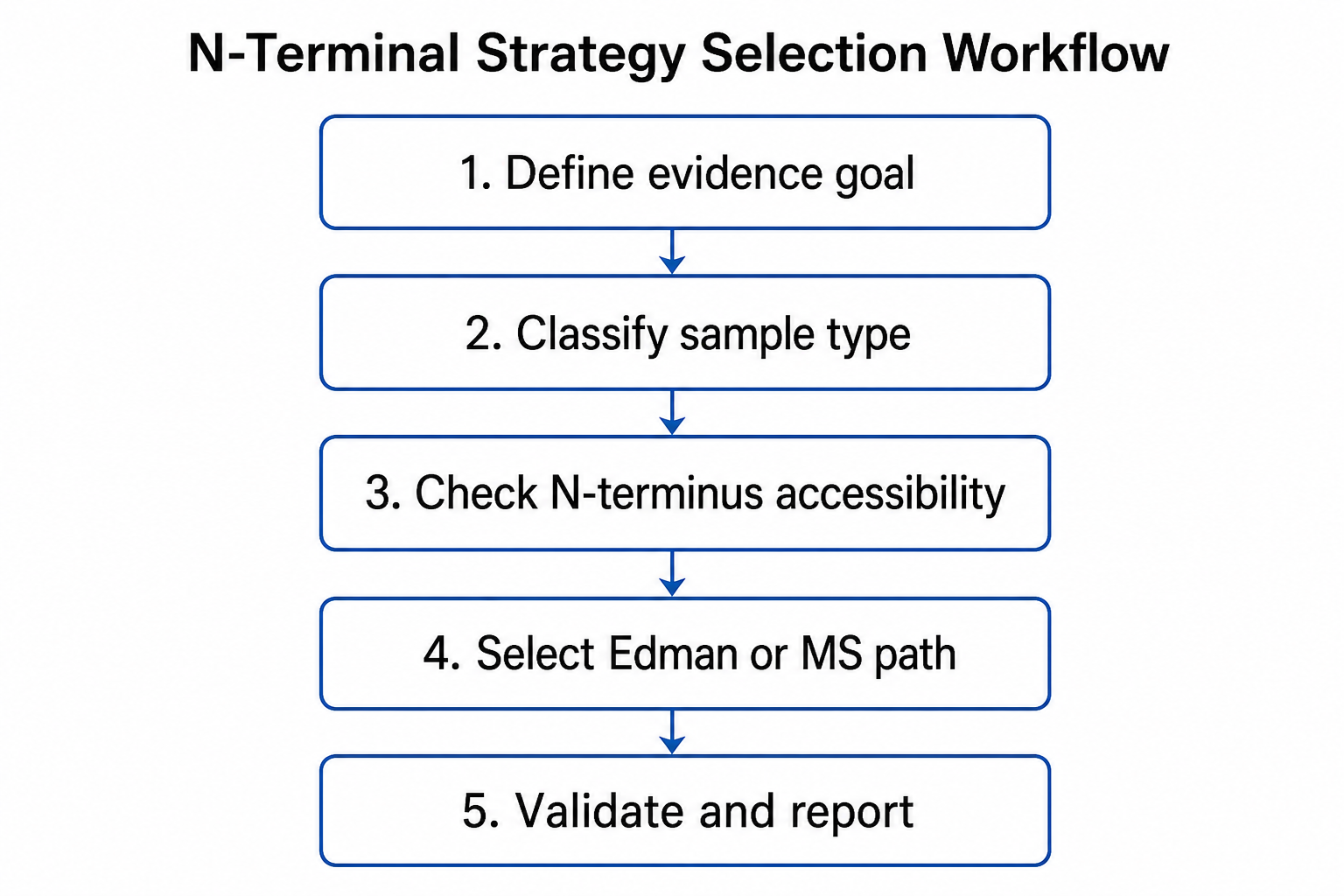
Figure 2. Practical workflow for choosing an N-terminal sequencing strategy from goal definition through reporting
For expressed products, compare the observed N-terminal sequence with the predicted mature start after signal peptide, tag, or propeptide removal. For unknown bands, compare the observed residues against database entries, homology candidates, or de novo tags generated in parallel experiments.
Step 5: Prepare Recombinant and Unknown-Band Samples Differently
Preparation strategy should follow sample class.
For expressed products, prioritize purity before terminal analysis. Remove excess tag if it remains attached and interferes with interpretation. Confirm that the submitted fraction is the expressed product rather than a degradation fragment. Provide the expression construct map and expected processing details.
For unknown bands, prioritize band resolution and cleanup. Use tight gel excision, minimize keratin contamination, and avoid overloaded lanes that blur band boundaries. If the band is faint, consider enrichment or repeat purification before terminal analysis. A mixed band should be improved before method selection, not after a failed Edman run.
Pilot feasibility can save material. A small test run on limited sample can reveal blocking, insufficient purity, or the need to switch from Edman to MS-based terminal analysis before the full project is committed.
Step 6: Validate Results and Define Reporting Depth
Validation should match the decision the project must support. Clone screening may accept a short confirmed N-terminal stretch. Lot release or publication may require clearer documentation, repeat analysis, or orthogonal support from peptide mapping or intact mass measurement.
A strong terminal report should distinguish high-confidence residue calls from tentative ones. It should note cycle number achieved, blocking observed, mixed sequence risk, and recommended next steps if the result is inconclusive. For unknown bands, the report should also state whether the terminal evidence is sufficient for identification or only useful as a lead for broader sequencing.
Do not treat two readable residues as full protein identification. Do not ignore a mismatch between observed and expected mature start. Do not report terminal sequence from a mixed band without noting contamination risk.
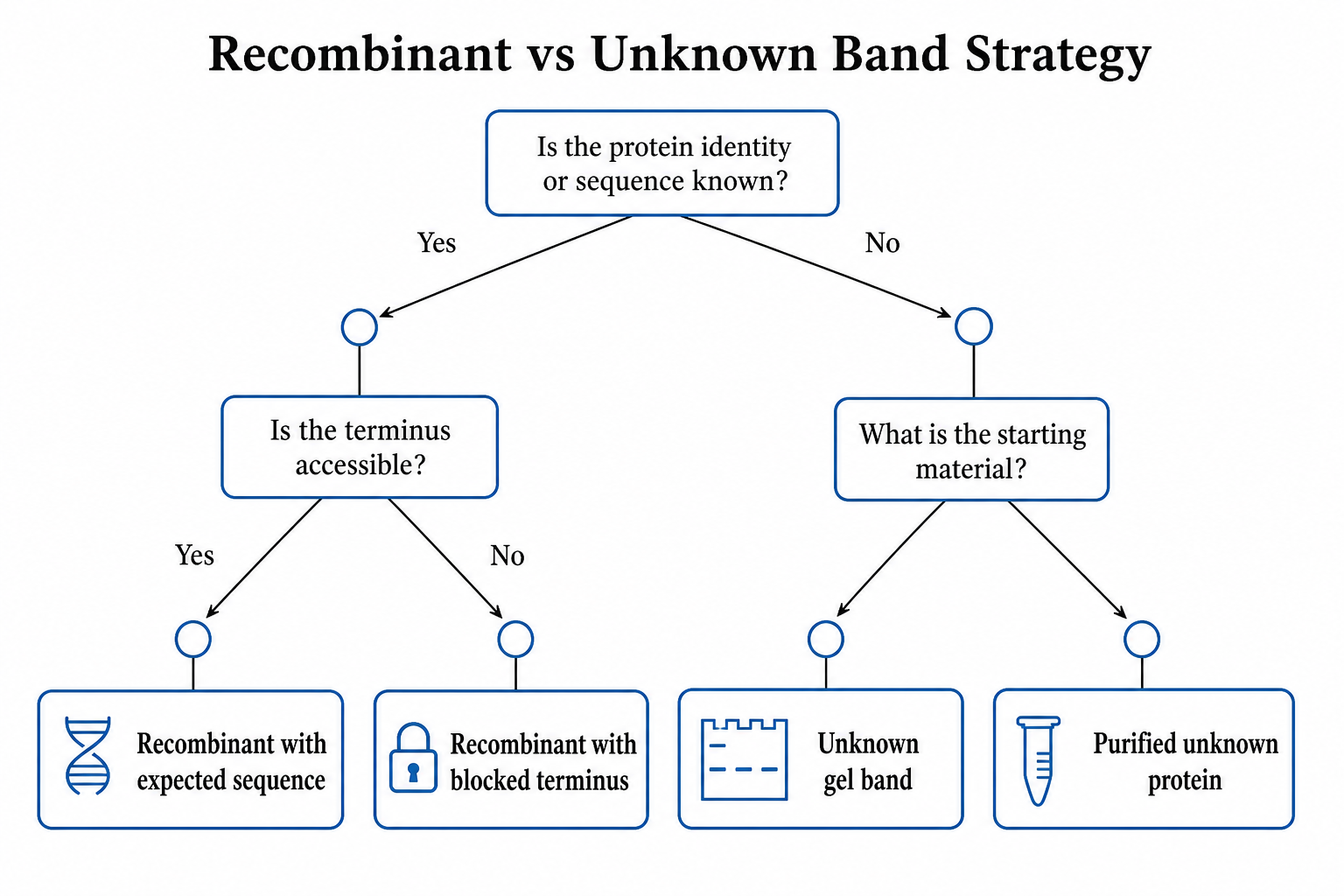 Figure 3. Decision branches for recombinant samples and unknown gel bands
When recombinant terminal readout matches the expected mature start, the strategy usually ends at confirmation. When unknown-band readout does not match any plausible reference, escalate to de novo protein sequencing or targeted proteomics rather than forcing a weak terminal conclusion.
Expected Outputs From a Well-Planned Strategy
| Output Type | Typical Content | Best Used For |
| Confirmed N- terminal sequence | Observed residues from cycle one onward | Recombinant mature start verification |
| Terminal mismatch report | Observed terminus differs from expected design | Construct troubleshooting |
| Blocked terminus note | Cycle one failure with recommended next route | Method switching to MS- based analysis |
| Unknown-band terminal lead | Short sequence from enriched gel band | Database search or primer design |
| Orthogonal support summary | Intact mass or mapped N-terminal peptide evidence | QC, publication, or comparability review |
The deliverable should match the strategy chosen at the start. A recombinant QC project and an unknown-band identification project should not be expected to produce the same depth of evidence from the same sample class.
Key Cautions
Do not submit complex lysates when a single-band terminal answer is required. Do not assume Edman will work when pyroglutamylation or acetylation is likely. Do not use terminal readout alone to identify an unknown protein with no reference when broader sequence recovery is needed. Do not hide mixed-sequence risk when a gel band was poorly resolved.
For expressed products, verify that the submitted sample represents the intended product form. For unknown bands, improve purification before debating method sensitivity. Strategy quality depends as much on sample classification as on instrument choice.
Frequently Asked Questions
1. What is the first step in choosing an N-terminal sequencing strategy?
The first step is to define the terminal evidence goal and classify the sample as a recombinant product with an expected start or an unknown band requiring identification support.
2. When is Edman chemistry the best first choice?
Edman analysis is usually best for purified protein with a free N-terminus when the project needs direct residue-by-residue confirmation of the mature start.
3. How should unknown gel bands be handled differently?
Unknown bands usually need tighter excision, better cleanup, and a backup plan if terminal readout is blocked or insufficient. Broader de novo protein sequencing may be required when no reference sequence exists.
4. What if cycle one Edman analysis fails?
A cycle one failure often indicates a blocked N-terminus, insufficient purity, or a competing terminal sequence. MS-based terminal peptide analysis or peptide mapping may be the next appropriate route.
5. Is terminal readout enough to identify an unknown protein?
Not always. Terminal readout may provide a valuable lead, but unknown proteins with no reference often need additional proteomics or de novo sequencing to support reliable identification.
Conclusion
Choosing an N-terminal sequencing strategy depends on whether the sample is a recombinant product with an expected mature start or an unknown band with uncertain identity. Define the evidence goal first, review N-terminal accessibility, match the method to sample purity, and plan validation before submission. Edman chemistry remains the most direct route for many recombinant confirmation projects, while unknown bands often need stricter enrichment and a clearer backup path toward MS-based terminal analysis or broader protein sequencing.
If you need help selecting the right terminal workflow for recombinant QC, blocked N-termini, or unknown gel bands, contact MtoZ Biolabs to discuss N-terminal sequencing, Edman analysis, peptide mapping, or an integrated follow-up plan.
How to order?




