






How to Choose a Proteomics Method for Serum, Plasma, or CSF Samples
Choose a protein analysis method for serum, plasma, or CSF samples by starting with the research claim, not with platform names.
If the goal is to obtain a reportable protein list from a limited sample set, identification-focused LC-MS/MS may be sufficient. If the goal is to compare protein abundance across defined groups, use comparative quantitative proteomics. Within quantitative biofluid work, DDA is a common discovery-oriented route, while DIA often fits broader comparative cohorts that need consistent quantification across many samples.
Confirm matrix, cohort structure, and expected deliverables with the laboratory before locking the method. Sample condition still limits every route: severe hemolysis, lipemia, contamination, precipitation, and repeated freeze-thaw are not recommended for the main comparison.
Method Selection Decision Tree
Use the tree below in order.
Step 1. What must the dataset answer?
- Which proteins can be identified under the selected workflow? → identification-focused analysis
- Which proteins change in abundance between defined groups? → quantitative proteomics
- Which predefined proteins require focused measurement? → targeted analysis or quantification
Step 2. How many samples and how structured is the comparison?
flexible discovery or identification emphasis → consider DDA
higher data completeness and cross-sample consistency → consider DIA
Step 3. Which matrix is locked?
- serum or plasma circulating comparison → blood biofluid proteomics route
- CNS-proximal protein readout required → consider a CSF proteomics route
Step 4. Are sample quality and design assumptions acceptable?
If sample condition, anticoagulant consistency for plasma, or arm matching is unresolved, fix those before choosing software or platform details.
When the claim spans both inventory and comparison, plan one primary method for the first batch rather than splitting samples across incompatible routes without review. A pilot identification set can inform a later quantitative cohort, but the two stages should not be treated as one interchangeable dataset unless the design explicitly allows that linkage.
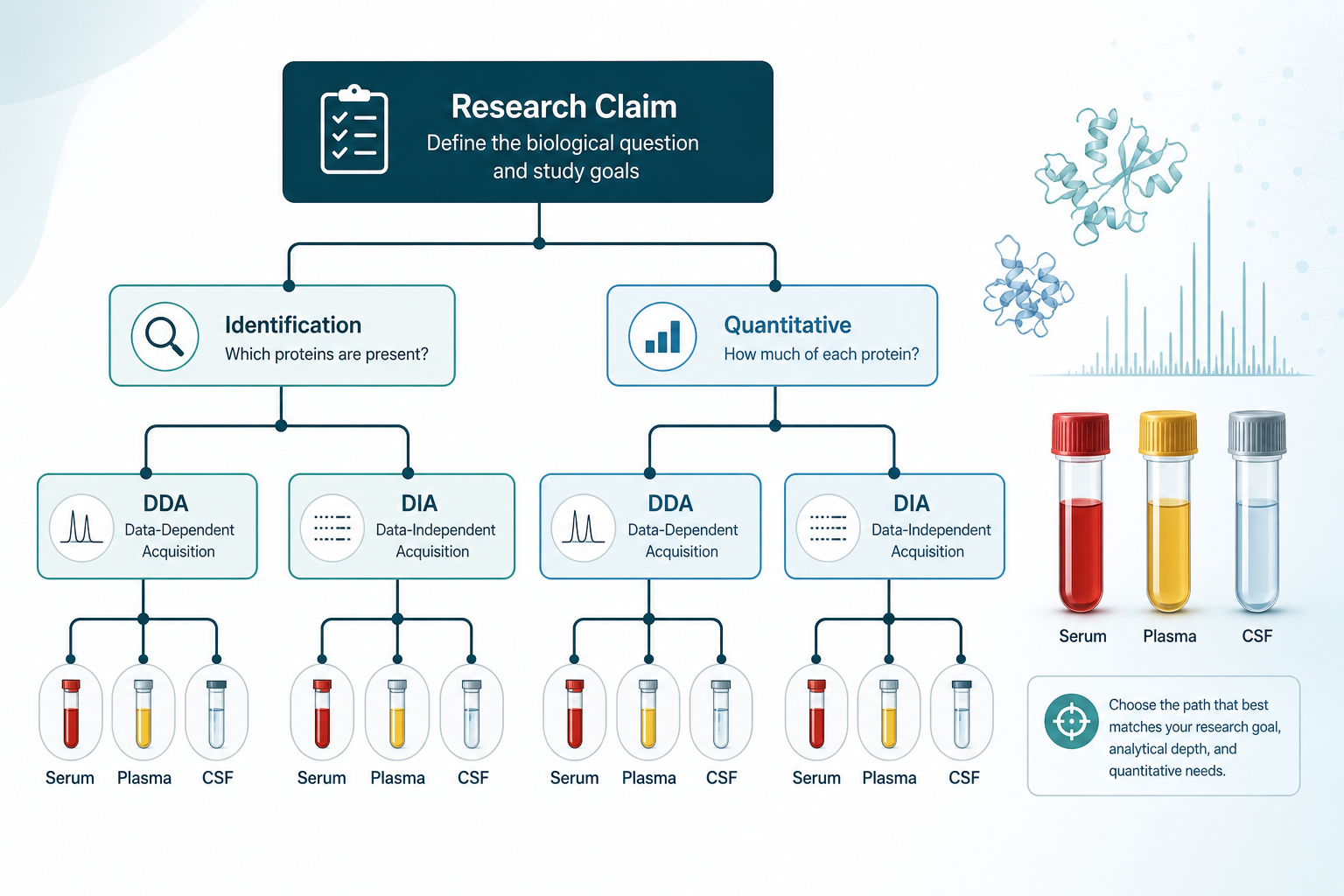
Figure 1. Start with the research claim, then sample structure, matrix, and sample readiness before choosing DDA or DIA.
Comparison Table: Identification vs Quantitative Proteomics
|
Method route |
Best when the project needs |
Typical sample context |
Main output |
Limit to remember |
|---|---|---|---|---|
|
Protein identification–focused LC-MS/MS |
a detectable protein inventory in a limited sample set |
pilot materials, workflow scoping, and protein-list generation |
protein identification tables |
not designed for robust quantitative group comparison |
|
DDA quantitative proteomics |
discovery-oriented profiling with group contrasts in smaller or flexible sets |
early disease vs control screens in serum, plasma, or CSF |
identification plus quantitative matrices; differential screening |
cohort scale and reproducibility planning matter |
|
DIA quantitative proteomics |
broader comparative cohorts with predefined arms |
multi-sample case-control or treatment cohorts |
consistent quantitative matrices across many samples; differential screening |
design should be locked before acquisition planning |
|
Targeted quantification |
focused measurement of a predefined protein list |
known targets from prior evidence or discovery |
focused peptide or protein measurement |
limited to predefined targets and method feasibility |
Most comparative biofluid projects use DDA- or DIA-based quantitative proteomics. Identification-focused and targeted methods answer narrower questions and should not be substituted for a cohort comparison without reviewing the study goal.
DDA vs DIA for Biofluid Quantitative Proteomics
Once the project requires group comparison, the next split is usually DDA versus DIA.
|
Item |
DDA-oriented route |
DIA-oriented route |
|---|---|---|
|
Common software direction |
MaxQuant or Proteome Discoverer |
Spectronaut or DIA-NN |
|
Cohort fit |
Flexible discovery and identification |
Consistent cross-sample quantification |
|
Discovery emphasis |
strong for open inventory plus initial contrast |
strong for reproducible cross-sample quantification |
|
Planning requirement |
arm labels and sample quality still mandatory |
acquisition design and arm structure should be fixed early |
|
Biofluid caveat |
dynamic-range limits remain in serum and plasma |
dynamic-range limits remain; DIA does not remove abundant protein dominance |
Software version numbers are not required at method-selection stage. What matters is agreeing that the project is DDA- or DIA-oriented and that the comparison arms are defined.
Platform context can include Orbitrap Exploris 480, timsTOF Pro, and Orbitrap Astral, but platform choice should follow the locked method route and sample set rather than drive the scientific question.
Label-free quantitative proteomics is often the practical framing for biofluid group comparisons when no metabolic labeling strategy is built into the study design. In practice, the DDA or DIA decision still determines acquisition and data-processing workflow. Discuss that split with the laboratory rather than treating “label-free” and “DIA” as unrelated options.
How Matrix Choice Affects Method Fit
Method selection is not independent of matrix.
Serum and plasma
Serum and plasma support circulating protein identification and quantitative comparison when sample condition and handling are matched. Plasma projects should lock one anticoagulant class before analysis planning: prefer EDTA or citrate and avoid heparin.
Abundant circulating proteins dominate both matrices. Method choice changes how confidently groups are compared; it does not remove the need for realistic expectations about low-abundance detection.
CSF
CSF is most appropriate when the study requires a CNS-proximal protein readout. Blood contamination and limited volume affect whether discovery or comparative quantification is practical for the available cohort.
If the scientific question is CSF-specific, choose the CSF proteomics route before debating DDA versus DIA details.
What to Confirm Before Locking the Method
Confirm these items during method selection:
- one primary matrix for the main comparison
- defined study arms and labels
- whether the project needs inventory, group comparison, or targeted follow-up
- DDA or DIA direction based on cohort size and comparison structure
- expected deliverables: identification tables, quantitative matrices, differential screening, and pathway views such as GO, KEGG, COG, PPI, and Reactome where species support allows
- Reactome species fit for plasma or serum projects, including Homo sapiens, Mus musculus, and Rattus norvegicus among supported species
- submission amount and sample condition assumptions confirmed with the laboratory
Do not select a method first and redefine the claim later. That order usually creates mismatched expectations about coverage and statistics.
If depletion, fractionation, or other preprocessing is under discussion for serum or plasma, decide whether it is in scope before comparing DDA and DIA. Preprocessing changes what the method is comparing and should not be added silently after the route is locked.
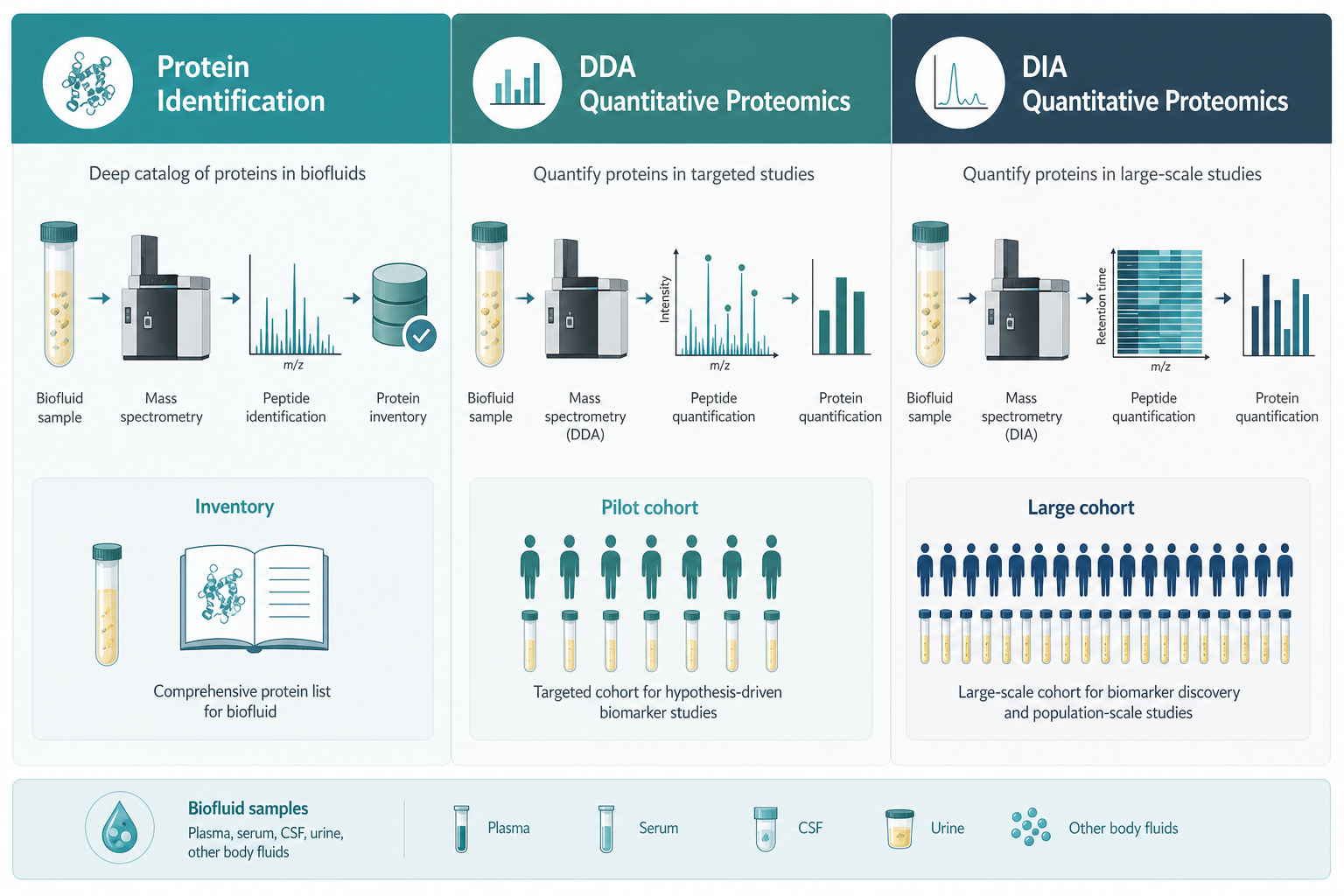
Figure 2. Identification, DDA, and DIA answer different study claims in biofluid proteomics.
Common Method-Selection Mistakes
Mistake 1: choosing DDA or DIA based on perceived novelty rather than the study objective and data requirements.
Fix: compare discovery depth, data completeness, cohort design, and platform suitability.
Mistake 2: requesting identification only, then expecting robust disease-versus-control statistics.
Fix: move to quantitative proteomics when comparison is the claim.
Mistake 3: mixing serum and plasma samples inside one quantitative contrast.
Fix: lock one matrix or split the analysis plan.
Mistake 4: ignoring plasma anticoagulant consistency during method discussions.
Fix: treat anticoagulant choice as part of the analytical model.
Mistake 5: expecting targeted quantification to replace discovery design for an unbiased screen.
Fix: use targeted analysis for predefined proteins, and use discovery proteomics when unbiased candidate generation is required.
Related Services
Complementary
Blood/Plasma/Serum Proteomics Solutions
Use when the locked matrix is serum or plasma and the method route is circulating protein identification or quantification.
Complementary
Cerebrospinal Fluid (CSF) Protein Quantitative Proteomics Solutions
Use when the locked matrix is CSF and the method route must support CNS-proximal comparison.
Alternative
Protein Identification Service
Use when the primary need is protein identification in a limited sample set rather than a full biofluid cohort comparison.
Frequently Asked Questions
1. Should serum, plasma, or CSF projects start with identification or quantification?
Start with the claim. Identification fits presence-focused questions. Quantitative proteomics fits disease, treatment, or timepoint comparisons.
2. When is DDA the better fit?
DDA may fit projects emphasizing flexible discovery and protein identification, depending on the platform and study design.
3. When is DIA the better fit?
DIA may fit projects requiring greater data completeness and quantitative consistency across matched samples.
4. Can one method serve both discovery and validation?
Discovery and targeted validation are different stages. Unbiased proteomics identifies candidates; targeted follow-up measures a short list by a separate plan.
5. Does method choice solve low-abundance detection in serum or plasma?
No. Biofluids remain dynamic-range limited. Method choice changes comparison strength; it does not guarantee recovery of every low-abundance protein.
6. What software direction aligns with DDA and DIA?
DDA commonly uses MaxQuant or Proteome Discoverer. DIA commonly uses Spectronaut or DIA-NN. Confirm the final route with the laboratory.
7. What should be decided before choosing a platform?
Matrix, study arms, sample condition assumptions, quantification route, and expected deliverables.
Conclusion
Protein analysis method selection for serum, plasma, or CSF samples begins with the research claim, then sample structure, matrix, and readiness. Identification-focused workflows and DDA- or DIA-based quantitative proteomics differ in study purpose, acquisition design, and expected output and should not be treated as interchangeable.
Lock the claim first, then choose the route that supports the intended comparison and deliverables. Teams planning biofluid projects can contact MtoZ Biolabs to align method choice with the available cohort and study goal.
How to order?




