






How LC-MS/MS Supports Exosome Protein Analysis and EV Cargo Profiling
Introduction
Exosome and EV projects often reach a methods question after vesicles are isolated: how can protein cargo be identified at scale, and what does LC-MS/MS actually contribute beyond a short marker panel. A team may already have particle size data and Western blot markers, yet still need a proteome-level view of vesicle cargo. Another team may ask whether LC-MS/MS exosome proteomics can support comparative profiling across disease or treatment groups.
LC-MS/MS supports exosome protein analysis by converting vesicle protein preparations into peptide measurements that identify and, when designed for quantification, compare EV-associated proteins. The method does not replace isolation quality control. Instead, it provides the analytical depth needed for EV cargo profiling once enriched vesicles are ready for proteomics. For projects being evaluated under an Exosome / Extracellular Vesicle Proteomics Service workflow, this article explains the technical route from vesicle protein input to cargo readout and when LC-MS/MS is the right measurement layer.
What LC-MS/MS Contributes to Exosome Protein Analysis
LC-MS/MS separates peptides by liquid chromatography and fragments them for sequence-based identification. In vesicle studies, this workflow is applied after proteins are extracted from enriched exosome or EV fractions and digested into peptides.
For exosome protein analysis, the key contribution is breadth beyond a short marker panel. Marker assays such as Western blotting for CD9, CD63, or CD81 can support EV preparation context, while LC-MS/MS expands protein cargo analysis beyond a small marker set. LC-MS/MS can identify a broader set of vesicle-associated proteins, but identification depth varies by species, isolation quality, and sample amount. Identification depth varies by sample matrix, species, EV preparation quality, protein input, digestion efficiency, and acquisition strategy. Well-prepared mammalian EV samples may support broad proteome coverage, while low-input, highly contaminated, or nonstandard preparations may produce shallower profiles. When quantitative designs are used, the same platform supports EV cargo profiling across conditions by ranking protein abundance changes between groups.
LC-MS/MS exosome proteomics therefore answers cargo composition and comparative cargo questions. It does not by itself prove that every identified protein is uniquely exosomal, because isolation purity and contaminant carryover still shape the protein list.
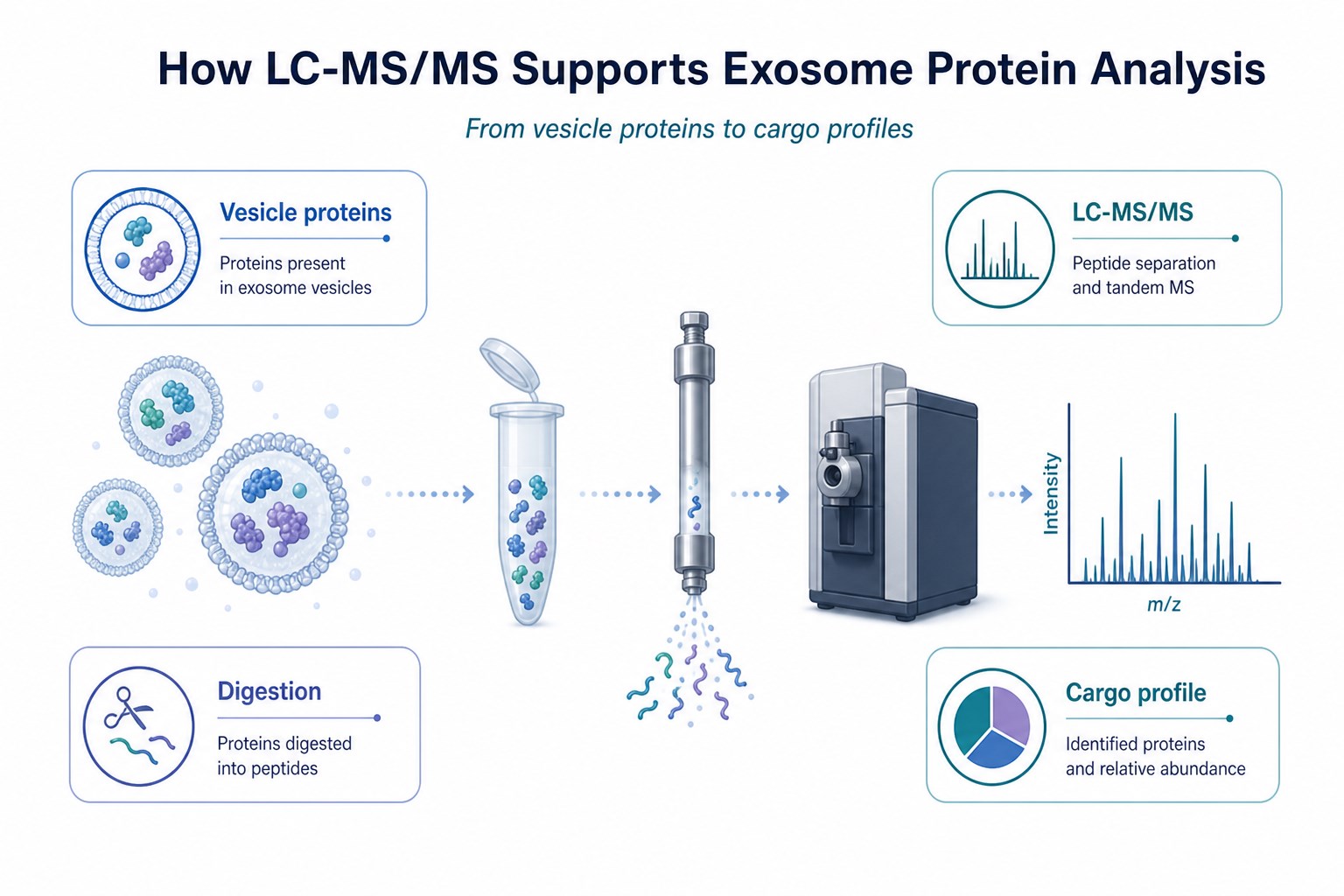
Figure 1. LC-MS/MS identifies peptides from vesicle protein digests and supports comparative EV cargo profiling.
Technical Route: From EV Protein Input to MS Readout
A practical LC-MS/MS route for vesicle proteins can be divided into five linked stages. Each stage influences identification depth and the reliability of comparative profiles.
Step 1. Start from a Defined Vesicle Preparation
The proteomics route assumes an agreed isolation or enrichment strategy. Plasma, serum, urine, CSF, and conditioned media differ in background protein load. Poor enrichment transfers soluble contaminants into the MS sample and weakens cargo interpretation. Isolation notes should travel with the proteomics request so acquisition and filtering can be planned against the expected background.
Step 2. Extract and Digest Vesicle Proteins
Proteins are solubilized from the vesicle fraction, reduced and alkylated when required, and digested to peptides. Digestion quality and peptide recovery directly affect identification depth in later LC-MS/MS. Incomplete digestion or peptide loss at this stage is a common reason exosome protein analysis underperforms even when vesicle isolation looked acceptable.
Step 3. Separate Peptides by Liquid Chromatography
Peptide mixtures are separated before entering the mass spectrometer. Chromatography improves coverage of lower-abundance cargo proteins that would otherwise be suppressed by abundant species.
Step 4. Acquire MS and MS/MS Spectra
Survey scans measure peptide ions. Fragmentation spectra support sequence matching. Label-free, TMT/iTRAQ, or DIA strategies can be considered according to sample input, group design, batch structure, discovery needs, and quantitative goals in LC-MS/MS exosome proteomics.
Step 5. Identify Proteins and Build Cargo Profiles
Database searching or spectral matching assigns peptides to proteins. For comparative EV cargo profiling, quantitative values are normalized and compared across matched groups. Candidate cargo changes can be ranked for follow-up, and routine reports can include functional annotation such as GO and KEGG analysis. Candidate prioritization can be considered when research background, comparison design, and follow-up goals are provided.
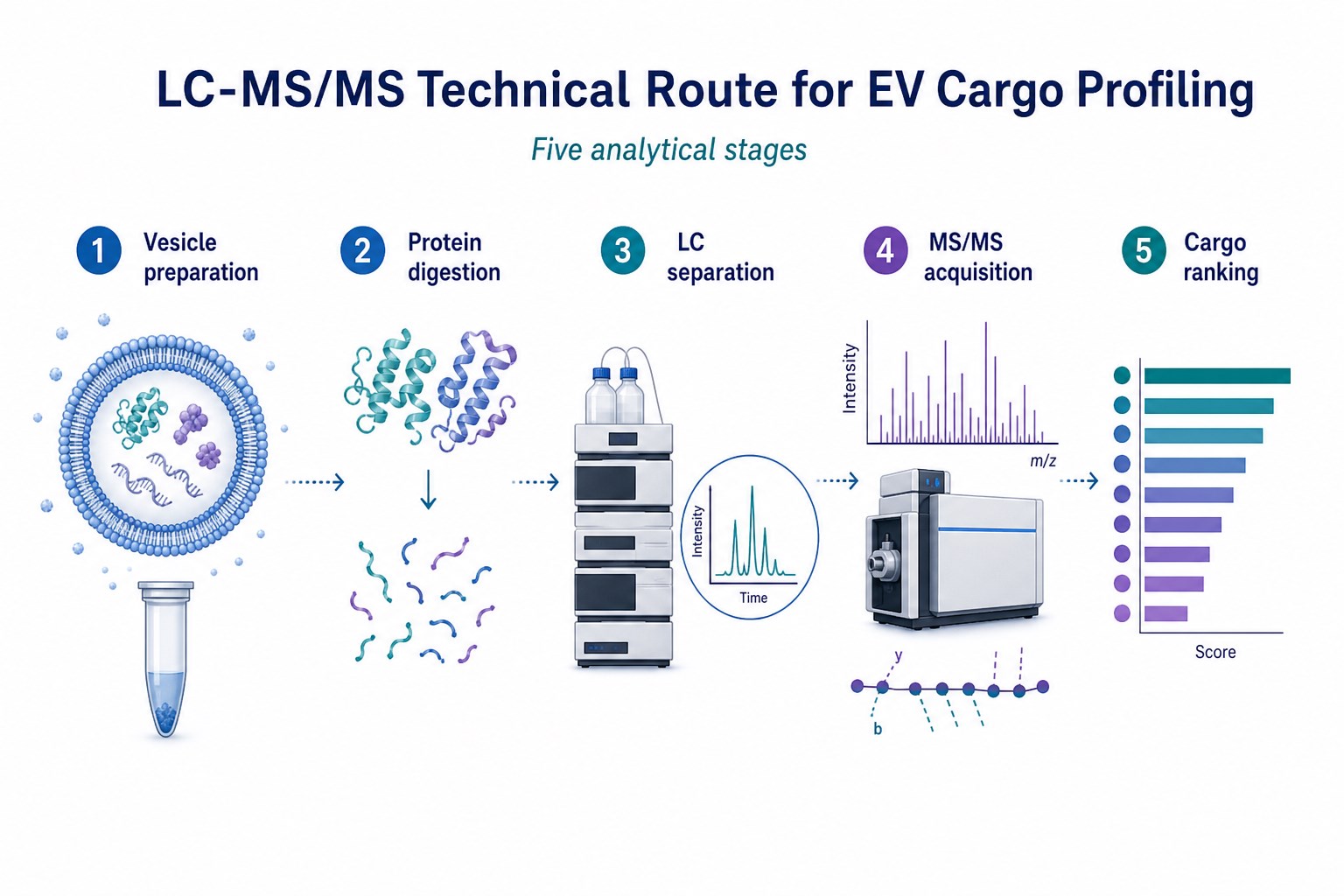
Figure 2. The technical route moves from vesicle preparation and protein digestion through LC separation, MS/MS acquisition, and cargo profile ranking.
How EV Cargo Profiling Is Built from LC-MS/MS Data
Cargo profiling is more than a protein identification table. A useful profile links vesicle quality context to ranked protein evidence.
Identification lists show which proteins were detected in the preparation. Quantitative profiles show which proteins change between conditions. Pathway or functional annotation can organize candidates, but annotation does not replace enrichment metrics or isolation controls.
For comparative cargo work aimed at biomarkers or mechanism hypotheses, the strongest profiles combine reproducible quantification, matched isolation across arms, and transparent filtering of likely contaminants. LC-MS/MS provides the measurement engine. Study design decides whether the resulting profile is interpretable.
Technical Value and Practical Limits
LC-MS/MS supports vesicle protein identification and comparative EV cargo profiling when enrichment and digestion are successful. Identification depth is not fixed across projects and should not be treated as a guaranteed coverage target.
It also has clear limits. Isolation bias can enrich non-vesicle proteins. Low vesicle yield reduces depth. Highly abundant contaminants can mask lower-abundance cargo. Label-free, TMT or iTRAQ, and DIA strategies each carry trade-offs in multiplexing and missing-value behavior. Sample amount planning should therefore include both isolation recovery and the peptide input needed for stable LC-MS/MS performance.
These limits mean LC-MS/MS exosome proteomics should be planned together with isolation strategy and, when needed, orthogonal vesicle characterization.
Teams planning LC-MS/MS-based vesicle protein work can consult MtoZ Biolabs to align isolation quality, acquisition strategy, and whether discovery or quantitative cargo profiling fits the current study.
Design Points That Improve Cargo Interpretation
Define whether the claim is inventory, differential cargo, or targeted confirmation before acquisition begins.
Match isolation and protein input across comparison groups. Unequal vesicle recovery creates false cargo differences.
Document vesicle characterization expectations when purity claims matter for interpretation.
Choose acquisition and quantification modes that match sample number and required analytical depth, without assuming a fixed protein count for every matrix.
Reserve orthogonal follow-up approaches, such as marker Western blotting, PRM-based targeted proteomics, or other project-specific validation routes, for priority cargo proteins rather than treating every identification as a validated biomarker. PRM-based targeted verification can be considered for selected candidates; MRM feasibility should be assessed by project. A short methods review before acquisition often saves more time than re-running underpowered vesicle digests after the fact.
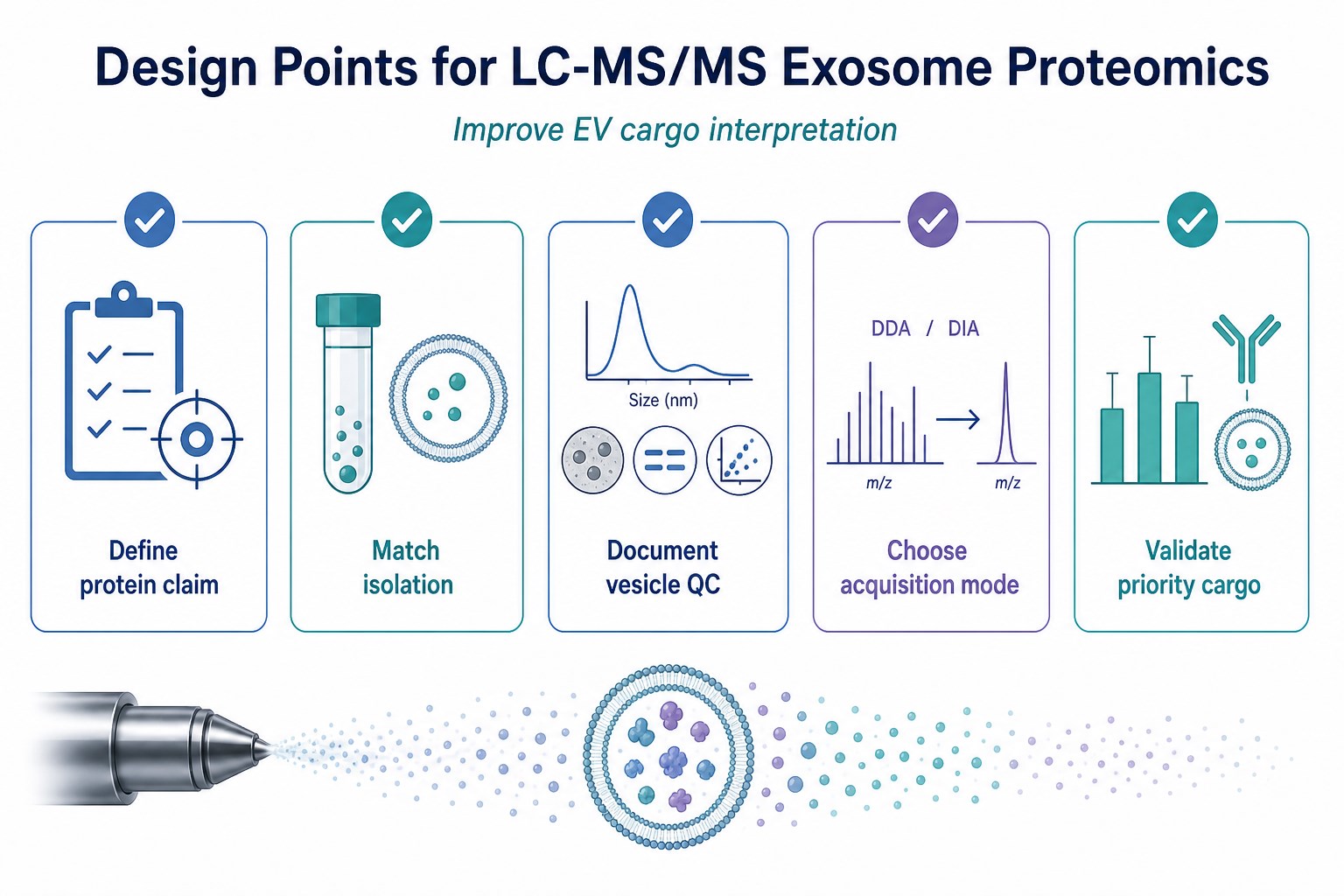
Figure 3. Reliable EV cargo profiling depends on matched isolation, clear protein claims, suitable LC-MS/MS design, and follow-up of priority candidates.
For projects that need method framing before submission, MtoZ Biolabs can review whether the current vesicle preparations are ready for LC-MS/MS measurement.
Frequently Asked Questions
1. How does LC-MS/MS support vesicle protein measurement?
It identifies peptides from digested vesicle proteins and can quantify protein differences across conditions for EV cargo profiling.
2. What is LC-MS/MS exosome proteomics used for?
It is used to inventory vesicle-associated proteins and to compare cargo profiles between biological groups when isolation quality is adequate.
3. Can LC-MS/MS replace EV marker Western blots?
No. Marker assays such as Western blotting for CD9, CD63, or CD81, together with available particle characterization, imaging data, or other EV quality information, can support vesicle preparation context. LC-MS/MS expands cargo identification beyond a small marker set, with depth that varies by sample and isolation quality. LC-MS/MS expands cargo identification beyond a small marker set, with depth that varies by sample and isolation quality.
4. Why do contaminant proteins still appear in EV cargo lists?
Isolation is imperfect, and sensitive MS detects both vesicle-associated proteins and co-isolated background. Filtering and matched controls improve interpretation.
5. When is quantitative design needed?
Use quantification when the claim depends on cargo differences between conditions, not only on presence or absence of proteins.
Conclusion
LC-MS/MS supports exosome protein analysis by measuring peptides from enriched vesicle protein digests and converting those measurements into identification lists or comparative cargo profiles. LC-MS/MS exosome proteomics is most effective when isolation quality, matched group design, and acquisition strategy are planned together.
The method provides depth that marker panels cannot match, but it remains dependent on vesicle enrichment quality and careful filtering. Teams preparing EV cargo studies can use the Exosome / Extracellular Vesicle Proteomics Service page to share sample source, EV preparation status, available input, group design, and analysis goals for project-specific workflow review.
Related Services
Exosome / Extracellular Vesicle Proteomics Service
Exosome Quantitative Proteomics Service
How to order?




