






High-throughput: Affinity purification mass spectrometry
Introduction
Affinity purification mass spectrometry (AP-MS) is often introduced as a single-bait workflow. In practice, many interaction programs require dozens of bait purifications, matched controls, treatment comparisons, and biological replicates analyzed within a defined project window. Standard one-sample AP-MS can answer a focused interaction question, but pathway screens, comparative interactome studies, and multi-condition PPI panels quickly outgrow low-throughput execution models.
High-throughput affinity purification mass spectrometry addresses this scale problem by standardizing bait panels, control design, sample processing, LC-MS/MS scheduling, and comparative data review across many AP-MS runs. The goal is not only to analyze more samples faster. It is to preserve specificity, replicate structure, and cross-bait comparability while expanding interaction discovery capacity. This article explains what high-throughput AP-MS means, how the scaled workflow is organized, and where it adds the most value in large protein interaction projects.
What High-Throughput AP-MS Means
High-throughput AP-MS refers to affinity purification mass spectrometry executed across many baits, controls, and conditions using standardized protocols and batch-oriented LC-MS/MS analysis.
The term does not mean sacrificing control quality for speed. It means designing AP-MS projects so pull-down capture, digestion, instrument analysis, and interactor filtering can be repeated consistently across a sample panel. Typical high-throughput AP-MS programs include multi-bait pathway mapping, treatment versus control interactome comparison, mutant or isoform bait panels, and time-course interaction remodeling studies.
Output remains bait-centered interactor evidence. High-throughput execution improves how completely and comparably that evidence is generated across the project.
Why Standard AP-MS Workflows Hit Throughput Limits
AP-MS sample count grows quickly when interaction mapping expands beyond one bait.
Each bait usually requires at least one matched negative control and often biological replicates. Treatment groups, time points, or mutant comparisons multiply the number of purifications further. Every purification typically becomes an independent digestion and LC-MS/MS run. When projects include ten or more baits with controls and replicates, total run count can exceed what a low-throughput schedule supports without compromising depth, replicate number, or turnaround time.
The main bottlenecks are not limited to instrument speed. They include inconsistent pull-down execution across baits, variable digestion and LC setup, incomplete control coverage, and delayed comparative review when data arrive sample by sample rather than as a structured panel.
Core Principles of High-Throughput AP-MS
Scaling AP-MS successfully depends on design discipline before the first purification begins.
Panel design defines the bait list, shared controls, replicate structure, and mapping question as one project rather than as isolated experiments. Protocol standardization uses the same lysis, wash, elution, digestion, and LC conditions across the panel to support cross-run comparison. Control matching applies equivalent negative controls to every bait type in the set. Batch scheduling groups purifications and LC-MS/MS runs to reduce setup drift and improve turnaround predictability. Unified data review applies common filtering thresholds, contaminant rules, and bait-control contrast criteria across the full dataset.
High-throughput AP-MS fails when many samples are processed quickly but metadata, controls, and analysis rules differ between baits.
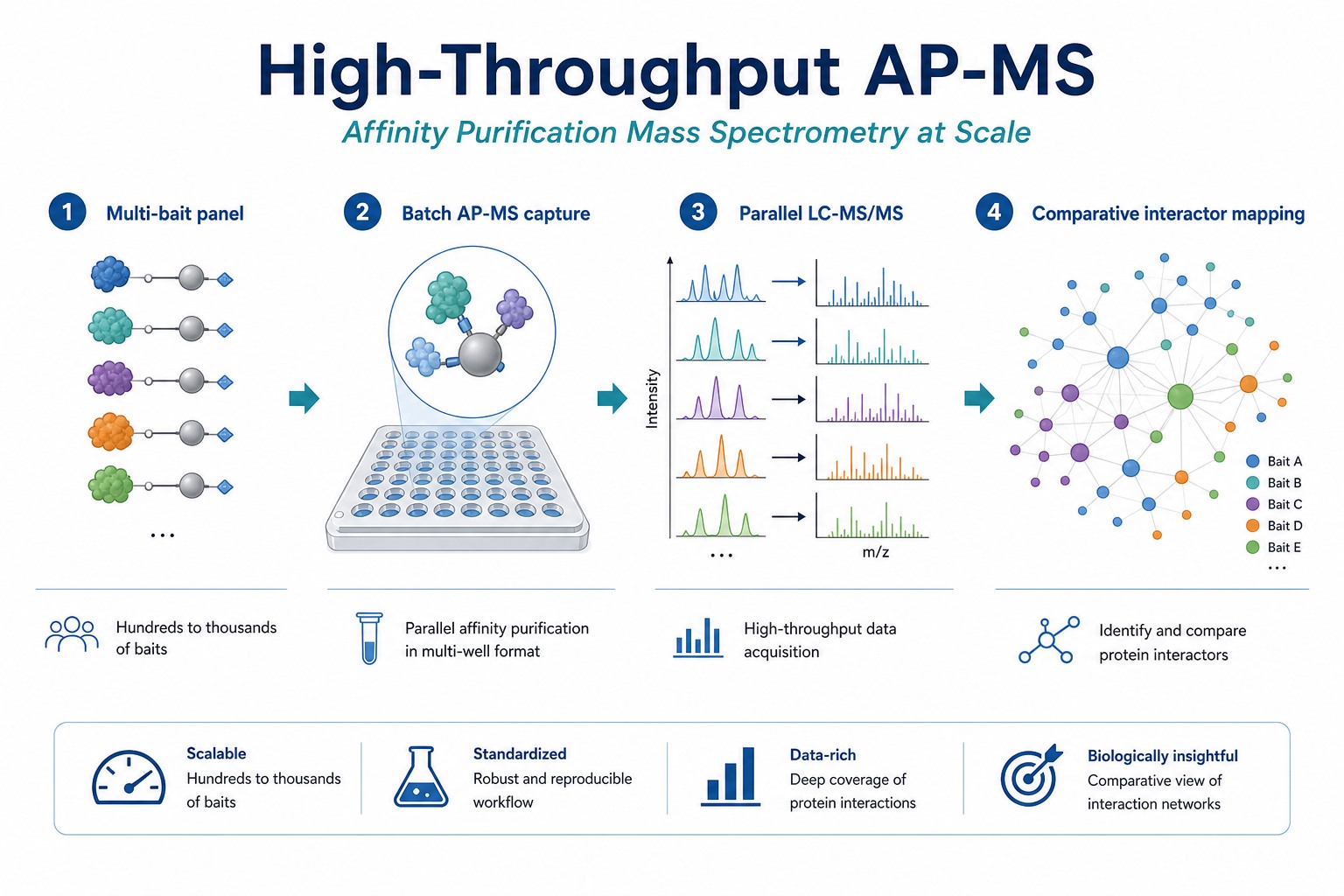
Figure 1. High-throughput AP-MS scales bait panels, LC-MS/MS analysis, and comparative interactor review across large interaction projects.
Standard High-Throughput AP-MS Workflow
A practical high-throughput AP-MS workflow follows a linked sequence.
Project scoping defines bait panel size, control types, replicate count, treatment groups, and deliverable format before sample intake. Parallel affinity capture performs bait and control pull-downs using standardized buffers, wash conditions, and processing times across the panel. Batch sample preparation digests enriched material with uniform protocols and tracks sample metadata for downstream integration. Scheduled LC-MS/MS analyzes the panel with run order and gradient strategy matched to project depth and timeline goals. Comparative data analysis applies false discovery rate control, bait-control filtering, and replicate review across all runs. Interaction mapping integrates interactor lists to identify shared partners, bait-specific binders, and condition-responsive changes.
Uniform biochemistry across the panel is as important as instrument capacity for reliable high-throughput output.
Related Services
MS-Based Protein-Protein Interaction Analysis Service
Fusion Protein Interaction Analysis Service | Pull-Down and MS
Pull Down based Protein Analysis Service with Mass Spectrometry
Co-Immunoprecipitation Protein Interaction Analysis Service
Protein Identification Service
Researchers planning high-throughput AP-MS panels can consult MtoZ Biolabs to align bait design, control strategy, and batch LC-MS/MS analysis with project scale and mapping goals.
Scaling Decisions by Project Type
Different high-throughput AP-MS goals require different scaling priorities.
|
Project Type |
Panel Focus |
Throughput Priority |
Essential Control |
|---|---|---|---|
|
Pathway bait screen |
Many related baits |
Cross-bait comparability |
Empty tag vector |
|
Drug response interactome |
Bait panel plus treatment groups |
Condition comparison |
Vehicle control |
|
Mutant versus wild-type mapping |
Paired bait variants |
Paired quantitative review |
Matched empty control |
|
Time-course interaction study |
One bait across time points |
Temporal consistency |
Bead-only control |
|
Complex component survey |
Subunits from one machinery |
Shared partner detection |
Tag-matched control |
The table links project intent to scaling design. It does not replace bait-specific validation planning.
Batch Design and Control Strategy at Scale
Controls become more important as AP-MS sample number increases.
Empty tag or empty vector controls should be included for tagged bait panels so background binders can be filtered consistently across baits. Bead-only or resin-only controls help separate support matrix contaminants from bait-specific recovery. Isotype or nonspecific antibody controls are required when antibody capture AP-MS is part of the panel. Replicate structure should be fixed before sample intake because replicate count strongly affects confidence when many interactors are reviewed together. Contaminant databases and literature-curated background lists should be applied uniformly across the full dataset.
A high-throughput AP-MS panel without matched controls often produces large but low-confidence interactor lists.
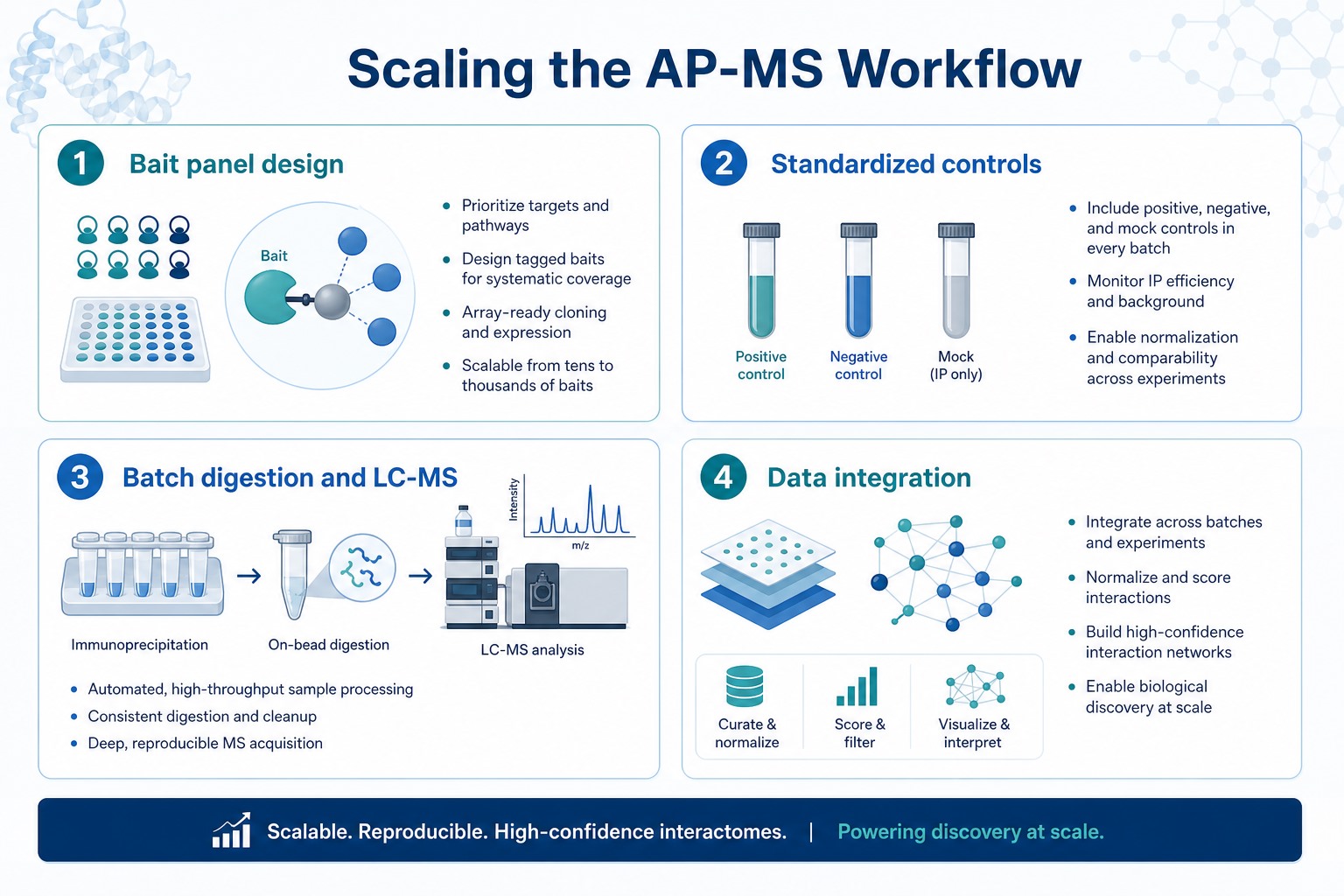
Figure 2. High-throughput AP-MS depends on standardized bait panels, controls, batch processing, and integrated data review.
Data Integration in High-Throughput AP-MS
High-throughput AP-MS value increases when data are analyzed as a panel rather than as isolated runs.
Cross-bait comparison identifies partners shared across pathway components and binders unique to individual baits. Quantitative bait-control review applies common thresholds for enrichment ratios, spectral evidence, and replicate presence. Contaminant filtering uses shared rules to flag sticky proteins that recur across unrelated baits. Condition comparison highlights interactors that change after treatment, mutation, or stimulation. Mapping output converts many AP-MS lists into a structured interaction dataset suitable for prioritization and follow-up validation.
Integration rules should be defined before analysis begins so filtering remains consistent across the project.
Core Technical Advantages and Current Limitations
Core Technical Advantages
Scalable interaction discovery across many baits.
High-throughput AP-MS supports pathway screens and comparative interactome projects that standard single-bait workflows cannot cover efficiently.
Improved cross-run comparability.
Standardized capture and analysis protocols reduce technical drift across large sample panels.
Better use of replicate structure.
Batch design makes it practical to include controls and replicates without sacrificing project timeline.
Panel-level interaction mapping.
Integrated review reveals shared partners, specific binders, and condition-specific remodeling across the dataset.
Current Limitations
Background binders scale with sample number.
Large panels require strict control design and contaminant filtering.
Indirect associations still copurify.
High-throughput AP-MS identifies associated proteins, not necessarily direct binders.
Protocol drift can distort mapping.
Any inconsistency in lysis, wash, or digestion conditions can mimic biological differences.
Validation remains necessary.
Mapped candidates still require orthogonal interaction confirmation.
Applications of High-Throughput AP-MS
High-throughput affinity purification mass spectrometry supports several large-scale interaction programs.
Pathway interactome screens map many baits from one signaling or regulatory network. Drug response mapping compares interaction profiles across treatment conditions for a bait panel. Multi-condition PPI panels analyze genetic, chemical, or temporal perturbations within one standardized project. Complex biology surveys examine related tagged components to define subunits and accessory factors. Validation pipeline design uses panel output to rank reciprocal AP-MS, Co-IP, or binding assays by specificity and network relevance.
Application value depends on bait quality, control coverage, and whether results are interpreted as candidate interactome data rather than confirmed direct binding proof.
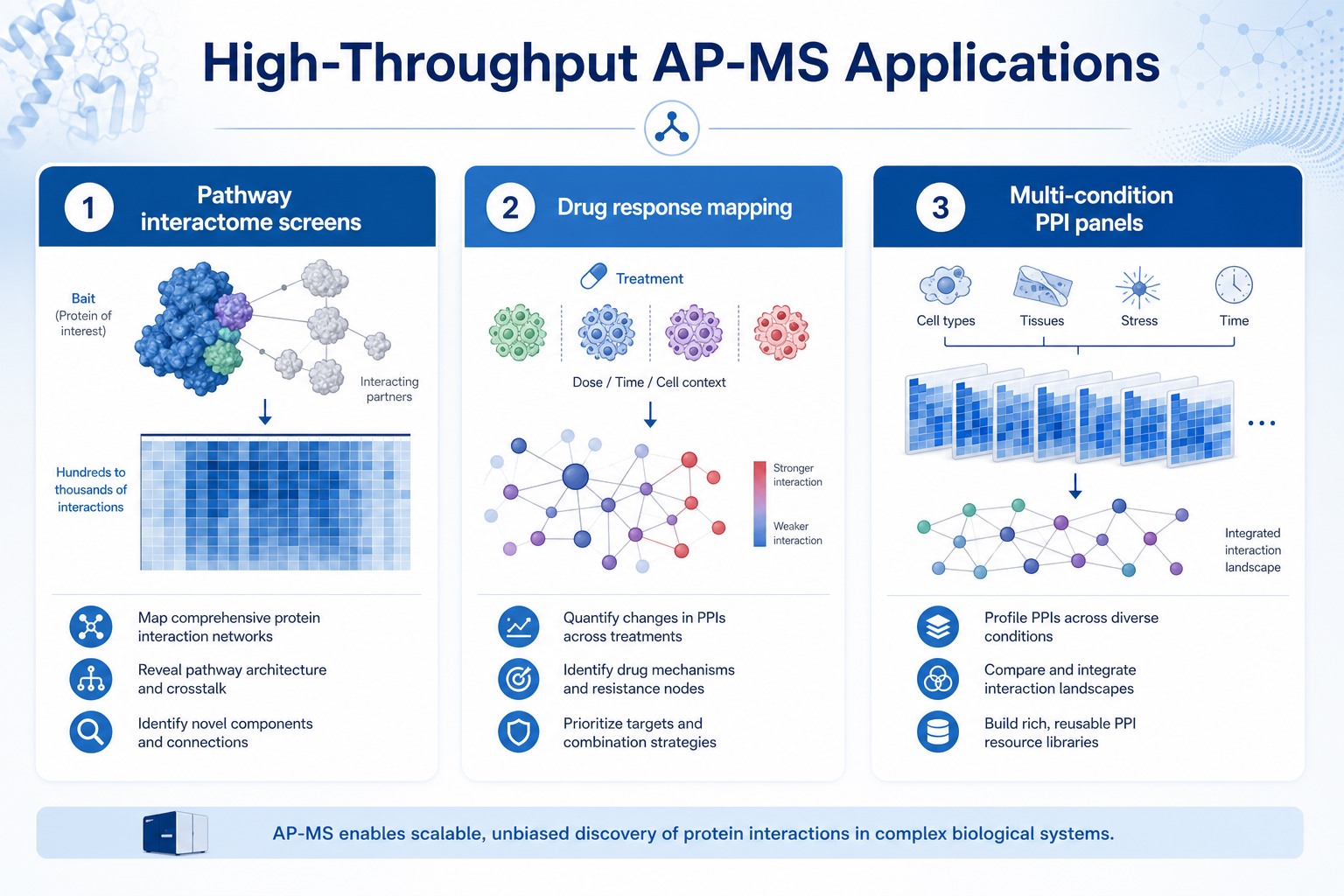
Figure 3. High-throughput AP-MS supports pathway screens, drug response mapping, and multi-condition PPI panels.
Expected Deliverables from a High-Throughput AP-MS Project
A useful high-throughput AP-MS report should extend beyond per-sample protein tables.
Typical deliverables include identified proteins for each bait and control purification with peptide evidence. Quantitative bait-control summaries and replicate review across the panel. Filtered interactor lists with shared contaminant flags and specificity scores. Cross-bait mapping summaries showing shared partners, unique binders, and condition-specific changes. Method documentation covering bait design, control strategy, batch workflow, LC-MS/MS analysis, and filtering thresholds. Optional validation priority lists based on panel specificity and biological context.
Reporting should distinguish mapped candidate interactors from confirmed direct binding events.
Frequently Asked Questions
1. What makes AP-MS high-throughput?
It analyzes many bait-control pairs across a standardized panel using batch-oriented purification, digestion, LC-MS/MS, and integrated data review.
2. Is high-throughput AP-MS the same as faster LC-MS/MS alone?
No. Throughput depends on panel design, control matching, protocol standardization, and comparative analysis as well as instrument scheduling.
3. How many baits can be included in one high-throughput AP-MS project?
The number depends on replicate design, control count, sample availability, and project depth goals. Panel size should be fixed before sample submission.
4. Are controls still required in high-throughput AP-MS?
Yes. Empty tag, bead-only, and matched negative controls are essential for filtering background binders in large datasets.
5. What is the usual next step after a high-throughput AP-MS panel?
Teams typically validate prioritized bait-prey pairs by reciprocal AP-MS, Co-IP, or targeted binding assays before making direct interaction claims.
Conclusion
High-throughput affinity purification mass spectrometry extends AP-MS from single-bait discovery to panel-scale interaction mapping. The approach combines standardized bait and control design, batch sample processing, scheduled LC-MS/MS analysis, and integrated interactor review to support pathway screens, comparative interactome studies, and multi-condition PPI projects. High-throughput AP-MS is strongest when speed is matched to disciplined experimental design rather than used as a substitute for controls and replicate structure.
Programs that define panel rules, filtering thresholds, and control strategy before sample intake obtain more actionable interaction datasets and move more efficiently into validation. Researchers planning high-throughput AP-MS or multi-bait interaction mapping can contact MtoZ Biolabs to review bait format, batch workflow design, and LC-MS/MS analysis suited to their project scale. For teams advancing from panel output to validated interaction models, MtoZ Biolabs can also support integrated pull-down MS analysis and follow-up confirmation workflows.
How to order?




