






Glycosylphosphatidylinositol Analysis Service
MtoZ Biolabs provides comprehensive Glycosylphosphatidylinositol Analysis Service designed to precisely identify, quantify, and characterize glycosylphosphatidylinositol (GPI) molecules in biological samples. This service supports investigations into the structural diversity, biosynthesis, and functional mechanisms of GPIs, delivering reliable molecular data for both basic and translational research.
Overview
Glycosylphosphatidylinositol (GPI) is a complex glycolipid composed of a phosphatidylinositol anchor, a conserved glycan core, and a phosphoethanolamine linker. It functions as a membrane anchor for certain proteins and serves as an essential component in cell membrane organization, signal transmission, and molecular recognition. The structural diversity of GPI molecules arises from variations in both their glycan moieties and lipid chains, which can significantly affect membrane properties and protein localization.
Alterations in GPI biosynthesis or remodeling are associated with metabolic and neurological disorders, as well as tumorigenesis. Therefore, detailed analysis of GPI structure and composition is crucial for understanding its biological roles.
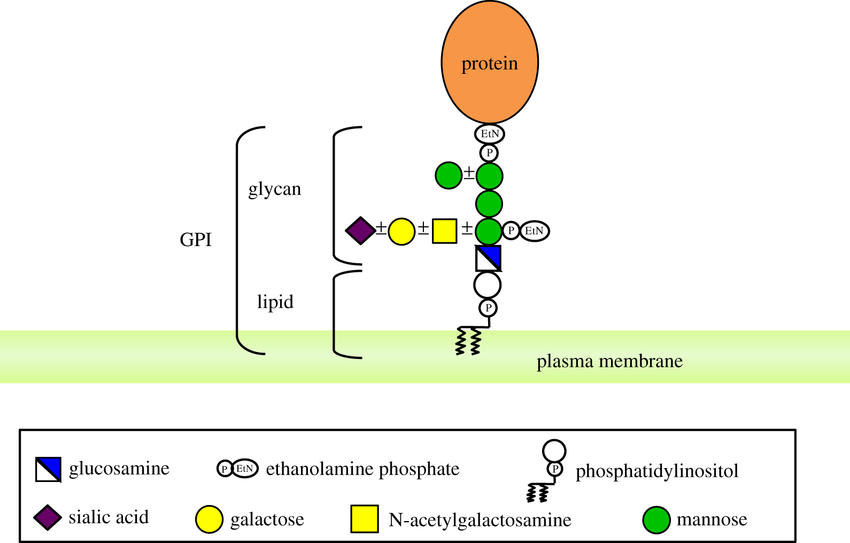
Kinoshita, T. et al. Open Biol. 2020.
Figure 1. Schematic Representation of a GPI Anchor
Services at MtoZ Biolabs
Our Glycosylphosphatidylinositol Analysis Service provides a systematic and high-resolution analytical workflow to reveal the molecular features of GPI across diverse biological matrices. Each analytical stage is optimized to deliver accurate, reproducible, and interpretable results.
1. Comprehensive Composition Profiling
Comprehensive profiling is conducted to determine the glycan, lipid, and phosphoethanolamine components of GPI molecules. Using advanced liquid chromatography coupled with high-resolution mass spectrometry, our analysis identifies molecular subclasses and reveals compositional diversity among samples.
2. Structural Elucidation
Detailed structural information is obtained through tandem mass spectrometry and nuclear magnetic resonance spectroscopy. These complementary methods enable mapping of glycan linkages, lipid chain configurations, and phosphatidylinositol connectivity to fully define GPI molecular architecture.
3. Quantitative Assessment
Quantitative workflows employ isotopic or label-free LC-MS analysis to determine relative and absolute abundances of GPI subclasses. This approach supports comparative studies between experimental groups and provides data suitable for statistical or bioinformatic modeling.
4. Biosynthesis and Remodeling Studies
GPI biosynthesis and remodeling are explored through enzymatic assays and chromatographic monitoring. This helps reveal dynamic metabolic processes such as fatty acid remodeling, glycan trimming, and phosphoethanolamine substitutions that regulate GPI function and diversity.
5. Functional Correlation and Data Integration
Data generated from MS, NMR, and chromatography are processed through proprietary bioinformatics pipelines. Correlation analyses link GPI structural variations to biological outcomes, providing molecular insight into GPI-associated signaling, membrane organization, and disease mechanisms.
Sample Submission Suggestions
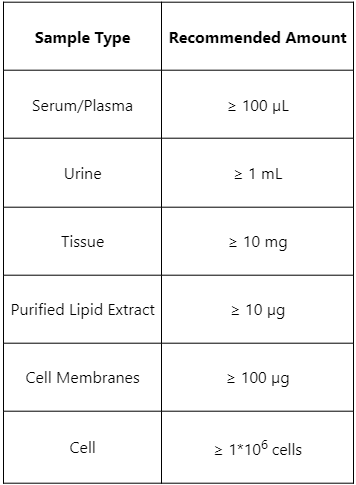
Samples should be frozen immediately at −80 °C after collection and shipped on dry ice. Avoid repeated freeze–thaw cycles. Provide sample source, matrix type, and treatment information for optimal analysis design. If required, MtoZ Biolabs can provide detailed sample submission guidelines.
Why Choose MtoZ Biolabs?
✅ Comprehensive Molecular Insight: Our Glycosylphosphatidylinositol Analysis Service captures complete structural and compositional information of GPI molecules, including glycan, lipid, and linkage components.
✅ Multi-Platform Analytical Integration: The Glycosylphosphatidylinositol Analysis Service combines LC-MS, HPLC, NMR, and enzymatic assays to achieve high precision and multidimensional resolution.
✅ Quantitative Precision and Reproducibility: High-sensitivity mass spectrometers ensure consistent and accurate quantification even for trace GPI subclasses.
✅ Broad Sample Compatibility: The platform accommodates diverse biological materials, from cultured cells and tissues to purified lipid extracts, ensuring flexibility across research applications.
✅ One-Time-Charge: Our pricing is transparent, no hidden fees or additional costs.
What Could Be Included in the Report?
1. Experimental Overview: Summary of analytical design, workflow, and key parameters used in GPI profiling and quantification.
2. Materials and Methods: Detailed documentation of instruments, sample preparation, and analytical techniques applied.
3. Analytical Results and Quality Control: Representative chromatograms, spectra, or NMR profiles, along with quality control metrics ensuring data reliability, such as accuracy, precision, and reproducibility.
4. Data Processing and Quantitative Results: Processed data including normalization, quantification, and subclass estimation of GPI molecules, with statistical analysis for interpretation.
5. Bioinformatics and Structural Annotation: Integrated analysis linking glycan and lipid structures with biological or functional interpretations.
6. Raw and Processed Data Files: Complete data package including raw instrument outputs and formatted result tables for downstream use.
How to order?




