






Glycosylation Site Analysis in Protein Function Studies: LC-MS/MS Workflows, Site Occupancy, and Biological Interpretation
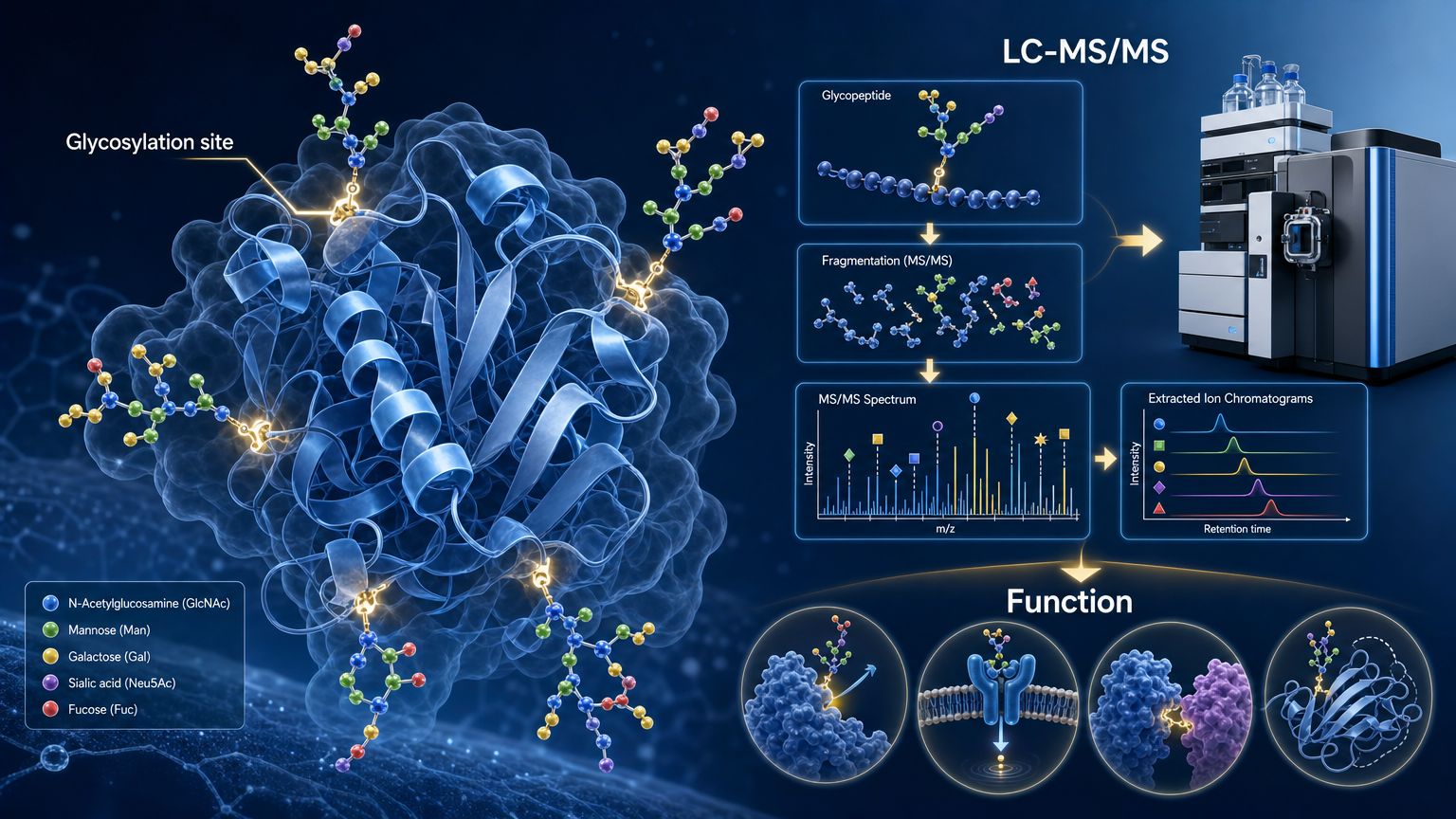
Glycosylation site analysis helps explain protein function by identifying where glycans are attached, how occupancy changes, and how site-specific glycoforms affect folding, trafficking, signaling, stability, and molecular recognition. In practice, LC-MS/MS-based glycoproteomics is the main analytical route because it can connect protein sequence, glycosylation site position, and glycan-associated mass evidence in one workflow.
Key Takeaways
-
Glycosylation site analysis is essential when protein function depends on folding, secretion, receptor binding, immune recognition, or therapeutic performance.
-
N-glycosylation and O-glycosylation influence proteins differently, so site mapping must match the underlying biology.
-
LC-MS/MS usually combines enrichment, glycopeptide separation, fragmentation, and bioinformatics to localize glycosylation sites.
-
Site occupancy and glycoform composition can be as important as total protein abundance in functional interpretation.
Why Do Glycosylation Sites Matter for Protein Function?
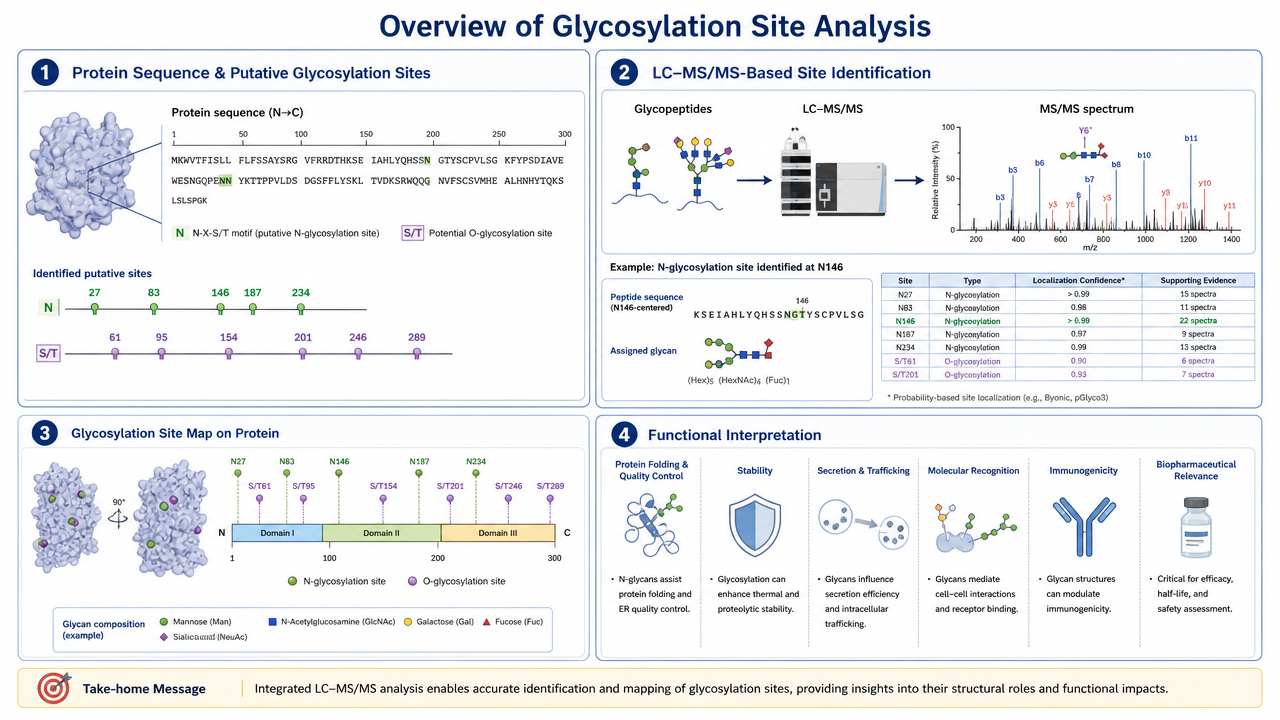
Glycosylation is not only a decorative modification. Site position can control whether a protein folds correctly, reaches the right compartment, avoids degradation, or binds receptors and ligands with the proper geometry.
Related Services
Glycosylation Site Analysis Service | LC-MS/MS
Glycosylation Site Analysis Service
Glycosylation Site and Glycan Analysis Service
N- and O-Glycosylation Site Analysis Services
What Does Glycosylation Site Analysis Measure?
The main questions are usually which residue is glycosylated, whether the site is occupied fully or partially, which glycan structures occur there, and how those site-level changes alter function.
LC-MS/MS Workflow for Glycosylation Site Analysis
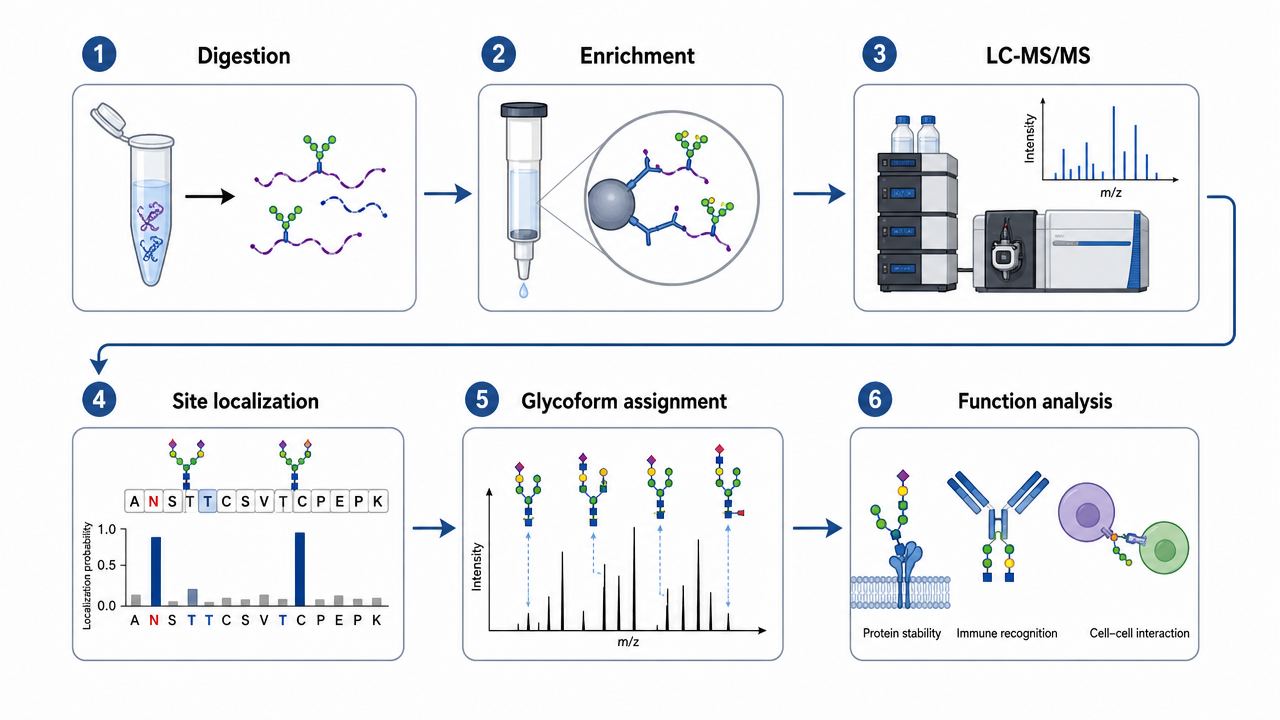
A typical workflow includes protein extraction, digestion, glycopeptide enrichment, chromatographic separation, tandem mass spectrometry, and bioinformatic assignment of glycosylation sites and glycoforms. Lectin enrichment, HILIC, or glycan-focused affinity methods are often used to increase glycopeptide recovery.
What Functional Questions Can Site Analysis Answer?
1. Folding and Stability
Site-specific glycans can support correct protein folding, shield aggregation-prone regions, or stabilize extracellular domains.
2. Trafficking and Localization
N-glycosylation often affects ER quality control and secretion, while O-glycosylation can influence surface presentation and turnover.
3. Interaction and Signaling
Glycosylation sites can alter receptor-ligand binding, antibody recognition, and protein complex formation.
Site Occupancy Versus Total Abundance
One protein can stay constant in abundance while its glycosylation landscape changes dramatically. That is why glycosylation site analysis often reveals biology that standard expression proteomics misses.
Common Applications
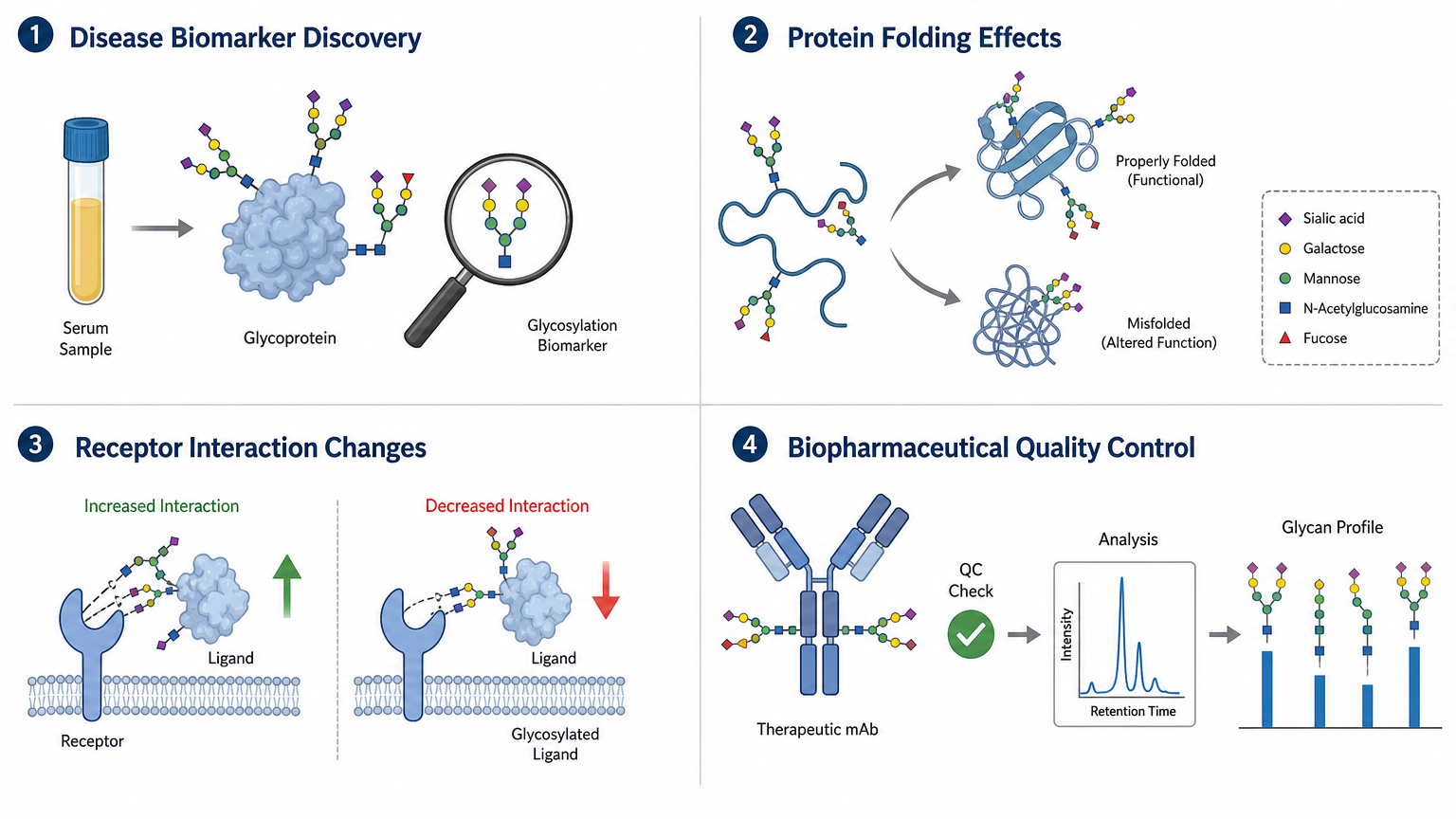
| Application | What Site Analysis Reveals? | Why It Matters? |
|---|---|---|
| Disease mechanism research | Site-specific remodeling on key proteins | Connects PTM change to pathology |
| Biomarker discovery | Abnormal glycosylation signatures | Improves specificity beyond total abundance |
| Biopharmaceutical development | Site occupancy and glycoform consistency | Affects efficacy, stability, and safety |
| Functional protein studies | Glycan-dependent folding or binding changes | Explains mechanistic behavior |
Interpretation Challenges
Glycopeptides are heterogeneous, often low abundance, and harder to fragment cleanly than standard peptides. Site ambiguity can appear when multiple candidate residues are close together.
FAQ
1. What is glycosylation site analysis?
It is the identification and interpretation of the specific amino acid residues on proteins that carry glycan modifications, often together with site occupancy and glycoform information.
2. Why is glycosylation site analysis important in protein function studies?
Because site-specific glycans can change folding, trafficking, signaling, binding, and therapeutic behavior even when total protein abundance stays the same.
3. What is the difference between glycosylation site analysis and total glycan profiling?
Total glycan profiling describes released glycan populations, while site analysis connects glycans to specific residues on specific proteins.
Conclusion
Glycosylation site analysis is one of the most informative ways to connect protein modification with function. When LC-MS/MS workflows are combined with strong enrichment, site-aware bioinformatics, and functional interpretation, researchers can move from generic glycosylation claims to precise statements about how site-specific glycans shape protein behavior in biology and biopharmaceutical research.
How to order?




