






Glycopeptide Identification Service
-
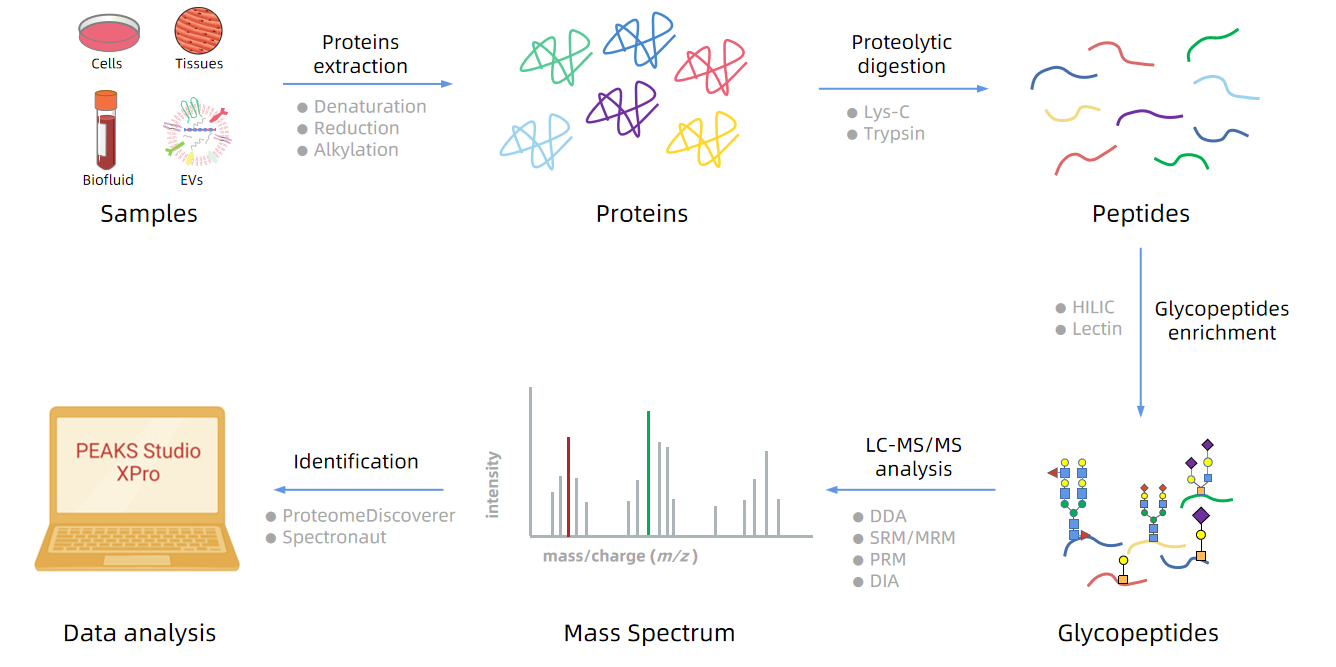
MtoZ Biolabs employs HILIC (hydrophilic interaction chromatography) or lectin enrichment strategies to increase glycopeptide detection efficiency.
-
We utilize high-resolution mass spectrometers such as Orbitrap Fusion Lumos and Q Exactive HF for precise fragmentation and glycan structure analysis.
-
MtoZ Biolabs applies specialized software such as Byonic and pGlyco to identify glycan compositions and modification sites, enabling systematic glycopeptide-level analysis.
-
LC-MS/MS raw data files (.raw)
-
Glycopeptide identification tables (Excel or CSV format)
-
Analytical report (PDF format)
-
Spectra and visualization images (TIFF or PNG format)
MtoZ Biolabs provides glycopeptide identification service based on advanced liquid chromatography–tandem mass spectrometry (LC-MS/MS) platforms. By integrating glycopeptide-specific enrichment and data analysis strategies, this service enables high-sensitivity identification and quantitative analysis of glycosylated peptides in protein samples. It is designed for research institutes and biopharmaceutical companies to comprehensively analyze the structural features and site distribution of protein glycosylation, as well as its functional roles in biological regulation. The service provides strong data support for glycoprotein drug development, disease mechanism studies, and biomarker discovery.
What is Glycosylation
Glycosylation refers to the enzymatic process in which carbohydrate chains are covalently attached to proteins, lipids, or other molecules. It is one of the most common and structurally complex post-translational modifications, playing a vital role in regulating protein folding, stability, secretion, and cell–cell recognition.
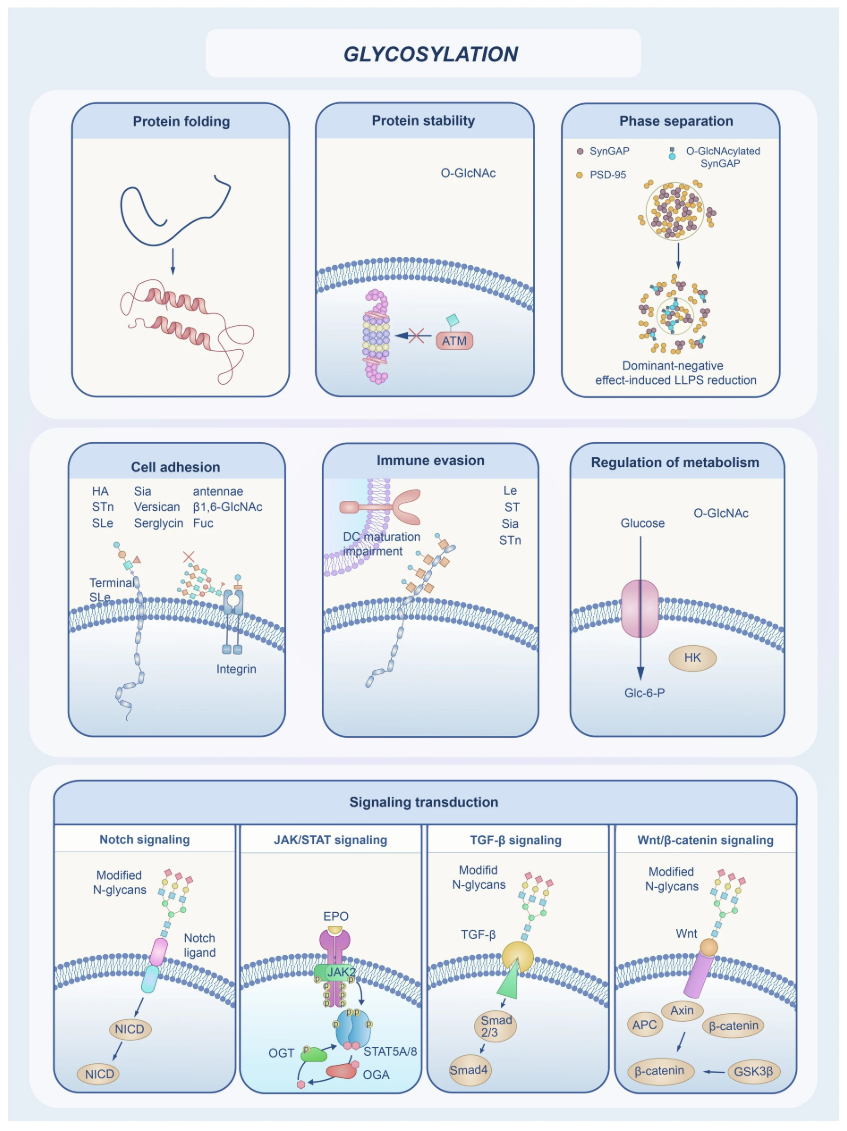
He, M. et al. Signal Transduct Target Ther. 2024.
Figure 1. Biological Functions of Glycosylation
There are two main types of glycosylation: N-linked glycosylation, which occurs on asparagine residues, and O-linked glycosylation, which occurs on serine or threonine residues. The type and pattern of glycosylation can influence protein conformation and biological function, thereby affecting signaling pathways, immune regulation, and disease progression.
A glycopeptide is a peptide fragment carrying glycan modifications derived from glycoproteins after enzymatic digestion. Glycopeptide identification and quantification provide direct structural information on glycosylation and offer insights into its biological significance in protein function and regulation.
Glycopeptide Identification Service at MtoZ Biolabs
MtoZ Biolabs offers comprehensive and accurate glycopeptide identification using high-sensitivity LC-MS/MS analysis platforms combined with glycopeptide enrichment and structural interpretation algorithms.
Through standardized workflows and rigorous quality control systems, MtoZ Biolabs ensures reliable qualitative and quantitative glycopeptide results for both scientific and industrial applications.
Workflow of Glycopeptide Identification Service
Why Choose MtoZ Biolabs
☑️ High-sensitivity detection platform: Utilizing Orbitrap Fusion Lumos systems for precise glycopeptide fragmentation and high-resolution detection.
☑️ Optimized enrichment strategy: Selecting HILIC or lectin enrichment methods based on sample characteristics to enhance coverage.
☑️ Multiple quantification strategies supported: Label-free, TMT, or iTRAQ quantification available for comparative studies.
☑️ Expert scientific team: Experienced in glycoproteomics research to provide reliable technical support.
Applications of Glycopeptide Identification Service
1️⃣ Glycoprotein structure research: Reveal glycosylation site distribution and glycan structural features.
2️⃣ Disease mechanism investigation: Identify glycopeptide biomarkers associated with cancer, immune disorders, or metabolic diseases.
3️⃣ Drug quality control: Assess glycosylation consistency and structural stability of recombinant glycoprotein drugs.
4️⃣ Biomarker discovery: Screen potential clinical targets through differential glycopeptide analysis.
5️⃣ Functional studies: Explore the effects of glycosylation on protein folding, trafficking, and molecular recognition.
Sample Submission Guidelines
| Sample Type |
Cell lysate |
Tissue extract |
Serum or plasma |
Purified glycoprotein sample |
Other biological samples (such as culture supernatants or body fluids) |
|
Recommended Amount |
≥ 200 μg total protein, concentration ≥ 1 μg/μL |
≥ 300 μg total protein, concentration ≥ 1 μg/μL |
≥ 200 μL |
≥ 100 μg, sufficient for replicate analysis |
≥ 500 μL |
Deliverables
1. Complete experimental and analytical report
2. Raw LC-MS/MS data files
3. Glycopeptide identification list with glycan structure annotation
4. Quantitative results and statistical charts
5. Optional bioinformatics analysis
FAQs
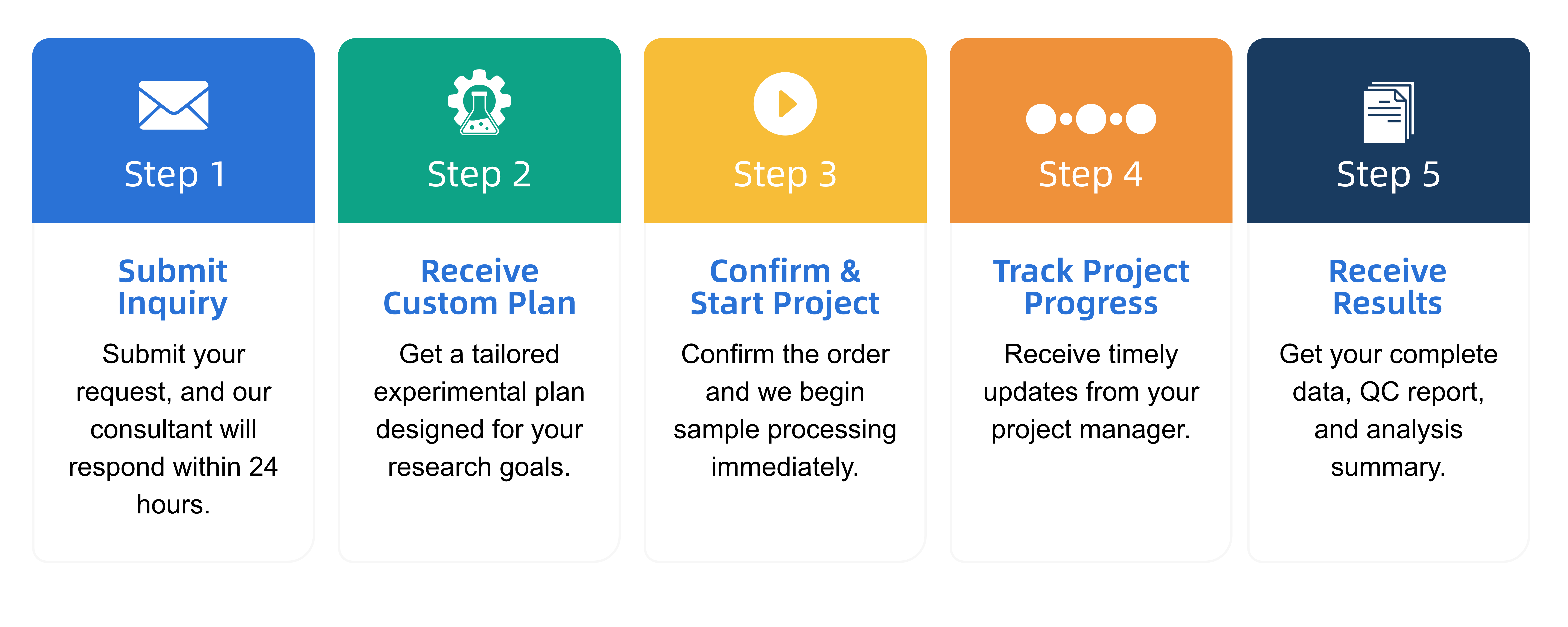
Q1: What is the service's general workflow?
Q2: What types of samples are suitable?
Suitable samples include cell lysates, tissue extracts, serum, plasma, and purified glycoproteins. Samples should be of high purity and free from detergents or high-salt buffers to avoid ionization interference during MS detection.
Q3: What data formats are provided?
MtoZ Biolabs provides standardized deliverables, including:
Customized data formats or structured outputs can be provided upon request.
Q4: How should I prepare my samples?
To ensure accurate detection, please follow these guidelines:
1. Acceptable sample types include cells, tissues, serum, plasma, or glycoprotein standards.
2. Samples should be free of impurities, salts, and SDS residues.
3. Recommended protein amount ≥ 100 μg with concentration ≥ 1 μg/μL.
4. Store samples at −80°C and ship on dry ice.
5. Include detailed information on sample origin and experimental objectives.
For more information, please refer to Sample Submission Guidelines for Proteomics and Sample Submission Guidelines for Metabolomics.
If you are unsure about your sample preparation, our technical team can provide personalized pre-analysis consultation and a sample submission guide to help you optimize preparation and shipping conditions.
Start Your Project with MtoZ Biolabs
Contact us to discuss your experimental design or request a quote. MtoZ Biolabs is committed to delivering high-quality, reproducible, and scientifically rigorous glycopeptide analysis solutions that empower innovation in life science research.
How to order?




