






Glycan Profiling for Monoclonal Antibodies: A Guide for Drug Developers
Introduction
Monoclonal antibody developers often focus early on binding affinity, expression titer, and developability, yet Fc glycosylation can become a defining quality attribute later in development. A process change may shift galactosylation or high-mannose content. A biosimilar program may need to demonstrate glycan similarity to a reference product. A therapeutic intended to minimize effector function may require tight control of core fucosylation and related Fc glycan features. In each case, glycan profiling provides the data needed to connect manufacturing conditions with antibody performance and regulatory documentation.
Glycan profiling for monoclonal antibodies characterizes the carbohydrate structures attached to the Fc region and reports major glycoform distributions across lots, process stages, and stability time points. For drug developers, the value lies not only in identifying glycan structures, but in using glycan data to support critical quality attribute review, comparability assessment, process control, and functional risk evaluation.
Teams that define glycan profiling goals early can align analytical methods with development stage, avoid repeat testing, and build glycan evidence into the broader CMC and characterization strategy.
What Glycan Profiling Means for Monoclonal Antibodies
Glycan profiling describes the types and relative abundance of glycan structures on a monoclonal antibody. For standard IgG molecules, the most functionally relevant site is the conserved N-glycosylation position at Asn297 in the Fc CH2 domain on each heavy chain. Glycans at this site can influence Fc receptor interaction, complement activation, stability, and clearance-related behavior.
Monoclonal antibodies are glycoproteins with inherent heterogeneity. A single mAb lot may contain multiple glycoforms differing in fucose, galactose, sialic acid, and mannose content. Glycan profiling therefore reports distributions rather than a single structure and is most useful when interpreted against product strategy, manufacturing history, and functional context.
For drug developers, glycan profiling supports three practical questions. Which glycan attributes matter for this product? Are current lots consistent with the intended glycan profile? Do process, scale, or site changes alter glycosylation in a way that requires further review?
Why Glycan Profiling Matters in mAb Development
Glycan profiling is relevant across discovery, process development, comparability, and lifecycle management.
During cell line and process development, culture conditions can shift glycan processing before functional assays show a change. Glycan profiling helps teams detect those shifts early and link them to cell line, media, or purification variables.
During comparability and biosimilar assessment, glycan similarity is often evaluated alongside primary structure and higher-order attributes. A glycan profile difference does not automatically mean product failure, but it must be understood in context and supported by appropriate follow-up data.
During control strategy development, selected glycan attributes may become monitored quality attributes when they correlate with function, stability, or patient exposure risk. Glycan profiling provides the baseline and ongoing data needed for that monitoring logic.
During lifecycle changes, technology transfer, scale-up, and manufacturing site moves can alter glycosylation patterns. Profiling before and after the change helps developers document impact and plan validation activities.
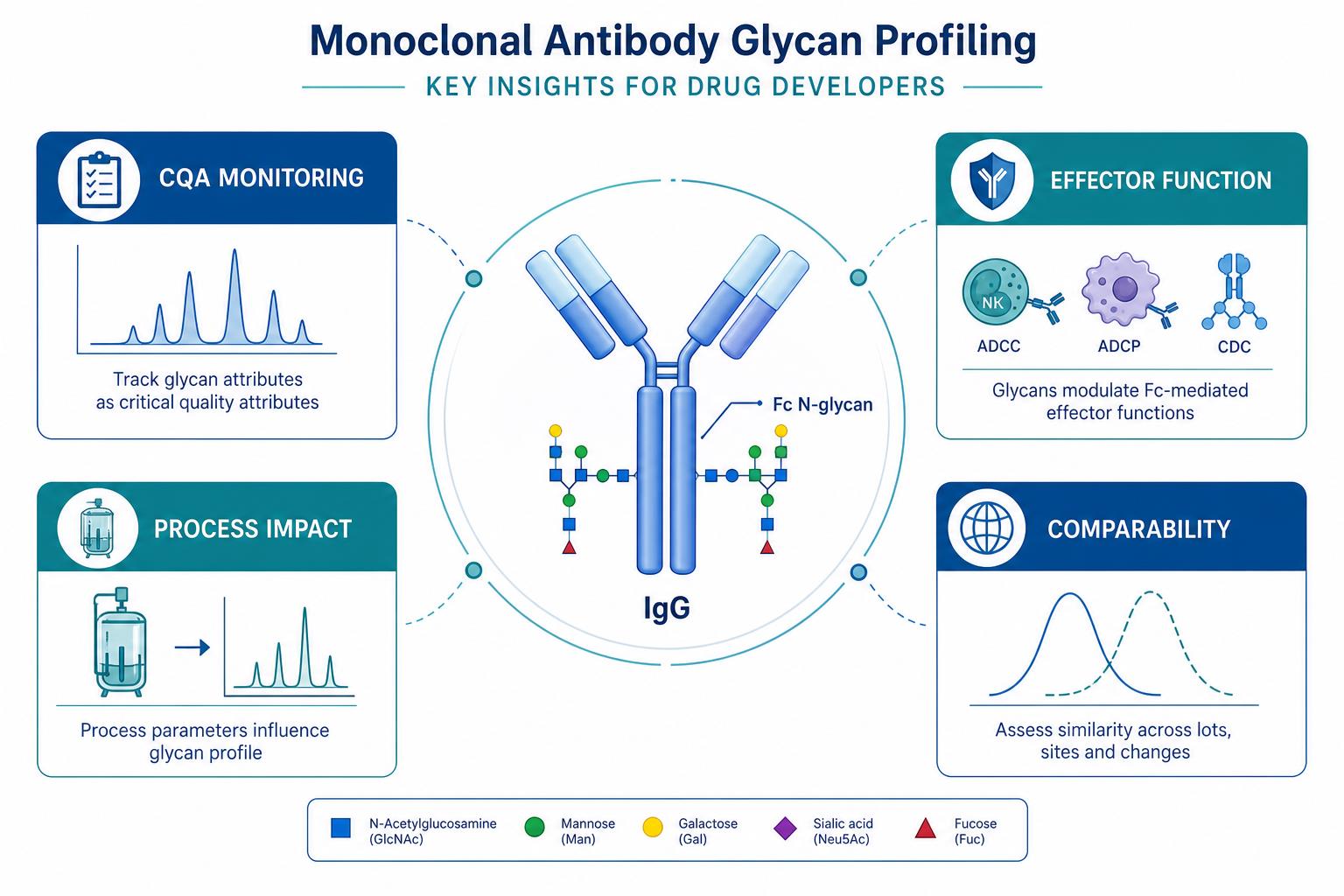
Figure 1. Glycan profiling supports CQA monitoring, effector function review, process impact assessment, and comparability decisions in mAb development.
Major Fc Glycan Attributes Drug Developers Should Monitor
Not every glycan feature requires the same level of control for every monoclonal antibody. Product strategy determines which attributes are most important.
Core fucosylation affects Fc gamma receptor IIIa binding and is closely reviewed when antibody-dependent cellular cytotoxicity is part of the product profile. Reduced core fucose may increase effector activity, while higher fucosylation may be desirable when effector function should remain low.
Galactosylation influences complement-related behavior and broader Fc effector context depending on antibody subclass and glycan environment. Agalactosyl glycoforms are commonly tracked during development and comparability review.
Sialylation can modulate Fc receptor interaction profiles and anti-inflammatory signaling context in some settings. Because sialylated Fc glycans may be lower in abundance, sensitive profiling methods may be required for reliable comparison.
High-mannose glycans can affect clearance through mannose receptor pathways and are often monitored when pharmacokinetic consistency is important. Process changes that increase high-mannose content may warrant additional review even when binding activity remains unchanged.
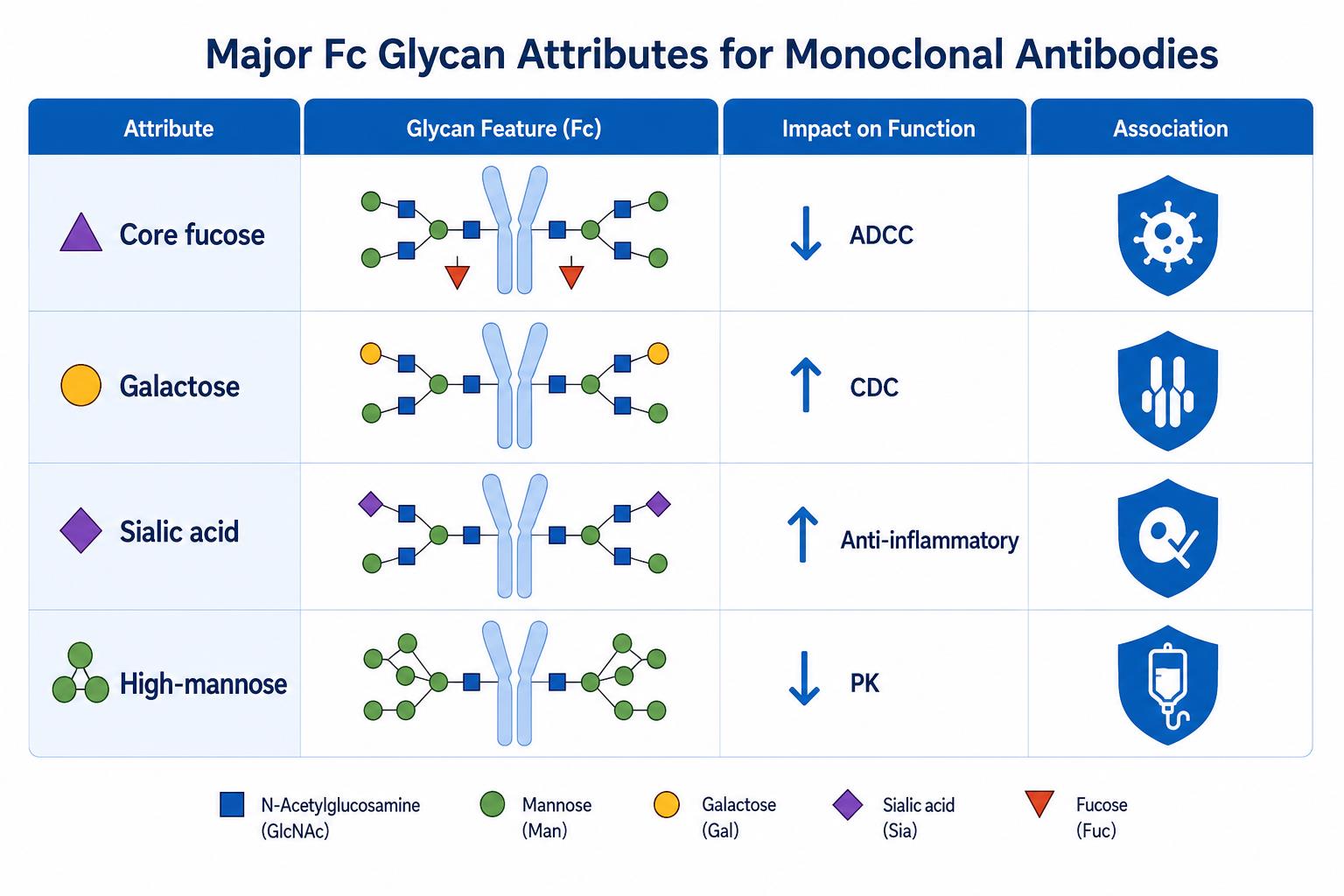
Figure 2. Drug developers commonly monitor core fucose, galactose, sialic acid, and high-mannose as part of Fc glycan profiling for monoclonal antibodies.
Standard Glycan Profiling Workflow for Drug Development Teams
A practical mAb glycan profiling workflow aligns analytical work with development decisions.
Define product-relevant glycan attributes based on mechanism of action, effector strategy, and control needs. Select analytical methods that report the required level of detail, whether released glycan profiling, glycopeptide LC-MS/MS, intact glycoform analysis, or a combined package. Establish baseline profiles on representative early lots or reference material. Compare subsequent lots, process variants, or stability samples against that baseline. Integrate glycan findings with functional, stability, and comparability data before making development decisions. Document methods, acceptance logic, and follow-up plans so glycan data can support internal review and regulatory packages.
Drug developers benefit when glycan profiling is planned as part of the CMC roadmap rather than added after an unexpected lot difference appears.
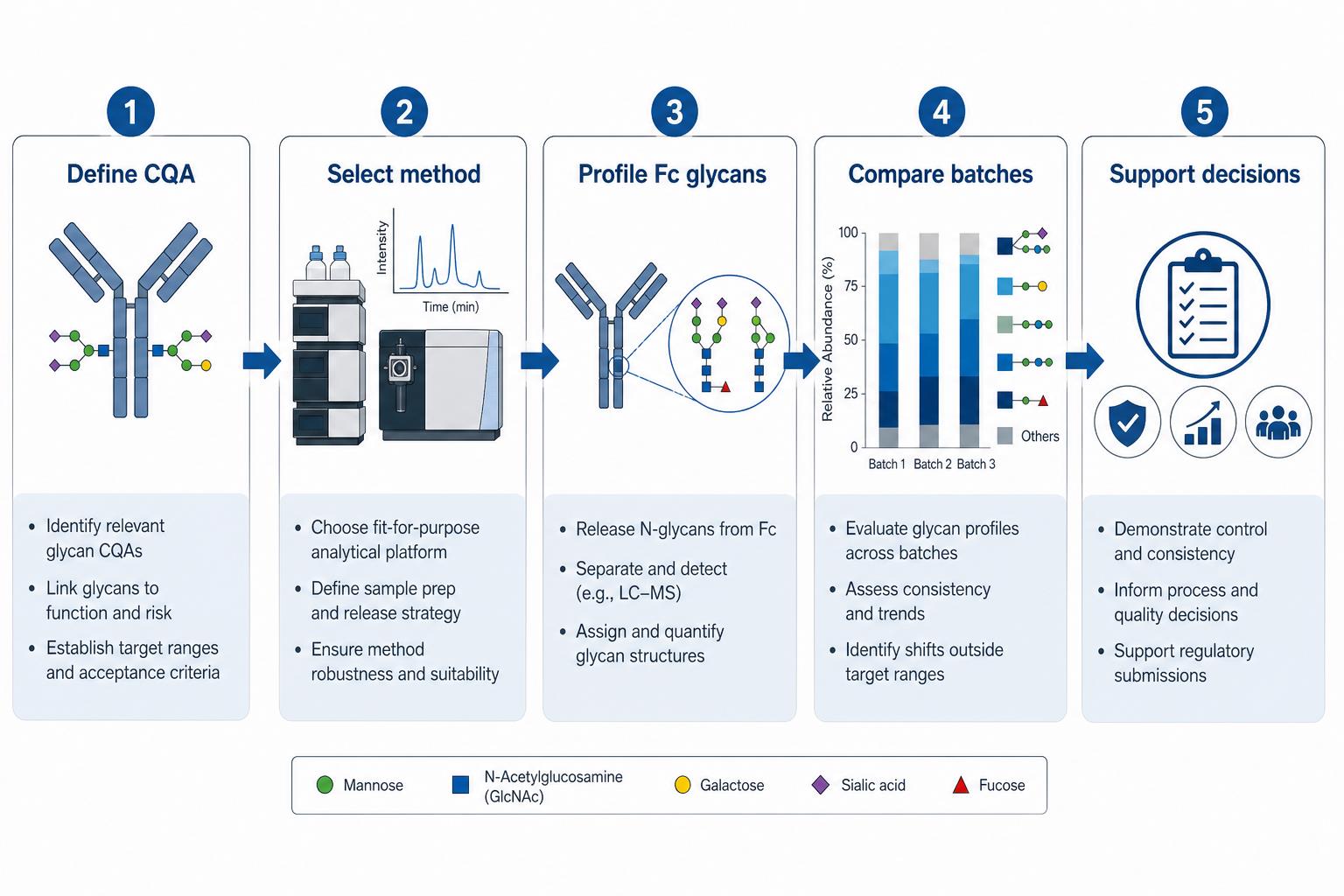
Figure 3. A development-focused glycan profiling workflow links method selection, Fc glycan profiling, batch comparison, and decision support.
Related Services
Protein Drug Glycosylation Analysis Service
Protein Glycosylation Analysis Service
Glycosylation Site Analysis Service
Comprehensive Glycosylation Analysis Service
Drug development teams planning monoclonal antibody glycan profiling can consult MtoZ Biolabs to align analytical scope with product stage, comparability needs, and reporting expectations.
Analytical Options and Development-Stage Fit
Different development stages may require different glycan profiling depth.
|
Development Stage |
Common Glycan Profiling Goal |
Typical Analytical Emphasis |
|---|---|---|
|
Early candidate selection |
Understand baseline Fc glycan behavior |
Intact glycoform screen or released glycan profile |
|
Process development |
Monitor glycan drift during optimization |
Released glycan and glycopeptide comparison |
|
Comparability or biosimilar review |
Compare reference and test glycan profiles |
Combined intact, released, and site-specific data |
|
Control strategy support |
Define monitored glycan attributes |
Quantitative profiling with batch history |
|
Stability or lifecycle change |
Detect glycan shift over time or after change |
Trend comparison against qualified baseline |
Early-stage programs may accept broader exploratory profiling. Late-stage programs usually require tighter method definition and clearer criteria for evaluating similarity or drift.
Key Insights Drug Developers Should Apply
Several insights help teams use glycan profiling effectively rather than treating it as a standalone report.
Glycan profile should be interpreted in light of product strategy. An effector-enhanced mAb and an effector-silent mAb will not prioritize the same glycan attributes.
A glycan shift is not always a failure, but it is always a signal. The key question is whether the shift is understood, bounded, and supported by appropriate functional or comparability data.
Method selection should match the decision. Released glycan data are strong for composition review. Glycopeptide mapping is stronger for site-specific context. Intact analysis is useful for rapid lot screening.
Baseline matters. Without a qualified reference profile, later comparisons become difficult to interpret during scale-up or tech transfer.
Glycan profiling works best with orthogonal evidence. Binding, ADCC, CDC, stability, and peptide mapping data often provide necessary context for glycan findings.
Core Technical Advantages and Practical Limits
Core Technical Advantages
Early detection of process-linked glycan drift.
Profiling can reveal glycan changes before functional or release assays show impact.
Support for CQA and control strategy design.
Defined glycan attributes can be monitored when they correlate with product performance.
Comparability documentation for mAb programs.
Glycan similarity data support biosimilar, process change, and site transfer reviews.
Functional risk context for Fc engineering decisions.
Glycan profiling helps developers evaluate whether Fc modifications or process conditions align with the intended effector profile.
Integration with broader biologics characterization.
Glycan data complement intact mass analysis, peptide mapping, and stability studies in development packages.
Practical Limits
Glycan profiling does not replace functional confirmation.
Effector activity still requires relevant biological assays when function is critical.
Low-abundance glycoforms may require sensitive methods.
Minor but important glycan species may be missed in shallow profiling workflows.
Expression system effects are substantial.
Cell line and process dominate glycan profile and must be documented for interpretation.
Acceptance criteria require product-specific logic.
There is no universal glycan profile that defines suitability for all monoclonal antibodies.
Sample and Program Planning Considerations
Drug developers should define several items before submitting mAb samples for glycan profiling.
- antibody format, subclass, and Fc engineering status
- development stage and decision the data must support
- reference lot, baseline lot, or comparator availability
- sample type: research material, drug substance, or drug product
- whether comparability, stability, or control strategy is the primary goal
- need for orthogonal functional or structural follow-up
Programs that document these factors early usually receive more actionable glycan profiling outputs.
Expected Deliverables for Development Teams
A development-oriented glycan profiling report should go beyond a glycan list. Useful deliverables may include:
- major Fc glycoform distribution summary
- monitored glycan attribute comparison across lots or conditions
- site occupancy notes when glycopeptide mapping is performed
- method and QC summary for regulatory or internal review
- interpretation of glycan differences against product strategy
- recommended follow-up assays when functional relevance is uncertain
Reporting depth should increase as the program moves from exploratory profiling toward comparability and control strategy support.
Frequently Asked Questions
1. Why is glycan profiling important for monoclonal antibodies?
Glycan profiling characterizes Fc carbohydrate structures that can affect effector function, stability, clearance, and lot-to-lot consistency in mAb products.
2. Which glycan site is most important on IgG antibodies?
The conserved Asn297 Fc N-glycosylation site is the most commonly monitored glycosylation position on IgG monoclonal antibodies.
3. When should drug developers start glycan profiling?
Baseline glycan profiling is useful once representative material is available from the intended expression system and before major process changes, comparability exercises, or control strategy finalization.
4. Can glycan profiling support biosimilar development?
Yes. Glycan profile comparison is commonly used to evaluate similarity between reference and candidate monoclonal antibody products.
5. Does glycan profiling alone determine product suitability?
No. Glycan profiling provides structural and distribution data. Suitability decisions usually require integration with functional, stability, and comparability evidence.
Conclusion
Glycan profiling for monoclonal antibodies gives drug developers a practical way to monitor one of the most important post-translational quality attributes in IgG products. Fc glycan composition can influence effector function, pharmacokinetic behavior, and lot consistency, making glycan data relevant from early process development through lifecycle management.
The most useful profiling programs define product-relevant glycan attributes early, select methods matched to the development decision, and interpret glycan shifts with functional and comparability context rather than in isolation. Reliable glycan profiling supports better process control, clearer biosimilar assessment, and stronger characterization packages for monoclonal antibody programs. Drug development teams planning mAb glycan profiling can contact MtoZ Biolabs to review product stage, analytical scope, and the reporting strategy best suited to the program.
How to order?




