






Glucuronic Acid Profiling Service
-
Raw analytical data obtained from MS, HPLC, or HPAEC-PAD platforms;
-
Processed result tables (Excel or CSV) listing content, retention time, and relative proportion;
-
A comprehensive analysis report (PDF) detailing experimental procedures, data evaluation, and key findings;
-
Chromatographic and mass spectrometric image files (TIFF or PNG) for visualization and comparison.
MtoZ Biolabs utilizes advanced analytical platforms to provide the glucuronic acid profiling service which enables precise quantification and structural analysis of glucuronic acid content, composition, and distribution within polysaccharides. This service is widely applied in polysaccharide structure research, biosynthetic pathway elucidation, and studies related to plant cell walls and metabolism, offering solid data support for functional polysaccharide development and biomass conversion.
What Is Glucuronic Acid?
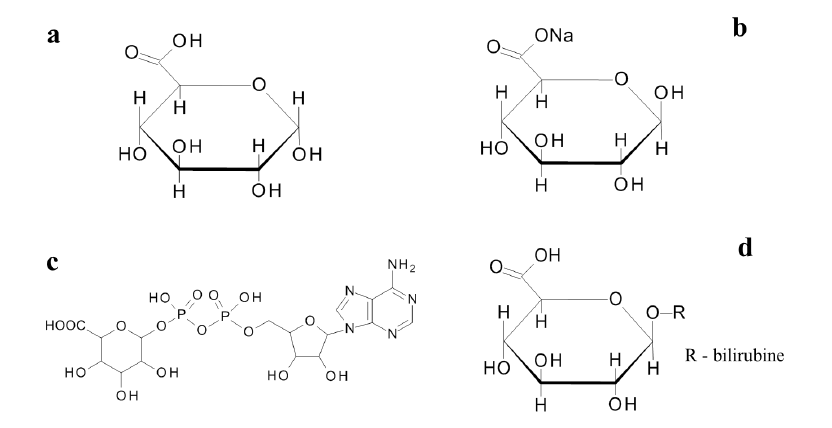
Glucuronic acid is a sugar acid derived from the oxidation of D-glucose and is widely found in natural polysaccharides such as pectin, hyaluronic acid, and glycosaminoglycans. It serves as an essential component of cell walls and connective tissues and plays a critical role in detoxification metabolism by conjugating with various compounds to facilitate their excretion. Owing to its significant functions in polysaccharide structure, biosynthesis, and metabolic regulation, glucuronic acid has extensive applications in phytochemistry, drug metabolism, and biomaterials research.
Vina, I. et al. International Journal of Recent Research and Applied Studies, 2013.
Figure 1. D-Glucuronic Acid and Its Metabolites.
Technical Platforms for Glucuronic Acid Profiling Service
1. High-Performance Liquid Chromatography (HPLC)
Offers excellent separation resolution and reproducibility, enabling efficient separation and stable detection of monosaccharide components.
2. Mass Spectrometry (MS)
(1) Liquid Chromatography-Mass Spectrometry (LC-MS): Combines high sensitivity with quantitative accuracy, suitable for analyzing complex systems containing nonvolatile compounds.
(2) Gas Chromatography-Mass Spectrometry (GC-MS): Provides high sensitivity and resolution, ideal for analyzing volatile or derivatized compounds.
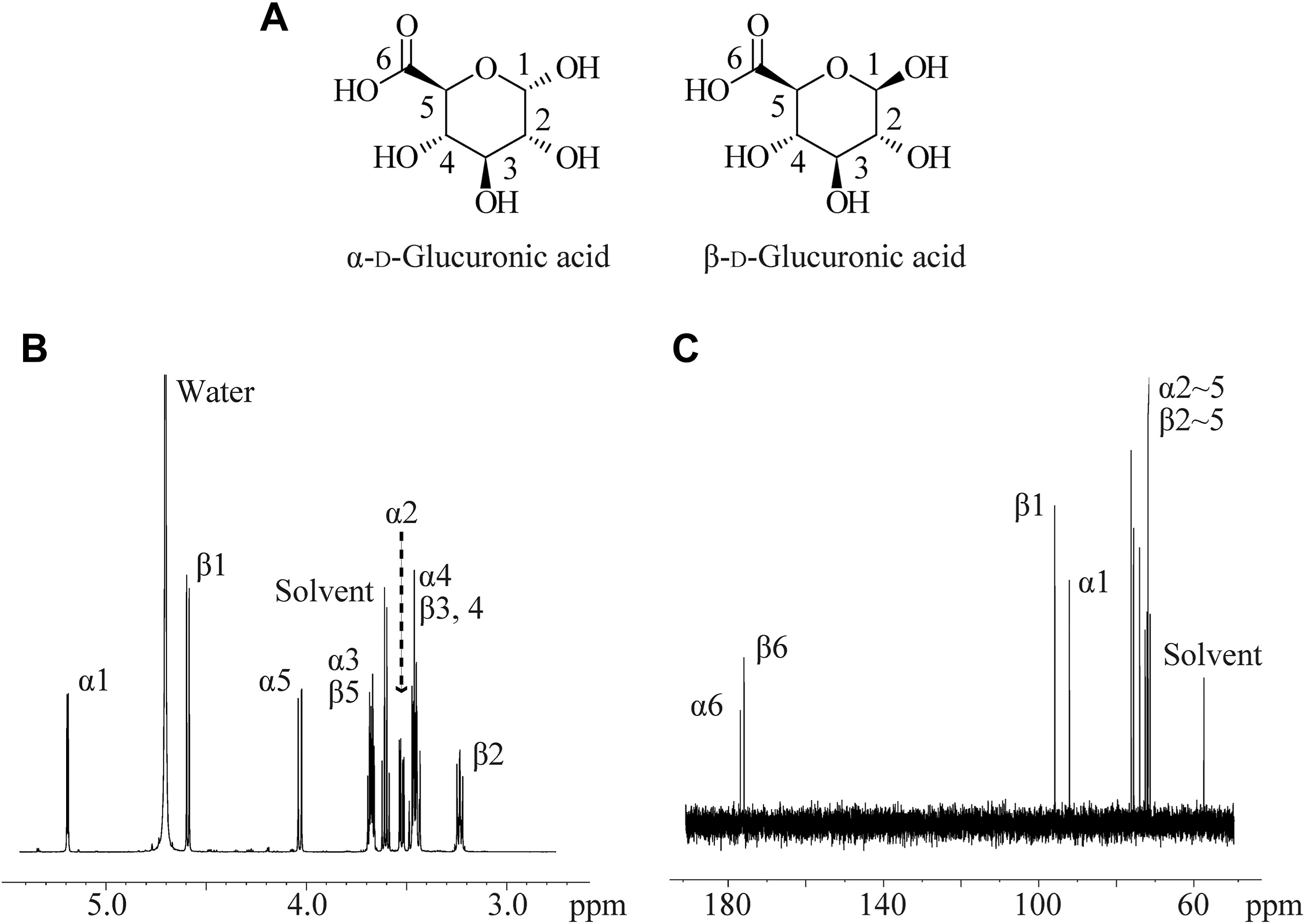
3. Nuclear Magnetic Resonance (NMR) Spectroscopy
Non-destructive and highly precise, it can be used to confirm the types of chemical bonds and conformational information of carbohydrates.
4. High-Performance Anion-Exchange Chromatography with Pulsed Amperometric Detection (HPAEC-PAD)
Combines high-resolution anion separation with electrochemical detection, allowing sensitive and accurate quantification of acidic sugar components in complex systems.
Fujii, T. et al. Journal of Biological Chemistry, 2025.
Figure 2. Structure of glucuronic acid and the result of NMR.
Glucuronic Acid Profiling Service at MtoZ Biolabs
1. Qualitative and Quantitative Analysis
Accurately determines the presence and relative content of glucuronic acid in samples, ensuring data precision and reproducibility.
2. Structural Characterization
Analyzes the structural composition and bonding features of glucuronic acid, helping to elucidate its distribution within polysaccharides and biological systems.
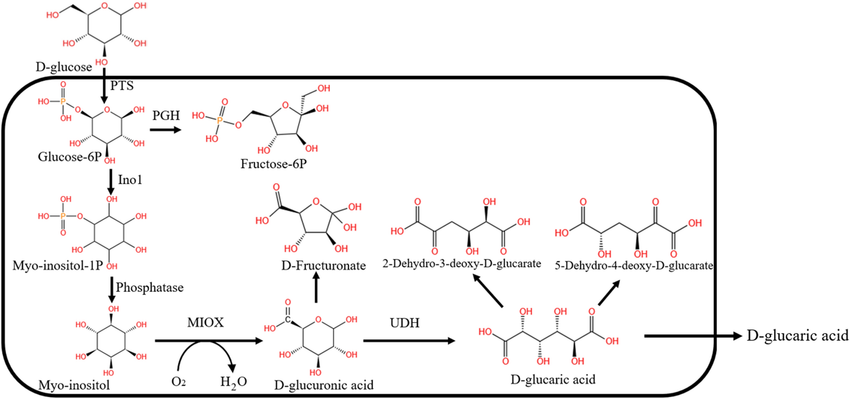
3. Metabolic Analysis
Evaluates changes in glucuronic acid under different reaction conditions or physiological environments, providing valuable insights for metabolic mechanism and functional studies.
Hu, H B. et al. World Journal of Microbiology and Biotechnology, 2024.
Figure 3. Metabolic Pathway of D-Glucuronic Acid Production.
Why Choose MtoZ Biolabs?
✅ High-Sensitivity Detection: Enables precise quantification and component identification of glucuronic acid.
✅ Comprehensive Analysis: Covers multiple dimensions including content, structure, and metabolic profiling.
✅ Customized Solutions: Analytical workflows are tailored to sample types and specific research objectives.
✅ Rigorous Quality Control: Continuous monitoring and standardized procedures ensure reliable data.
✅ One-Stop Service: Provides complete technical support from sample analysis to final report delivery.
Applications of Glucuronic Acid Profiling Service
1. Polysaccharide Structure Research
Used to analyze the glucuronic acid composition in polysaccharides and their derivatives, revealing molecular structure and functional characteristics.
2. Metabolic Pathway Studies
Tracks the transformation of glucuronic acid within cells or biological systems to elucidate metabolic mechanisms.
3. Biomaterials and Pharmaceutical Research
Evaluates the structural stability and metabolic properties of biomaterials or pharmaceutical formulations containing glucuronic acid.
4. Pectin and Plant Polysaccharide Studies
Determines glucuronic acid content in plant-derived polysaccharides for cell wall composition or pectin property analysis.
5. Quality Control and Standardization
Provides essential analytical data for quality assessment of biological samples, fermentation products, and polysaccharide materials.
Deliverables
1. Comprehensive Experimental Details
2. Materials, Instruments, and Methods
3. Quantitative and compositional analysis results of glucuronic acid
4. Structural characterization and related spectral data
5. Bioinformatics Analysis
6. Raw Data Files
FAQ
Q1: What types of samples are suitable?
A1: The glucuronic acid profiling service provided by MtoZ Biolabs is suitable for various sample types, including purified glucuronic acid, its formulations or derivatives, pectin, polysaccharide extracts, plant cell wall components, and fermentation products. To ensure stable and high-quality results, samples should be free of visible impurities or high salt content and are recommended to undergo desalting or filtration to minimize interference.
Q2: What is the service general workflow?
A2:

Q3: What data formats are provided?
A3: MtoZ Biolabs delivers standardized data in multiple formats to facilitate direct use in research and reporting. The standard deliverables include:
If special analytical requirements exist, data formats can be customized according to project specifications.
Q4: How should I prepare my samples?
A4: To ensure analytical accuracy and reproducibility, MtoZ Biolabs recommends the following sample preparation guidelines:
(1) Sample Type: Liquid samples or lyophilized powders are acceptable;
(2) Sample Purity: Avoid high concentrations of salts, lipids, or surfactants;
(3) Storage Conditions: Store at -20°C for short-term and at -80°C for long-term preservation;
(4) Transportation: Ship on dry ice in sealed, leak-proof containers to prevent degradation and repeated freeze-thaw cycles;
(5) Additional Information: Include sample source, preparation method, and analytical objectives to allow optimal method selection.
For more information, please refer to Sample Submission Guidelines for Proteomics, Sample Submission Guidelines for Metabolomics.
Start Your Project with MtoZ Biolabs
Contact us to discuss your experimental design or request a quote. Whether you aim to elucidate the structural characteristics of glucuronic acid or investigate its role in metabolic pathways and biological functions, MtoZ Biolabs will provide you with professional and precise analytical support.
How to order?




