






Fluorescently Labeled Peptide Binding Assays Service
MtoZ Biolabs provides a comprehensive Fluorescently Labeled Peptide Binding Assays Service designed to quantify and characterize molecular interactions between peptides and their targets. Using fluorescence-based detection systems, this service enables real-time, high-sensitivity analysis of peptide-protein, peptide-receptor, and peptide-ligand binding events. The platform integrates advanced spectroscopic technologies and kinetic modeling to support drug discovery, protein engineering, and biochemical mechanism studies.
Fluorescently labeled peptide binding assays are essential for investigating molecular recognition and binding affinities. By introducing fluorescent tags onto peptides, changes in fluorescence intensity, polarization, or resonance energy transfer can be used to monitor binding kinetics under physiological conditions. This nonradioactive, highly sensitive technique is widely applied in affinity measurement, inhibitor screening, and interaction mapping, providing crucial insights for both academic and pharmaceutical research.
Principle of Fluorescently Labeled Peptide Binding Assays
The principle of this assay relies on detecting fluorescence changes upon peptide binding to its target molecule. When a fluorescently labeled peptide interacts with a protein or receptor, alterations in fluorescence intensity, lifetime, or polarization occur due to changes in the microenvironment of the fluorophore. These measurable variations serve as quantitative indicators of binding strength and kinetics.
MtoZ Biolabs utilizes multiple fluorescence-based methods to suit diverse experimental needs, including:
🔸Fluorescence Polarization (FP): Measures binding-induced changes in molecular rotation to quantify affinity constants.
🔸Förster Resonance Energy Transfer (FRET): Detects energy transfer between fluorophore pairs for distance-dependent interaction studies.
🔸Time-Resolved Fluorescence (TRF): Improves sensitivity and minimizes background interference for high-throughput assays.
🔸Fluorescence Correlation Spectroscopy (FCS): Analyzes fluctuations in fluorescence intensity to extract diffusion coefficients and molecular interaction kinetics.
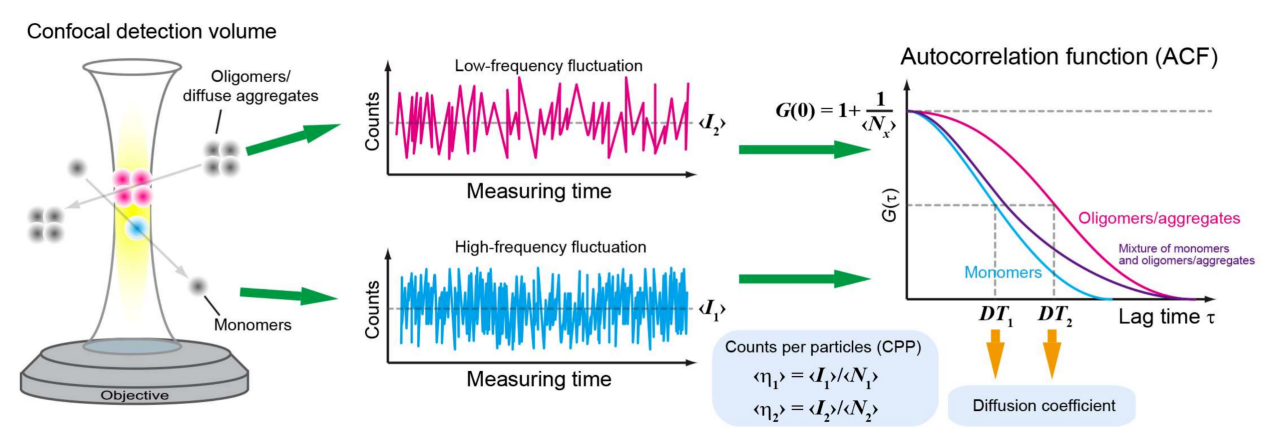
Kitamura, A. et al. Int J Mol Sci. 2018.
Figure 1. Overview of Fluorescence Correlation Spectroscopy (FCS)
🔸Fluorescence Anisotropy (FA): Evaluates rotational diffusion of fluorophore-labeled peptides. Upon binding to larger biomolecules, rotational motion decreases, resulting in higher anisotropy values.
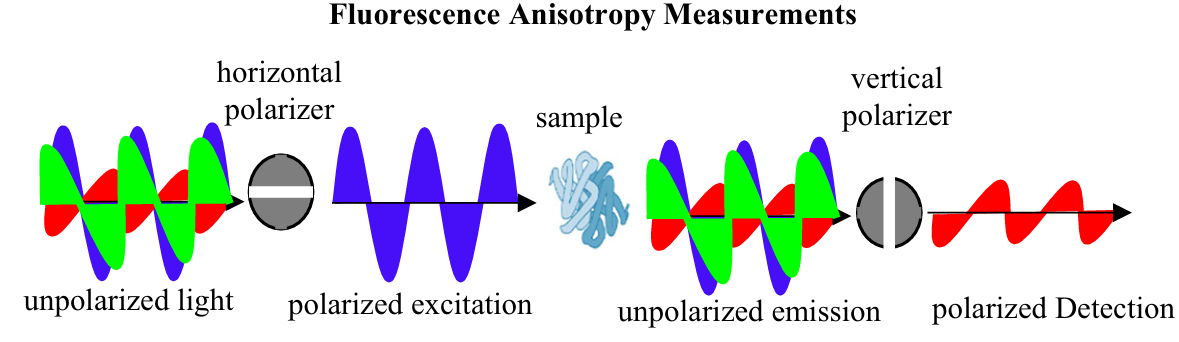
Shrirao, A. B. et al. Biotechnol Bioeng. 2021.
Figure 1. Fluorescence Anisotropy Measurement by Using Exciting Sample and Measuring Emission Through Vertical and Horizontal Polarization Filter
Fluorescently Labeled Peptide Binding Assays Service at MtoZ Biolabs
Our scientists customizes the most appropriate assay configuration according to research objectives, binding kinetics, and target type. We offer both cell-free and cell-based peptide binding assay formats to accommodate soluble proteins, membrane receptors, antibodies, and complex biological samples.
Our platforms include:
💠Enzyme Immunoassay (EIA): Enzyme-mediated colorimetric or chemiluminescent detection for high-throughput screening.
💠Fluorescence Immunoassay (FIA): Sensitive fluorescence-based readouts for quantifying peptide-target binding interactions.
💠Immunoradiometric Assay (IRMA): Radiolabeled detection for low-abundance targets requiring enhanced signal sensitivity.
💠Dissociation-Enhanced Lanthanide Fluorescence Immunoassay (DELFIA): Time-resolved fluorescence detection with minimal background interference.
💠Branched DNA (bDNA) Assay: Nucleic acid signal amplification for precise quantification of peptide binding events at low concentrations.
Through the integration of these complementary assay technologies, MtoZ Biolabs provides flexible solutions that can quantify binding affinities, determine kinetic constants, and evaluate competitive inhibition effects.
Workflow of Fluorescently Labeled Peptide Binding Assays Service
1. Peptide Design and Labeling
Selection of labeling sites and suitable fluorophores followed by custom synthesis and purification of labeled peptides.
2. Target Protein Preparation
Expression, purification, and quality control of target proteins or receptors to ensure assay specificity and reproducibility.
3. Binding Assay Setup
Optimization of assay conditions including buffer composition, temperature, and incubation time for accurate fluorescence detection.
4. Data Acquisition and Analysis
Real-time fluorescence measurement followed by curve fitting, kinetic modeling, and affinity constant determination.
5. Validation and Reporting
Confirmation of binding specificity using control experiments and delivery of a comprehensive report including figures, tables, and data interpretation.
Why Choose MtoZ Biolabs
✔️Integrated fluorescence and ligand-binding assay platforms for highly accurate peptide interaction quantification.
✔️Flexible experimental design tailored to target type, assay scale, and research objectives.
✔️Experienced scientific team specializing in peptide biochemistry and assay development.
✔️High analytical sensitivity with optimized signal-to-noise performance for reliable detection.
✔️Complete workflow coverage from peptide labeling to quantitative data interpretation.
✔️Rigorous quality control ensuring reproducibility and data integrity across all studies.
Applications of Fluorescently Labeled Peptide Binding Assays Service
- Quantitative analysis of peptide-protein and peptide-receptor interactions
- Screening of potential therapeutic peptides and inhibitors
- Characterization of molecular recognition mechanisms
- Drug-target binding kinetics and affinity evaluation
- Quality control of synthetic and recombinant peptides
- Study of post-translationally modified peptide interactions
FAQ
Q1: What types of samples are suitable?
Fluorescently labeled peptide binding assays at MtoZ Biolabs are compatible with a wide range of biological samples, including purified proteins, recombinant receptors, antibodies, membrane fractions, cultured cells, tissue lysates, and biological fluids such as plasma, serum, and cerebrospinal fluid. Both synthetic and naturally derived peptides can be analyzed.
Q2: How should I prepare my samples?
- Ensure samples are free of aggregates, particulate matter, and interfering buffer components.
- For peptide samples, dissolve in an appropriate assay buffer and filter if necessary.
- Tissue samples should be properly homogenized and centrifuged to obtain clear lysates.
- For cell-based assays, maintain consistent cell viability and receptor expression.
Detailed requirements and recommendations can be found in the Sample Submission Guidelines for Proteomics.
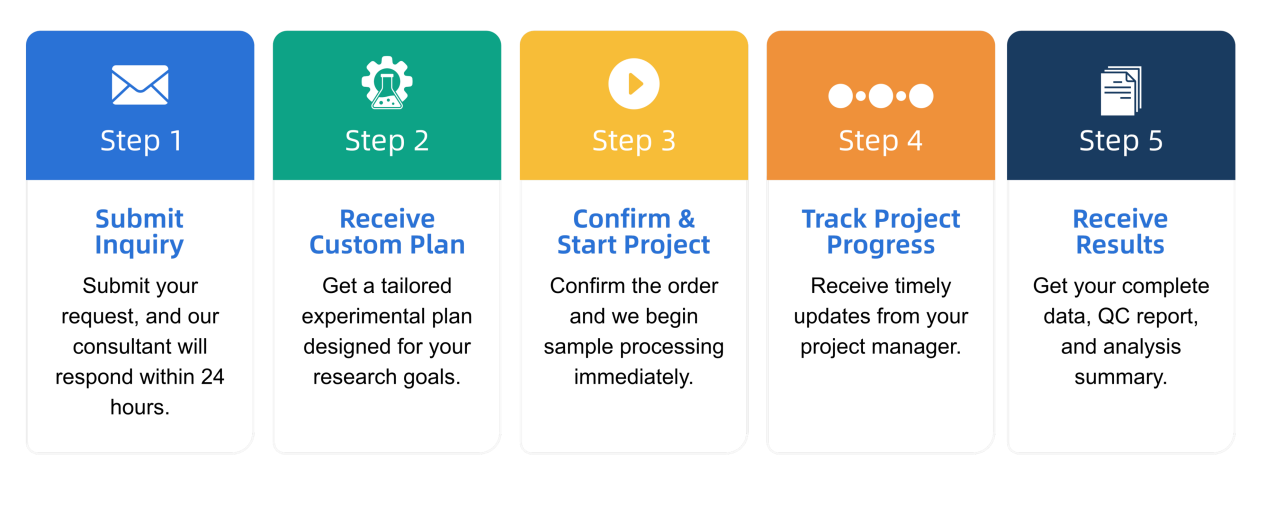
Q3: What is the service general workflow?
Q4: What data formats are provided?
1. Detailed assay reports in PDF format summarizing experimental setup, fluorescence readouts, and analysis results.
2. Quantitative binding data provided in Excel or CSV format for further analysis.
3. High-resolution fluorescence spectra and binding curves in image formats such as PNG or TIFF.
4. Additional formats available upon request to meet specific project or publication needs.
Start Your Project with MtoZ Biolabs
By integrating advanced fluorescence detection technologies with expert analytical support, we enable accurate characterization of molecular affinities and binding dynamics, empowering your peptide discovery and drug development projects.
Contact us today to discuss your experimental design and obtain a quotation.
How to order?




