






Discovery, Quantification, or Validation: How to Match Mass Spectrometry Proteomics Strategies to Research Goals
Introduction
A proteomics project can fail before the first LC-MS/MS run if the analytical strategy does not match the research goal. A signaling team that needs unbiased screening of treatment-responsive proteins may receive a targeted panel report that never surveys the proteome. A biomarker group that needs reproducible panel measurement may receive a discovery dataset with stochastic missing values across clinical specimens. A mechanistic study that requires statistically supported fold-change comparison may receive an identification-heavy report with limited quantitative design. In mass spectrometry proteomics, discovery, quantification, and validation are related but not interchangeable strategies.
Matching mass spectrometry proteomics strategies to research goals means selecting the workflow that produces the evidence type required for the next decision. Discovery prioritizes broad protein identification and hypothesis generation. Quantification prioritizes reproducible abundance comparison across conditions. Validation prioritizes repeated measurement of defined targets with assay-style confidence. Understanding how these strategies differ helps teams avoid costly repeat experiments and design proteomics projects that answer the original biological or translational question.
When Researchers Must Choose a Proteomics Strategy
Strategy selection usually becomes urgent at six common decision points.
A new treatment or genetic perturbation may require an unbiased survey of altered proteins before pathway follow-up. A preclinical model comparison may require statistically supported abundance differences across replicate groups. A biomarker program may need to move from candidate nomination to repeated peptide monitoring in larger cohorts. A biologics comparability study may require sequence-level confirmation rather than broad proteome screening. An immunoprecipitation experiment may need interaction partner identification before targeted review of selected binders. A grant or CMC milestone may require evidence formatted for a specific reporting standard rather than a generic protein list.
In each case, the research goal determines whether discovery, quantification, or validation should lead the experimental design.
Four Comparison Dimensions for Proteomics Strategy Selection
Discovery, quantification, and validation differ across four dimensions that matter in project planning.
Primary output defines what the report must deliver. Discovery outputs are protein identification tables and candidate lists. Quantification outputs are differential abundance comparisons with statistical support. Validation outputs are reproducible measurements for a defined peptide or protein panel.
Workflow depth describes how broadly the mass spectrometer surveys the sample. Discovery uses broad LC-MS/MS acquisition such as DDA or DIA. Quantification adds consistent measurement design across replicates and groups. Validation narrows measurement to selected transitions by PRM or MRM.
Replicate and cohort requirements differ by strategy. Discovery may tolerate broader variability when the goal is nomination. Quantification requires biological replicates and normalization planning from the start. Validation requires locked methods, acceptance criteria, and often larger sample numbers for the selected panel.
Confidence standard reflects how strongly claims must be supported. Discovery supports hypothesis generation with database search evidence. Quantification supports group comparison when replicate concordance is adequate. Validation supports repeated target measurement with defined performance expectations.
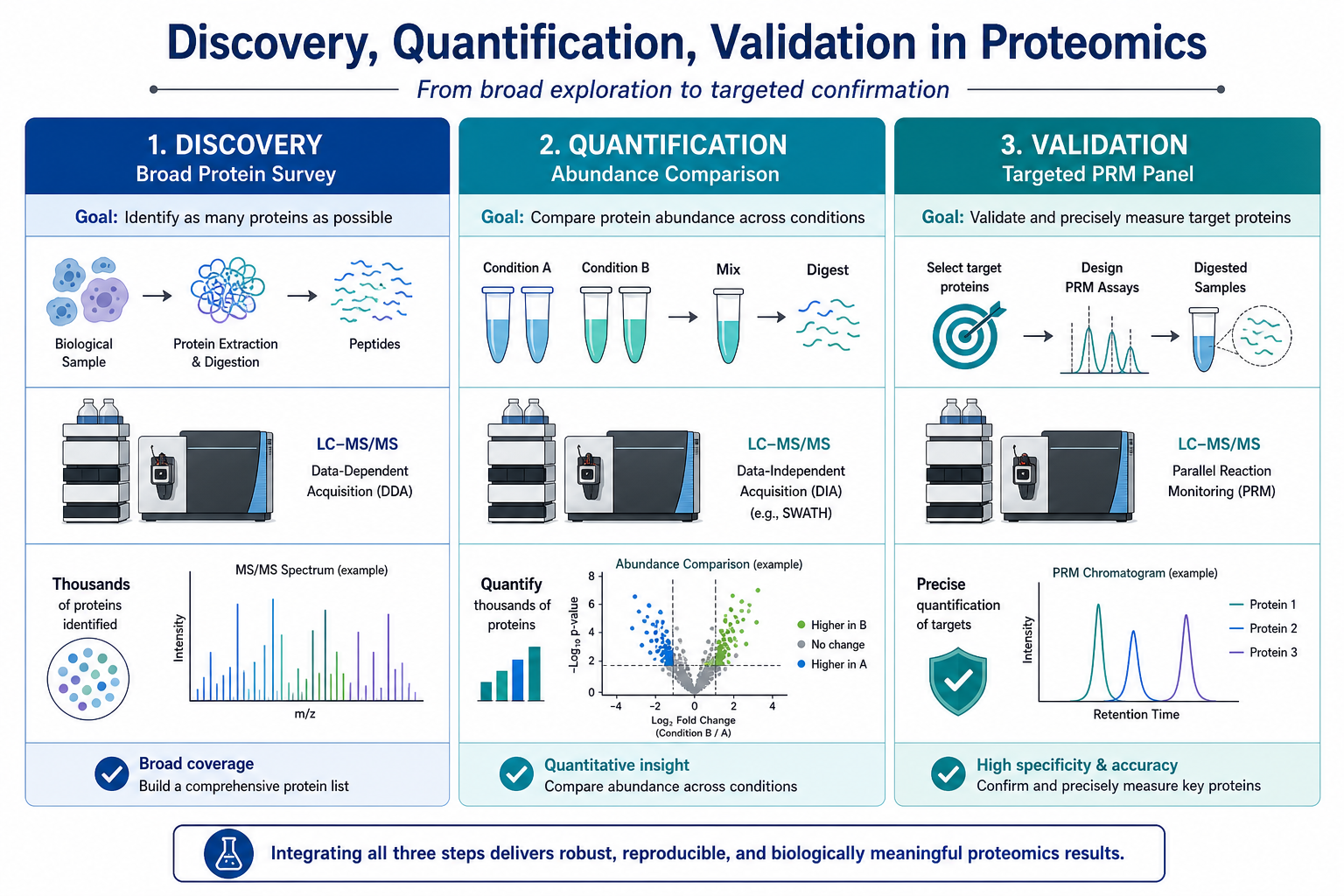
Figure 1. Discovery, quantification, and validation in mass spectrometry proteomics differ in primary output, workflow breadth, replicate requirements, and confidence standards.
Discovery Proteomics Strategy
Discovery proteomics uses LC-MS/MS to survey many proteins in a sample and identify candidates for follow-up. In bottom-up workflows, proteins are digested into peptides, separated by liquid chromatography, and analyzed by data-dependent or data-independent acquisition. Database searching assigns peptide-spectrum matches and infers protein identities.
Discovery is appropriate when the research goal is unbiased screening, such as identifying treatment-responsive proteins, cataloging immunoprecipitation components, or generating candidates before pathway analysis.
The technical value of discovery is breadth. One experiment can detect hundreds to thousands of proteins without pre-selecting targets. Discovery can also include label-free or isobaric quantitation when differential comparison is part of the screening phase.
Discovery is weaker when the project requires assay-style reproducibility for a defined panel or repeated monitoring across many clinical specimens.
Quantification Proteomics Strategy
Quantification proteomics compares protein abundance across sample groups, time points, or treatment conditions. Measurement is peptide-based. The instrument records ion intensities or reporter signals, and software rolls peptide values up to protein groups for statistical comparison.
Quantification is appropriate when the research goal depends on relative abundance change across treatment groups, disease models, time points, or manufacturing conditions.
Common quantification modes include label-free LC-MS, TMT or iTRAQ labeling, SILAC metabolic labeling, and DIA or SWATH acquisition. Each mode places different demands on sample preparation, multiplex design, and normalization review.
Quantification is weaker when replicate planning is insufficient or when the study requires confirmation of a small predefined panel with locked acceptance criteria.
Validation Proteomics Strategy
Validation proteomics monitors selected peptide targets with targeted LC-MS/MS, most often by PRM or MRM. Instead of surveying the whole proteome, the method measures defined precursor and fragment transitions for a panel chosen during discovery or based on prior knowledge.
Validation is appropriate when the research goal requires repeated measurement of specific proteins. Biomarker follow-up, pathway confirmation, assay transfer from discovery data, and quality monitoring of selected product-related peptides are common examples.
The technical value of validation is reproducibility and specificity. Chromatography, transition selection, and calibration can be optimized for a limited panel, producing more stable quantitative readouts than broad discovery acquisition typically provides.
Validation is weaker when the project still requires unbiased proteome coverage. A targeted panel cannot identify unexpected proteins or off-target changes. Validation therefore usually follows discovery or quantification rather than replacing them entirely.
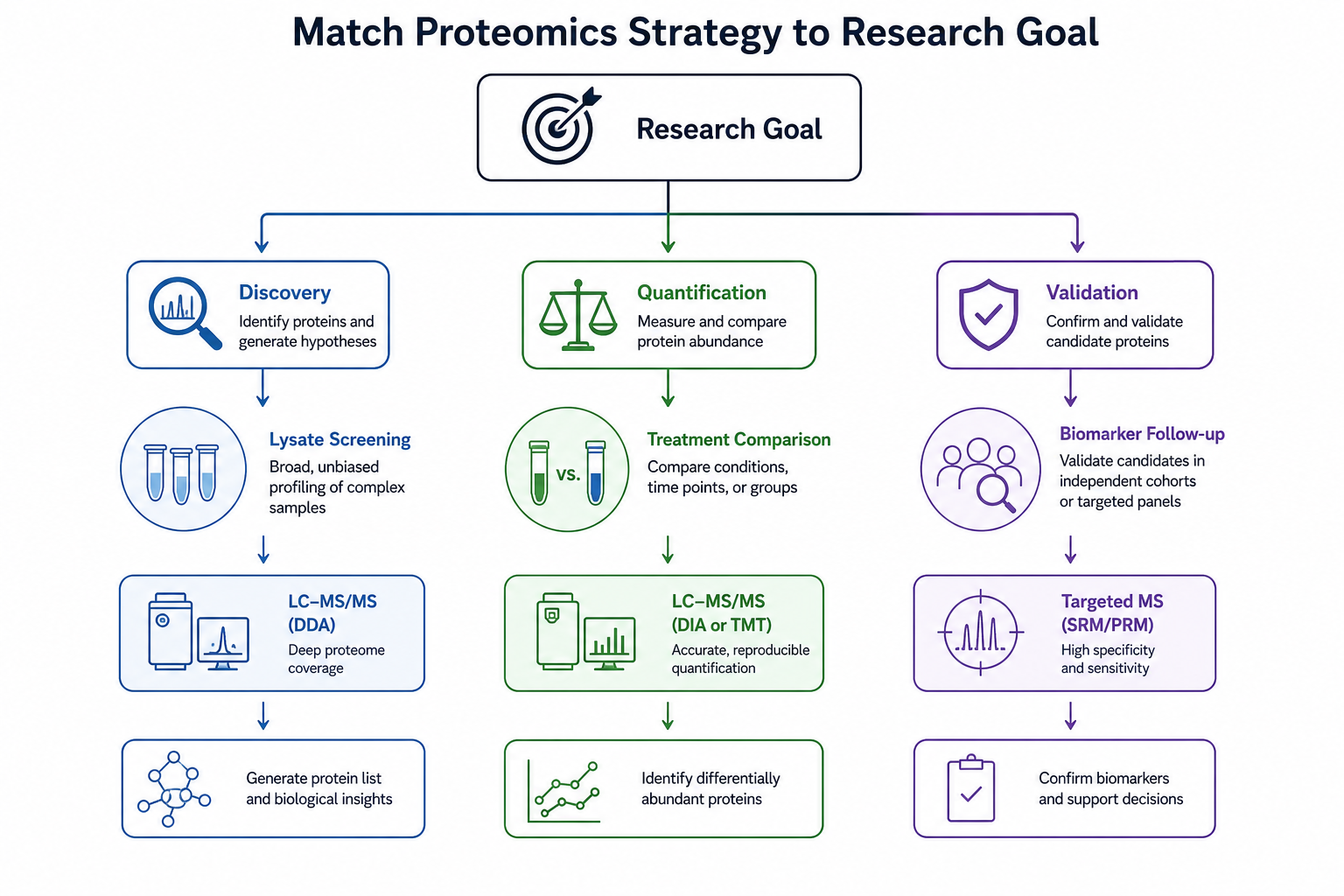
Figure 2. Research goals determine whether discovery screening, quantitative comparison, or targeted validation is the appropriate mass spectrometry proteomics strategy.
Related Services
Quantitative Proteomics Service
Label-Free Quantitative Proteomics Service, MS Based
PRM Targeted Proteomics Analysis Service
Proteomics Bioinformatic Analysis Service
Researchers selecting discovery, quantification, or validation workflows can consult MtoZ Biolabs to align LC-MS/MS strategy with study goals before phase 1 sample preparation begins.
Side-by-Side Strategy Comparison
The table below compares discovery, quantification, and validation across the main planning variables used in mass spectrometry proteomics projects.
|
Comparison variable |
Discovery |
Quantification |
Validation |
|---|---|---|---|
|
Primary research goal |
Unbiased screening and candidate nomination |
Abundance comparison across groups |
Repeated measurement of defined targets |
|
Typical acquisition |
DDA or DIA LC-MS/MS |
Label-free, TMT, SILAC, or DIA with replicate design |
PRM or MRM targeted LC-MS/MS |
|
Main output |
Protein identification list and optional candidate ratios |
Differential abundance table with statistics |
Panel-level quantitative report |
|
Sample breadth |
Many proteins per run |
Many proteins, but comparison is central |
Selected peptides only |
|
Replicate emphasis |
Moderate; nomination focused |
High; statistics depend on replicates |
High; assay reproducibility focused |
|
Common next step |
Pathway review or target shortlist |
Targeted follow-up or functional study |
Assay deployment or larger cohort testing |
This comparison shows why strategy mismatch is common when a discovery report is expected to function as a validation assay, or when a quantification study is designed without adequate replicate structure.
Decision Recommendations by Research Goal
Different project goals favor different strategy entry points.
|
Research goal |
Recommended leading strategy |
Why |
|---|---|---|
|
Identify proteins changed by a new treatment |
Discovery with optional label-free or TMT quantitation |
Broad coverage is needed before target selection |
|
Compare disease and control tissue proteomes |
Quantification by label-free, TMT, or DIA |
Group comparison is the primary decision driver |
|
Confirm a shortlist of biomarker candidates in a larger cohort |
Validation by PRM |
Reproducible panel measurement is required |
|
Map interaction partners in a pull-down experiment |
Discovery on enriched sample |
Unbiased identification precedes follow-up |
|
Monitor selected proteins across repeated study visits |
Validation by PRM or MRM |
Locked target measurement supports longitudinal review |
|
Support biologics sequence and quality review |
Targeted peptide mapping or validation-style mapping |
Defined sequence evidence is the reporting goal |
When the project spans more than one goal, a staged strategy is often more effective than forcing one workflow to serve every milestone.
Progressive Use of Discovery, Quantification, and Validation
Many successful proteomics programs use all three strategies in sequence rather than choosing only one.
Phase 1 discovery identifies proteins affected by a condition or treatment. Phase 2 quantification tests whether candidate changes are reproducible across replicate sets. Phase 3 validation monitors selected peptides with targeted PRM under tighter analytical control.
A staged design helps control reporting scope. Teams avoid over-committing to a large targeted panel before discovery narrows the candidate list.
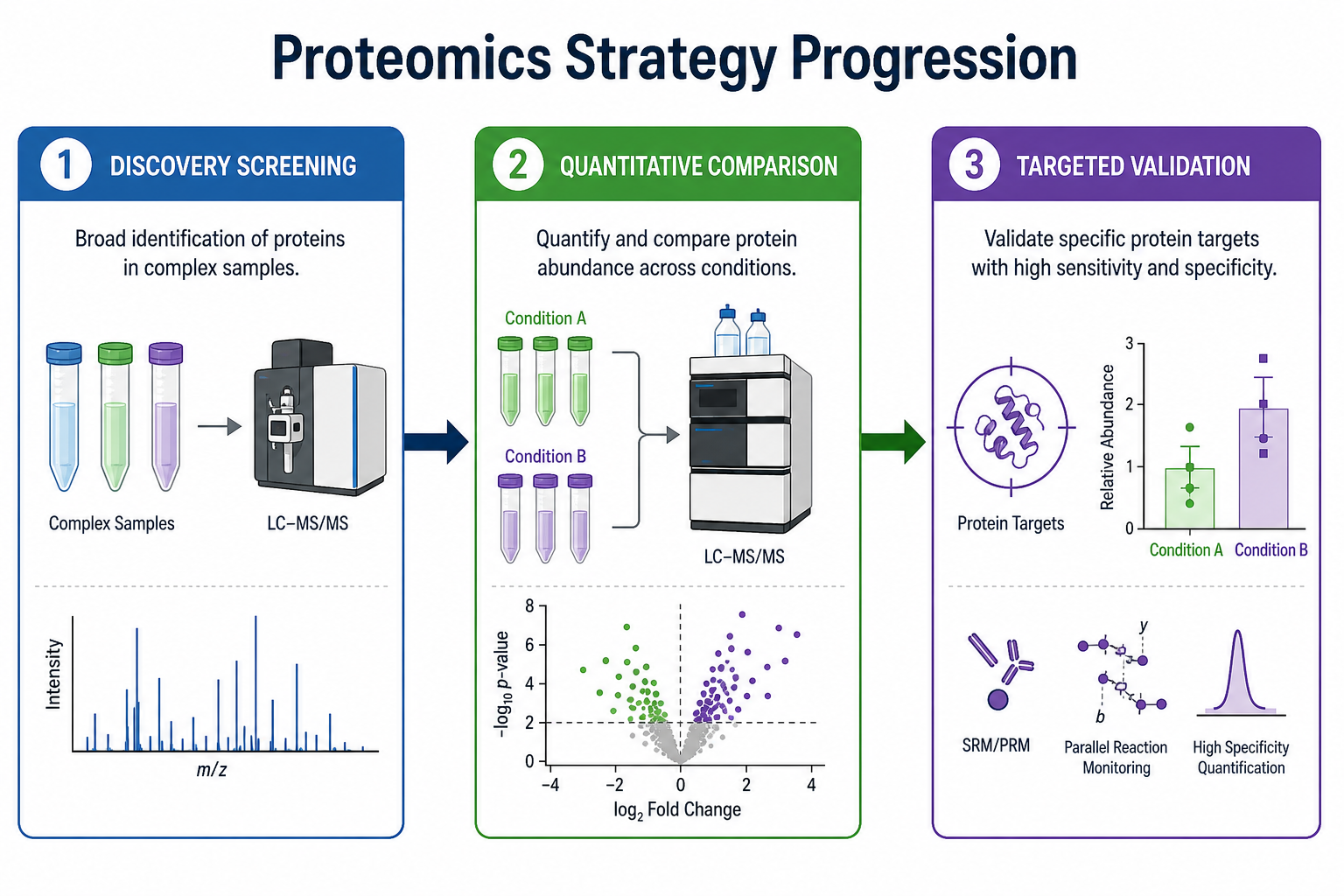
Figure 3. Many proteomics programs progress from discovery screening to quantitative comparison and then to targeted validation as research goals become more specific.
Common Strategy Mismatches to Avoid
Using discovery acquisition alone when a biomarker panel must be measured reproducibly in many clinical specimens often produces unstable readouts. Running validation before target selection can miss relevant biology. Designing quantification without biological replicates may generate fold-change tables that cannot support robust statistics.
Avoiding these mismatches begins with defining the decision the dataset must support, not only the sample type entering the laboratory.
Frequently Asked Questions
1. What is the difference between discovery and quantification in proteomics?
Discovery prioritizes broad protein identification and candidate nomination. Quantification prioritizes comparing protein abundance across groups with replicate-supported statistics. Many projects combine both, but the primary goal determines which strategy should lead the design.
2. When should validation be used instead of discovery?
Validation should lead when the protein targets are already defined and the project requires repeated, reproducible measurement of a selected panel. Discovery is more appropriate when the proteome must be surveyed without prior target selection.
3. Can one LC-MS/MS project include discovery and quantification?
Yes. Label-free, TMT, SILAC, and DIA workflows can generate identification and quantitative comparison in the same study when replicate design and analysis goals are defined before sample preparation.
4. Is targeted PRM only for biomarker studies?
No. Targeted PRM is also used for pathway confirmation, assay transfer from discovery data, repeated monitoring in preclinical models, and selected biologics peptide review when a defined panel must be measured consistently.
5. How should teams choose between label-free, TMT, and PRM for quantification?
Label-free and DIA are common for larger discovery-oriented cohorts. TMT is useful for multiplexed group comparison within a controlled design. PRM is appropriate when quantification must focus on a defined target set with validation-level reproducibility.
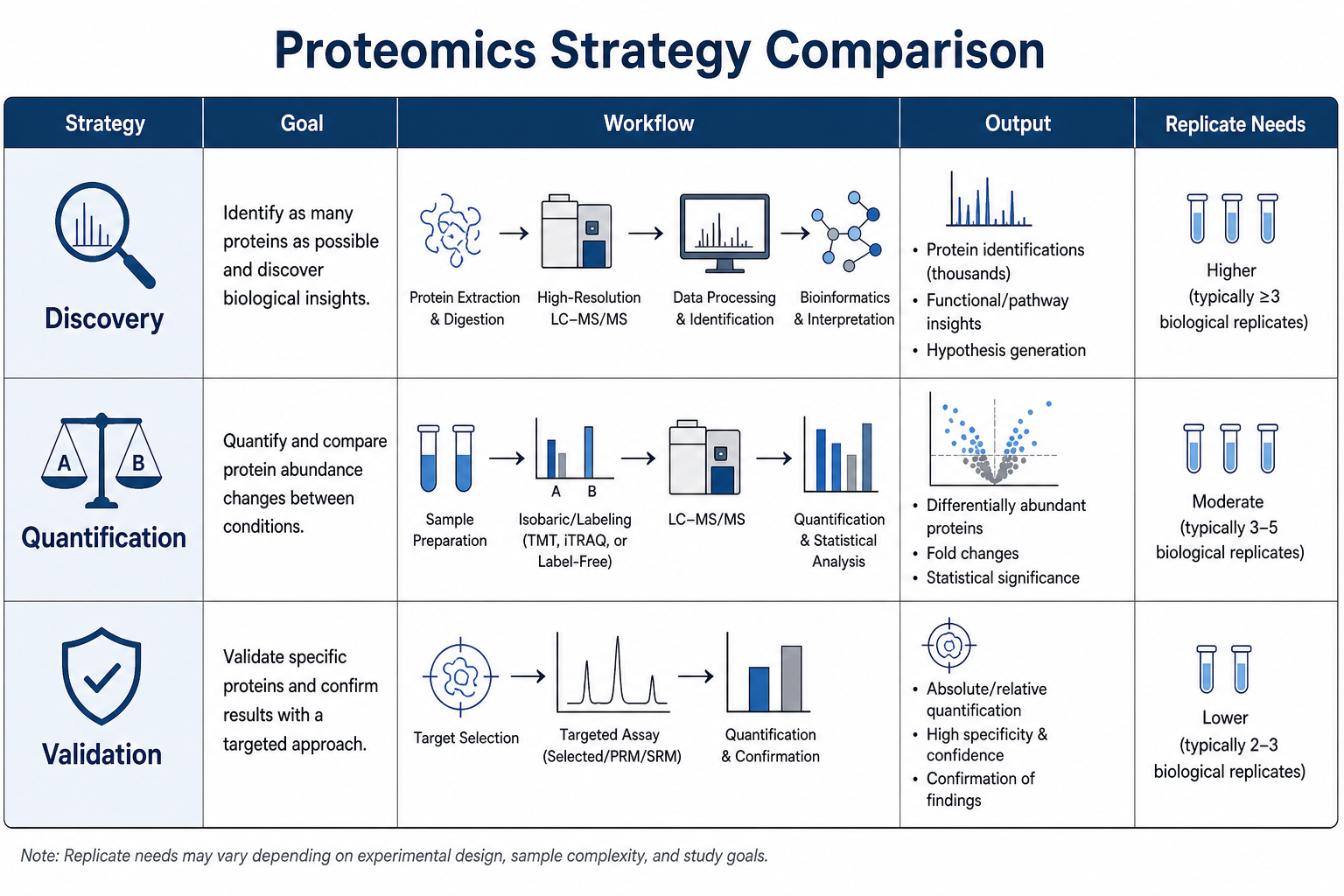
Figure 4. Discovery, quantification, and validation differ in research goal, workflow design, reporting output, and replicate requirements.
Conclusion
Discovery, quantification, and validation answer different research questions in mass spectrometry proteomics. Discovery supports unbiased screening and candidate nomination. Quantification supports abundance comparison across conditions with statistical review. Validation supports repeated measurement of defined targets with tighter analytical control. Matching strategy to goal before phase 1 preparation and phase 2 LC-MS/MS acquisition reduces repeat analysis and produces reports that fit the next project decision.
If your team is deciding between discovery screening, quantitative comparison, or targeted validation, MtoZ Biolabs can help map the research goal to the appropriate LC-MS/MS workflow and reporting format. Contact MtoZ Biolabs to review sample type, study objective, and whether discovery, quantification, or validation should lead your next proteomics project.
How to order?




