DIA-Based Peptide Quantification Service
MtoZ Biolabs provides DIA-based peptide quantification services using DIA-MS workflows for comprehensive peptide measurement and reproducible peptide-level comparison. The service supports endogenous peptides and protein-derived peptides across complex biological samples.
- DIA-MS based peptide quantification
- Reproducible peptide abundance measurement
- Large-scale peptide comparison
MtoZ Biolabs provides DIA-based peptide quantification services using data-independent acquisition (DIA) mass spectrometry for comprehensive peptide identification and quantitative comparison.
The service enables measurement of peptide abundance changes across biological samples by integrating DIA-MS acquisition, peptide-level data processing, and quantitative bioinformatics analysis. It supports projects requiring reproducible peptide profiling, comparative analysis, and large-scale peptide measurement.
What Is DIA-Based Peptide Quantification?
DIA-based peptide quantification is a mass spectrometry-based approach designed to measure the relative abundance of peptide species across biological samples. During DIA-MS acquisition, peptide precursor ions within predefined isolation windows are systematically fragmented to generate comprehensive peptide fragmentation data. These data are computationally processed to identify peptides and extract quantitative information from peptide signals.
Depending on the research objective, analyzed peptides may include endogenous peptides or peptides generated from protein-derived samples. DIA-based peptide quantification provides a consistent strategy for comparing peptide abundance patterns across multiple biological conditions.
Technical Principles
DIA-based peptide quantification relies on systematic LC-MS/MS acquisition and computational extraction of peptide-specific quantitative information. Unlike DDA, which selects precursor ions based on intensity during each acquisition cycle, DIA collects fragmentation information across defined mass windows. This acquisition strategy improves measurement consistency and reduces missing quantitative values across multiple samples.
The resulting data are used for relative peptide abundance comparison. For projects requiring absolute peptide concentration measurement, targeted quantitative approaches with stable isotope-labeled standards are generally applied.
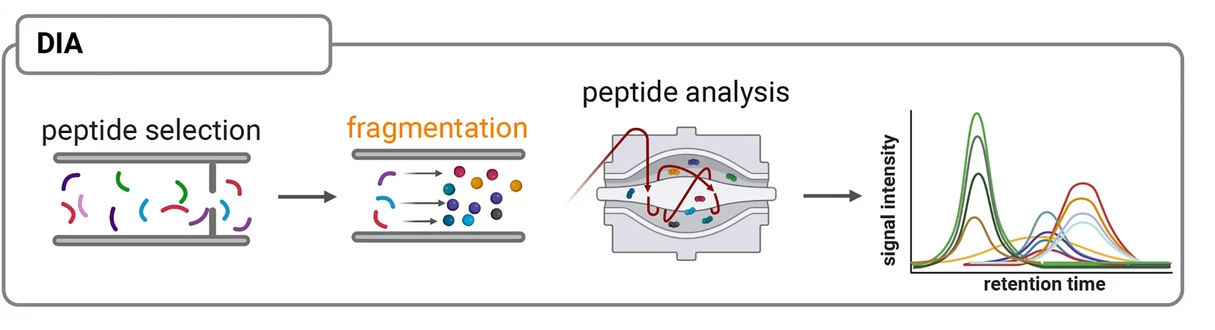
Goetze, S. et al. Clinical Proteomics, 2024.
Figure1. Diagram of DIA Acquisition Mode
Choose the Right Workflow
Different acquisition strategies are suitable for different peptide analysis objectives.
|
DIA-Based Peptide Quantification |
DDA-Based Peptide Analysis |
|
|
Acquisition strategy |
Systematic acquisition across predefined isolation windows |
Precursor selection based on signal intensity |
|
Quantitative consistency |
High consistency across multiple samples |
More susceptible to missing measurements |
|
Suitable projects |
Comparative peptide quantification and large-scale peptide profiling |
Discovery-oriented peptide identification |
DIA-based peptide quantification is particularly suitable for projects requiring reproducible peptide abundance measurement across multiple biological samples or experimental groups.
DIA-Based Peptide Quantification Service at MtoZ Biolabs
MtoZ Biolabs provides integrated DIA-based peptide quantification services covering peptide preparation, DIA-MS acquisition, quantitative analysis, and biological interpretation.
1. Peptide Preparation
Peptide samples are prepared according to sample origin, peptide characteristics, and study requirements. For protein-derived peptide analysis, enzymatic digestion strategies can be incorporated when required.
2. DIA-MS Acquisition
Prepared peptide samples are analyzed using DIA-based LC-MS/MS acquisition strategies to generate comprehensive peptide fragmentation information.
3. Peptide Identification and Quantification
DIA datasets are processed to identify peptide signals and extract quantitative information for peptide abundance comparison across samples.
4. Bioinformatics Analysis
Quantitative peptide results are evaluated through statistical comparison and functional interpretation according to project objectives.
The workflow is customized according to peptide characteristics, sample type, experimental design, and quantitative objectives. By combining standardized LC-MS/MS workflows with DIA data processing strategies, MtoZ Biolabs supports reliable peptide-level quantitative analysis for complex biological studies.
Sample Submission Requirements
MtoZ Biolabs supports DIA-based peptide quantification for various biological samples, including tissues, cells, biological fluids, microbial samples, and prepared peptide samples. Sample requirements depend on peptide origin, sample type, abundance, and study objectives. Specific requirements for sample amount, preparation method, and shipping conditions can be evaluated according to project characteristics.
For detailed sample submission guidelines, please contact MtoZ Biolabs for project-specific recommendations.
Deliverables
Typical deliverables include:
- Peptide identification and quantitative abundance results
- Peptide abundance comparison across samples
- Differential peptide analysis between experimental groups
- Peptide-level functional annotation and pathway analysis
- Final analysis report
Applications
DIA-based peptide quantification supports research projects requiring reliable peptide-level quantitative information, including:
1. Peptide Profiling Studies
Characterize peptide abundance patterns across different biological conditions.
2. Biomarker Research
Evaluate candidate peptide markers through comparative quantitative analysis.
3. Disease-Related Peptide Analysis
Investigate peptide alterations associated with disease models or biological states.
4. Mechanistic Studies
Analyze peptide changes involved in biological regulation and molecular processes.
5. Multi-Omics Integration
Combine peptide quantitative data with other omics datasets for broader biological interpretation.
Why Choose MtoZ Biolabs?
1. Customized Workflow Development
DIA-based peptide quantification workflows are customized according to peptide characteristics, sample types, and study objectives to support different research requirements.
2. DIA-MS Technical Expertise
Experienced DIA-MS workflows and optimized acquisition strategies are applied to generate consistent peptide-level quantitative data across complex sample sets.
3. Complex Sample Analysis Experience
MtoZ Biolabs supports peptide quantification projects involving diverse biological samples, including tissues, cells, biological fluids, microbial samples, and prepared peptide samples.
4. Comprehensive Data Interpretation
Dedicated bioinformatics pipelines support peptide identification, quantitative comparison, and biological interpretation to help researchers extract meaningful insights from DIA datasets.
5. End-to-End Project Support
MtoZ Biolabs provides support throughout project planning, sample evaluation, experimental execution, and data analysis to facilitate efficient project implementation.
FAQ
Q1. What are the advantages of DIA-based peptide quantification?
DIA-based peptide quantification provides systematic peptide measurement with improved quantitative consistency and reduced missing values, making it suitable for multi-sample comparative studies.
Q2. Can DIA-based peptide quantification analyze endogenous peptides?
Yes. DIA-based peptide quantification can be applied to endogenous peptide analysis as well as protein-derived peptide analysis, depending on sample type and research objectives.
Q3. Can DIA-based peptide quantification provide absolute peptide concentrations?
DIA-based peptide quantification primarily provides relative peptide abundance comparison between samples. Absolute peptide concentration measurement generally requires targeted quantitative workflows using stable isotope-labeled standards.
Start Your Project with MtoZ Biolabs
MtoZ Biolabs provides customized DIA-based peptide quantification solutions for researchers requiring reproducible peptide-level quantitative analysis.
Whether your project focuses on endogenous peptide profiling, protein-derived peptide analysis, or comparative peptide abundance measurement, our team can help develop an appropriate DIA-MS workflow based on sample characteristics and research objectives.
Contact MtoZ Biolabs to discuss your peptide quantification project requirements.
MtoZ Biolabs, an integrated chromatography and mass spectrometry (MS) services provider.
Related Services
Data-Dependent Acquisition Service
Label-Free DIA Quantitative Proteomics
Demo for DIA Proteomics Analysis
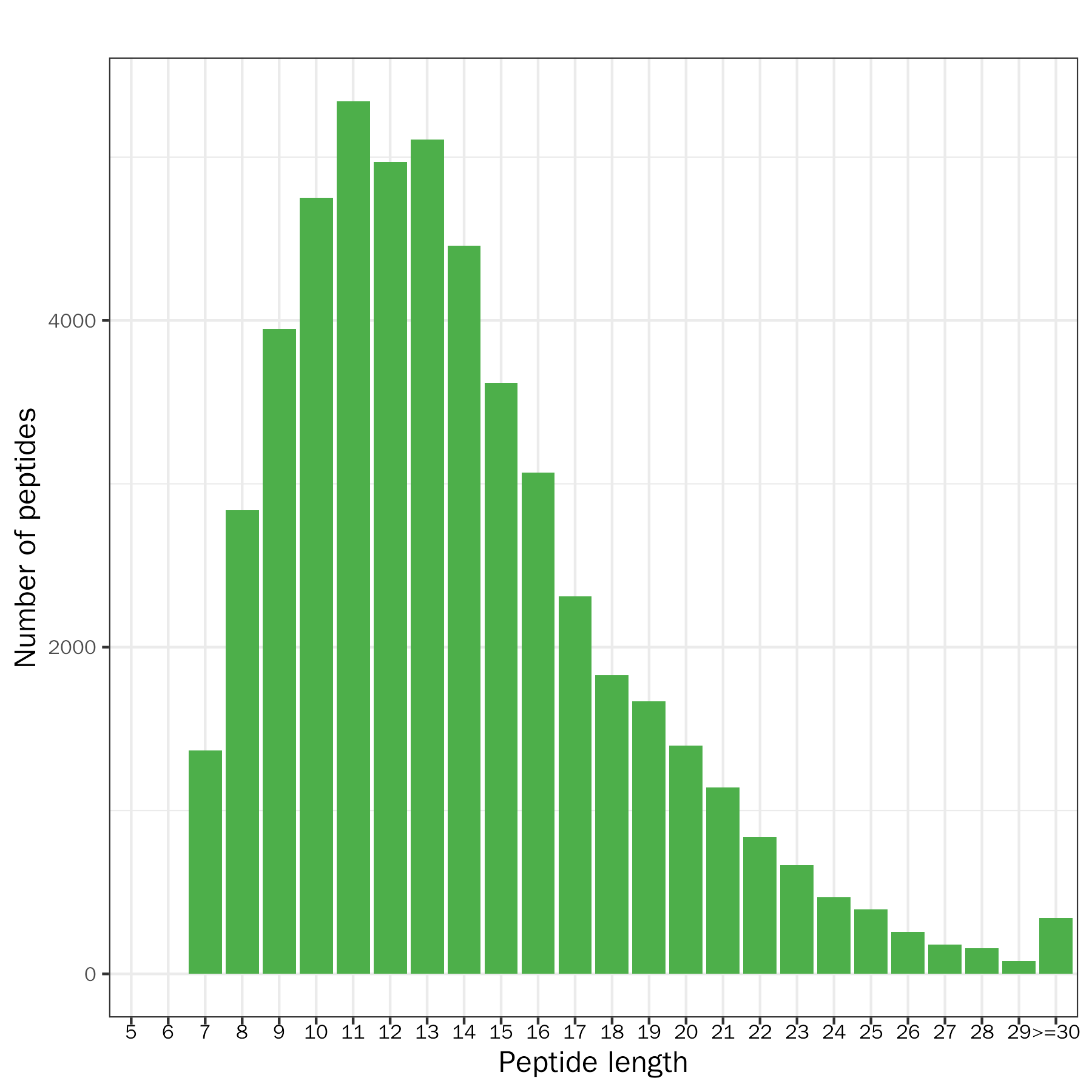
Peptide Length Distribution
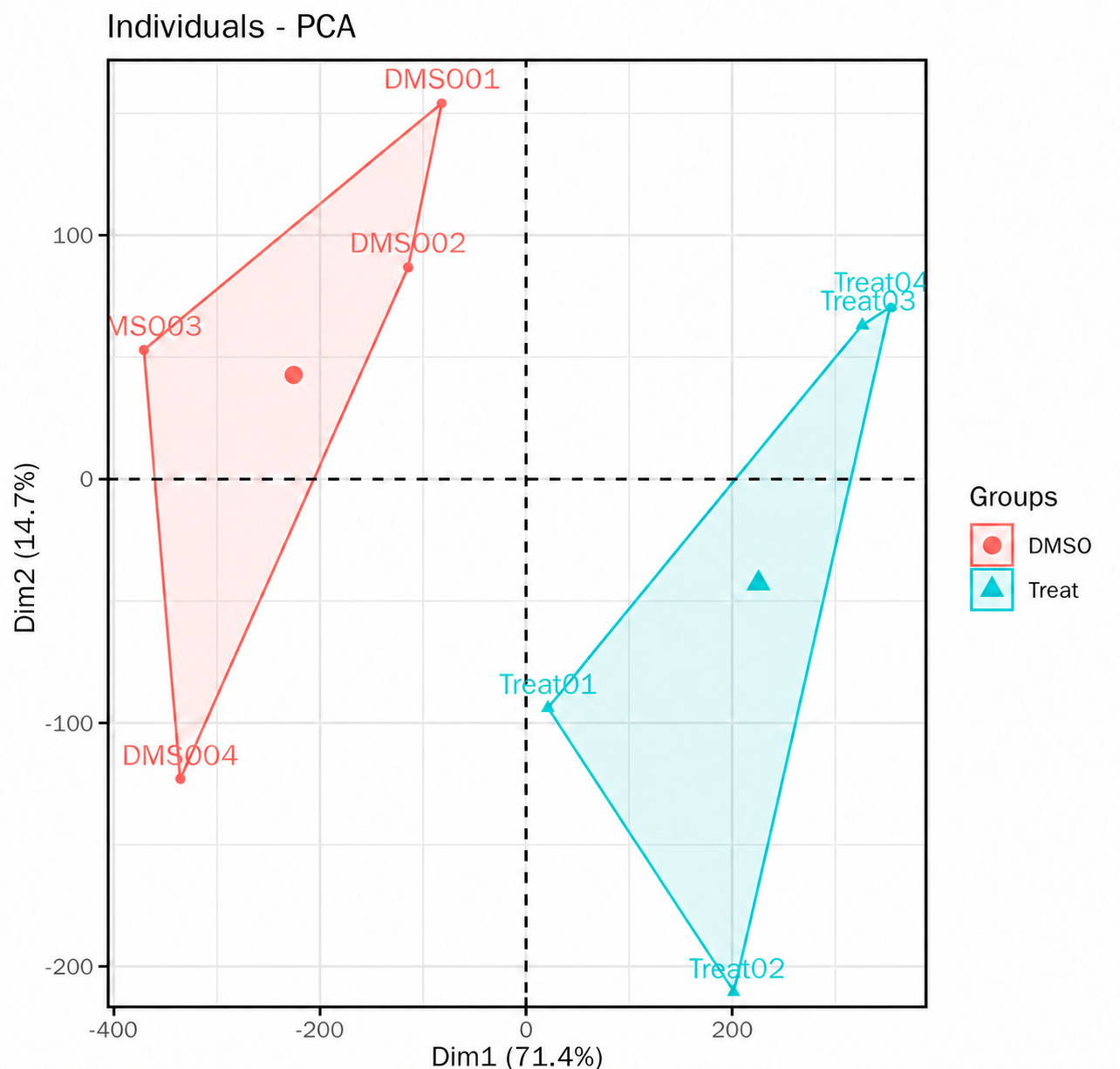
PCA Plot of Sample Grouping
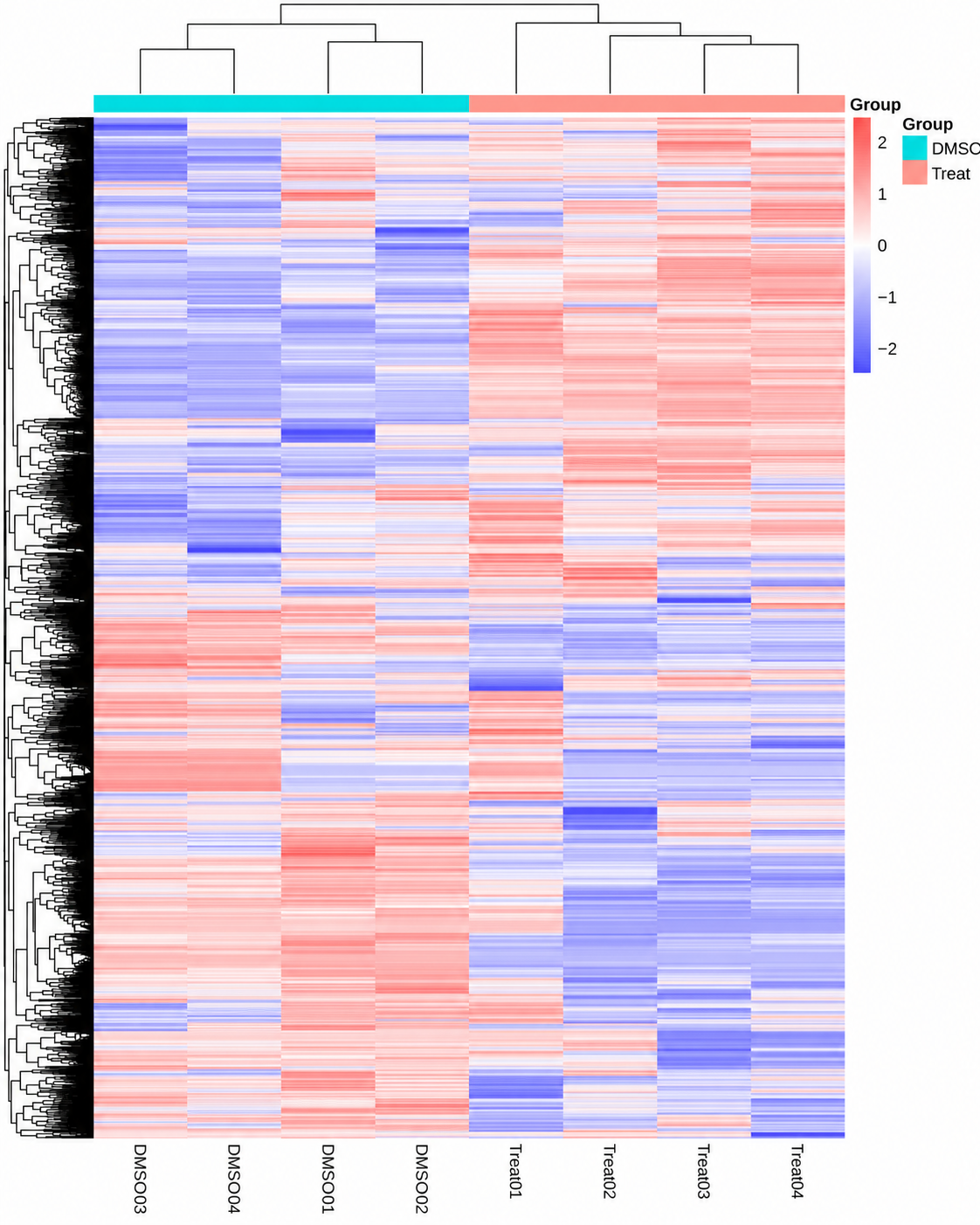
Hierarchical Clustering of Protein Abundance