






Common Causes of High Background in IP-MS Experiments
High background in IP-MS is common before specificity filtering—not every identified protein is a true interactor. The problem for many projects is not that background exists, but that nonspecific binders, antibody-associated carryover, bead-matrix proteins, and abundant lysate contaminants enter the same searchable list as bait-specific partners without a clear control model to separate them.
Clients facing crowded MS tables, unclear negative controls, or repeated sticky-protein profiles need a cause-to-solution map: which background class is driving noise, which control arm filters it, and when reagent upgrades such as matched isotype controls, antibody-coupled magnetic beads, or an antibody validated for IP-MS should be part of the fix. Share bait identity, current control design, and representative MS output with MtoZ Biolabs while reviewing background-heavy IP-MS data.
What High Background Looks Like in IP-MS
Background-heavy IP-MS output often shares recognizable patterns before formal filtering.
- Ribosomal, cytoskeletal, chaperone, and keratin-associated proteins rank near the top
- Antibody heavy chain, light chain, protein A, protein G, or bead-matrix peptides appear prominently
- The same sticky proteins recur across unrelated bait IPs in the same lysate system
- Target IP and negative control samples show overlapping protein profiles
- Bait may be present, yet partner ranking is dominated by nonspecific binders
- Raw identification tables are long, but few proteins enrich clearly over control arms
These patterns do not automatically mean the experiment failed. They often mean background was not modeled, filtered, or reduced at the IP and control-design stage.
Common Causes of High Background and the Matching Response
The table below links frequent background drivers to the first-line control or reagent response. Use it to decide whether the next step is better controls, IP optimization, reagent change, or analysis triage.
|
Background cause |
Why it inflates IP-MS lists |
First-line response |
|---|---|---|
|
Nonspecific antibody immunoprecipitation |
Proteins co-purify with the reagent, not the bait |
Matched isotype or nonspecific IgG control processed in parallel |
|
Missing or mismatched negative controls |
All identifications remain candidate interactors |
Add isotype, bead-only, or matrix-matched controls with identical handling |
|
Bead or capture-matrix binding |
Resin-associated proteins survive washing |
Bead-only or no-antibody control; review bead chemistry |
|
Abundant lysate carryover |
Highly expressed proteins persist through mild washes |
Tighten washes against bait retention; rank by control enrichment |
|
Weak bait-specific capture |
Sticky proteins dominate when bait recovery is low |
Review IP-MS validated antibody options for the target |
|
Excess antibody input |
More nonspecific binding and antibody peptides in MS |
Titrate antibody amount in pilot IP |
|
WB-only or non-MS-validated reagent |
Detection success does not guarantee IP specificity |
Move toward antibody validated by IP-MS when discovery remains the goal |
|
Reporting raw IDs without control contrast |
Background proteins stay in the candidate pool |
Subtract or rank against matched control arms before validation |
The table is a planning guide. One cause often coexists with another, so review bait recovery, control parity, and enrichment ranking together rather than fixing only the longest protein list.
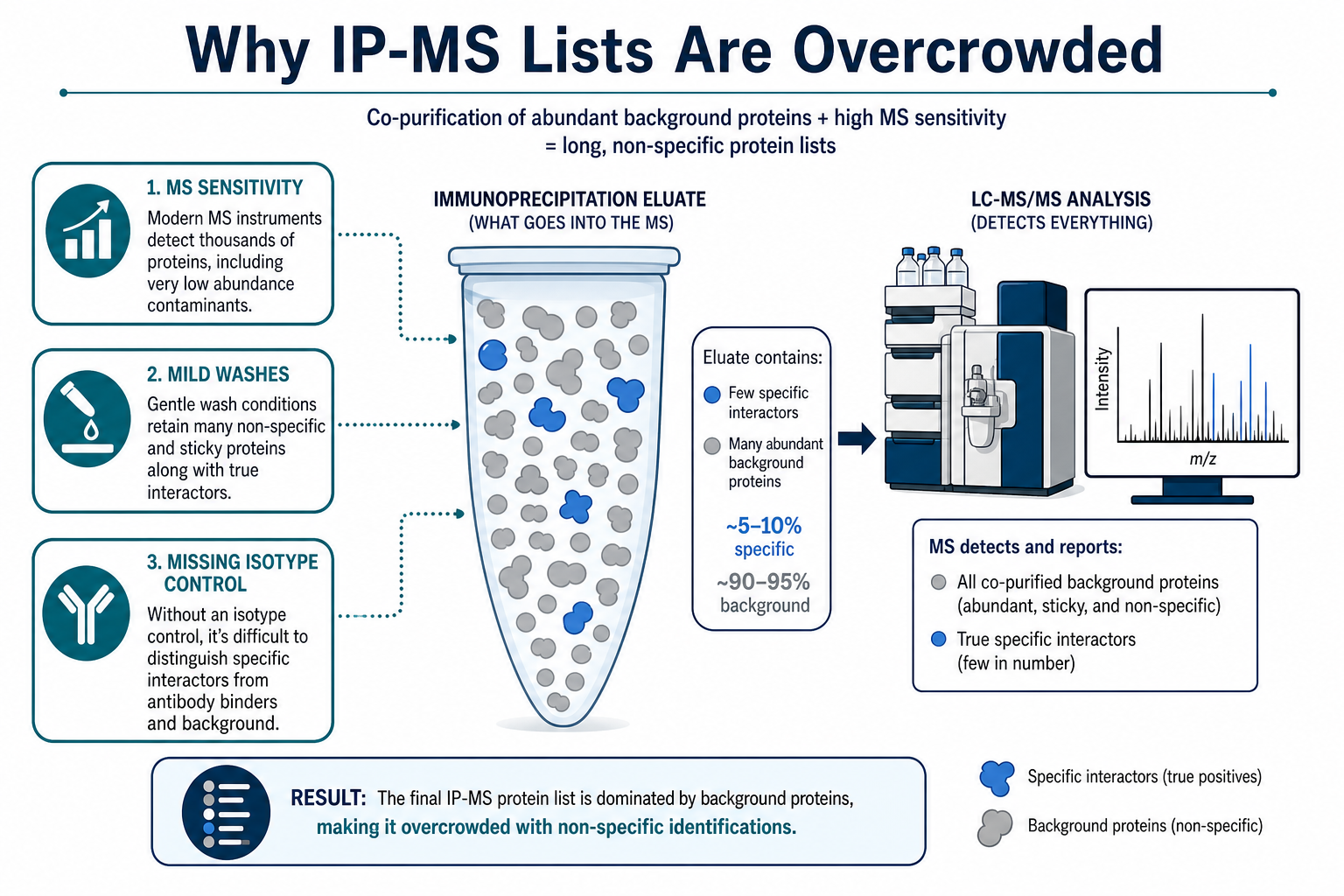
Figure 1. Long background-heavy lists are common before isotype contrast and enrichment ranking are applied.
Antibody-Associated Background and Control Design
Nonspecific immunoprecipitation is one of the most common antibody-driven background sources. A bait antibody may enrich sticky lysate proteins that are unrelated to the target, and LC-MS/MS makes those proteins easy to overinterpret as interactors.
Isotype matched or nonspecific IgG processed in parallel with the bait IP is the standard primary control for filtering antibody-associated background. The control should use the same host, isotype, bead chemistry, antibody input, lysis, wash, elution, and MS workflow as the bait arm. Isotype IgG is a core control, not the only possible negative arm; bead-only or matrix-matched controls may also be needed depending on the design.
When isotype and bait profiles overlap heavily despite matched handling, review antibody amount, clonality, lot consistency, and whether the reagent is IP-capable or IP-MS validated. An IP-MS validated antibody, or an antibody validated for IP-MS, should be considered when endogenous discovery still requires cleaner bait enrichment and lower nonspecific carryover after control subtraction.
Bead-Matrix and Handling Background
Protein A, protein G, streptavidin, and other capture supports can introduce their own binders into the eluate. Handling differences between bait and control tubes—bead lot, wash volume, incubation time, or elution method—can also make controls poor background models even when the antibody is acceptable.
Bead-only or no-antibody controls help separate matrix binding from bait-specific recovery. Antibody-coupled magnetic beads can reduce manual coupling variability and improve consistency when bead chemistry contributes to background noise. Matched processing remains essential: controls lose value when they are not generated under the same conditions as bait IP samples.
Lysate Carryover and Wash-Stringency Tradeoffs
Highly abundant cellular proteins can survive washing and dominate MS tables even when bait recovery is acceptable. Mild lysis or gentle washes preserve weak interactors but also retain more nonspecific binders. Harsh washes may lower sticky-protein carryover yet risk losing legitimate low-abundance partners.
Background control here depends on contrast, not on eliminating every contaminant peptide. Rank proteins by enrichment over matched isotype or bead controls rather than by raw identification count alone. Wash optimization should be tested against bait retention, not against list length by itself.
A Practical Background-Control Workflow
Use the workflow below when IP-MS results look overcrowded or specificity is unclear.
Step 1. Confirm bait recovery. Background interpretation is unreliable when bait is absent or inconsistent across replicates.
Step 2. Verify matched controls exist. At minimum, review whether isotype or nonspecific IgG was processed in parallel. Add bead-only or contrast-specific arms if the design requires them.
Step 3. Compare target IP to each control arm. Proteins that enrich similarly across bait and primary negative controls are background candidates.
Step 4. Rank by enrichment, not detection alone. Require replicate support for proteins entering a validation shortlist.
Step 5. Revise IP design if controls mirror bait IP. Adjust antibody input, washes, bead format, or reagent class before repeating MS on the same low-specificity eluate.
Step 6. Upgrade reagents when capture remains the limit. Consider isotype controls matched to the capture antibody, antibody-coupled magnetic beads for cleaner handling, and IP-MS validated bait antibodies when endogenous discovery remains the goal.
This sequence keeps background control at the experiment-design level rather than treating every long list as an MS sensitivity problem.
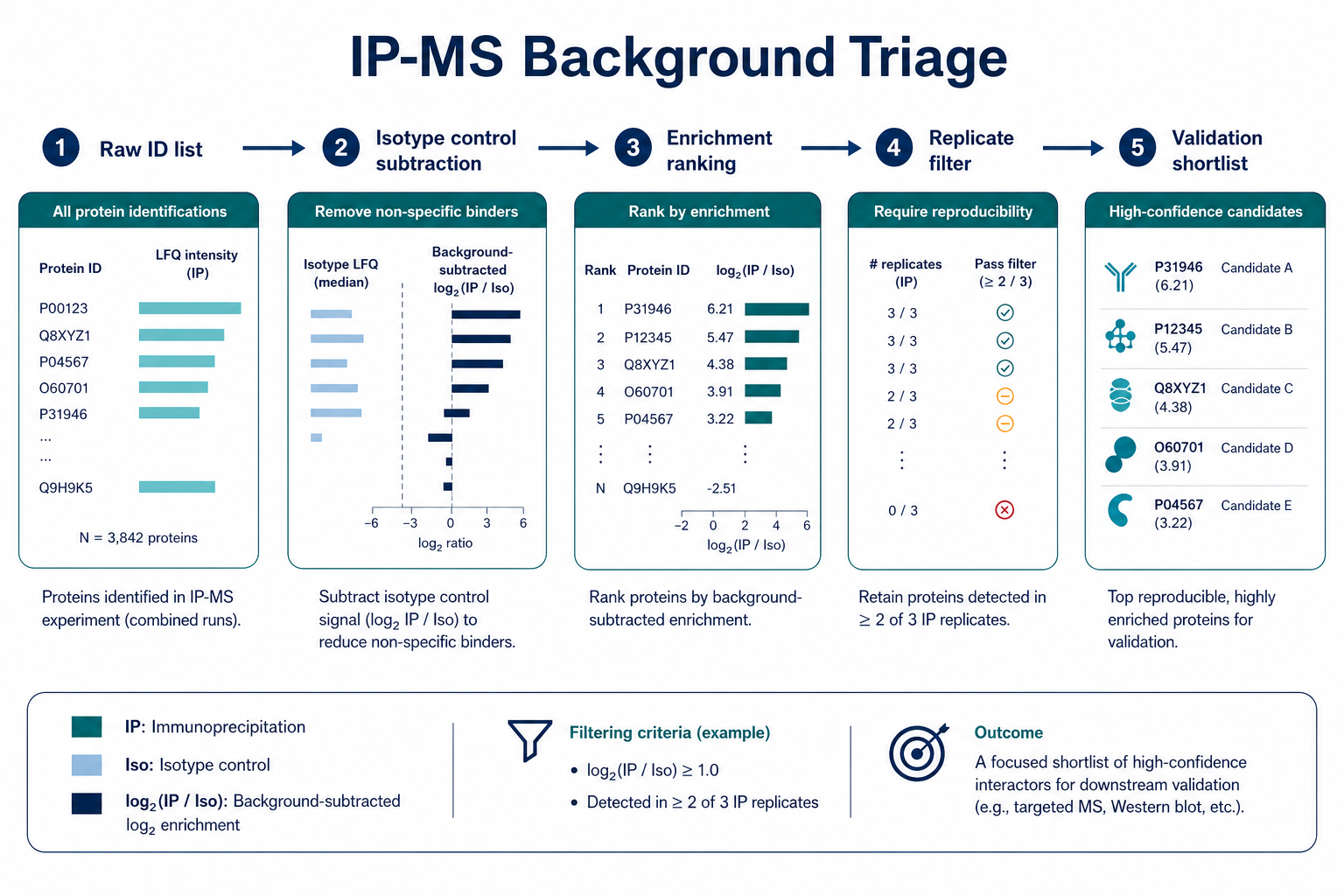
Figure 2. Control contrast and enrichment ranking turn background-heavy lists into interpretable candidate sets.
What to Send for a Background-Control Review
Provide the following when requesting help with high-background IP-MS data:
- Target bait and capture antibody used
- Control arms included, such as isotype IgG, bead-only, or vehicle samples
- Whether bait and controls were processed with matched lysis, washes, and elution
- Approximate list length before and after any filtering
- Recurring sticky proteins across bait and control samples
- Whether endogenous Co-IP-MS remains required or alternative workflows are acceptable
That information helps determine whether the next step is control redesign, reagent upgrade, or analysis triage.
MtoZ Biolabs can review control design, product options, and Co-IP-MS or IP-MS service fit for background-heavy interaction projects.
Related Products
Antibody-coupled Magnetic Beads
Related Services
IP-MS Protein Interactomics Analysis Service
Co Immunoprecipitation (Co-IP) Service
Protein-Protein Interaction Analysis Service
Frequently Asked Questions
1. Is some background normal in IP-MS?
Yes. Immunoprecipitation never yields bait-only material. The goal is to model and filter background with matched controls, not to eliminate every nonspecific peptide.
2. Is isotype IgG the only control needed?
No. Isotype or nonspecific IgG is the primary antibody-background control in many designs, but bead-only, vehicle, or contrast-specific controls may also be required.
3. Can high background be fixed by deeper LC-MS/MS alone?
Usually not. Deeper acquisition on a low-specificity eluate often detects more background proteins rather than cleaner interactors.
4. When should I use an IP-MS validated antibody?
Consider it when endogenous discovery remains required, bait recovery or nonspecific enrichment stays high after matched controls and reasonable IP optimization, and a validated alternative exists.
5. How do antibody-coupled magnetic beads help?
They can improve consistency in capture chemistry and reduce manual coupling variability that contributes to bead-associated background or handling differences between samples.
6. What is the fastest way to make a crowded list usable?
Contrast bait IP against matched negative controls, rank by enrichment rather than raw identification, and require replicate support before validation.
Conclusion
High background in IP-MS experiments usually comes from a mix of nonspecific antibody capture, bead-matrix binders, lysate carryover, weak bait recovery, and missing control contrast—not from MS sensitivity alone. The practical response is to map the dominant cause, add matched controls that filter the right artifact class, optimize IP conditions against bait retention, and upgrade to an antibody validated for IP-MS when reagent fit remains the limiting step.
Isotype controls, antibody-coupled magnetic beads, and IP-MS validated bait reagents address different layers of the same problem: modeling background, stabilizing capture chemistry, and improving enrichment quality before LC-MS/MS readout. Contact MtoZ Biolabs to review control design, product options, and IP-MS or Co-IP-MS service fit for background-heavy interaction studies.
How to order?




