






Co-IP Limitations & In-Cell Crosslinking MS for Weak Protein Interactions
Introduction
Co-immunoprecipitation, or Co-IP, is widely used to study protein-protein interactions because it can enrich a target protein and identify associated partners by Western blot or mass spectrometry. The method works well for stable complexes, especially when the bait protein, antibody, lysis buffer, and wash conditions are well optimized. However, many biologically important interactions are not stable. Signaling proteins, transcriptional regulators, membrane-associated complexes, kinase substrates, and stress-response factors may interact briefly, weakly, or only under a specific cellular state. When these contacts are disrupted during extraction, Co-IP can produce a negative result even when the interaction occurred inside native cells.
This limitation becomes a real problem when researchers need to explain a phenotype but cannot recover enough interaction evidence. A bait protein may show clear functional relevance, yet repeated Co-IP experiments detect only abundant or stable partners. Weak protein interactions can dissociate during cell lysis. Transient protein interactions can disappear before antibody capture. In-cell crosslinking MS addresses this gap by stabilizing protein proximity in living cells before extraction, digestion, and LC-MS/MS analysis.
Related Services
| Research Need | Recommended Service Direction |
|---|---|
| Identify protein interaction partners by mass spectrometry | |
| Analyze protein-protein interaction networks | |
| Improve Co-IP/MS quantification and background control | |
| Map protein-protein interface regions or conformational effects | |
| Confirm identified proteins from complex samples |
For projects where Co-IP results are weak, inconsistent, or difficult to interpret, MtoZ Biolabs can help evaluate whether IP-MS, in-cell crosslinking MS, HDX-MS, or a combined workflow best matches the biological question.
Why Co-IP Can Miss Weak and Transient Interactions
Co-IP depends on the physical survival of a protein complex during extraction and enrichment. The interaction must remain intact after cells are disrupted, diluted into lysis buffer, exposed to detergent, incubated with antibody-bound beads, and washed to remove nonspecific proteins. Each step improves sample handling or reduces background, but each step can also shift the binding equilibrium away from weak or short-lived complexes.
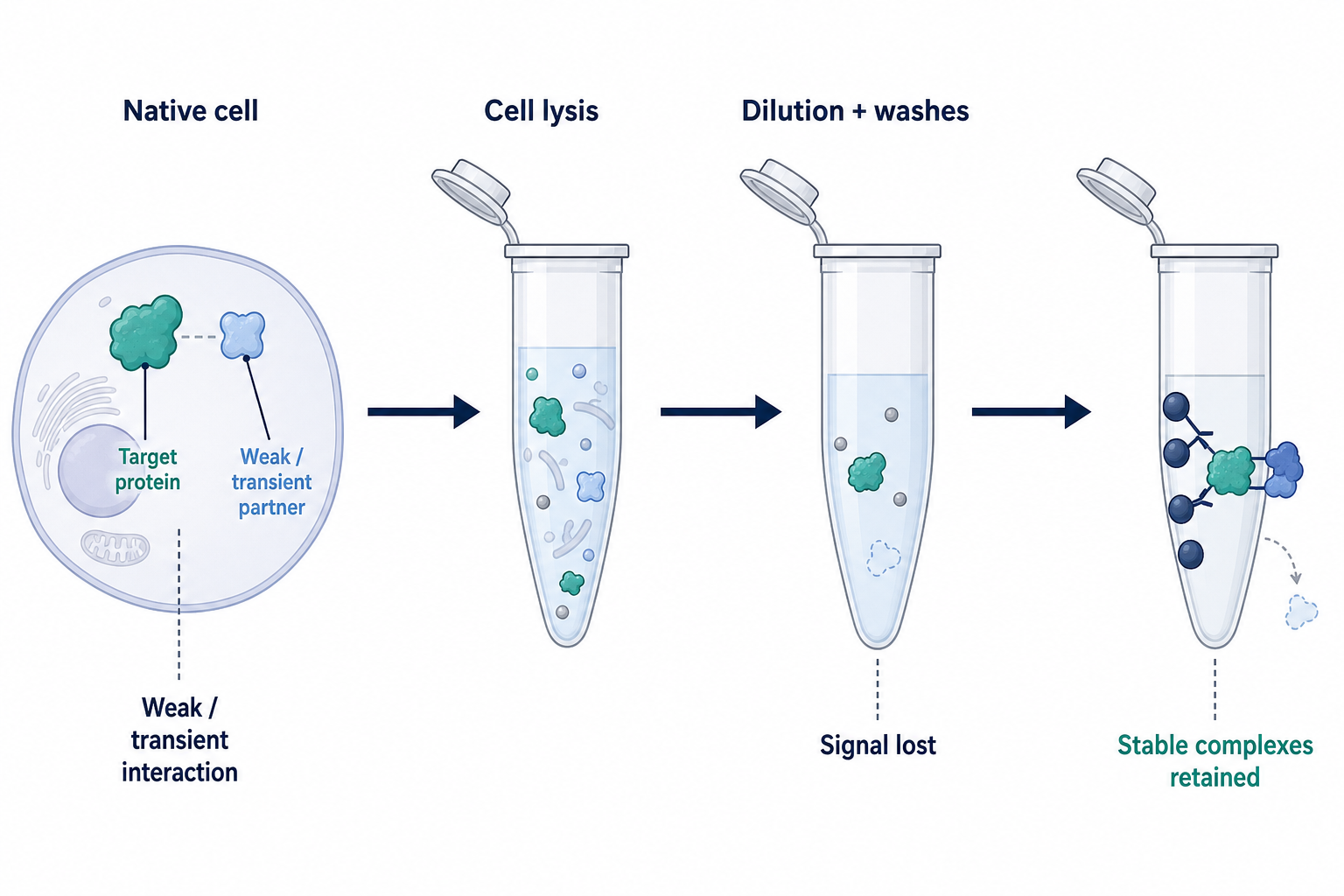
Figure 1. Why weak and transient interactions can be lost during Co-IP
Several mechanisms commonly explain Co-IP failure:
-
Loss of native cellular context: Compartmentalization, local concentration, membrane proximity, and phase-separated environments can support interactions in cells. Lysis removes these spatial constraints.
-
Dilution of binding partners: Weak interactions often depend on high local concentration. Once proteins enter a larger extraction volume, dissociation becomes more likely.
-
Detergent and salt effects: Lysis buffers can disrupt hydrophobic contacts, electrostatic interactions, membrane-associated complexes, or scaffold-dependent assemblies.
-
Wash stringency: Strong washes reduce background, but they may remove true interactors with low affinity.
-
Low stoichiometry: A transient partner may bind only a small fraction of the bait protein. The signal can fall below detection after enrichment.
-
Antibody or tag interference: Antibody binding may block a relevant interface or favor one bait conformation over another.
These issues do not mean Co-IP is unreliable. They mean Co-IP is selective for interactions that survive the workflow. For stable protein complexes, that selectivity can be useful. For dynamic biology, the same selectivity can create blind spots.
The Root Cause: Co-IP Captures What Survives Extraction
A common assumption is that a Co-IP experiment captures the interaction state inside the cell. In practice, Co-IP captures the fraction of interactions that remain associated after extraction. That distinction matters when studying signaling, chromatin regulation, stress granules, membrane trafficking, or drug-induced target engagement.
For example, a kinase-substrate contact may last only long enough for phosphorylation. A transcription factor may contact a co-regulator only under a specific stimulus. A membrane protein may depend on lipid microdomains that are disrupted by detergent. In each case, a negative Co-IP result may reflect the workflow rather than the absence of biology.
Researchers often respond by changing buffer composition, lowering wash stringency, crosslinking after lysis, using larger input amounts, or switching antibodies. These optimizations can help. However, these optimizations do not fully solve the core problem if the interaction is already lost before capture.
How In-Cell Crosslinking MS Improves Detection
In-cell crosslinking MS stabilizes protein proximity before cell lysis. A cell-permeable crosslinker is added to intact cells under defined conditions. If two reactive amino acid residues are close enough in the native cellular environment, the crosslinker can form a covalent bridge. After that, cells can be lysed, proteins can be digested, and crosslinked peptides can be analyzed by LC-MS/MS.
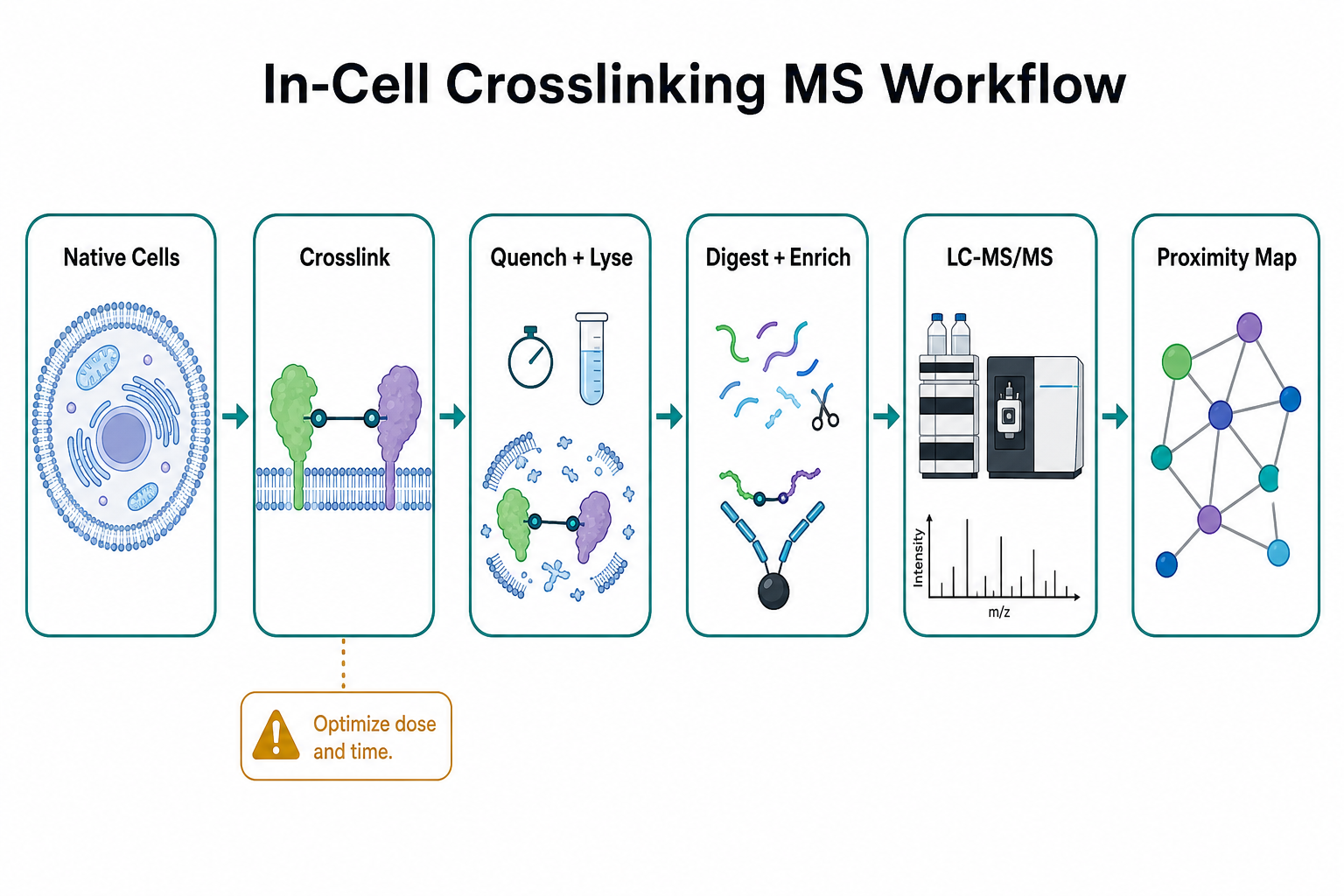
Figure 2. In-cell crosslinking MS workflow
This workflow improves detection of weak protein interactions and transient protein interactions because the proximity event is captured before the disruptive extraction steps. Instead of asking whether a complex survives lysis, in-cell crosslinking MS asks whether proteins were close enough in cells to generate crosslinked peptides.
A typical workflow includes:
-
Culture or treat cells under the biological condition of interest.
-
Add a suitable cell-permeable crosslinker.
-
Quench the reaction to stop additional crosslinking.
-
Lyse cells under controlled conditions.
-
Digest proteins into peptides.
-
Enrich or fractionate crosslinked peptides when needed.
-
Analyze samples by high-resolution LC-MS/MS.
-
Identify crosslinked peptides and infer proximity relationships.
Cleavable crosslinkers can improve MS interpretation because fragmentation produces diagnostic ions. Non-cleavable crosslinkers may also be useful, but data analysis can be more complex. Crosslinker selection should match the sample type, target abundance, cellular permeability, spacer length, and MS platform.
What In-Cell Crosslinking MS Adds Beyond Co-IP
The main advantage of in-cell crosslinking MS is not only higher retention of weak complexes. The method can also provide structural and spatial information. When crosslinked peptides are identified, researchers may learn which protein regions were close in the cellular state being studied. This can support interaction mapping, protein conformation analysis, complex modeling, or comparison between treated and untreated cells.
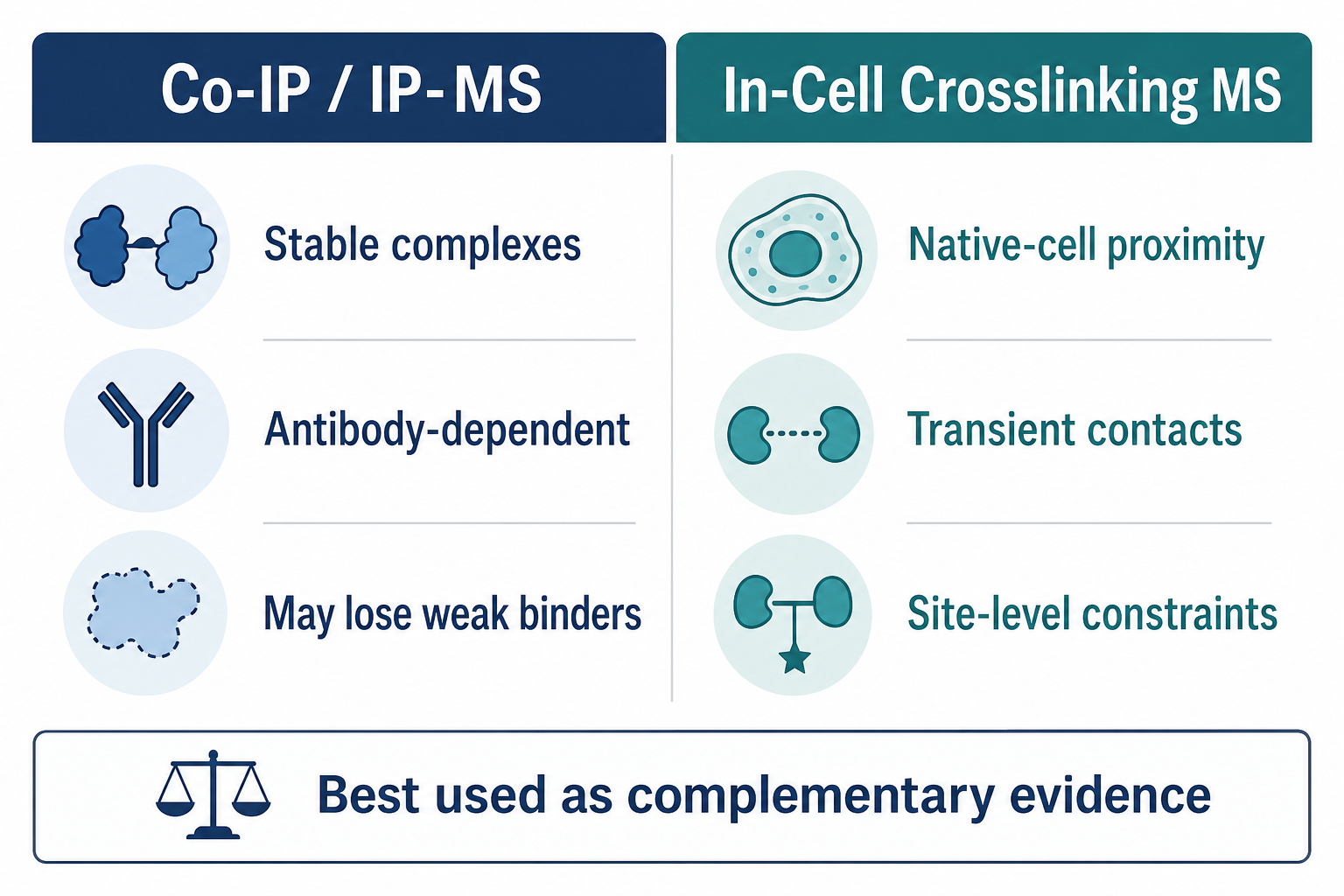
Figure 3. Co-IP versus in-cell crosslinking MS
These methods are best viewed as complementary. Co-IP or IP-MS can identify stable complex members and support bait-centered enrichment. In-cell crosslinking MS can preserve native-cell proximity and provide crosslinked peptide evidence. When both methods support the same interaction, confidence increases. When the methods disagree, the difference may reveal whether the interaction is stable, transient, condition-dependent, or extraction-sensitive.
Practical Project Design Considerations
In-cell crosslinking MS is powerful, but it requires careful experimental design. Crosslinking chemistry can change protein recovery, peptide detectability, and database search complexity. A successful project should define the biological question before selecting the crosslinker or acquisition strategy.
Key design factors include:
| Factor | Why It Matters |
|---|---|
| Cell type and treatment condition | Protein proximity depends on cellular state |
| Crosslinker permeability | The reagent must reach relevant compartments |
| Spacer arm length | Determines the distance range captured |
| Reactive chemistry | Affects which residues can be linked |
| Protein abundance | Low-abundance proteins may require enrichment |
| Biological replicates | Needed to distinguish real patterns from noise |
| Controls | Untreated, quenched, or mock conditions help interpret specificity |
| Database search strategy | Crosslinked peptide identification requires specialized analysis |
Researchers should also decide whether the project is discovery-oriented or hypothesis-driven. Discovery studies need broader proteome coverage and stronger control design. Hypothesis-driven studies may focus on a known bait, pathway, treatment condition, or protein complex.
When to Use Co-IP, In-Cell Crosslinking MS, or Both
Co-IP remains a practical first-line method when the interaction is expected to be stable and antibodies are reliable. Co-IP is also useful when researchers need a simple validation workflow after a discovery experiment. If the goal is to test whether a known partner associates with a bait under standard conditions, Co-IP may be sufficient.
In-cell crosslinking MS becomes more valuable when the biological system suggests fast, weak, or context-dependent interactions. It is especially relevant for:
-
signaling pathway interactions
-
kinase-substrate or enzyme-substrate contacts
-
drug-induced target engagement
-
membrane-associated protein complexes
-
phase-separated or scaffold-dependent assemblies
-
chromatin-associated regulatory complexes
-
stress-response or stimulation-dependent protein networks
A combined workflow is often the most informative. Co-IP can enrich bait-associated proteins, while in-cell crosslinking MS can preserve proximity before lysis. In selected cases, crosslinking can be paired with affinity enrichment to improve detection of low-abundance interactors. The exact design should be adjusted to the bait protein, sample amount, expected interaction strength, and downstream validation plan.
Expected Outputs From an In-Cell Crosslinking MS Study
A well-designed in-cell crosslinking MS project can produce several useful outputs. The results should be interpreted as proximity evidence, not automatically as direct functional binding. Crosslinks indicate that reactive residues were within the distance allowed by the crosslinker under the tested condition.
Typical outputs may include:
| Output Type | Research Value |
|---|---|
| Crosslinked peptide list | Shows peptide pairs detected by MS |
| Protein-protein proximity map | Identifies proteins connected by crosslink evidence |
| Intra-protein crosslinks | Supports conformational or domain arrangement analysis |
| Inter-protein crosslinks | Supports interaction network or complex modeling |
| Condition-specific differences | Highlights treatment-responsive proximity changes |
| Candidate interactions for validation | Guides Co-IP, Western blot, mutagenesis, HDX-MS, or functional assays |
The strongest interpretation usually comes from combining crosslink evidence with orthogonal data. For example, a crosslinked peptide pair may suggest a contact region. Co-IP can test complex association. Mutagenesis can evaluate functional relevance. HDX-MS can assess interface-related conformational changes.
Limitations and Common Pitfalls
In-cell crosslinking MS improves detection of weak and transient interactions, but in-cell crosslinking MS is not a universal replacement for Co-IP. Crosslinking efficiency can be low. Some proteins may not have accessible reactive residues near the interface. Highly complex samples can generate challenging MS/MS spectra. Database search space can become large, especially in whole-proteome studies.
Common pitfalls include:
-
using crosslinker concentration that damages cells or causes excessive nonspecific links
-
skipping time-course optimization
-
interpreting all proximity events as direct binding
-
using insufficient biological replicates
-
ignoring protein abundance differences
-
relying on crosslinking MS without validation when making strong mechanistic claims
A cautious interpretation is essential. In-cell crosslinking MS captures spatial proximity under defined conditions. Functional interaction still requires biological context and, in many cases, orthogonal validation.
Frequently Asked Questions
1. Why does Co-IP fail to detect some real protein interactions?
Co-IP can miss real interactions when the complex dissociates during lysis, dilution, detergent exposure, antibody capture, or washing. This is common for weak protein interactions, transient protein interactions, and complexes that depend on native cellular organization.
2. Does in-cell crosslinking MS prove direct protein binding?
Not by itself. In-cell crosslinking MS provides proximity evidence. A crosslink shows that two reactive residues were close enough for the reagent to bridge them. Direct binding should be supported by additional evidence when the biological claim requires it.
3. Can in-cell crosslinking MS replace Co-IP?
Usually no. The methods answer different questions. Co-IP detects complexes that survive extraction and enrichment. In-cell crosslinking MS captures proximity before extraction. Many projects benefit from using both methods together.
4. What samples are suitable for in-cell crosslinking MS?
The method is commonly used with cultured cells, treated cells, or native cellular systems where crosslinker permeability and sample amount are suitable. The exact requirements depend on the protein abundance, crosslinker chemistry, and whether enrichment is included.
5. When should researchers consider in-cell crosslinking MS?
Researchers should consider in-cell crosslinking MS when Co-IP results are weak, when the interaction is expected to be transient, or when the project needs native-cell proximity information before lysis changes the interaction landscape.
Conclusion
Co-IP is useful for stable protein complexes, but Co-IP can miss weak and transient protein interactions because the workflow depends on interactions surviving extraction and washing. In-cell crosslinking MS improves detection by stabilizing protein proximity in native cells before lysis. This makes the method especially useful for signaling networks, drug-response studies, membrane-associated complexes, and condition-dependent protein-protein interaction analysis.
For projects where negative Co-IP data conflicts with functional evidence, the next step is not always another round of buffer optimization. A better strategy may be to ask whether the interaction should be captured before extraction. Contact MtoZ Biolabs to discuss whether in-cell crosslinking MS, IP-MS, HDX-MS, or a combined workflow is the right fit for your protein interaction study.
How to order?




