






Cell Culture Exosome Proteomics: Collection, Controls, and LC-MS/MS Planning
Introduction
Cell culture EV projects often look simpler than blood studies, yet proteomics results can still be dominated by medium additives, dead-cell debris, and unmatched collection timing. A team may collect conditioned media after stimulation and assume vesicle cargo differences are biological. Another team may switch from serum-containing medium to reduced-serum conditions without planning blank controls for LC-MS/MS.
Cell Culture Exosome Proteomics analyzes proteins from EV preparations derived from cell culture supernatants or conditioned media. Suitability depends on collection design, background controls, EV preparation quality, and whether the available material is compatible with downstream LC-MS/MS. Projects may begin with conditioned media that still require EV isolation and characterization or with pre-isolated EV preparations ready for proteomics evaluation. MtoZ Biolabs’ Exosome / Extracellular Vesicle Proteomics Service supports project planning across EV preparation, characterization, protein identification, and quantitative proteomics. This article focuses on the collection, control, and LC-MS/MS considerations that are particularly important for cell culture-derived EV studies.
Why Culture Supernatants Are Attractive, and Where They Fail
Conditioned media are controllable, scalable, and useful for mechanism studies around defined cell types, genotypes, or treatments. They also introduce culture-specific backgrounds. Fetal bovine serum, supplements, secreted non-vesicle proteins, and apoptotic debris can enter enrichment workflows and appear in proteomics lists.
Cell Culture Exosome Proteomics is therefore a good fit when the hypothesis is cell-derived vesicle cargo under defined culture conditions. It is a poor fit when medium blanks, collection windows, and cell health are uncontrolled, because those variables can create cargo signatures that look biological.
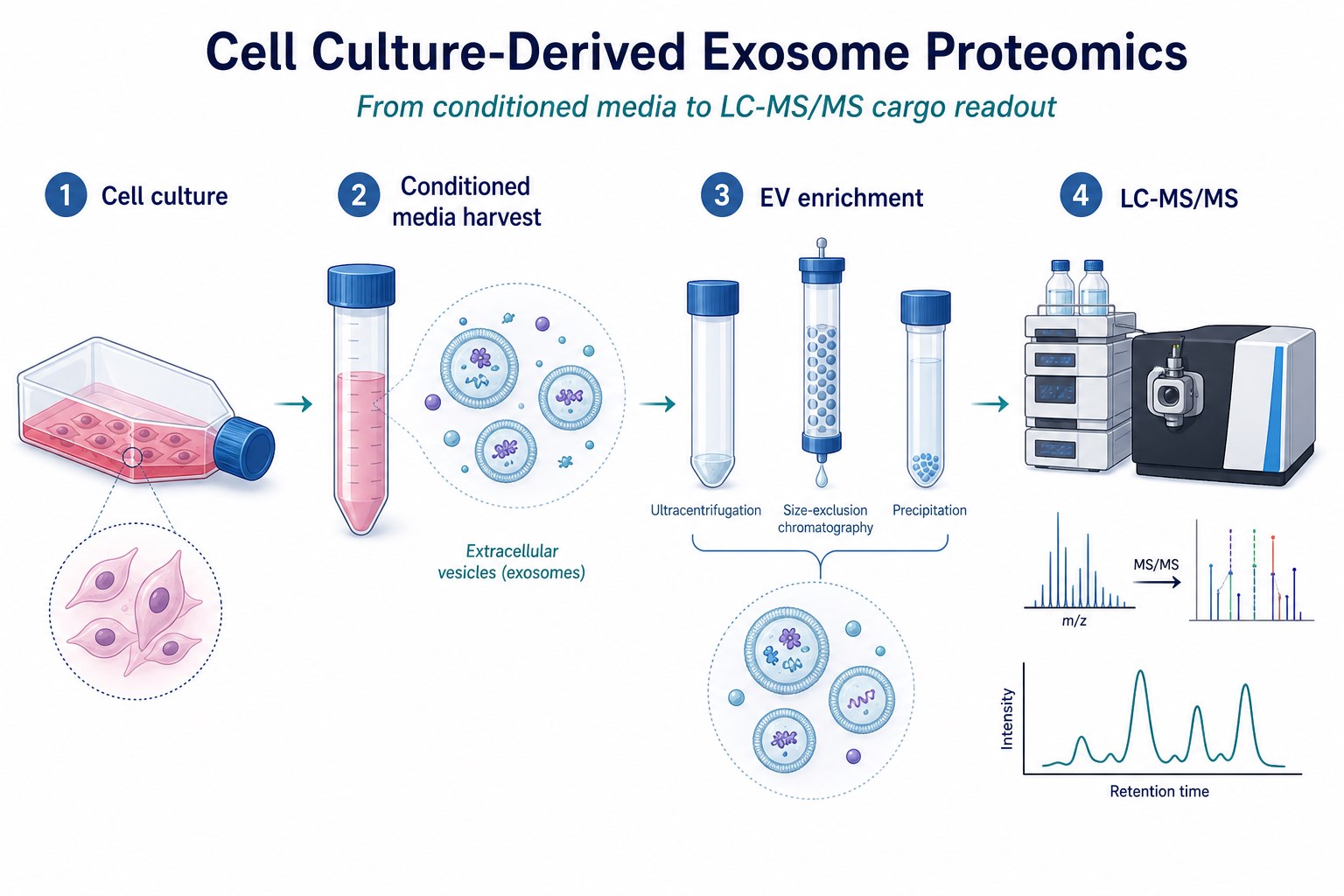
Figure 1. Culture-derived EV proteomics connects conditioned media collection and vesicle enrichment to LC-MS/MS cargo readout.
Collection Considerations for Conditioned Media EV Studies
Conditioned media appear easy to harvest, but small process differences accumulate quickly in proteomics. The collection plan should make every comparison arm equivalent in growth state, medium history, and clarification steps before EV enrichment begins.
1. Define the Production Window
Record seeding density, confluence, treatment timing, and harvest window. Vesicle output and contaminant load change with cell state. Unmatched harvest timing across arms is a common source of false differential cargo. A written harvest matrix shared by all operators reduces arm-to-arm drift in multi-day collections.
2. Control Medium Composition
Serum, EV-depleted serum, and serum-free formulations are not interchangeable mid-study. If serum must be used, plan EV-depleted reagents and matched blank processing. Medium switches should be treated as design events, not quiet protocol edits.
3. Separate Cells and Large Debris Before EV Enrichment
Clarify centrifugation or filtration steps used to remove cells and large debris. Incomplete clarification increases non-vesicle protein and organelle contamination in later proteomics.
4. Scale Volume to Isolation and MS Needs
Culture systems can generate large volumes, but concentration and isolation still lose material. As a planning reference, For MtoZ Biolabs project planning, 50 mL of cell culture-conditioned medium is a reference input for quantitative proteomics, while 50–100 mL is listed for EV characterization. Actual requirements may vary with sample status and study design.
5. Document Cell Health and Cytotoxicity
High death rates increase debris and free protein background. For treatment arms, cytotoxicity notes help interpret whether cargo changes reflect signaling biology or cell breakdown.
Controls That Matter for Culture-Derived EV Proteomics
1. Medium Blanks Processed Like Samples
Unconditioned medium, or medium incubated without cells under the same plasticware and timing, helps identify additive-derived proteins that survive enrichment.
2. EV-Depleted Serum Blanks When Serum Is Present
If EV-depleted serum is used, process a serum-containing blank through the same isolation route. Residual bovine proteins can still appear in culture EV proteomics datasets and should be recognized during filtering.
3. Matched Vehicle and Treatment Arms
Stimulus studies need matched vehicle media, identical harvest windows, and identical isolation batches whenever possible. Otherwise treatment effects cannot be separated from processing drift.
4. Optional Genetic or Pathway Controls
Knockdown, knockout, or pathway-inhibitor arms can strengthen biological interpretation after proteomics ranking, but they do not replace medium blanks.
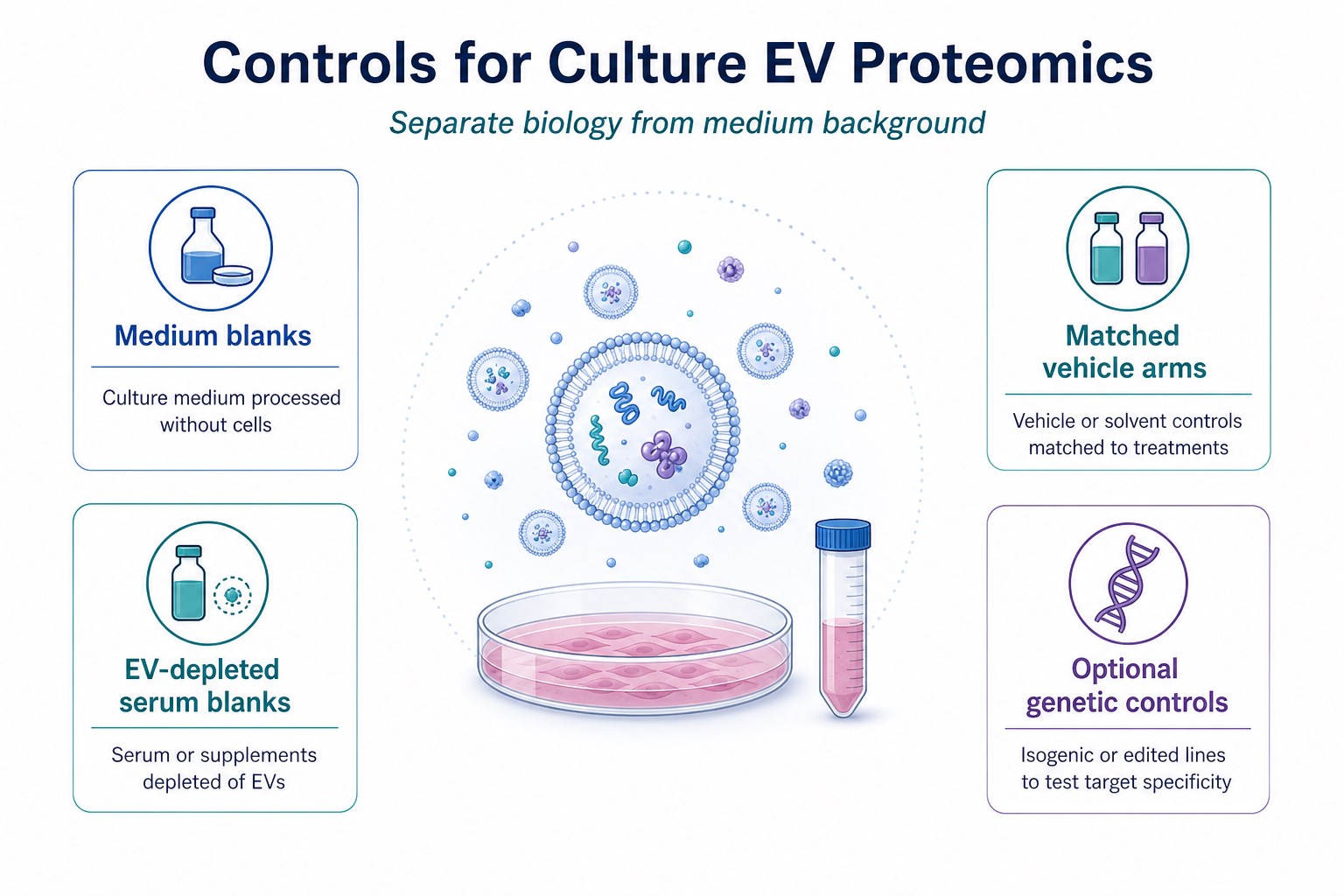
Figure 2. Useful controls for culture EV proteomics include medium blanks, serum-related blanks, and matched vehicle or treatment arms.
LC-MS/MS Planning for Culture EV Cargo Profiles
1. Match the Acquisition Plan to the Claim
Protein identification studies prioritize proteome coverage. Differential studies need quantitative stability across replicates. Targeted confirmation needs a shortlist strategy after discovery ranking.
2. Expect Culture-Additive Proteins and Filter Transparently
Bovine serum proteins and common medium contaminants should be reviewed explicitly. Transparent filtering is part of Cell Culture Exosome Proteomics interpretation, not an afterthought.
3. Keep Isolation and Digestion Matched Across Arms
Unequal concentration factors, bead lots, or digestion input create technical cargo differences. Matched protein input improves comparative LC-MS/MS reliability.
4. Decide What Vesicle QC Accompanies Proteomics
NTA particle profiling, TEM or cryo-EM morphology review, and selected WB markers such as CD9, CD63, or CD81 help document that enriched fractions behave as EV preparations. QC helps distinguish EV preparation quality from interpretation of the downstream protein profile. ELISA or flow cytometry is not treated here as a standard EV QC module.
5. Reserve Orthogonal Assays for Priority Cargo
Culture EV lists remain enrichment hypotheses. Priority proteins that carry the biological claim should be confirmed beyond a single LC-MS/MS shortlist.
Teams planning conditioned-media EV studies can review the Exosome / Extracellular Vesicle Proteomics Service to align sample status, collection design, EV preparation, and LC-MS/MS scope.
Practical Readiness Checklist Before Submission
Lock medium recipe and serum strategy for all arms that will be compared.
Record harvest timing, confluence, and treatment conditions with each conditioned media batch.
Include medium blanks and, when relevant, EV-depleted serum blanks in the isolation plan.
Confirm that volume and concentration strategy can support both vesicle QC and proteomics input.
Define whether the goal is protein identification, quantitative comparison, or candidate follow-up.
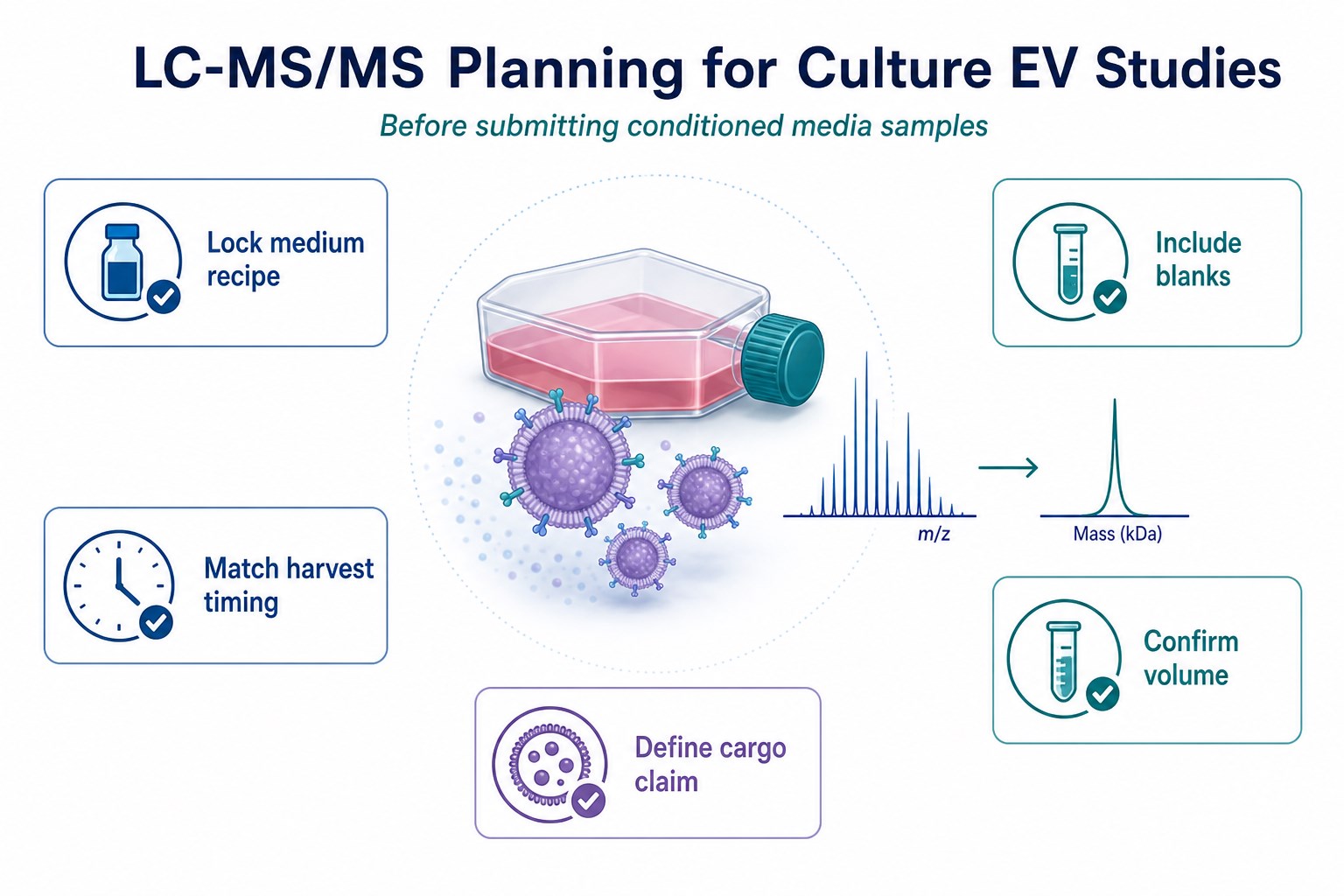
Figure 3. Before LC-MS/MS, confirm medium lock-in, matched harvest, blank controls, volume, and the intended cargo claim.
For projects that still need help setting blank controls or harvest windows, MtoZ Biolabs can review whether the current supernatant EV proteomics plan is ready for comparative analysis.
Frequently Asked Questions
1. Is cell culture supernatant suitable for exosome proteomics?
Yes, when collection timing, medium composition, and blank controls are standardized for the intended cargo claim.
2. Why do bovine proteins appear in culture EV proteomics?
Serum or residual serum components can survive enrichment and be detected by sensitive LC-MS/MS. Blanks help identify those background proteins.
3. What control is most useful for conditioned-media EV studies?
A medium blank processed through the same isolation workflow is a practical starting point, especially when additives are present.
4. Can treatment media be compared without matched harvest windows?
Not reliably. Unmatched confluence or harvest timing can create technical cargo differences that look like treatment effects.
5. What should be planned before Cell Culture Exosome Proteomics by LC-MS/MS?
Lock medium conditions, define blanks, match collection across arms, and confirm volume for isolation plus MS input. The same planning applies when the request is framed as Conditioned Media EV Proteomics.
Conclusion
Cell Culture Exosome Proteomics can characterize EV-associated protein profiles from defined cell culture models when supernatant collection and background controls are carefully planned. For Conditioned Media EV Proteomics, medium composition, harvest windows, blank controls, EV preparation, and the intended LC-MS/MS analysis should be considered together rather than addressed only after isolation.
Culture systems offer greater experimental control than many biofluid matrices, but medium additives, secreted proteins, and cell debris can still contribute substantial background. Clear blank design, matched harvest timing, and consistent EV preparation are therefore critical for interpreting comparative protein profiles. Researchers planning cell culture or conditioned-media EV studies can use the Exosome / Extracellular Vesicle Proteomics Service to discuss whether current conditioned media or pre-isolated EV samples are suitable for EV preparation, characterization, protein identification, or quantitative LC-MS/MS analysis.
Related Services
Exosome / Extracellular Vesicle Proteomics Service
Exosome Quantitative Proteomics Service
Exosome Separation & Purification Service
Animal Cell-derived Exosome Isolation and Development Service
How to order?




