






Can Immunoprecipitation Eluates Be Submitted Directly for Mass Spectrometry?
Introduction
Yes—immunoprecipitation eluates can often be submitted for mass spectrometry when a service accepts enriched protein and performs digestion and LC-MS/MS under a defined protocol. “Direct submission” usually means your lab skips local digestion, not that proteolysis and peptide cleanup are skipped altogether.
Do not ship eluates as-is when isotype controls are missing, buffers are incompatible with digestion, labels are incomplete, or bait recovery was never checked. The decision flow and submission matrix below list what must be ready before handoff and which format—eluate, bead-bound material, or pre-digested peptides—fits your project.
What “Direct Submission” Usually Means
In project discussions, direct submission most often means one of three scenarios:
- The lab completes IP and elution, then sends eluted protein to a provider for digestion, cleanup, and LC-MS/MS
- The lab sends bead-bound IP material for on-bead digestion and LC-MS/MS under a defined service protocol
- The lab sends pre-digested peptides that are already cleanup-ready for LC-MS/MS injection
Direct submission does not usually mean injecting raw IP eluate into a proteomics LC-MS/MS system without converting proteins to peptides first. Routine IP-MS interaction identification depends on proteolytic digestion and peptide-level analysis. Intact-protein MS of eluates is a different workflow and is not interchangeable with standard co-purification identification projects.
Clarifying which submission type applies prevents mismatched expectations between the submitting lab and the receiving service.
When IP Eluates Can Be Submitted Without Local Digestion
IP eluates can be submitted for mass spectrometry without the submitting lab performing digestion when the receiving service explicitly accepts enriched protein material and defines the digestion workflow. This is a common outsourcing model when the lab has strong IP capability but limited proteomics prep infrastructure.
Eluates are reasonable candidates for direct service handoff when:
- Bait IP and matched isotype or nonspecific control IP eluates were generated with comparable handling
- Elution buffer composition is documented and known to be compatible with the provider digestion protocol, or the provider confirms they can process that matrix
- Sample labels identify bait arm, control type, replicate number, and any treatment contrast
- Bait recovery was assessed enough to interpret low prey signal realistically
- Material is stored and shipped under conditions that preserve protein integrity until processing begins
In this model, “direct submission” means skipping local digestion, not skipping digestion altogether.
When Eluates Should Not Be Submitted As-Is
Several conditions mean eluates should be adjusted locally or redesigned before shipment rather than sent immediately for LC-MS/MS.
Buffer incompatibility is the most common blocker. Elution buffers with high detergent carryover, strong denaturants, glycerol at high concentration, incompatible chelators, or low-pH glycine elution used for western blot convenience may inhibit service-side digestion or require buffer exchange first. If the provider has not validated the exact matrix, treat incompatible buffers as a prep problem rather than a labeling problem.
Missing controls are a design blocker, not a prep blocker, but they still mean the shipment should pause. Bait IP eluates without parallel isotype or nonspecific IgG controls may produce identifications that cannot be filtered for bait-specific enrichment after MS. Mismatched handling between bait and control tubes creates the same problem even when controls exist.
Low bait recovery, visible precipitation, partial elution failure, or unknown freeze-thaw history also warrant review before submission. MS may still identify proteins, but specificity interpretation becomes weak and repeat IP may be more efficient than deep MS on poor material.
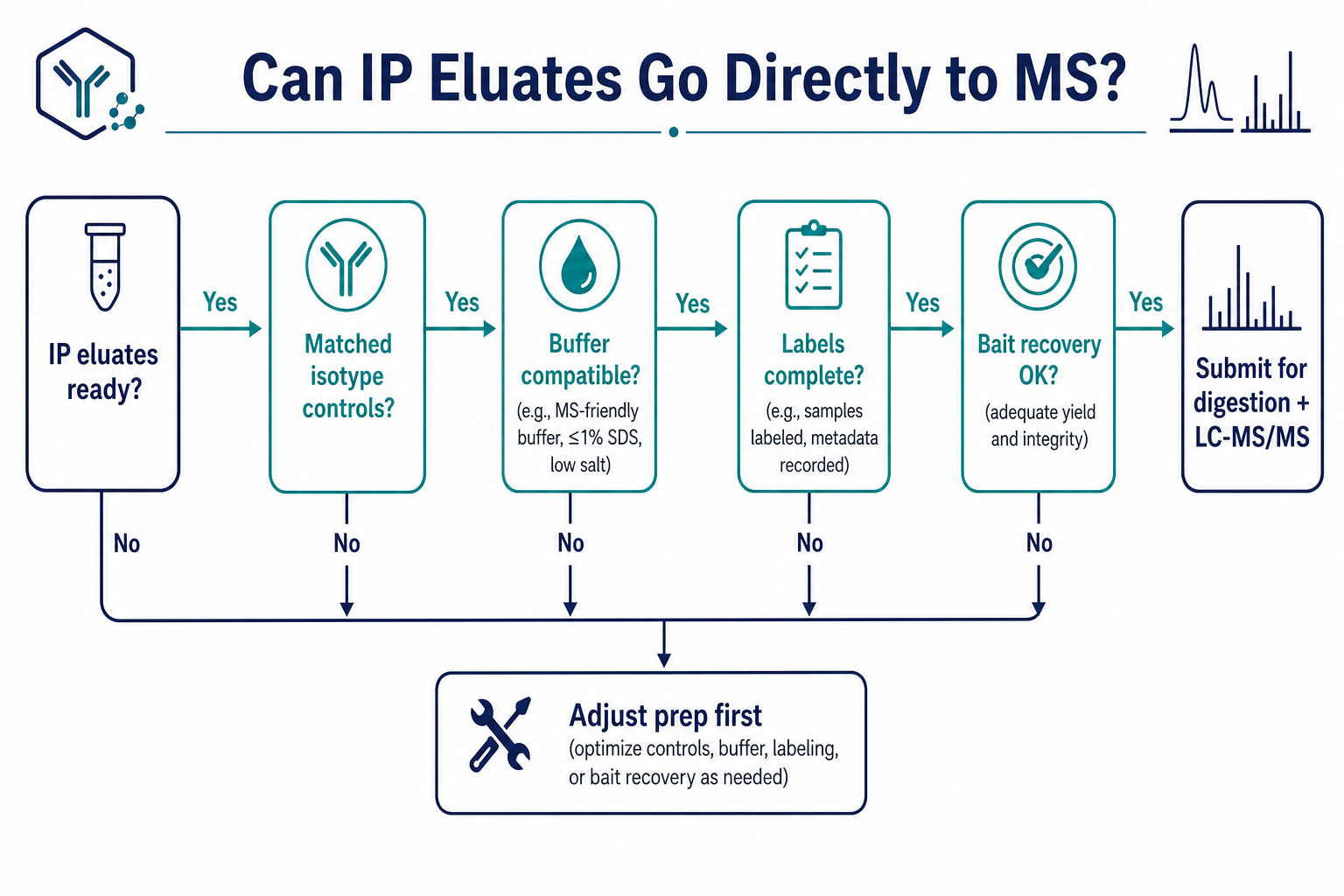
Figure 1. Direct IP eluate submission depends on control matching, buffer compatibility, labeling, and realistic bait recovery—not eluate clarity alone.
Eluate vs Bead-Bound Submission
Not every IP material format is equally easy to hand off. Eluted protein is appropriate when elution is efficient, buffer composition is documented, and bait-associated material is recovered in solution rather than retained on beads. Bead-bound IP material may be preferable when elution efficiency is low, when on-bead digestion is the planned service workflow, or when elution buffer would require extensive cleanup before digestion.
The submission format should be decided before IP begins when possible, because switching from elution to on-bead digestion after samples are generated can break comparability across arms if handling differs between bait and control tubes. Confirm with the receiving service which format they expect before shipping tubes labeled as ready for MS.
Minimum Checks Before Shipping IP Eluates
Use this pre-shipment review before calling an eluate MS-ready.
Confirm that every bait IP tube has its intended control counterpart and that labels distinguish replicate number and contrast arm. Document elution buffer components, antibody and bead type, wash stringency at a workflow level, and any visible bait recovery observations. Verify storage temperature and shipment plan against provider requirements.
Ask explicitly whether the service performs digestion and cleanup or accepts peptides only. If the provider performs digestion, disclose detergents, salts, and any nonstandard elution additives that may affect enzyme activity. If bait recovery was weak, note that before submission so analysis expectations are aligned.
What the Service Provider Still Needs to Do
Even when eluates are submitted “directly,” the provider typically performs steps the submitting lab skipped locally. These may include buffer assessment, reduction and alkylation, proteolytic digestion, peptide cleanup, LC-MS/MS acquisition, database searching, and control-based review of identifications.
That division of labor works when handoff documentation is complete. It fails when eluates arrive with missing controls, ambiguous labels, or buffers the service cannot process without unplanned rework. Direct submission is a scope agreement, not an exemption from sample readiness standards.
Submission Format and Readiness Summary
|
Material submitted |
What “direct” usually implies |
Main readiness requirement |
|---|---|---|
|
IP eluate |
Provider digests and analyzes protein |
Documented buffer; matched control eluates |
|
Bead-bound IP |
Provider performs on-bead digestion |
Same bead protocol across bait and control arms |
|
Pre-digested peptides |
Provider runs LC-MS/MS only |
Cleanup-complete peptides with intact labels |
|
Lysate only |
Provider performs IP and MS |
Antibody and control plan defined in advance |
The table supports early conversation with a service provider before IP samples are generated.
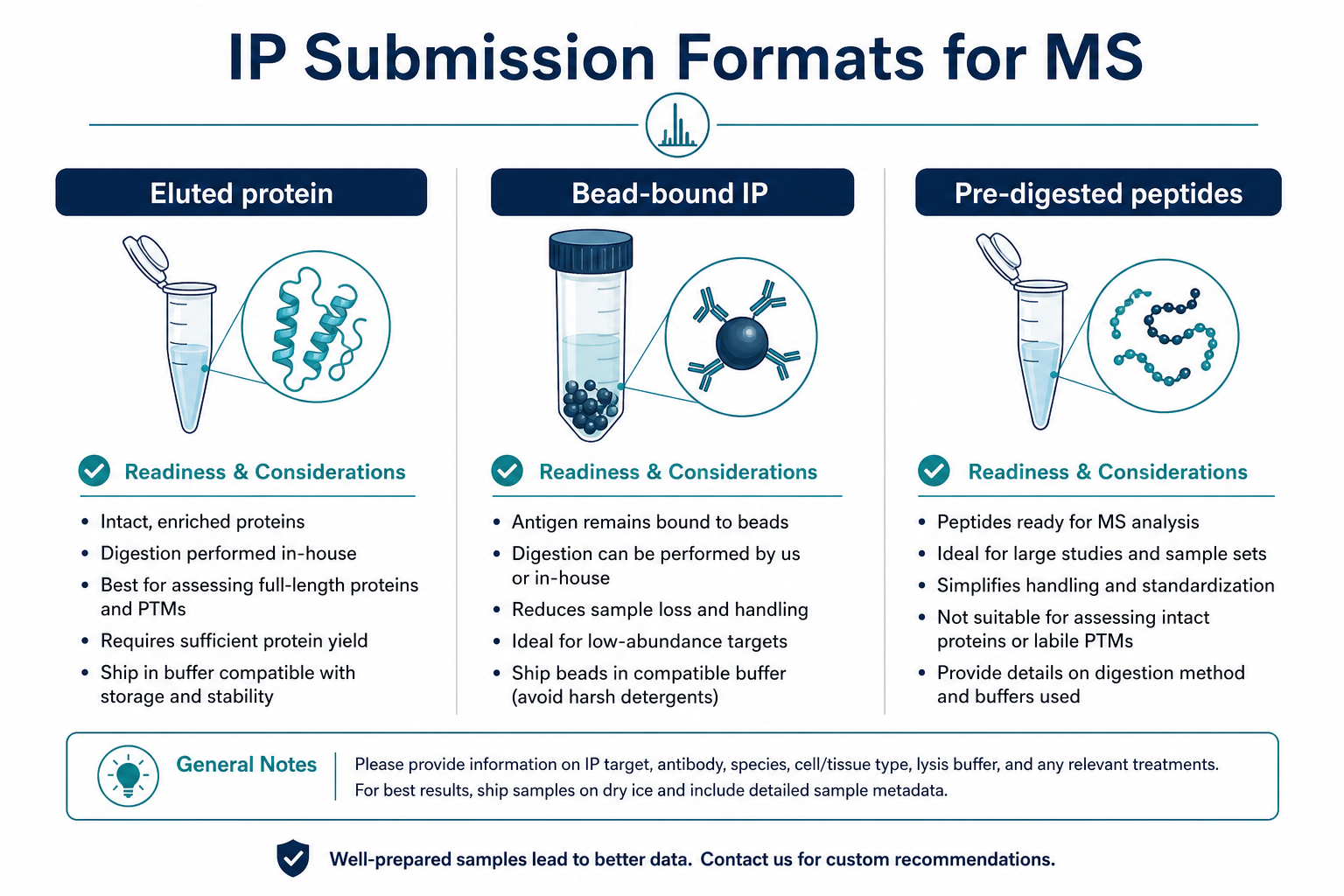
Figure 2. Direct submission format depends on whether the provider receives eluates, bead-bound IP, or pre-digested peptides.
What to Include in a Direct-Submission Request
A useful submission request should list bait and control definitions for every tube, state elution buffer composition and IP format, report bait recovery observations and any protocol deviations, confirm replicate structure, and indicate whether the project requires discovery identification or bait-control contrast analysis.
MtoZ Biolabs can review this information to confirm whether immunoprecipitation eluates are ready for LC-MS/MS handoff or whether buffer adjustment, control generation, or repeat IP is needed first.
Frequently Asked Questions
1. Can immunoprecipitation eluates be submitted directly for mass spectrometry?
Often yes, when a service accepts enriched protein material and performs digestion and LC-MS/MS under a defined protocol. Direct submission does not usually mean skipping digestion for standard IP-MS identification workflows.
2. Do I need to digest IP eluates before shipping?
Not always locally. Many providers digest submitted eluates or bead-bound material as part of the service. Confirm scope before shipment.
3. Can I submit bait IP eluates without isotype controls?
You can submit them, but the resulting data may be difficult to interpret as bait-specific enrichment without matched control IP material processed in parallel.
4. What elution buffers cause problems for MS submission?
High detergent carryover, strong denaturants, high glycerol, incompatible chelators, and undisclosed nonstandard additives can interfere with digestion or cleanup unless the provider confirms compatibility.
5. Is bead-bound IP better than eluate submission?
Bead-bound material can be preferable when elution is inefficient or when on-bead digestion is the agreed service workflow. The best format depends on IP performance and provider protocol.
6. When should I request a readiness review before shipping?
Request review when buffer composition, control matching, bait recovery, or submission format is uncertain.
Related Services
LC-MS Analysis of Pull-down Proteins
Submit IP eluates or bead-bound material when enrichment is complete and digestion plus LC-MS/MS will be performed by the service.
IP-MS Protein Interactomics Analysis Service
Plan immunoprecipitation, isotype controls, and LC-MS/MS together when eluate handoff alone is not enough for the project goal.
Co-Immunoprecipitation Protein Interaction Analysis Service
Use when the project needs targeted co-enrichment readouts rather than open LC-MS/MS from IP eluates.
Conclusion
Immunoprecipitation eluates can be submitted for mass spectrometry when matched controls, documented buffers, clear labels, and a defined provider scope make the handoff MS-ready. Direct submission usually means the submitting lab skips local digestion, not that proteolysis and peptide cleanup are unnecessary for standard IP-MS identification.
Eluates that look clear are not automatically qualified. Buffer incompatibility, missing isotype controls, weak bait recovery, and incomplete metadata are the most common reasons to pause shipment and adjust prep or experimental design first. Researchers with IP eluates ready for LC-MS/MS can review the LC-MS Analysis of Pull-down Proteins service page or contact MtoZ Biolabs with buffer details, control matching, and sample format for submission readiness assessment.
How to order?




