






Bottom-Up Proteomics: Principles, Workflow, and Analysis
Introduction
A bottom-up proteomics dataset can look complete at first glance yet fail to support the intended conclusion. Peptide-spectrum matches may number in the thousands, but protein inference may remain conservative for isoforms. Quantitative ratios may shift because of digestion variability rather than biology. A phosphorylation site may be reported without enough fragment evidence for confident localization. These problems usually trace back to workflow design or analysis choices rather than instrument failure alone.
Bottom-up proteomics remains the standard peptide-centric route for protein identification, modification mapping, and comparative quantification in research and biopharmaceutical analysis. The method depends on three linked layers: analytical principles that define what is measured, a sample-to-spectra workflow that determines data quality, and a computational analysis pipeline that converts spectra into protein-level evidence. Weakness in any one layer can limit the value of the final report.
Core Principles of Bottom-Up Proteomics
Bottom-up proteomics is built on a simple analytical logic: proteins are converted into peptides, peptides are measured by LC-MS/MS, and protein identities are inferred from the peptides detected.
The first principle is enzymatic reduction of complexity. Intact proteins in a mixture are difficult to measure directly at scale. Digestion with trypsin or alternative proteases produces peptides with lengths and charge states suited to reversed-phase LC and tandem mass spectrometry.
The second principle is peptide-spectrum matching. Each MS/MS spectrum represents fragment ions from one peptide precursor. Identification depends on agreement between experimental fragment patterns and predicted patterns from a protein sequence database or spectral library.
The third principle is protein inference rather than direct protein sequencing. In most projects, proteins are reported as protein groups assembled from shared peptides, not as full-length sequences read directly from intact molecules.
The fourth principle is context-dependent quantification. Peptide intensities or reporter ion signals can support sample comparison, but quantitative meaning depends on digestion consistency, acquisition mode, normalization strategy, and whether the project uses label-free, isobaric, metabolic labeling, or targeted acquisition.
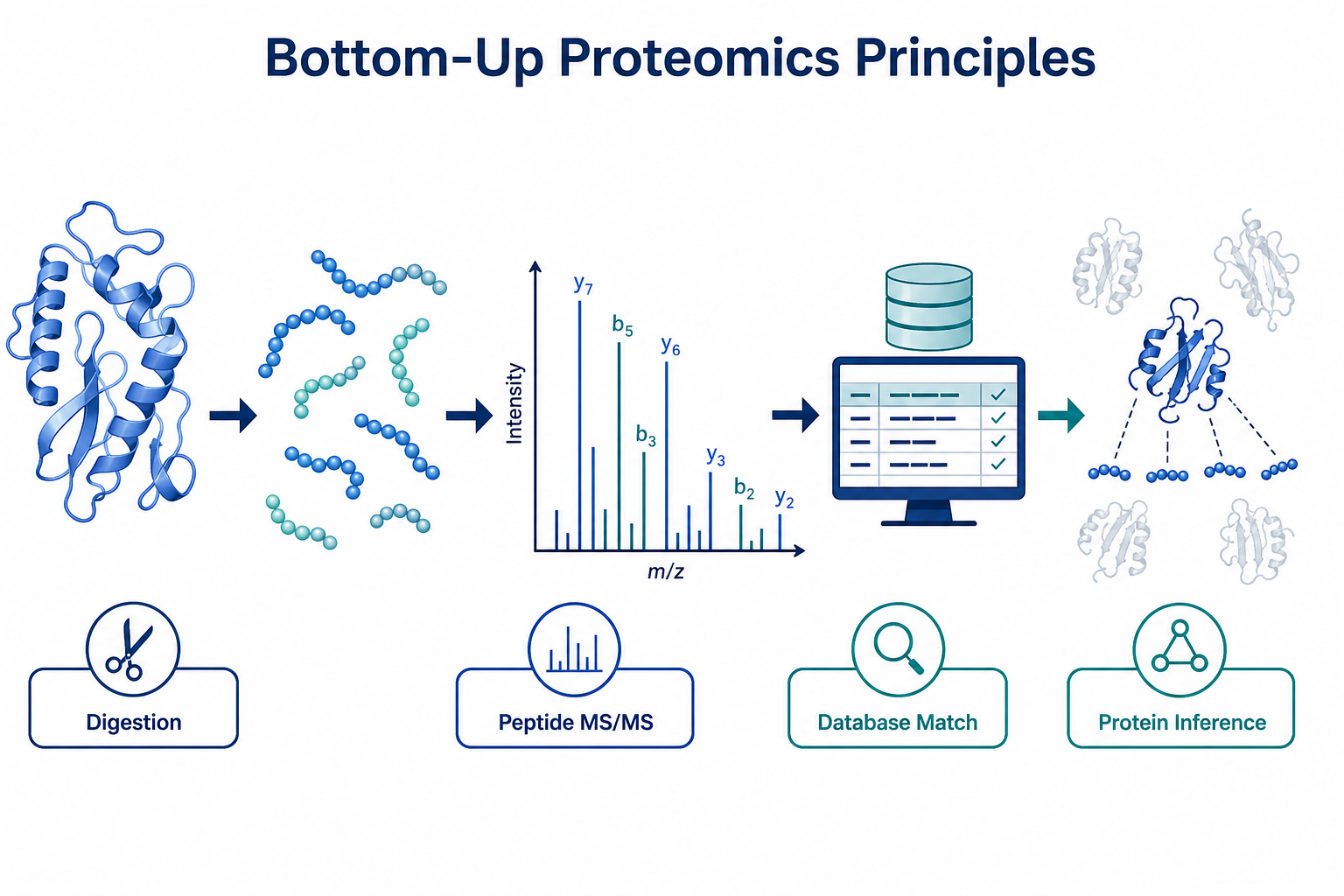
Figure 1. Bottom-up proteomics principles link digestion, peptide MS/MS measurement, database matching, and protein inference.
Why Peptide-Centric Analysis Works at Scale
Peptide measurement offers practical advantages for large-scale protein analysis. Peptides ionize efficiently, separate well by reversed-phase LC, and produce interpretable fragment ladders under common collision-based fragmentation conditions. Database searching scales to large spectral datasets because peptide candidate space, while large, is more manageable than intact proteoform space for complex mixtures.
This peptide-centric design also supports modular project expansion. The same digested sample format can support discovery identification, PTM enrichment, label-free comparison, TMT multiplexing, SILAC-based turnover analysis, or later PRM confirmation without changing the initial sample preparation logic.
The trade-off is loss of intact proteoform context. Once digestion occurs, co-occurring modifications on one protein molecule must be reconstructed from overlapping peptide evidence. Bottom-up proteomics is therefore strong for cataloging proteins and localizing many modification sites, but less direct for intact proteoform assignment.
Standard Bottom-Up Proteomics Workflow
A complete bottom-up proteomics workflow moves from sample intake to protein-level reporting through six linked phases.
Phase 1 is project scoping. The laboratory defines whether the priority is identification depth, quantitative comparison, modification mapping, or targeted confirmation. Sample type, replicate number, and reporting format should be fixed before digestion begins.
Phase 2 is sample preparation. Proteins are extracted under conditions compatible with the sample matrix, reduced and alkylated when required, and digested with a selected protease. Cleanup steps remove salts, detergents, and other interferents that reduce LC-MS/MS performance.
Phase 3 is peptide separation. Reversed-phase LC distributes peptides across a gradient before they enter the mass spectrometer. Gradient length, column chemistry, and loading amount influence identification depth and quantitative reproducibility.
Phase 4 is tandem mass spectrometry acquisition. Data-dependent acquisition selects precursor ions during the run for MS/MS analysis. Data-independent acquisition fragments peptides in defined windows and is often paired with spectral libraries for reproducible quantification across cohorts.
Phase 5 is peptide identification. Experimental spectra are searched against a protein database or matched to a spectral library with enzyme rules, mass tolerances, and modification parameters aligned to the experiment.
Phase 6 is protein inference and optional quantification. Identified peptides are grouped into protein groups, filtered by false discovery rate controls, and quantified when the study design requires comparative analysis.
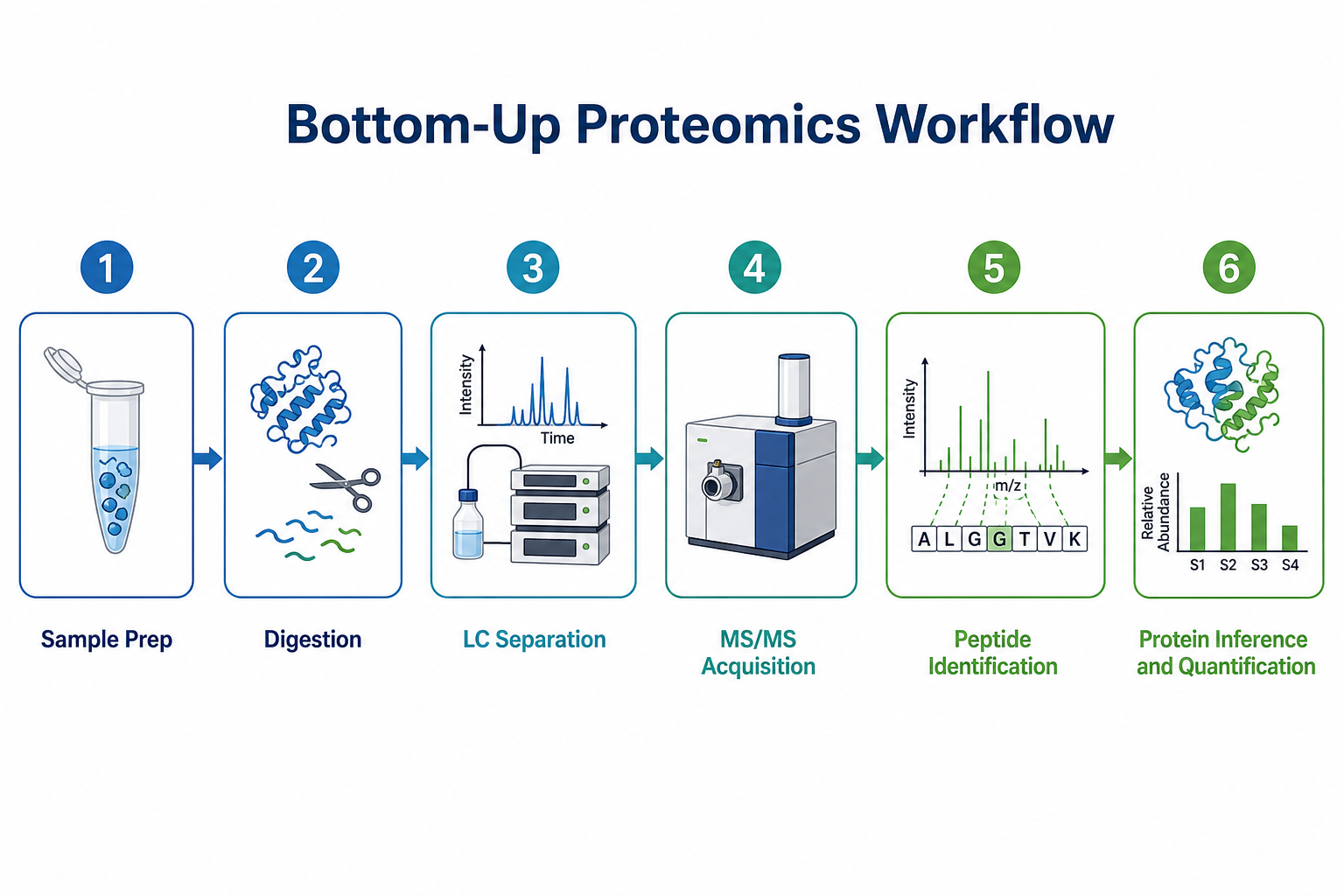
Figure 2. A standard bottom-up proteomics workflow links sample preparation, digestion, LC-MS/MS acquisition, peptide identification, and protein-level reporting.
Sample Preparation and Digestion Decisions
Workflow quality depends heavily on preparation choices made before acquisition.
Lysis conditions must balance protein solubility against digestion compatibility. Detergent-containing buffers may improve extraction from membranes but require cleanup before stable chromatography. Reduction and alkylation open disulfide bonds and block refolding, improving access to cleavage sites in structured domains.
Trypsin remains the default protease because it cleaves C-terminal to lysine and arginine, producing peptides well suited to LC-MS/MS. Alternative enzymes or sequential digestion can improve coverage of acidic regions, membrane domains, or sites blocked after initial cleavage. Missed cleavages are not automatically errors; they can be allowed during database searching when incomplete digestion is expected.
Enrichment may be required when the project extends beyond global identification. Phosphopeptide, glycopeptide, ubiquitin remnant, or other PTM-focused workflows depend on enrichment chemistry matched to the biological question.
LC-MS/MS Acquisition Principles
Acquisition mode shapes the type of evidence a project produces.
In data-dependent acquisition, the instrument selects abundant or eligible precursor ions for MS/MS during the LC run. DDA is widely used for deep identification in discovery projects because instrument time is directed toward strong precursors in each survey cycle.
In data-independent acquisition, the instrument fragments peptides across predefined mass windows in a systematic manner. DIA improves quantitative consistency across runs and is often favored for cohort comparison when spectral libraries or direct inference pipelines are available.
Regardless of mode, precursor mass accuracy, fragmentation quality, chromatographic peak shape, and replicate depth all influence whether peptide calls are confident enough for protein inference and quantification.
Related Services
Bottom-up proteomics projects often combine experimental workflow support with identification, quantification, and interpretation services. Relevant options include:
Protein Identification Service
Label-Free Quantitative Proteomics Service, MS Based
Quantitative Proteomics Service
Proteomics Bioinformatic Analysis Service
SWATH Based Protein Quantitative Service
Researchers planning bottom-up proteomics should define workflow scope, analysis depth, and reporting format before phase 1 sample intake and phase 2 data acquisition begin.
The Bottom-Up Proteomics Analysis Pipeline
Analysis is where raw spectra become protein evidence. A robust pipeline includes database searching, false discovery rate control, protein inference, optional quantification, and structured interpretation.
Database searching compares experimental MS/MS spectra with in silico peptide predictions generated from a protein reference set. Search parameters must reflect enzyme specificity, allowed modifications, precursor and fragment tolerances, and instrument-specific scoring behavior. Incomplete or outdated databases are a common source of missing identifications.
False discovery rate control separates confident peptide-spectrum matches from random matches. Target-decoy strategies and score-based filtering are widely used to keep false positives at an acceptable level for the project. Conservative FDR thresholds are especially important in modification-focused searches where expanded candidate space increases false match risk.
Protein inference groups peptides into protein groups or gene groups according to shared peptide evidence and parsimony rules. Shared peptides across protein families create ambiguity that should be reported clearly rather than hidden in summary tables.
Quantification, when included, may use label-free precursor or fragment intensities, reporter ions from TMT or iTRAQ, SILAC ratios, or targeted PRM measurements. Normalization across samples and rejection of low-quality features are essential before biological interpretation.
Interpretation connects filtered protein and peptide lists to pathway context, modification summaries, or quality comparisons depending on the study design.
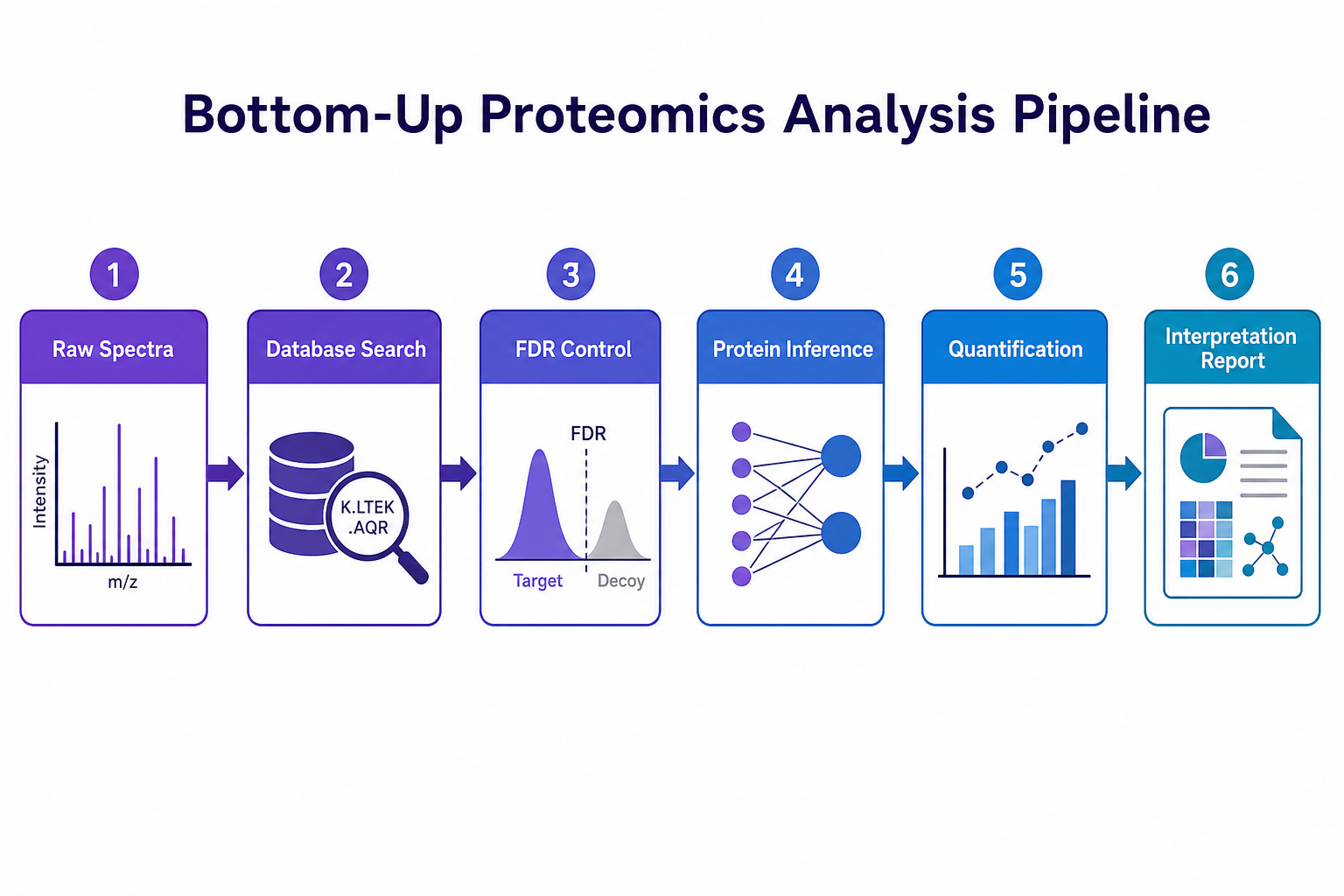
Figure 3. Bottom-up proteomics analysis converts raw spectra into protein evidence through search, FDR control, inference, and interpretation.
Analysis Outputs and Reporting Layers
A useful bottom-up proteomics report should be layered rather than reduced to a single protein name list.
The peptide layer includes peptide-spectrum matches, scores, modification localization metrics, and retention time information. This layer supports manual review of critical calls and provides traceability for publication or regulatory review.
The protein layer includes protein groups, sequence coverage, and shared peptide notes that affect inference confidence. This layer is often the main discovery output for identification-focused projects.
The quantitative layer includes normalized abundance tables, comparison statistics, and QC summaries on replicate agreement and missing values. This layer supports differential expression or treatment comparison when quantification is part of the design.
The interpretation layer connects filtered results to biological context, such as pathway enrichment, modification site summaries, or comparability conclusions in biologics peptide mapping.
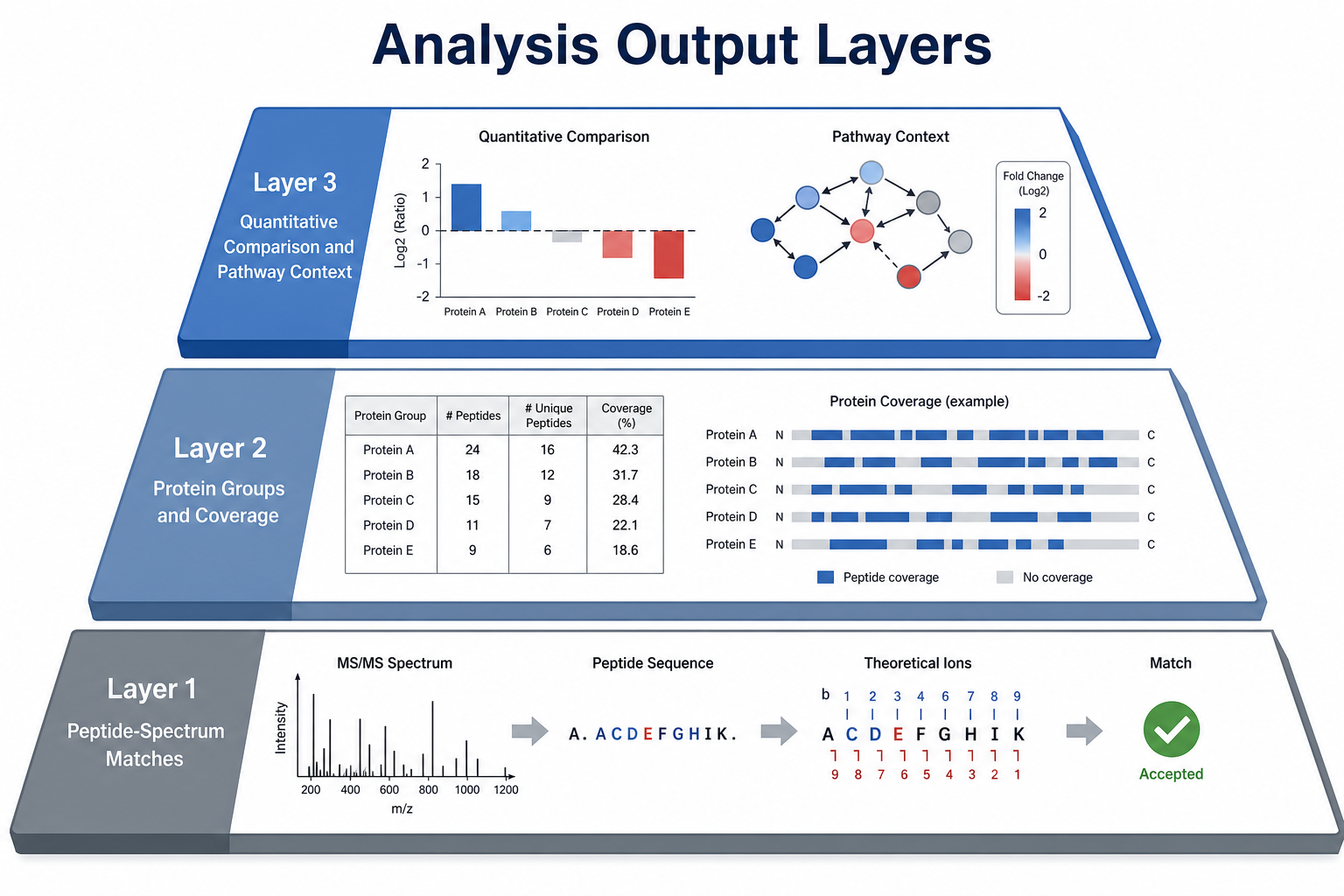
Figure 4. Bottom-up proteomics reports are most useful when peptide, protein, quantitative, and interpretation layers are clearly separated.
Workflow and Analysis Mode Comparison
Different project goals require different combinations of acquisition and analysis strategy. The table below summarizes common pairings in bottom-up proteomics.
|
Study Goal |
Typical Acquisition Mode |
Primary Analysis Focus |
Common Output |
|---|---|---|---|
|
Deep protein identification |
DDA with long LC gradient |
Database search with conservative FDR |
Protein groups and peptide table |
|
Cohort quantification |
DIA or label-free DDA |
Normalized quantification and missing-value review |
Quant matrix and comparison statistics |
|
PTM site mapping |
DDA after enrichment |
Modification search and localization review |
Modified peptide and site list |
|
Biologics peptide mapping |
Targeted DDA or focused LC method |
Reference-based coverage mapping |
Coverage map and modified peptide summary |
|
Targeted follow-up |
PRM or MRM on selected peptides |
Confirmatory peak review |
Verified peptide panel |
This table is a planning aid. Sample complexity, reference database quality, and reporting requirements can shift the final workflow even when the general goal remains the same.
Applications in Research and Biopharmaceutical Analysis
Bottom-up proteomics supports a wide range of project types when the workflow and analysis pipeline are matched to the question.
In discovery research, the method is used for protein identification in cell and tissue lysates, differential expression analysis across treatment groups, and pathway interpretation after quantitative filtering. In signaling studies, phosphoproteomics enrichment combined with modified peptide searching supports site-level activation mapping.
In biopharmaceutical analysis, bottom-up proteomics supports peptide mapping for sequence coverage, comparability assessment after process changes, host cell protein monitoring, and impurity tracing when peptide evidence is sufficient for the decision.
In targeted follow-up, discovery results often feed PRM assay development for repeated measurement of selected proteins or modification sites across larger sample sets.
Frequently Asked Questions
What are the main steps in bottom-up proteomics?
The main steps are sample preparation, enzymatic digestion, LC-MS/MS acquisition, peptide identification, protein inference, and optional quantification with biological interpretation.
Why is trypsin used so often in bottom-up proteomics?
Trypsin produces peptides with lengths and charge states that work well for reversed-phase LC and tandem mass spectrometry, and its cleavage specificity is easy to model during database searching.
What is the difference between DDA and DIA in bottom-up proteomics?
DDA selects precursor ions during the run for MS/MS analysis and is widely used for deep discovery identification. DIA fragments peptides in predefined windows and is often chosen when reproducible quantification across many samples is the priority.
What does protein inference mean in bottom-up analysis?
Protein inference is the process of grouping identified peptides into protein-level results. It is required in most projects because multiple proteins can share the same peptide evidence.
What should a bottom-up proteomics report include?
A strong report usually includes peptide-spectrum match evidence, protein group results, quantification tables when applicable, QC summaries, and interpretation notes that distinguish confident calls from provisional features.
Conclusion
Bottom-up proteomics works because it links clear analytical principles to a repeatable workflow and a structured analysis pipeline. Digestion makes complex protein mixtures measurable as peptides. LC-MS/MS produces fragment evidence for identification and quantification. Database searching, FDR control, and protein inference convert spectra into protein-level results that can support discovery, modification mapping, and biologics characterization.
Reliable outcomes depend on treating workflow and analysis as one system. Sample preparation choices shape peptide evidence. Acquisition mode shapes identification depth and quantitative consistency. Analysis parameters determine whether reported proteins and modifications are fit for the intended biological or quality decision.
Teams planning bottom-up proteomics can contact MtoZ Biolabs to review sample type, workflow design, and the analysis depth required for the study goal.
If a project requires both identification and quantitative comparison across cohorts, MtoZ Biolabs can help align digestion strategy, acquisition mode, and reporting layers before data acquisition begins.
Researchers preparing bottom-up proteomics studies for publication or biologics review can request a project assessment from MtoZ Biolabs to define phase 1 workflow scope and phase 2 analysis deliverables.
How to order?




