






Bottom-Up Proteomics Guide: Principles, Workflows, and LC–MS/MS Applications
Introduction
Bottom-up proteomics is the most widely used strategy for large-scale protein identification and comparative analysis, yet project outcomes vary widely depending on workflow design. One laboratory may generate a deep protein list from a cell lysate but weak quantitative reproducibility across replicates. Another may quantify peptides consistently yet miss modified proteins central to the study hypothesis. A biologics group may obtain peptide coverage for a monoclonal antibody while PTM localization remains incomplete. These differences usually reflect workflow and LC-MS/MS choices rather than instrument availability alone.
Bottom-up proteomics digests proteins into peptides and uses LC-MS/MS to identify and quantify peptide evidence that supports protein-level conclusions. The method combines sample preparation, chromatographic separation, tandem mass spectrometry acquisition, database searching, protein inference, and optional quantitation into one analytical program. For researchers planning a bottom-up study, the key is aligning principles, workflow steps, and LC-MS/MS settings with the biological or characterization question.
This guide outlines the core principles of bottom-up proteomics, describes a standard workflow from sample intake to reporting, and summarizes common LC-MS/MS applications in protein analysis.
Core Principles of Bottom-Up Proteomics
Bottom-up proteomics rests on four linked principles that define how protein evidence is generated.
Enzymatic reduction of complexity.
Proteins in a mixture are digested into peptides, most often with trypsin, to produce analytes suited to reversed-phase LC and tandem mass spectrometry.
Peptide-spectrum matching.
MS/MS spectra are matched to peptide sequences from a protein database or spectral library. Identification confidence depends on fragment ion quality and search scoring.
Protein inference from peptides.
Proteins are reported as inferred groups assembled from shared peptide evidence rather than as intact sequences read directly from whole molecules.
Peptide-level quantitation summarized at the protein level.
Abundance comparison is derived from peptide ion intensities, spectral counts, isobaric reporter ions, or targeted monitoring, then rolled up to proteins using defined rules.
These principles explain why digestion strategy, acquisition mode, and search parameters influence both identification depth and quantitative quality in the same experiment.
Standard Bottom-Up Proteomics Workflow
A practical bottom-up proteomics project follows a defined sequence from scoping through reporting.
Project scoping.
Define whether the priority is protein identification, quantitative comparison, modification mapping, or targeted confirmation. Fix sample number, replicate design, and reporting format before digestion.
Sample preparation.
Extract proteins under matrix-compatible conditions, reduce and alkylate cysteines when required, and digest with the selected protease. Cleanup removes salts, detergents, and interferents that suppress LC-MS/MS performance.
Peptide separation.
Reversed-phase LC distributes peptides across a gradient before mass spectrometry analysis. Gradient length and column selection affect identification depth and run-to-run reproducibility.
LC-MS/MS acquisition.
Precursor ions are selected for fragmentation using data-dependent, data-independent, or targeted acquisition depending on project goals.
Peptide identification and protein inference.
Database search or spectral library matching assigns PSMs. False discovery rate filtering and protein grouping rules determine the final identification list.
Quantitation and reporting.
When quantitation is in scope, peptide measurements are normalized and summarized at the protein level. Reports should include method notes, QC metrics, and interpretation limits.
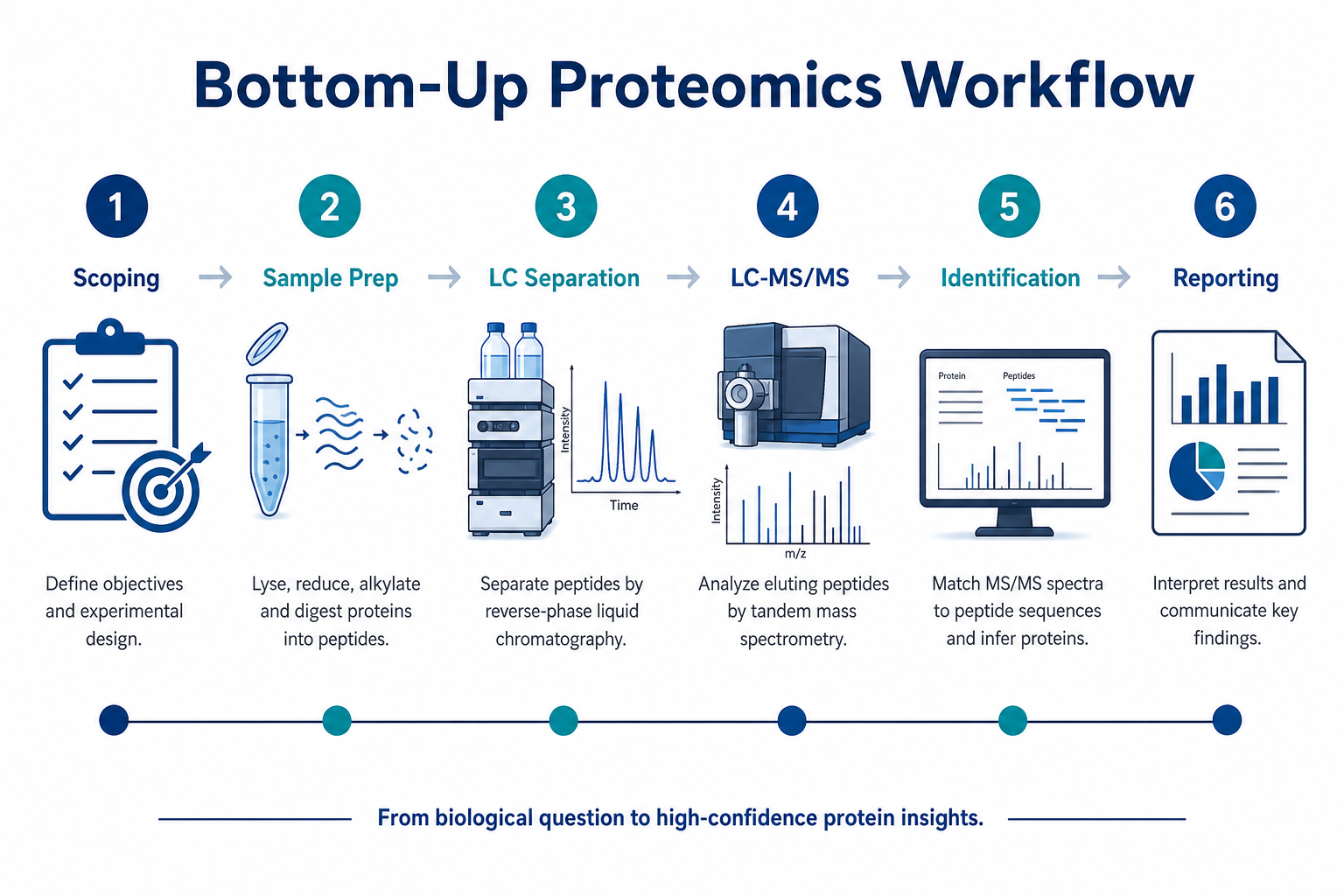
Figure 1. A bottom-up proteomics guide workflow moves from project scoping through sample preparation, LC-MS/MS acquisition, identification, and reporting.
LC-MS/MS in Bottom-Up Proteomics
LC-MS/MS is the analytical core of bottom-up proteomics. Each component affects the type of evidence generated.
Liquid chromatography
Reversed-phase LC separates peptides by hydrophobicity and reduces ionization competition in the mass spectrometer. Longer gradients often improve identification depth in complex lysates. Shorter gradients may be sufficient when a focused peptide panel is monitored.
Tandem mass spectrometry
Peptide precursors are isolated and fragmented to produce product ions that support sequence assignment. Fragment quality is especially important for modified peptides and low-abundance targets in complex backgrounds.
Acquisition modes
Data-dependent acquisition dynamically selects precursors for MS/MS and is widely used in discovery identification. Data-independent acquisition such as SWATH fragments peptides systematically across defined windows and supports reproducible quantitation when spectral libraries are available. Targeted PRM or MRM monitors selected peptides with assay-style reproducibility after discovery or for predefined panels.
Database searching and modification review
Search parameters include enzyme specificity, precursor and fragment tolerances, fixed and variable modifications, and false discovery rate thresholds. PTM-aware searches can localize modifications when fragment evidence supports residue assignment.
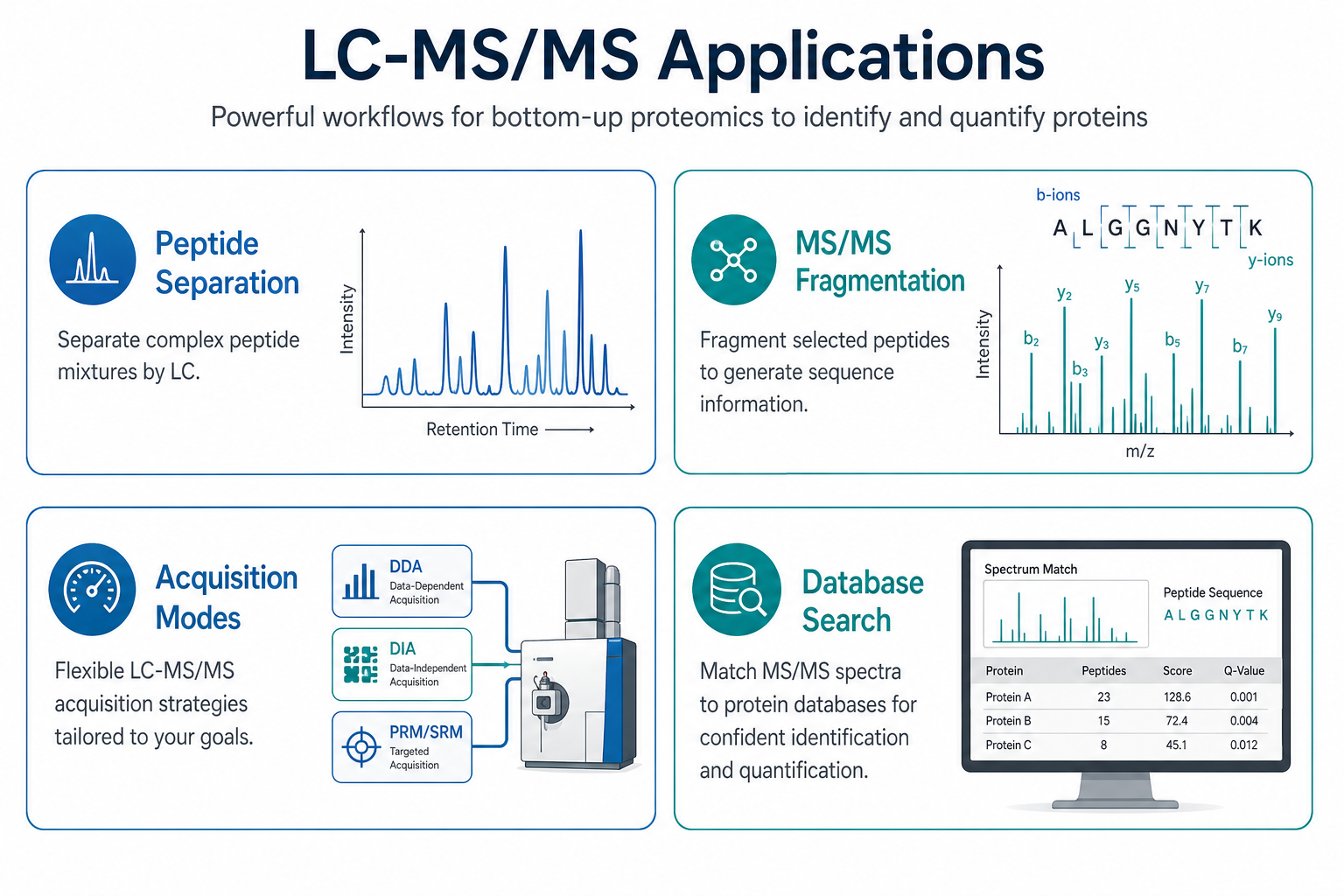
Figure 2. LC-MS/MS in bottom-up proteomics combines peptide separation, fragmentation, acquisition mode selection, and database searching.
Related Services
Bottom-up proteomics projects often pair core identification with adjacent protein analysis services. Relevant options include:
Protein Identification Service
Label-Free Quantitative Proteomics Service, MS Based
Bottom-Up MS-Based PTM Analysis Service
Quantitative Proteomics Service
Researchers planning a bottom-up proteomics study can consult MtoZ Biolabs to review sample type, workflow scope, and the LC-MS/MS strategy best suited to the project goal.
Quantitation Strategies in Bottom-Up Workflows
Quantitation is often included in the same bottom-up experiment that generates identifications. Strategy selection should match the comparison design.
|
Quantitation Mode |
How It Works |
Typical Application |
|---|---|---|
|
Label-free |
Peptide ion intensity across LC-MS runs |
Discovery comparison across sample groups |
|
Spectral counting |
Number of MS/MS spectra per protein |
Semi-quantitative screening |
|
TMT or iTRAQ |
Isobaric reporter ions after MS/MS |
Multiplexed group comparison |
|
SILAC |
Light versus heavy peptide ratios |
Cell culture-based comparison |
|
PRM or MRM |
Monitored peptide transitions |
Targeted panel measurement |
Label-free and isobaric approaches are common in discovery programs. Targeted monitoring is often used after candidate proteins are defined.
LC-MS/MS Applications in Protein Analysis
Bottom-up proteomics supports diverse protein analysis goals when workflow design matches the application.
|
Application Area |
Bottom-Up LC-MS/MS Focus |
Typical Output |
|---|---|---|
|
Cell and tissue lysate profiling |
Discovery identification and label-free comparison |
Protein list and abundance changes |
|
Biomarker discovery in biofluids |
Depletion or fractionation plus deep LC-MS/MS |
Candidate protein panel |
|
Biologics peptide mapping |
Reference-based PSM assignment |
Sequence coverage map |
|
PTM analysis |
Enrichment plus modification-aware search |
Localized modified peptides |
|
Phosphoproteomics |
Enrichment of phosphopeptides |
Phosphosite assignments |
|
Targeted follow-up |
PRM assay on selected peptides |
Reproducible panel quantitation |
Application fit should be defined before sample preparation because enrichment, digestion, and acquisition settings are difficult to change without new material.
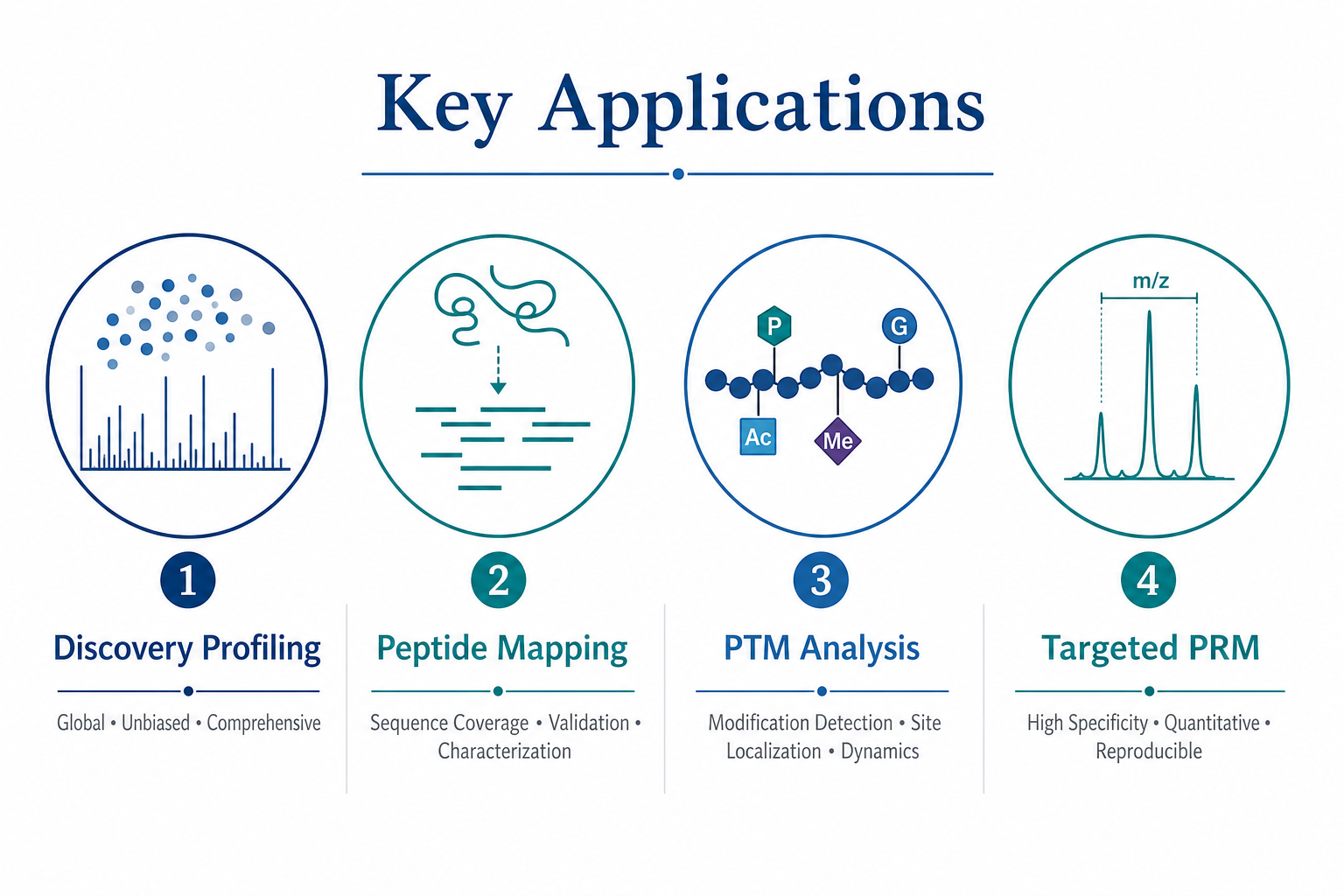
Figure 3. Bottom-up proteomics LC-MS/MS applications include discovery profiling, peptide mapping, PTM analysis, and targeted PRM follow-up.
Core Technical Advantages and Current Limitations
Core Technical Advantages
High throughput in complex mixtures.
Bottom-up LC-MS/MS can identify and compare many proteins in one experiment.
Strong software and database support.
Database searching and quantitation tools are mature for peptide-centric workflows.
Flexible expansion from discovery to targeted assays.
The same digest format can support PTM enrichment, multiplexed quantitation, and later PRM confirmation.
Sequence and modification evidence.
MS/MS fragmentation supports peptide assignment and many PTM localization tasks.
Current Limitations
Protein inference required.
Results are built from peptides, not direct intact protein readout.
Digestion introduces variability.
Quantitative differences can reflect prep inconsistency if workflow control is weak.
Dynamic range challenges remain.
Low-abundance proteins may be missed without fractionation or enrichment.
Acquisition trade-offs.
Deeper identification sampling can reduce quantitative coverage per run.
Frequently Asked Questions
1. What is bottom-up proteomics?
Bottom-up proteomics digests proteins into peptides and uses LC-MS/MS to identify and quantify peptides that support protein-level conclusions.
2. Why is trypsin commonly used in bottom-up workflows?
Trypsin cleaves after lysine and arginine residues and typically produces peptides with lengths and charge states suited to reversed-phase LC-MS/MS.
3. What is the role of LC-MS/MS in bottom-up proteomics?
LC separates peptides before mass spectrometry analysis, and MS/MS fragmentation provides sequence evidence for peptide identification and quantitation.
4. Can bottom-up proteomics identify and quantify proteins in one experiment?
Yes. The same LC-MS/MS workflow can support identification through PSMs and quantitation through peptide ion measurement strategies.
5. When should targeted PRM follow a bottom-up discovery run?
PRM is often used when a defined set of proteins must be monitored with higher reproducibility after discovery identifies candidate peptides.
Conclusion
Bottom-up proteomics remains the standard peptide-centric route for protein identification, modification mapping, and comparative quantitation because it balances sensitivity, throughput, and analytical flexibility. Successful projects align core principles with a structured workflow and LC-MS/MS settings matched to the study goal. Principles define how peptide evidence supports protein conclusions. Workflow steps control sample quality and measurement consistency. LC-MS/MS applications translate those fundamentals into discovery profiling, biologics peptide mapping, PTM analysis, and targeted follow-up.
Teams that define application fit and quantitation strategy before digestion can generate more interpretable protein evidence with fewer repeat runs. Researchers planning a bottom-up proteomics study can contact MtoZ Biolabs to review sample type, workflow design, and the LC-MS/MS reporting format required for the project.
How to order?




