






Basics of Protein and Antibody Glycosylation
Introduction
Proteins and antibodies rarely exist as simple amino acid chains in biological systems or biopharmaceutical products. Many therapeutic proteins, monoclonal antibodies, fusion proteins, and serum glycoproteins carry covalently attached carbohydrate structures that influence folding, stability, clearance, receptor binding, and effector function. A development team may observe batch-to-batch mass differences in an antibody drug substance. A characterization group may need to confirm whether glycan profiles remain consistent after a process change. A research program may need to understand how glycosylation affects protein behavior before functional assays are interpreted.
Protein and antibody glycosylation refers to the enzymatic addition of glycan structures to specific amino acid sites on a polypeptide backbone. These modifications are post-translational and can vary by cell line, culture conditions, protein sequence, and tissue source. For monoclonal antibodies, glycosylation is often concentrated in the Fc region, where glycan composition can influence Fc receptor interaction and complement activation pathways. For other proteins, N-linked and O-linked glycans may appear at multiple sites and contribute to structural heterogeneity that must be characterized during development and quality review.
Understanding the basics of protein and antibody glycosylation helps teams define what should be measured, which analytical route fits the question, and how glycan data support comparability, release testing, or mechanistic interpretation.
What Protein and Antibody Glycosylation Means
Glycosylation is the attachment of oligosaccharide structures, or glycans, to protein side chains or backbone regions. Unlike a fixed sequence encoded in DNA, glycosylation is heterogeneous. The same glycosylation site on a protein may carry different glycan structures across molecules, producing a mixture of glycoforms rather than a single uniform product.
In proteins and antibodies, glycosylation is usually classified by linkage chemistry and site context. N-linked glycosylation occurs when glycans are attached to asparagine residues within the consensus sequence Asn-X-Ser/Thr, where X is any amino acid except proline. O-linked glycosylation occurs when glycans are attached to serine or threonine residues, often in mucin-like or flexible regions. Other glycan types, including C-linked and glypiation, occur in specialized protein classes but are less central to routine antibody characterization.
For therapeutic antibodies, glycosylation is a critical quality attribute because the Fc-associated glycans can modulate effector function, aggregation tendency, pharmacokinetic behavior, and comparability between batches or manufacturing processes. Glycosylation therefore belongs to both structural characterization and functional risk assessment in biologics development.
Core Principles of N-Linked and O-Linked Glycosylation
N-linked glycosylation
N-linked glycosylation begins in the endoplasmic reticulum and is further processed in the Golgi apparatus. A core glycan structure is transferred to an asparagine side chain, then trimmed and extended by glycosidases and glycosyltransferases. The final structures may include high-mannose, hybrid, or complex glycan types with variable fucose, sialic acid, galactose, and branching patterns.
For IgG antibodies, the conserved N-glycosylation site at Asn297 in each heavy chain CH2 domain is the most studied Fc glycan location. Variation at this site can change Fc effector properties and is often monitored during process development and comparability review.
O-linked glycosylation
O-linked glycosylation usually occurs in the Golgi and often begins with attachment of N-acetylgalactosamine to serine or threonine, followed by extension into larger structures. O-glycans are frequently more variable and site-distributed than the canonical Fc N-glycans on IgG molecules. They may appear on non-antibody glycoproteins, fusion proteins, Fc-engineered constructs, or antibody fragments depending on sequence and expression system.
O-linked glycosylation can increase structural heterogeneity and complicate intact mass interpretation, peptide mapping, and site assignment when multiple low-abundance sites are present.
Glycoform heterogeneity
Glycoform heterogeneity means that a purified protein sample contains a distribution of glycan structures at one or more sites. This heterogeneity is normal for mammalian expression systems. Analytical characterization must therefore report glycan distribution, site occupancy, and major glycoform populations rather than expecting a single glycan structure for every molecule.
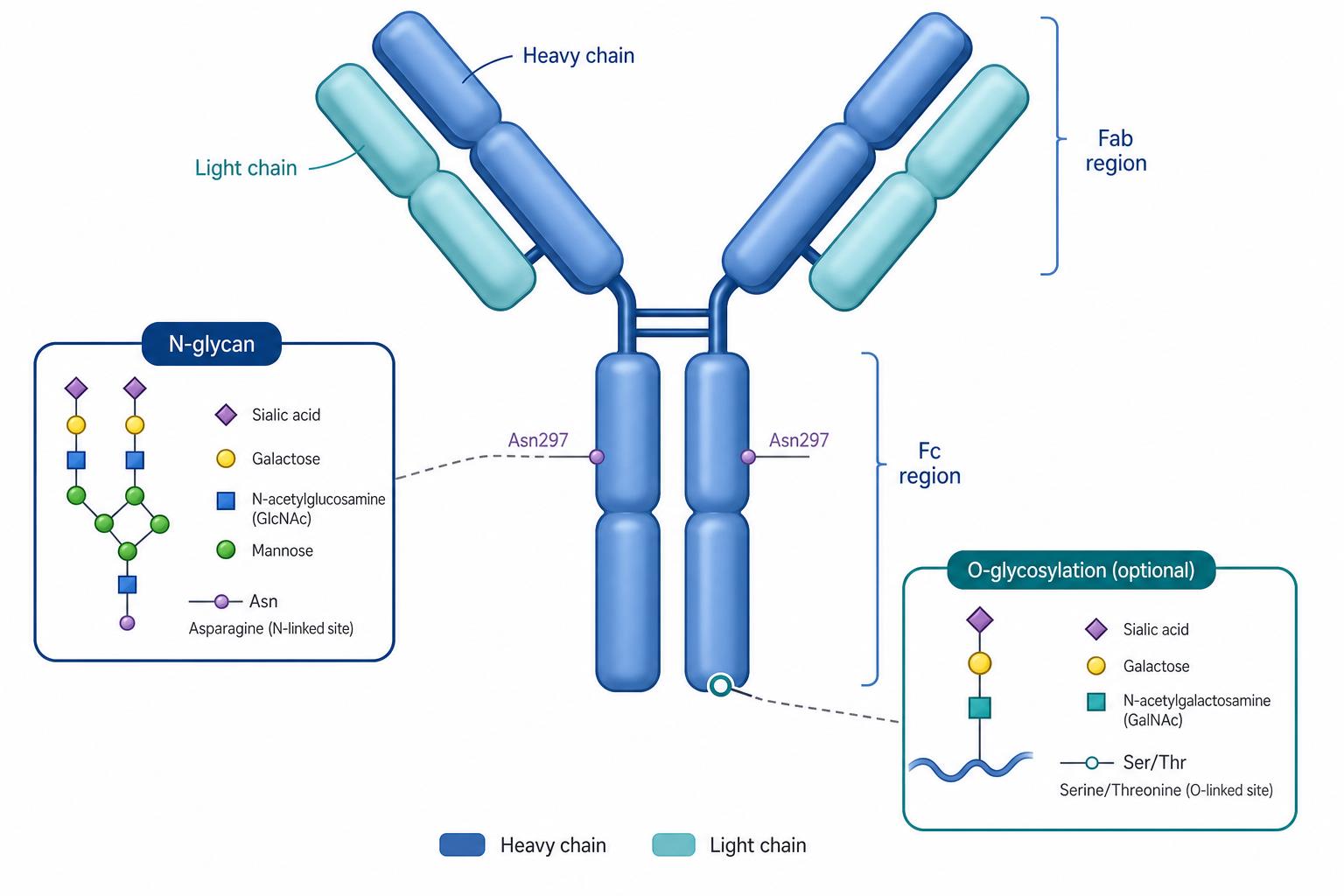
Figure 1. Therapeutic antibodies commonly carry N-linked glycans on the Fc region, and glycoform heterogeneity can influence structural and functional properties.
Why Glycosylation Matters in Therapeutic Antibodies
For monoclonal antibodies and many biologics, glycosylation is not a secondary detail. It can affect product quality in several ways.
Glycan composition can influence Fc-mediated effector functions such as antibody-dependent cellular cytotoxicity and complement activation. Sialylation, galactosylation, fucosylation, and high-mannose content are commonly reviewed during antibody characterization because they can shift biological activity. Glycosylation can also affect protein stability, aggregation propensity, and recognition by clearance receptors. In biosimilar or process comparability studies, glycan profile similarity is often evaluated alongside primary structure and higher-order property data.
Antibody glycosylation is strongly influenced by expression system and manufacturing conditions. CHO cells, NS0 cells, HEK cells, and other platforms can produce different glycan patterns on the same antibody sequence. Culture parameters, nutrient availability, and downstream handling can further shift glycoform distribution. This is why glycosylation is treated as a process-linked quality attribute rather than a fixed sequence feature alone.
Standard Approaches to Glycosylation Characterization
Glycosylation analysis in proteins and antibodies usually combines one or more analytical layers depending on the project goal.
Intact mass analysis reveals global glycoform distributions by measuring mass differences among intact protein molecules. Released glycan analysis removes glycans enzymatically or chemically and profiles free glycan compositions. Glycopeptide analysis uses proteolytic digestion and LC-MS/MS to map glycosylation sites and associate glycan structures with specific peptides. Site occupancy review determines whether a glycosylation site is fully, partially, or minimally occupied across the product population.
A practical characterization project defines whether the immediate need is global glycoform comparison, site localization, glycan composition profiling, or batch comparability support. That decision determines whether intact MS, released glycan profiling, or glycopeptide LC-MS/MS is the most appropriate starting route.
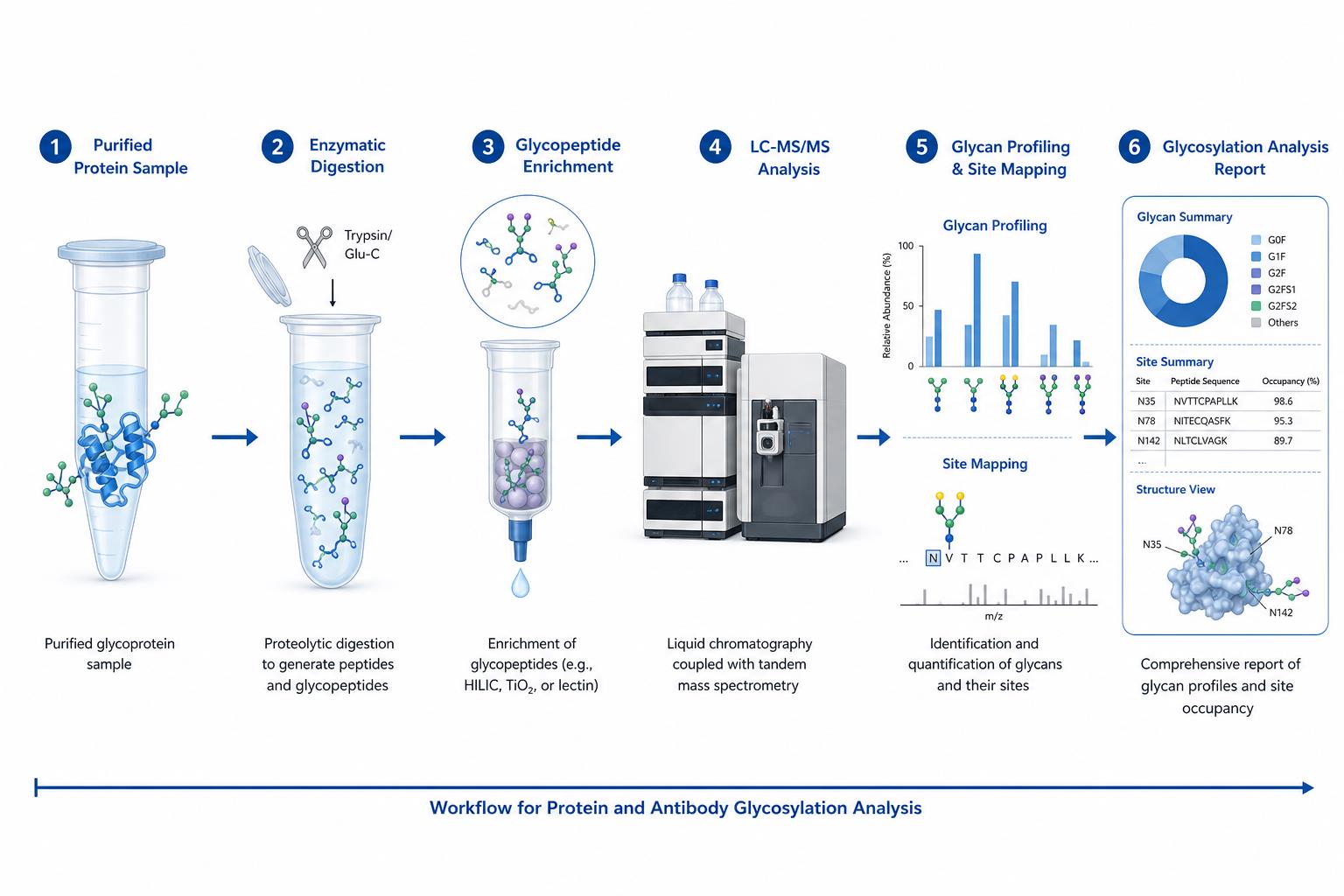
Figure 2. Protein and antibody glycosylation analysis typically combines sample preparation, glycopeptide or glycan enrichment, LC-MS/MS acquisition, and glycan or site mapping interpretation.
Related Services
Protein Glycosylation Analysis Service
Glycosylation Site Analysis Service
Comprehensive Glycosylation Analysis Service
Protein Drug Glycosylation Analysis Service
Researchers planning protein or antibody glycosylation characterization can consult MtoZ Biolabs to review sample type, expression system, and the analytical depth required for the project goal.
N-Linked vs O-Linked Glycosylation in Analysis Planning
N-linked and O-linked glycosylation differ in biosynthesis, structural patterns, and analytical handling. Project planning should account for these differences before method selection.
|
Feature |
N-Linked Glycosylation |
O-Linked Glycosylation |
|---|---|---|
|
Typical site |
Asparagine in Asn-X-Ser/Thr motif |
Serine or threonine |
|
Common antibody relevance |
Fc Asn297 site on IgG |
Less common on standard IgG, more relevant on other glycoproteins |
|
Biosynthesis route |
ER and Golgi processing |
Primarily Golgi-linked extension |
|
Major glycan classes |
High-mannose, hybrid, complex |
Often mucin-type and variable structures |
|
Common analytics |
Released glycan profiling, glycopeptide LC-MS/MS |
Enrichment and site mapping workflows often required |
|
Interpretation focus |
Fc effector function, glycoform distribution |
Site heterogeneity and structural complexity |
Core Technical Value and Current Analytical Limitations
Core Technical Value
Links carbohydrate structure to protein function.
Glycosylation analysis connects glycan composition with stability, clearance, receptor interaction, and effector behavior.
Supports biologics quality characterization.
Glycan profiling helps document product heterogeneity, major glycoforms, and site occupancy during development and comparability review.
Complements primary structure workflows.
Glycosylation data add context to intact mass analysis, peptide mapping, and higher-order characterization rather than replacing them.
Enables batch and process comparison.
Glycan distribution shifts can be monitored across manufacturing changes, biosimilar assessments, and stability studies.
Provides site-specific context when needed.
Glycopeptide analysis can associate glycan structures with specific residues rather than reporting only global averages.
Current Analytical Limitations
Heterogeneity complicates single-value reporting.
A protein rarely exists as one glycan form, so results must describe distributions rather than a single structure.
Low-abundance sites can be missed.
Minor occupied sites or low-level O-glycans may require enriched workflows and higher sensitivity than routine intact mass review.
Conformational context matters.
Glycan presentation on intact protein may not be fully captured by released glycan analysis alone.
Matrix and sample purity affect results.
Buffers, excipients, and incomplete purification can interfere with digestion, enrichment, and LC-MS performance.
Method choice determines what is seen.
Released glycan analysis, intact mass review, and glycopeptide mapping answer related but not identical questions.
Applications in Protein and Antibody Characterization
Glycosylation analysis supports multiple development and research scenarios across biologics and glycoprotein programs.
Monoclonal antibody characterization.
Fc glycan profiling helps document major glycoforms and evaluate effector-related structural attributes during mAb development.
Fusion protein and recombinant glycoprotein review.
Non-antibody biologics may contain multiple N- and O-glycosylation sites that require site-specific mapping and heterogeneity assessment.
Biosimilar and comparability studies.
Glycan profile comparison supports similarity review when process, cell line, or manufacturing site changes occur.
Process development monitoring.
Culture and purification changes can shift glycoform distribution before functional or stability effects become visible.
Release and stability support.
Glycosylation data can complement release characterization when glycan attributes are relevant to product control strategy.
These application areas describe common uses. The appropriate analytical depth depends on product type, regulatory context, and whether the goal is discovery, development, or quality documentation.
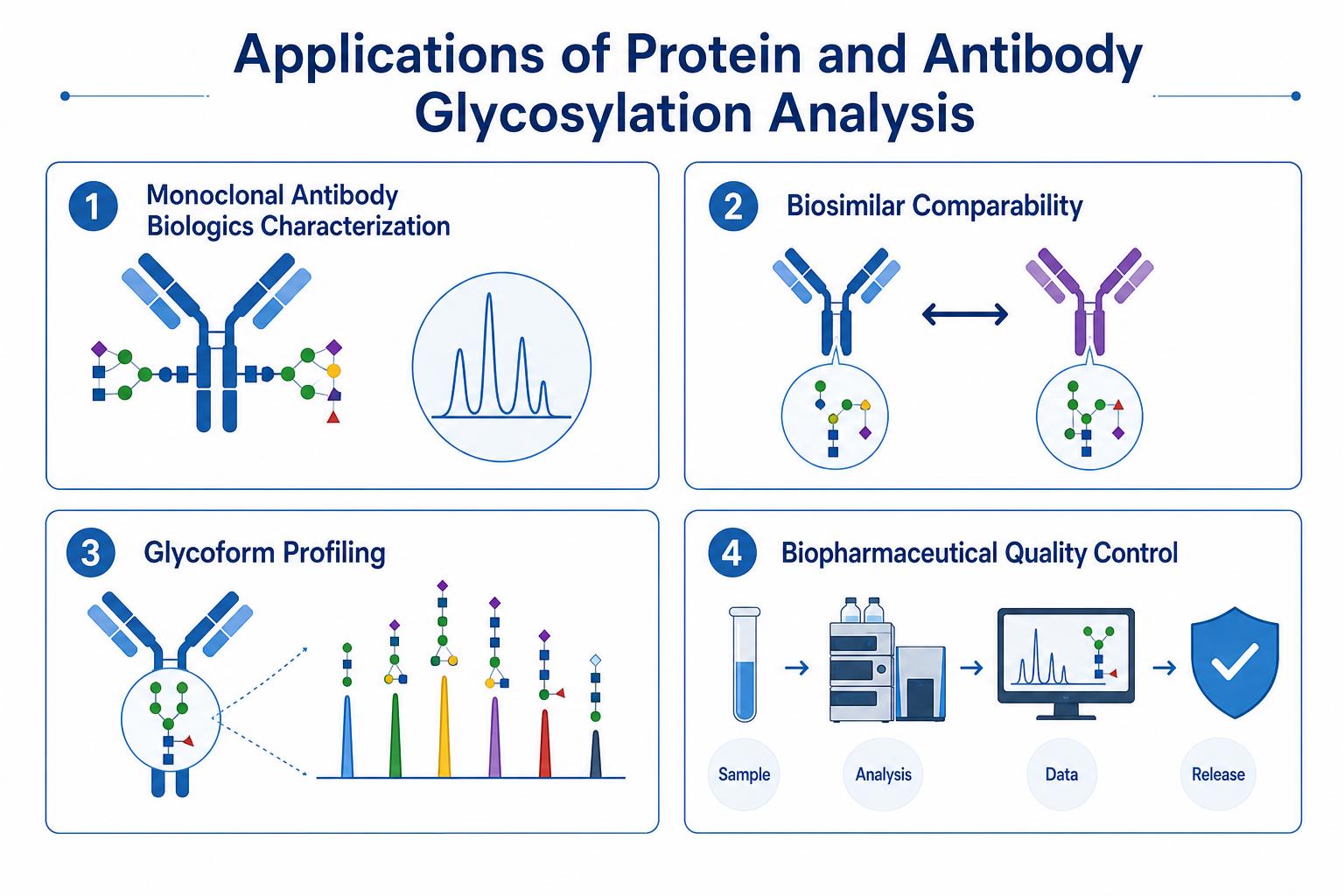
Figure 3. Glycosylation analysis supports monoclonal antibody characterization, biosimilar comparability, glycoform profiling, and biopharmaceutical quality review.
Sample and Method Considerations
Glycosylation results depend on sample type and preparation as much as on instrument capability. Common planning factors include:
- Product type: monoclonal antibody, fusion protein, enzyme, or other recombinant glycoprotein
- Expression system: CHO, NS0, HEK, or other cell line with known glycosylation tendencies
- Sample form: drug substance, drug product, reference standard, or research material
- Purity and buffer composition: detergents, excipients, and salts may affect digestion or enrichment
- Analytical goal: global glycoform review, site mapping, released glycan profiling, or comparability testing
- Orthogonal data needs: intact mass, peptide mapping, or functional assays may be required alongside glycan analysis
Sample feasibility review before digestion or glycan release often prevents repeat analysis caused by incompatible formulation or insufficient purity.
Expected Deliverables and Reporting Depth
A useful glycosylation characterization report should describe both the analytical method and the biological interpretation limits. Depending on project scope, deliverables may include:
- major glycoform distribution summary from intact mass or released glycan analysis
- site-specific glycopeptide identification when LC-MS/MS mapping is performed
- glycan composition tables for dominant structures
- site occupancy commentary for monitored N-linked or O-linked positions
- comparability summary when multiple batches or process conditions are analyzed
- method notes covering digestion, enrichment, instrumentation, and data processing
Reporting depth should match the intended use. Early development may focus on identifying dominant glycoforms and major site occupancy. Late-stage comparability or biopharmaceutical documentation may require tighter control around defined glycan attributes and batch-to-batch consistency.
Frequently Asked Questions
1. What is protein glycosylation?
Protein glycosylation is the covalent attachment of carbohydrate structures to specific amino acid sites on a protein, producing glycoproteins with structural and functional heterogeneity.
2. Where are monoclonal antibodies usually glycosylated?
IgG antibodies commonly carry N-linked glycans on the Fc region, especially at the conserved Asn297 site on each heavy chain. Other glycosylation may occur depending on sequence and expression system.
3. What is the difference between N-linked and O-linked glycosylation?
N-linked glycans attach to asparagine in the Asn-X-Ser/Thr motif. O-linked glycans attach to serine or threonine residues through a different biosynthetic pathway and often show distinct structural patterns.
4. Why does glycosylation matter in biologics development?
Glycosylation can affect stability, clearance, aggregation, receptor interaction, and effector function. It is therefore an important quality attribute in protein and antibody characterization.
5. How is antibody glycosylation usually analyzed?
Common approaches include intact mass analysis, released glycan profiling, and glycopeptide LC-MS/MS for site-specific glycan assignment. Method choice depends on the project goal and required reporting depth.
Conclusion
Protein and antibody glycosylation is a fundamental post-translational modification that introduces structural diversity beyond the amino acid sequence alone. N-linked and O-linked glycans can influence folding, stability, biological activity, and product heterogeneity, especially in therapeutic antibodies where Fc glycan composition is closely reviewed during development and comparability assessment.
Reliable glycosylation understanding begins with the basics: where glycans attach, why glycoform heterogeneity occurs, and which analytical approach reports the attribute most relevant to the project. Intact mass analysis, released glycan profiling, and glycopeptide LC-MS/MS each provide different layers of evidence and are often used together in biologics characterization workflows. Researchers planning protein or antibody glycosylation analysis can contact MtoZ Biolabs to review product type, sample status, and the characterization path best suited to the development or quality goal before analysis begins.
How to order?




