






Arabinose Analysis Service
Arabinose is a naturally occurring five-carbon monosaccharide that belongs chemically to the pentose class. It is an important component of plant cell wall polysaccharides, hemicellulose, and pectin. Arabinose is widely found in plant tissues, fruits, grains, bacterial and fungal polysaccharides, and usually occurs in the L-arabinose form. As a structural sugar, arabinose plays a key role in plant cell wall formation, energy metabolism, and signal transduction. In addition, arabinose participates in various physiological processes such as stress response, carbon storage, and biosynthetic regulation.
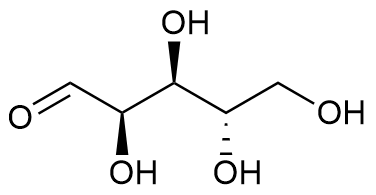
Figure 1. The Structure of Arabinose
With the continuous development of glycomics and biomass utilization research, the demand for arabinose quantification, structural analysis, and metabolic profiling continues to grow in both academic and industrial fields. Equipped with advanced LC-MS/MS and HPLC platforms, MtoZ Biolabs provides a high-sensitivity and highly reproducible arabinose analysis service that offers accurate and reliable analysis for various types of samples, including plant tissues, food products, fermentation materials, and metabolic samples, providing comprehensive data support for researchers and enterprises.
Services at MtoZ Biolabs
MtoZ Biolabs’ arabinose analysis service combines multiple analytical techniques to achieve comprehensive profiling from free arabinose detection to polysaccharide composition analysis. According to sample characteristics and project objectives, we provide the following types of analysis:
1. Free Arabinose Quantification
HPLC or LC-MS/MS is used to quantify free arabinose in samples such as serum, urine, fermentation broth, and food extracts. This method provides high sensitivity, good linearity, and reproducibility, making it suitable for basic metabolic studies and food quality assessment.
2. Polysaccharide Composition Analysis
Plant cell walls, hemicellulose, pectin, or bacterial polysaccharide samples are hydrolyzed with acid and analyzed to determine the ratio of arabinose to other monosaccharides such as galactose, xylose, and mannose. This reveals polysaccharide composition characteristics and provides valuable data for structural analysis and plant cell wall studies.
3. Arabinose Metabolite Profiling
For fermentation systems and metabolic studies, arabinose and its derivatives, such as arabinitol and arabinonic acid, are detected to evaluate carbon utilization efficiency and metabolic pathway activity. This is widely used in bioenergy conversion, metabolic regulation, and microbial metabolism research.
4. Glycomic-Level Arabinose Profiling
After enzymatic release of glycans, derivatization labeling combined with LC-MS/MS analysis enables detection and localization of arabinose units in glycan structures. This approach is applied in glycoprotein modification research, plant glycomics, and natural product structure studies.
5. Quality Control and Product Testing
For food, pharmaceutical, and plant extract samples, arabinose content and stability are analyzed to evaluate performance in formulations, shelf life, and process control, providing technical support for product development and quality management.
Analysis Workflow
1. Sample Receipt and Evaluation: After receiving samples, MtoZ Biolabs designs the optimal analytical strategy based on sample type and analytical objectives.
2. Sample Pretreatment: Homogenization, extraction, desalting, or acid hydrolysis is performed to ensure the complete release of arabinose for detection.
3. Instrumental Analysis: HPLC, LC-MS/MS, or GC-MS is selected depending on project objectives to obtain quantitative and structural data.
4. Data Processing and Validation: Calibration curves, internal standards, and replicate analyses are used to ensure data accuracy and reliability.
5. Report Generation: A complete report containing raw data, quantitative results, chromatograms, and statistical analysis is provided.
Service Advantages
1. Multi-Platform Technology
MtoZ Biolabs is equipped with HPLC, GC-MS, and LC-MS/MS analytical platforms and selects the optimal method based on sample complexity. Multi-platform verification ensures accurate and comprehensive results with both quantitative and structural data.
2. High Sensitivity and Reproducibility
Using high-resolution mass spectrometry and stable internal standard calibration, we achieve precise detection of low-abundance arabinose. This approach provides strong reproducibility and is applicable to complex biological matrices, fermentation systems, and plant extracts.
3. Professional Team
The MtoZ Biolabs team has expertise in glycomics and metabolomics and provides scientific data interpretation and research advice to help clients better understand arabinose metabolism and its biological significance.
4. Customized Service Solutions
We offer flexible analytical options, including detection scope, analytical methods, and reporting formats. Services are tailored for various applications such as research, food quality testing, fermentation monitoring, and pharmaceutical development to ensure scientific and practical value.
Applications
✔️ Plant Cell Wall Research: Analysis of arabinose content and distribution in pectin and hemicellulose for studies on plant structure and stress resistance.
✔️ Food and Nutrition Analysis: Quantification of arabinose in foods, juices, and functional beverages for formulation optimization and quality evaluation.
✔️ Fermentation and Metabolic Engineering: Monitoring arabinose utilization and conversion efficiency during fermentation to improve metabolic pathway design.
✔️ Metabolomics and Microbial Research: Profiling arabinose metabolism in microbial and host-microbiota interactions.
✔️ Pharmaceutical and Natural Product Analysis: Determining arabinose composition and structure in plant extracts and polysaccharide-based pharmaceuticals for consistency evaluation.
Sample Submission Suggestions
1. Sample Types: Serum, urine, cell extracts, tissue homogenates, plant tissues, food samples, and fermentation broths.
2. Sample Volume: At least 100 μL of liquid sample or 50 mg of solid sample is recommended.
3. Storage and Transport: Store at −20°C or below and ship on dry ice to avoid repeated freeze-thaw cycles.
4. Sample Information: Provide sample source, pretreatment method, and analytical purpose to ensure the best analytical strategy.
5. Special Notes: For high-salt or high-fat samples, please inform us in advance for optimized sample processing.
MtoZ Biolabs provides standardized sample submission and packaging guidelines to ensure sample stability and integrity during transport and analysis.
Deliverables
1. Raw data files
2. Quantitative result tables
3. Experimental conditions and quality control records
4. Data visualization and statistical analysis
5. Comprehensive technical report
For more information about the arabinose analysis service or to request a customized testing plan, please contact the professional team at MtoZ Biolabs. We are committed to providing reliable analytical support to help your research and industrial projects achieve meaningful results.
How to order?




